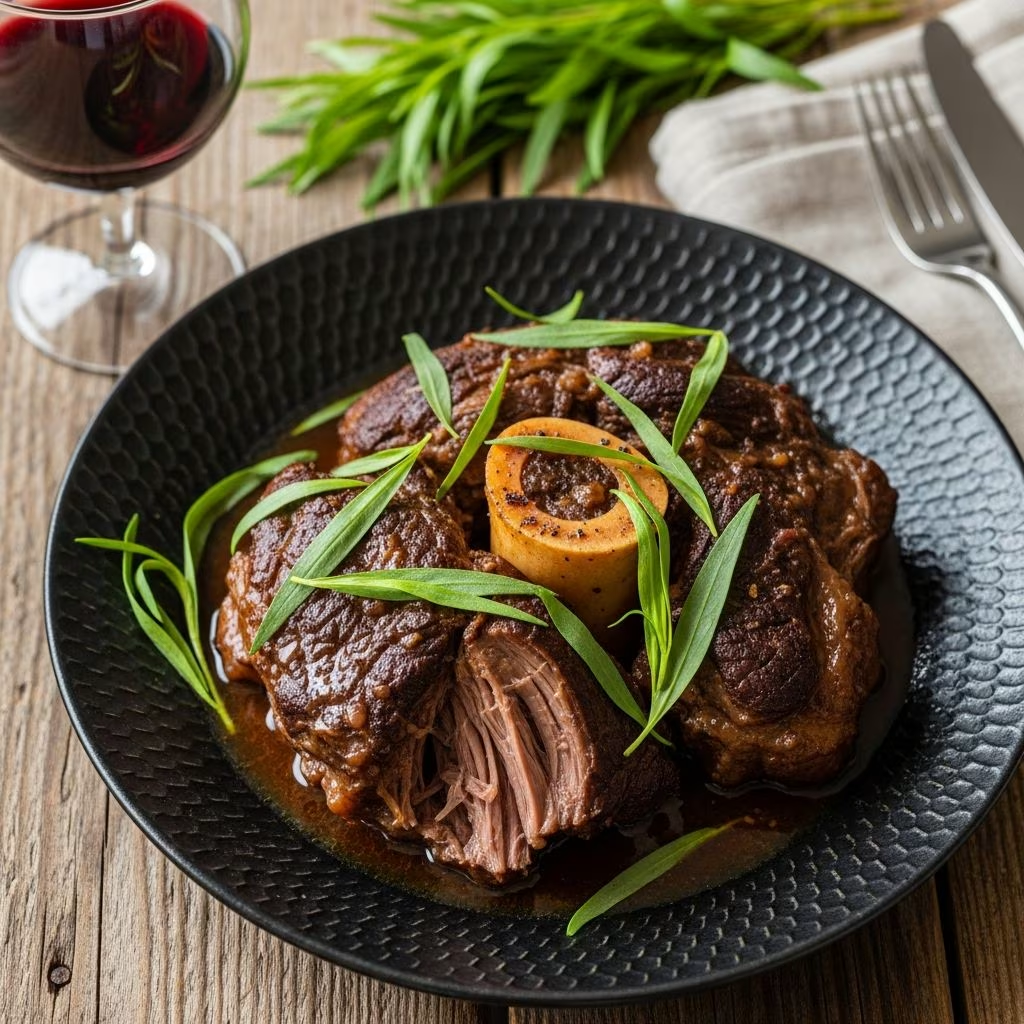
Transform humble beef shanks into a melt-in-your-mouth masterpiece by slow-braising them in robust red wine and fragrant tarragon. This classic technique yields fork-tender meat infused with deep, savory flavors from mirepoix vegetables, herbs, and a glossy sauce. Perfect for weekend dinners or impressing guests, this dish embodies the essence of home cooking elevated to gourmet levels.
Why Braising Beef Shanks Excels
Braising is an ideal method for tough, flavorful cuts like beef shanks, which come from the leg and contain ample connective tissue. Low, slow cooking in liquid breaks down collagen into gelatin, resulting in succulent texture without drying out. Red wine adds acidity to tenderize further, while tarragon brings a subtle anise-like brightness that cuts through richness.
Nutritionally, beef shanks provide high-quality protein, iron, and B vitamins. A 4-ounce serving offers about 25 grams of protein and significant zinc for immune support. Paired with vegetables, it becomes a balanced meal. This preparation minimizes waste, as the bone marrow enriches the sauce naturally.
Essential Ingredients for Success
Gather these pantry staples and fresh produce for four servings. Scale up for larger crowds.
- Beef shanks: 3-4 pounds, bone-in for maximum flavor (about 4 pieces, 1-2 inches thick).
- Seasonings: Kosher salt, black pepper (freshly ground).
- Aromatics: 2 onions (medium, diced), 3 carrots (chopped), 3 celery stalks (chopped), 4 garlic cloves (minced).
- Umami boosters: 2 tablespoons tomato paste.
- Liquids: 2 cups dry red wine (Cabernet Sauvignon or Merlot), 4-5 cups beef broth (low-sodium).
- Herbs: 4 sprigs fresh thyme, 2 bay leaves, 2 tablespoons fresh tarragon (chopped; plus extra for garnish).
- For searing: 2-3 tablespoons neutral oil (avocado or vegetable).
- Garnish option: Fresh parsley, lemon zest for a gremolata-style topping.
Choose grass-fed shanks for better marbling and ethical sourcing. Dry wines prevent overly sweet sauces; avoid cooking wines.
Step-by-Step Cooking Guide
Prep time: 30 minutes. Cook time: 3-3.5 hours. Total: ~4 hours. Use a heavy Dutch oven (5-7 quart) for even heat distribution.
Prep the meat: Pat shanks dry. Season generously with salt and pepper 1-24 hours ahead (refrigerate uncovered for dry brine effect). This draws out moisture for better sear and flavor penetration.
Preheat and sear: Oven to 325°F (165°C). Heat oil over medium-high. Sear shanks in batches, 4-5 minutes per side until deeply browned. Transfer to plate; reserve fat.
Sauté vegetables: Lower heat to medium. Add onions, carrots, celery, garlic. Cook 8-10 minutes until softened and caramelized. Stir in tomato paste; cook 2 minutes to deepen flavor.
Deglaze and braise: Pour in wine, scraping browned bits (fond) for intensity. Simmer 3 minutes. Return shanks, add broth to cover ¾, thyme, bay leaves, half the tarragon. Boil briefly, cover, oven-braise 3-3.5 hours until fork-tender.
Rest and finish: Remove shanks. Skim fat (chill overnight for ease). Strain solids if desired; reduce liquid 10-15 minutes for syrupy sauce. Stir in remaining tarragon.
Pro tip: Test doneness by twisting a fork; meat should shred effortlessly. If sauce is thin, cornstarch slurry thickens without dulling taste.
Flavor Enhancements and Twists
Customize for variety:
| Variation | Key Changes | Flavor Profile |
|---|---|---|
| Classic Italian Osso Buco | Swap tarragon for gremolata (parsley, garlic, lemon); add saffron. | Bright, citrusy. |
| Asian-Inspired | Use soy sauce, ginger, star anise; garnish with scallions. | Umami, spicy. |
| Root Vegetable Medley | Incorporate parsnips, potatoes in braise. | Earthy, hearty. |
| Lightened Version | Chicken stock, less wine; serve with quinoa. | Fresher, leaner. |
Storage: Refrigerate 4 days or freeze 3 months. Reheat gently in sauce to retain moisture.
Perfect Pairings and Serving Ideas
Serve over creamy polenta, mashed potatoes, or risotto to soak up sauce. Add steamed greens like kale for balance. Wine match: Same varietal used in cooking, or bold Zinfandel.
- Starters: Arugula salad with goat cheese.
- Sides: Roasted Brussels sprouts, garlic bread.
- Dessert: Dark chocolate tart to echo wine notes.
For holidays, bone-in shanks impress at the table; pull meat tableside for drama.
Common Pitfalls and Fixes
- Tough meat: Insufficient time or high heat. Always low-and-slow.
- Bitter sauce: Over-reduced wine. Taste and balance with broth.
- Watery braise: Too much liquid. Cover tightly; add midway if needed.
- No oven? Use slow cooker: 8 hours low after searing.
Nutritional Snapshot
| Per Serving (¼ recipe) | Amount |
|---|---|
| Calories | ~550 |
| Protein | 35g |
| Fat | 28g |
| Carbs | 12g |
Estimates based on standard ingredients; varies by cut and wine.
Frequently Asked Questions
Can I use boneless shanks?
Yes, but bone-in adds gelatin for superior sauce. Boneless cooks 30 minutes less.
What if I lack red wine?
Substitute equal beef broth plus 2 tbsp balsamic vinegar for acidity.
Is tarragon essential?
It provides unique licorice notes; substitute dill or extra thyme if unavailable.
How do I make it dairy-free?
Already is; skip any butter in sides.
Freezer-friendly?
Absolutely. Portion with sauce in bags; thaw overnight.
Master this recipe for endless cozy meals. Experiment confidently—braising forgives minor tweaks.
References
- Braised Beef Shanks with Tarragon Gremolata — Newell Tasting Table. 2023. https://neweltastingtable.com/braised-beef-shanks/
- Braised Beef Shank Recipe — The Inn at Honey Run. 2022. https://www.innathoneyrun.com/braised-beef-shank-recipe/
- Braised Beef Shank With Wine And Tarragon — Cooked.wiki. 2024. https://cooked.wiki/saved/531f7bdf-33b1-4851-9dd0-38594534b230