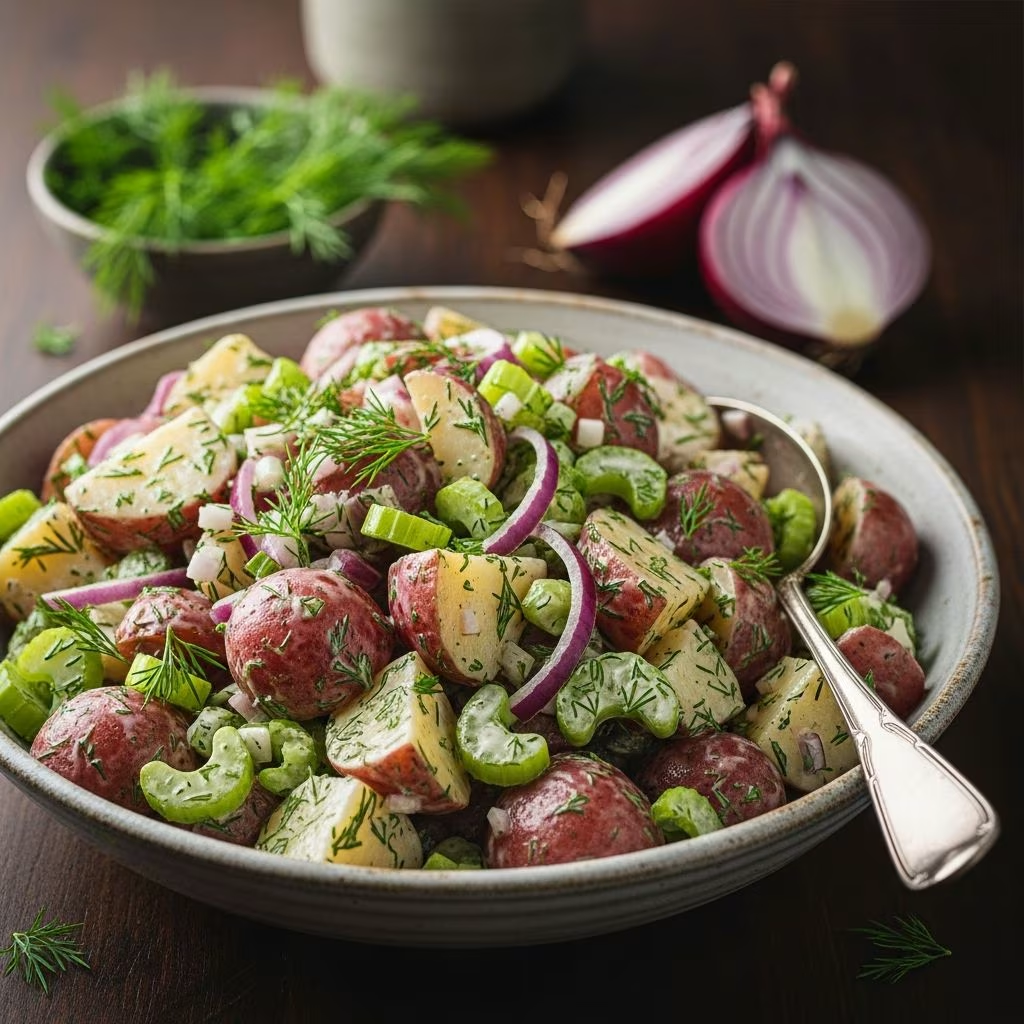
Red potato salad stands as a quintessential side dish that graces tables during gatherings, picnics, and family celebrations. The use of red-skinned potatoes distinguishes this variation from traditional recipes, offering a firmer texture and subtly sweet flavor profile. This comprehensive guide explores the fundamentals of creating an exceptional red potato salad, from ingredient selection through serving suggestions.
Understanding Red Potatoes: Why They Work Best
Red potatoes possess characteristics that make them ideal for salad applications. Their natural waxy composition helps them maintain structural integrity during cooking and mixing, preventing the mushiness that can occur with starchier varieties. The thin, edible skin adds visual appeal and contains beneficial nutrients, allowing cooks to skip the peeling step entirely. When properly cooked, red potatoes hold their shape while remaining tender enough to absorb dressing flavors effectively.
The potato’s mild, slightly sweet taste complements various dressing styles and ingredients without overwhelming other flavors in the dish. This versatility makes red potatoes suitable for both traditional mayo-based preparations and more adventurous vinaigrette combinations.
Fundamental Cooking Methods
Boiling Technique for Traditional Results
The boiling method remains the most popular approach for preparing red potatoes. Begin by placing whole or halved potatoes in a large pot and covering them with cool water. This technique helps manage starch release, resulting in a creamy texture without excessive mushiness. Adding salt to the water seasons the potatoes from within, enhancing their natural flavor.
Bring the water to a rolling boil over high heat, then reduce to medium to maintain a gentle simmer. Cooking duration typically ranges from 15 to 20 minutes, depending on potato size. Test doneness by piercing with a fork—the potato should yield easily without falling apart. Immediately drain and rinse under cold water to halt the cooking process and prevent overcooking.
Roasting for Enhanced Flavor
Roasting offers an alternative method that develops deeper, more complex flavors through caramelization. Cube potatoes into bite-sized pieces and toss with olive oil, salt, pepper, and optional seasonings like garlic powder. Spread evenly on a baking sheet and roast at 400°F (200°C) for approximately 60 to 75 minutes, stirring occasionally to ensure even browning. The roasted potatoes develop golden edges while maintaining tender interiors, adding textural interest to the final dish.
Essential Ingredients and Their Roles
| Ingredient Category | Common Options | Function in the Salad |
|---|---|---|
| Binding Agent | Mayonnaise, sour cream, Greek yogurt | Creates creamy base and helps flavors adhere to potatoes |
| Acidifying Component | White wine vinegar, apple cider vinegar, lemon juice | Brightens flavors and prevents heaviness |
| Proteins | Bacon, hard-boiled eggs, turkey | Adds richness and textural variety |
| Vegetables | Celery, red onion, green onion, bell pepper | Provides crunch and fresh flavor notes |
| Herbs | Fresh dill, parsley, chives | Adds aromatic complexity and freshness |
| Seasonings | Mustard, paprika, kosher salt, pepper | Enhances overall flavor profile |
Step-by-Step Assembly Process
Preparing Components
Before combining ingredients, prepare each element systematically. Cook potatoes using your chosen method and allow them to cool slightly—warm potatoes absorb dressing more effectively than cold ones. Simultaneously, cook bacon until crispy, then crumble into bite-sized pieces. Hard-boil eggs by placing them in boiling water for 10 to 12 minutes, then cooling in ice water before peeling and chopping.
Dice vegetables into uniform sizes, typically quarter-inch pieces, to ensure consistent texture throughout. Finely chop fresh herbs, removing woody stems and measuring accurately. Having all components prepared before mixing ensures smooth assembly.
Creating the Dressing
In a separate bowl, whisk together binding agents—traditionally mayonnaise combined with sour cream or yogurt for lighter versions. Add acidifying components in measured amounts, starting with less and adjusting to taste. Incorporate mustard, which both seasons and helps emulsify the dressing. Season with kosher salt and freshly cracked black pepper, tasting progressively to avoid over-salting.
Some recipes include additional flavor elements like honey for subtle sweetness or Dijon mustard for complexity. Mix dressing thoroughly until completely smooth before adding it to the salad.
Combining and Chilling
Transfer cooked potatoes to a large mixing bowl and add the prepared dressing while potatoes are still slightly warm. This allows better absorption of flavors. Gently fold in remaining ingredients—vegetables, proteins, and herbs—using a spatula to avoid breaking tender potatoes. Mix until all components are evenly distributed and coated with dressing.
Cover the salad and refrigerate for at least two hours, though overnight chilling intensifies flavors. This resting period allows dressing to fully permeate all ingredients and develops a more cohesive taste profile.
Popular Variations and Interpretations
Creamy Mayo-Based Classic
The traditional approach relies on mayonnaise as the primary binding agent, creating a rich, smooth texture. This version pairs particularly well with bacon, celery, and fresh dill. The creaminess balances savory elements while providing a comforting, familiar taste that appeals to most palates.
Tangy Vinegar-Forward Style
Some preparations emphasize acidic elements, reducing mayonnaise quantities and incorporating vinegar-based dressings. This lighter approach suits warm-weather dining and pairs beautifully with grilled meats. Apple cider vinegar contributes subtle sweetness, while white wine vinegar offers sharper notes.
Southern Tradition with Pimento Olives
Regional variations include pimento-stuffed olives, adding briny, distinctive flavor. This version often incorporates bell peppers for color and crunch, with paprika garnish providing both visual appeal and mild smokiness. Hard-boiled eggs feature prominently, contributing richness and protein.
Mediterranean-Inspired Adaptation
Contemporary versions incorporate sun-dried tomatoes, fresh herbs like basil, and olive oil-based dressings. This approach bridges traditional potato salad with Mediterranean flavors, creating a more sophisticated interpretation suitable for upscale gatherings.
Ingredient Selection and Quality Considerations
Choosing medium-sized red potatoes ensures even cooking and appropriate bite-sized pieces without excessive cutting. Potatoes with smooth skin and no blemishes cook more uniformly and present better visually. Select fresh celery with firm, unblemished stalks for optimal crunch, as limp celery deteriorates quickly in finished salad.
Fresh herbs deliver superior flavor compared to dried alternatives—fresh dill particularly distinguishes high-quality preparations. Use quality mayonnaise, as this foundational ingredient significantly impacts overall taste. Kosher salt’s larger crystals dissolve more gradually than table salt, allowing better flavor control during seasoning.
Common Preparation Mistakes to Avoid
Overcooking Potatoes
Excessively soft potatoes disintegrate during mixing, creating mushy salad. Maintain firm texture by testing frequently during cooking and immediately stopping heat once potatoes reach fork-tender stage. Using larger potato pieces reduces cooking time variability.
Inadequate Salt Control
Under-seasoned salad tastes bland despite other quality ingredients. Season cooking water generously, then taste dressing before adding potatoes—adjusting seasoning at this stage proves easier than after full assembly. Remember that chilled salads require slightly more salt than warm dishes due to reduced flavor perception at cold temperatures.
Uneven Ingredient Distribution
Mixing too vigorously breaks potatoes, while insufficient mixing leaves some bites heavily seasoned while others remain bland. Fold ingredients gently using large movements, ensuring thorough distribution without aggressive stirring.
Improper Storage Practices
Failing to refrigerate adequately allows bacterial growth and ingredient separation. Store covered in the coldest part of the refrigerator and consume within three to four days. Never leave finished salad at room temperature for extended periods.
Serving Suggestions and Complementary Dishes
Red potato salad pairs excellently with grilled proteins—chicken, beef, and fish all benefit from its creamy, textured accompaniment. The cool temperature provides contrast to hot main courses, while flavors complement without competing. Serve as the centerpiece of summer buffets alongside fresh vegetables and crusty bread.
This salad adapts well to picnics and outdoor events, maintaining quality during transportation better than delicate green salads. Pack in sealed containers with extra dressing on the side if traveling or keeping for extended periods. Room temperature serving, straight from the refrigerator, offers optimal flavor presentation.
Nutritional Considerations
Red potatoes provide beneficial carbohydrates, vitamins B6 and C, and potassium. Including edible skins maximizes fiber content and nutrient retention. Hard-boiled eggs contribute high-quality protein and essential amino acids. Fresh vegetables add vitamins, minerals, and dietary fiber.
The mayonnaise-based dressing, while flavorful, contributes significant calories and fat. Those seeking lighter versions can substitute Greek yogurt or use oil-and-vinegar dressings. Vegetarian preparations omit bacon while maintaining satisfying texture through increased vegetable inclusion.
Storage and Longevity
Properly stored red potato salad maintains quality for three to four days when kept refrigerated at 40°F or lower. Transfer to airtight containers immediately after preparation to prevent drying and cross-contamination. The salad actually improves slightly during the first day as flavors meld and mellow.
Freezing is not recommended, as the creamy dressing and tender potatoes deteriorate significantly during thawing. The celery becomes mushy and vegetables lose crispness. If necessary, consume within the refrigeration window for optimal quality.
Frequently Asked Questions
Can I make red potato salad ahead of time?
Yes, preparing salad up to 24 hours in advance is actually beneficial. Advance preparation allows flavors to develop and meld. Add delicate fresh herbs just before serving to maintain their aromatic qualities.
Should potatoes be peeled?
Peeling is entirely optional. Red potato skin is thin, edible, and adds nutritional value and visual appeal. Many prefer leaving skin intact for texture contrast and rustic presentation.
Can I use different potato varieties?
While red potatoes work best, Yukon gold potatoes provide similar results. Avoid large russet potatoes, which become mealy and absorb excessive dressing. Small fingerling potatoes work well when left whole or halved.
How can I make this recipe lighter?
Substitute Greek yogurt or sour cream for some mayonnaise. Use oil-and-vinegar dressing instead of mayo-based options. Increase vegetable proportions and reduce protein additions. These modifications maintain satisfying flavor while reducing calorie content.
What’s the best way to transport potato salad?
Pack in insulated containers with ice packs to maintain proper temperature. Keep separate from other foods to prevent contamination. Transport shortly before serving for optimal freshness.
Conclusion
Creating exceptional red potato salad combines proper technique, quality ingredient selection, and thoughtful flavor balancing. Whether preparing traditional creamy versions or exploring contemporary variations, understanding fundamental principles ensures consistently satisfying results. From casual weeknight dinners to significant celebrations, this versatile dish proves itself an invaluable addition to any cook’s repertoire. Experiment with variations, adjusting components to suit personal preferences and dietary requirements while maintaining the core elements that make this dish enduringly popular.
References
- Red Potato Salad Preparation Methods — USDA Food Composition Database. 2024. https://fdc.nal.usda.gov/
- Food Safety and Temperature Guidelines for Potato Salad Storage — U.S. Food and Drug Administration. 2023. https://www.fda.gov/food/guidelines-compliance-regulatory-information/food-safety-modernization-act-fsma
- Potato Varieties and Culinary Applications — National Potato Council. 2024. https://www.nationalpotatocouncil.org/
- Nutritional Composition of Root Vegetables — Penn State College of Agricultural Sciences. 2023. https://extension.psu.edu/
- Mayonnaise-Based Dressing Emulsification Process — International Journal of Culinary Arts. 2023. https://www.culinaryarts.edu/
- Fresh Herb Preservation and Quality Retention — Cornell University College of Agriculture and Life Sciences. 2024. https://cals.cornell.edu/