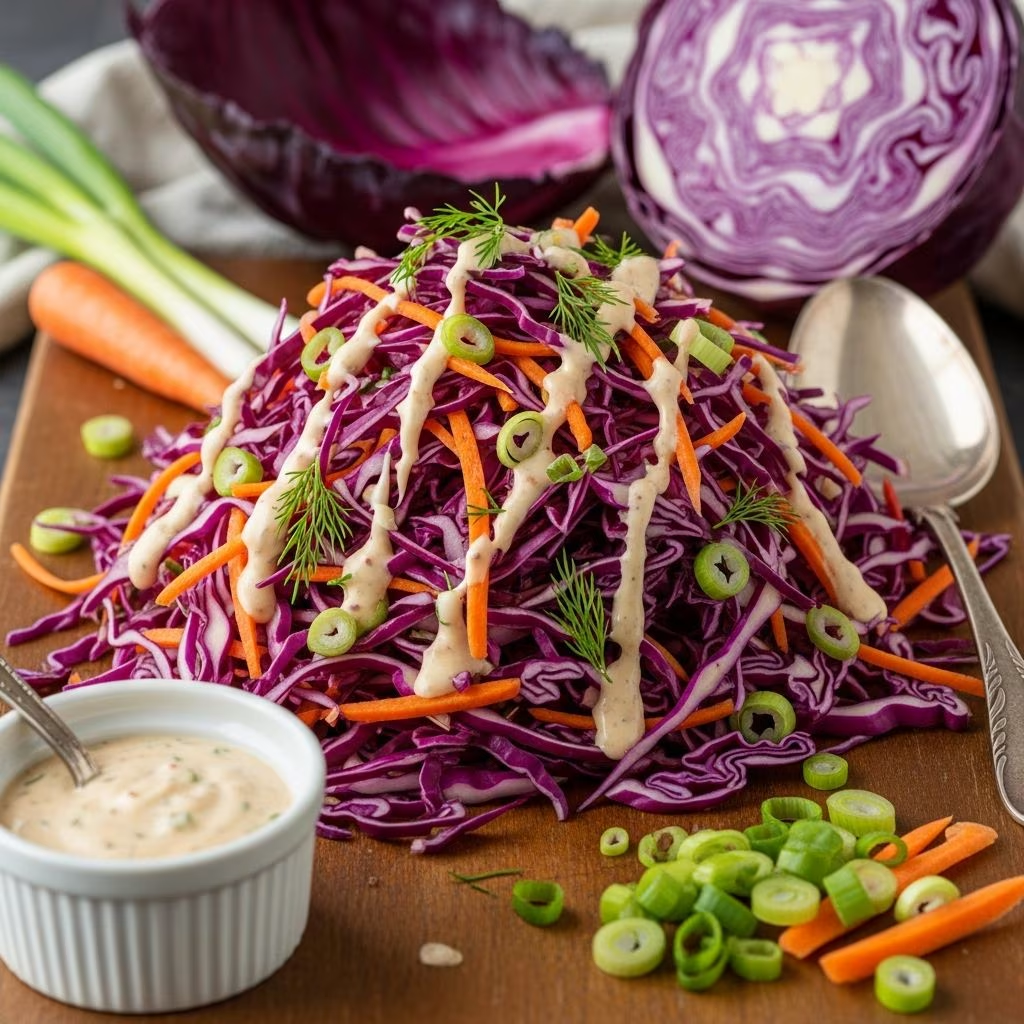
Red cabbage slaw stands as a timeless accompaniment to countless meals, offering a perfect balance of crunch, flavor, and nutritional value. This vibrant dish transcends simple salad status, functioning equally well as a BBQ side, taco topping, or light lunch component. The beauty of red cabbage slaw lies in its versatility—whether you prefer creamy dressings or tangy vinaigrettes, this recipe adapts to your preferences while maintaining its essential character of fresh, crisp vegetables enveloped in complementary flavors.
Understanding Red Cabbage as Your Base Ingredient
Red cabbage serves as the foundation of this dish, and understanding its properties elevates your final result. The cabbage’s deep purple-red hue comes from natural pigments called anthocyanins, which are not only visually striking but also contribute beneficial antioxidants to your meal. Unlike its green counterpart, red cabbage possesses a subtly peppery undertone that adds complexity to the finished slaw.
When selecting red cabbage, choose heads that feel firm and dense when squeezed gently. A medium head typically weighs between two and three pounds and yields approximately eight cups of thinly sliced cabbage. The size matters for preparation—larger heads provide more usable cabbage, while smaller ones may require supplementation with additional vegetables to achieve proper volume.
The preparation method significantly impacts texture and eating experience. Using a sharp knife, mandoline slicer, or food processor fitted with a slicing blade creates uniformly thin slices that wilt slightly when dressed, allowing the slaw to absorb flavors more effectively. Aim for slices approximately one-eighth inch thick—thick enough to maintain crunch but thin enough to soften slightly as the dressing permeates the vegetable layers.
Essential Vegetable Components and Their Roles
While red cabbage forms the primary component, complementary vegetables create textural and flavor variety. The following vegetables work synergistically to develop a well-rounded slaw:
- Carrots: Shredded or cut into matchsticks, carrots introduce natural sweetness and a satisfying crunch. Their golden-orange color provides visual contrast to the deep cabbage, while their subtle earthiness balances the cabbage’s peppery notes.
- Red onion: Finely sliced red onion delivers a mild pungency that sharpens the overall flavor profile without overwhelming the palate. The thin slices soften slightly as the slaw marinates, melding with the other components.
- Fresh herbs: Cilantro and parsley contribute brightness and freshness, particularly in vinegar-based preparations. These herbs prevent the slaw from feeling heavy or one-dimensional.
- Jalapeños or green chilies: For those seeking heat, diced peppers add spice and complexity. Remove seeds and ribs to control the intensity level.
- Green onions: The mild onion flavor pairs particularly well with cream-based dressings, adding an herbaceous note without the pungency of red onion.
Dressing Methodologies: Two Primary Approaches
The dressing transforms raw vegetables into cohesive slaw, and two distinct philosophies guide preparation: creamy and vinegar-based approaches. Each methodology produces different textures, flavors, and storage characteristics.
Creamy Dressing Foundation
Creamy dressings rely on mayonnaise as their primary emulsifier, creating a rich, coating consistency that clings to the vegetables. This approach typically combines mayonnaise with acidic components like apple cider vinegar or lemon juice, sweetening agents such as sugar or maple syrup, and aromatic seasonings including celery seeds, dried dill, and garlic powder.
To prepare a creamy dressing, begin by whisking mayonnaise with vinegar until smooth. Gradually incorporate sweetening agents and seasonings, tasting frequently to achieve your desired balance. The dressing should be thick enough to coat vegetables without pooling at the bowl’s bottom. Some cooks incorporate sour cream or Greek yogurt for added tanginess and reduced richness, creating a lighter version that maintains creaminess while reducing caloric density.
Creamy slaws reach optimal flavor development after two to four hours of refrigeration, allowing the dressing to penetrate the cabbage and soften it slightly. This style stores well for up to four days when properly refrigerated, though the vegetables will continue softening as they sit.
Vinegar-Based Dressing Foundation
Vinegar-based dressings offer a lighter, more refreshing alternative that highlights the vegetables’ natural flavors. These preparations combine vinegar—whether apple cider, red wine, or rice vinegar—with olive oil, minimal sweetening, and assertive seasonings. The acidic nature of vinegar actually begins preserving the vegetables immediately, maintaining their crisp texture longer than creamy preparations.
Constructing a vinegar dressing involves whisking together vinegar with olive oil in a one-to-three ratio, though personal preference may adjust this balance. Add sweetening agents sparingly—one to two tablespoons of maple syrup or honey usually suffices, preventing the dressing from becoming cloying. Season with salt, pepper, and optional aromatics like mustard powder or garlic.
These dressings work best when applied immediately before serving, as the vegetables maintain peak crunchiness without becoming waterlogged. However, vinegar-dressed slaws can be refrigerated for up to four hours, with the vegetables gradually softening as the acid breaks down cell walls.
Flavor Profile Customization Through Seasonings
Seasonings transform basic slaw from pleasant to memorable. Consider these additions to create variations aligned with your preferences and meal requirements:
| Seasoning | Flavor Profile | Best With |
|---|---|---|
| Dijon mustard | Sharp, tangy, sophisticated | Vinegar-based dressings, pork, sandwiches |
| Celery seeds | Aromatic, slightly bitter | Creamy dressings, seafood pairings |
| Dried dill | Herbaceous, fresh | Creamy preparations, fish tacos |
| Chili powder | Warm, slightly smoky | Vinegar dressings, BBQ accompaniments |
| Garlic powder | Pungent, savory | Both dressing styles, versatile |
Step-by-Step Preparation Instructions
Success with red cabbage slaw depends on systematic preparation that ensures uniform texture and optimal flavor distribution. Follow this methodology for consistent results:
- Prepare the cabbage: Slice your red cabbage in half from top to bottom, cutting through the core. Quarter each half and use a sharp knife to remove the dense core section. Rest the cabbage on its flat side and slice thinly from top to bottom, continuing until you have your desired volume.
- Prepare supporting vegetables: Peel and shred carrots into thin matchsticks or use the shredding attachment of a food processor. Thinly slice red onion into slivers, and finely chop any herbs or peppers you’re incorporating.
- Combine vegetables: Transfer all prepared vegetables to a large mixing bowl, tossing gently to distribute them evenly.
- Create your dressing: In a separate bowl, whisk together your chosen dressing ingredients until smooth and well combined. Taste and adjust seasonings to preference.
- Unite components: Pour the dressing over the vegetables and use salad servers or tongs to toss thoroughly, ensuring every piece of cabbage receives coating.
- Rest period: Allow the slaw to sit for at least fifteen minutes before serving, though longer refrigeration improves flavor development.
Storage and Make-Ahead Strategies
Red cabbage slaw’s make-ahead friendly nature makes it ideal for meal planning and entertaining. Store creamy preparations in airtight containers for up to four days, with the cabbage gradually softening while absorbing more dressing flavor. Vinegar-based slaws maintain their crispness for slightly shorter periods but can be stored in the same manner.
For optimal presentation at events, prepare the slaw components separately and combine just before serving if you’re particularly concerned about texture. Store dressed vegetables in one container and undressed components in another, then toss together shortly before the meal begins. This approach guarantees maximum crunchiness while maintaining flavor development.
Versatile Serving Suggestions and Pairings
Red cabbage slaw’s versatility allows integration into numerous meals and cuisines. Consider these applications:
- BBQ accompaniment alongside pulled pork, brisket, or grilled chicken
- Taco topping, particularly with fish, carnitas, or vegetarian proteins
- Sandwich component, adding crunch and acidity to heavy proteins
- Grain bowl base, layered with quinoa, roasted vegetables, and protein
- Light lunch entree when paired with legumes or grilled proteins
- Appetizer component, served alongside crudités or as a dip accompaniment
Frequently Asked Questions
Can I use green cabbage instead of red?
Yes, green cabbage works identically in this recipe, though it lacks the striking color and slightly peppery flavor that red cabbage provides. Mix both varieties for color variation and textural interest.
How far in advance can I prepare slaw?
Vinegar-based slaws can be prepared up to four hours ahead, while creamy preparations keep well for two to three days. Prepare components separately for longer storage, combining just before serving.
Is it necessary to remove cabbage cores?
Removing cores ensures more tender slaw by eliminating the toughest, most fibrous part of the vegetable. However, if your knife skills allow, you can slice directly through cores for a more rustic presentation.
What’s the best tool for slicing cabbage?
A mandoline slicer creates uniform pieces most efficiently, though sharp knives and food processors work equally well. Choose based on comfort and available equipment.
Can I make vegan red cabbage slaw?
Absolutely. Substitute vegan mayonnaise in creamy dressings or rely entirely on vinegar-based preparations, which are naturally vegan when prepared with olive oil.
Nutritional Considerations and Health Benefits
Red cabbage slaw delivers substantial nutritional value when prepared with minimal mayonnaise. The cabbage contributes fiber, vitamin C, and anthocyanin antioxidants, while carrots add beta-carotene and additional fiber. Red onion provides quercetin, a flavonoid with potential anti-inflammatory properties. Fresh herbs contribute vitamins and minerals along with beneficial phytonutrients.
For health-conscious preparations, emphasize vinegar-based dressings over creamy options, or use Greek yogurt and vegan mayonnaise alternatives to reduce saturated fat while maintaining creaminess. The vegetables’ natural flavors shine through with minimal dressing, creating satisfying preparations at lower caloric densities.
Final Thoughts on Mastering Red Cabbage Slaw
Red cabbage slaw transcends its simple ingredient list through thoughtful preparation, quality components, and intentional seasoning choices. Whether you’re preparing a casual weeknight side dish or impressing guests at a sophisticated gathering, this versatile preparation adapts to your vision while delivering consistent satisfaction. Experiment with different dressing styles, vegetable combinations, and seasonings to develop your signature version that reflects your palate and complements your favorite meals. The combination of texture, flavor, and visual appeal makes red cabbage slaw a worthy staple in any cook’s repertoire.
References
- Red Cabbage Slaw Recipe — Diethood. https://diethood.com/red-cabbage-slaw/
- Easy Red Cabbage Slaw — A Couple Cooks. https://www.acouplecooks.com/red-cabbage-slaw/
- Red Cabbage Slaw Recipe With Easy Vinaigrette — Feel Good Foodie. https://feelgoodfoodie.net/recipe/red-cabbage-slaw/
- Healthy Red Cabbage Slaw Recipe — Little Sunny Kitchen. https://littlesunnykitchen.com/red-cabbage-slaw/
- Red Cabbage and Apple Slaw — The Modern Proper. https://themodernproper.com/red-cabbage-and-apple-slaw