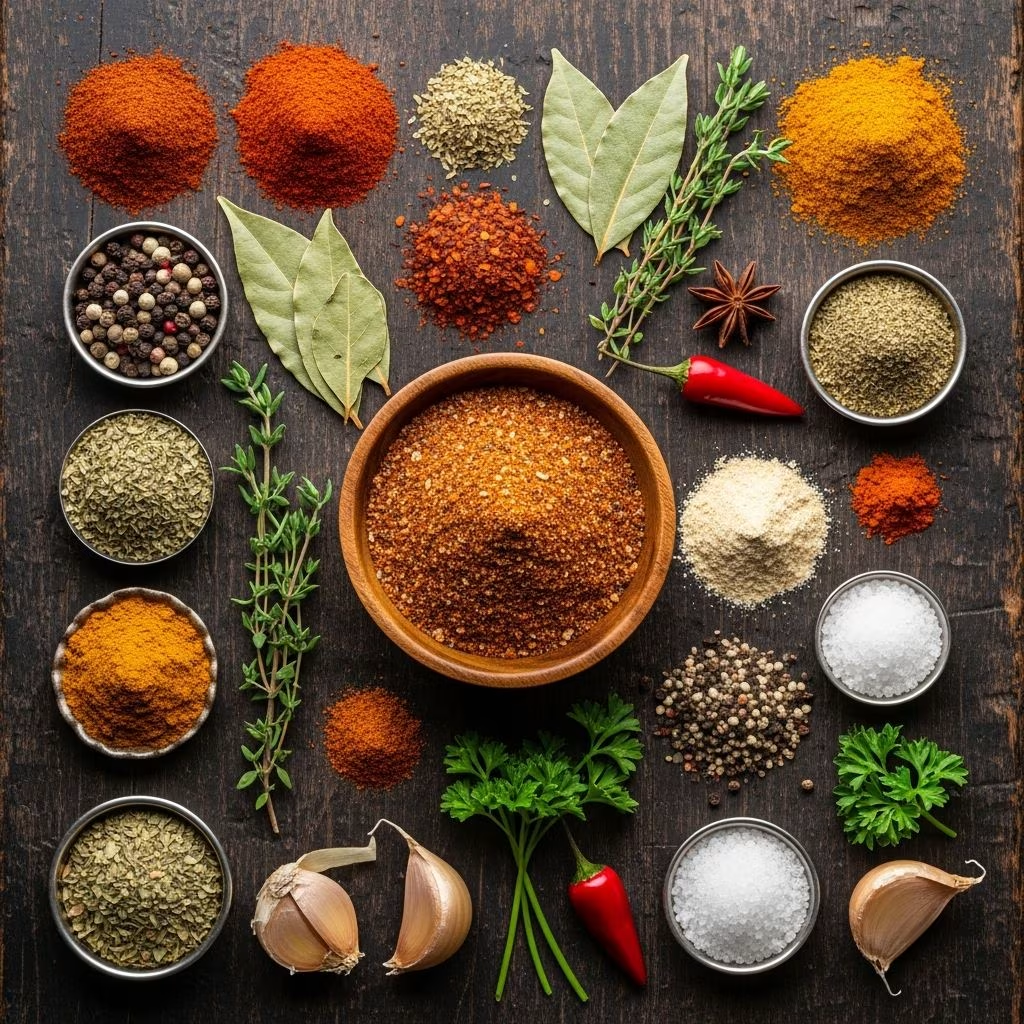
Homemade **Cajun spice blends** capture the essence of Louisiana’s vibrant culinary heritage, blending smoky, spicy, and earthy notes into a versatile seasoning. These mixes transform simple ingredients into bold flavors perfect for meats, seafood, vegetables, and more. Creating your own allows full control over heat and taste, avoiding preservatives in store-bought versions.
Origins and Essence of Cajun Seasoning
Cajun cuisine draws from French, African, and Native American influences, thriving in Louisiana’s bayous. The spice mix emerged as a practical way to amplify flavors in one-pot dishes like gumbos and jambalayas. Key elements include paprika for color and mild sweetness, cayenne for fire, garlic and onion powders for depth, and herbs like thyme and oregano for balance.
Traditional blends emphasize bold profiles without overwhelming sweetness, distinguishing them from milder Creole versions. Families passed down recipes orally, adapting to available spices, which explains the many variations today.
Core Ingredients in Cajun Spice Mixes
Building a solid base starts with pantry staples. Here’s a breakdown:
- Paprika: Provides vibrant red hue and subtle smokiness; smoked varieties add depth.
- Cayenne Pepper: Delivers adjustable heat; start low for milder blends.
- Garlic and Onion Powders: Essential for savory umami backbone.
- Dried Thyme and Oregano: Earthy herbs that ground the spice.
- Black Pepper: Freshly ground for sharp bite.
- Salt: Kosher or sea salt enhances all flavors; optional for low-sodium versions.
Optional add-ins like white pepper, cumin, or celery seed introduce unique twists.
Step-by-Step: Making Your First Cajun Blend
Assembling a basic mix takes under 5 minutes. Gather dry measuring spoons and an airtight jar.
- Measure ingredients precisely: 3 tbsp paprika, 2 tbsp garlic powder, 2 tbsp onion powder, 1 tbsp each thyme, oregano, black pepper, and 1-2 tsp cayenne.
- Combine in a bowl; whisk or shake vigorously for even distribution.
- Taste and adjust: Add more cayenne for heat or salt for balance.
- Store in a cool, dark place; lasts up to 6 months.
This yields about 1/2 cup, enough for dozens of uses. Scale up for gifting.
Customizing Heat Levels and Variations
Tailor blends to preferences with these profiles:
| Variation | Key Tweaks | Best For |
|---|---|---|
| Mild | Reduce cayenne to 1 tsp; add more paprika | Family meals, veggies |
| Medium | Standard cayenne (2 tsp); include smoked paprika | Seafood boils, chicken |
| Hot | Double cayenne; add chipotle or Aleppo pepper | Wings, bold stews |
| Salt-Free | Omit salt; boost herbs and peppers | Health-conscious cooking |
| Smoky | All smoked paprika; thyme-heavy | Grilled meats |
Experiment with cumin or mustard powder for complexity. Vegan or gluten-free? All ingredients fit naturally.
Storage and Shelf Life Tips
Freshness is key. Use glass jars to prevent moisture absorption. Label with date; potency fades after 6 months, though safe longer. Grind whole spices fresh for superior aroma. Refrigerate in humid climates to extend life up to a year.
Versatile Ways to Use Cajun Spice
This blend shines across dishes:
- Proteins: Rub on chicken, pork, or shrimp before grilling; 1-2 tbsp per pound.
- Seafood: Toss in boils or blacken fish fillets.
- Veggies: Roast potatoes or corn with a sprinkle.
- Soups and Stews: Stir into gumbo bases for authentic kick.
- Snacks: Dust on popcorn or fries for instant upgrade.
For frying, mix with flour for batters. In dips, blend 1 tsp into sour cream.
Recipe Ideas Featuring Cajun Spice
Cajun Blackened Chicken
Ingredients: 4 chicken breasts, 2 tbsp Cajun mix, 1 tbsp oil. Coat chicken, sear 5 min per side. Serves 4.
Spicy Cajun Popcorn Shrimp
Toss shrimp in 1 tbsp mix and cornstarch; air-fry at 400°F for 10 min. Dip in remoulade.
Cajun Roasted Veggies
Mix potatoes, peppers, onions with 2 tsp blend and oil; roast 25 min at 425°F.
One-Pot Cajun Rice
Sauté sausage, add rice, broth, 1 tbsp spice; simmer 20 min. Top with green onions.
These quick recipes highlight the blend’s range.
Common Mistakes and Pro Tips
- Avoid old spices; buy in small quantities.
- Don’t overpower dishes—start with 1 tsp per serving.
- Balance heat: Pair with creamy elements like butter or yogurt.
- For authenticity, source high-quality paprika.
Grind peppers fresh for brighter notes.
Health Benefits of Homemade Blends
Control sodium and avoid additives. Cayenne aids digestion; paprika offers antioxidants. Herbs provide anti-inflammatory properties. Low-calorie way to flavor without sauces.
FAQs
What is the difference between Cajun and Creole seasoning?
Cajun is bolder and spicier; Creole includes more herbs and sometimes celery salt.
Can I substitute fresh herbs?
No—dried are concentrated; use 1/3 the amount if fresh, but dry for storage.
How much Cajun spice per recipe?
1-2 tsp for sides, 1 tbsp for mains; adjust to taste.
Is Cajun spice gluten-free?
Yes, when made from pure spices.
Can I make it in bulk?
Absolutely; multiply ingredients and store in multiple jars.
References
- Homemade Cajun Spice Mix [out of necessity!] — Cooking by the Book. N/A. https://cookingbythebook.com/recipes/homemade-cajun-spice-mix-necessity/
- Cajun Seasoning Mix Recipe (Smoky Homemade Blend) — From Valerie’s Kitchen. N/A. https://www.fromvalerieskitchen.com/kickin-cajun-seasoning-mix/
- Cajun Spice Seasoning — The Vegan 8. N/A. https://thevegan8.com/cajun-spice-seasoning/
- Cajun Spices Three Ways — Louisiana Cookin’ Magazine. N/A. https://louisianacookin.com/cajun-spices-three-ways/
- Homemade Cajun Seasoning Mix (Without Salt) — Pass Me Some Tasty. N/A. https://www.passmesometasty.com/cajun-seasoning/
- Cajun Seasoning — Gimme Some Oven. N/A. https://www.gimmesomeoven.com/cajun-seasoning/