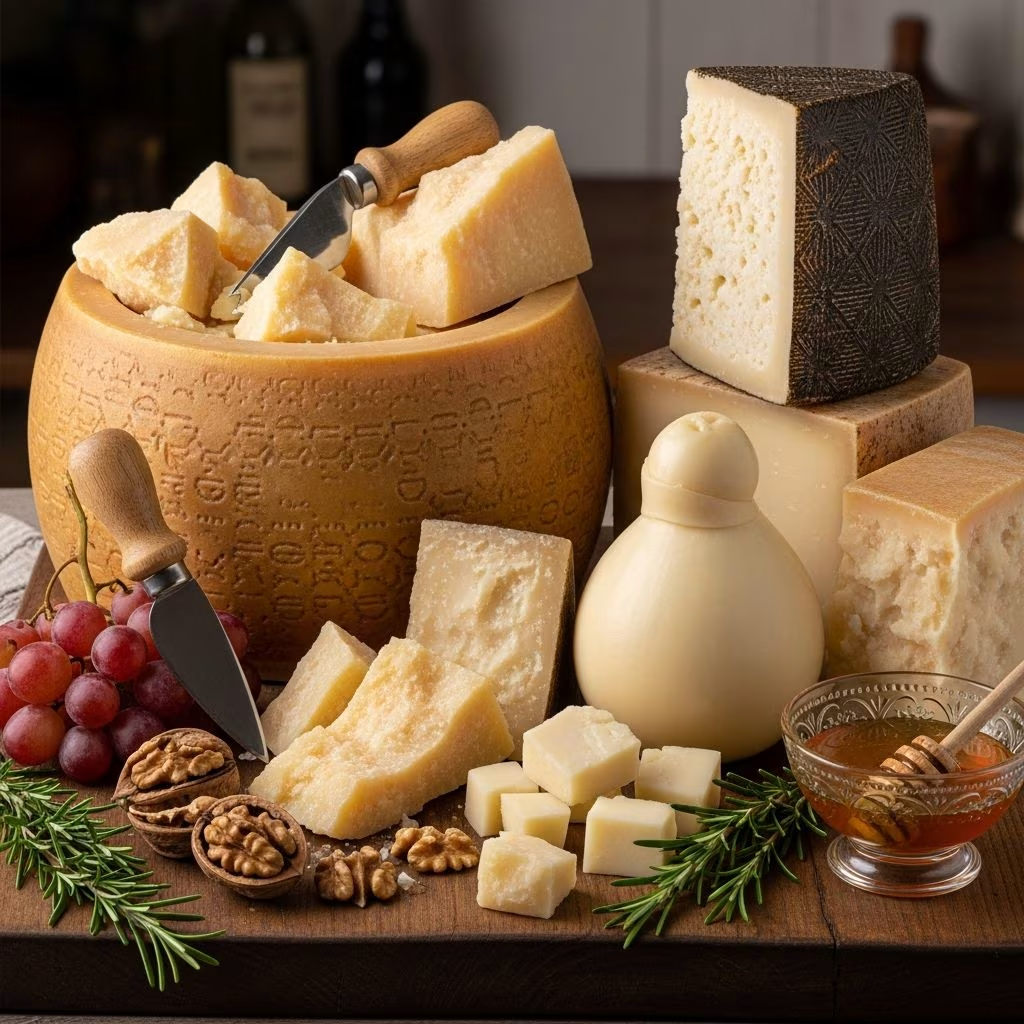
Italian cuisine has gifted the world with some of its most revered hard cheeses, each with a distinct character shaped by regional tradition, production methods, and ingredient selection. While these cheeses may appear similar at first glance, their differences run surprisingly deep. Understanding these distinctions transforms how you select and utilize these ingredients in the kitchen, whether you’re finishing a pasta dish, crafting a cheese board, or enhancing a savory recipe. This guide explores three cornerstone Italian cheeses and the nuances that define each one.
The Foundation: What Makes These Cheeses Distinct
Three primary factors distinguish these Italian hard cheeses from one another: the source of milk used in production, the geographic region where they are made, and the specific aging protocols followed by producers. Milk source stands as the most fundamental differentiator. Two of these cheeses rely on cow’s milk, while the third draws from sheep’s milk, creating entirely different flavor foundations and textural qualities. Geographic origin matters equally, as each cheese benefits from Protected Designation of Origin (PDO) status in Europe, meaning authentic versions can only be produced in specific regions with defined production standards. Finally, aging duration creates a spectrum of flavor intensity and texture, with younger versions offering subtlety and older versions delivering complexity and crystalline structure.
The Premium Choice: Cow’s Milk Innovation in Northern Italy
Production and Regional Heritage
This first variety emerged from medieval monastic traditions when monks sought to preserve excess milk through cheese-making. Historical records document its existence as early as 1254, when a noblewoman traded her house for a yearly supply of 53 pounds. Today, production remains confined to five Italian provinces in the Emilia-Romagna region, including Parma, Reggio Emilia, Modena, Bologna, and Mantova, each contributing to the collective identity of this protected cheese.
The production process begins with unpasteurized milk from cattle that graze on grass-based diets, a requirement that distinguishes this cheese from competitors. The absence of grain supplementation in the animals’ feed creates a milk composition that directly influences the final cheese’s depth and complexity. Wheels undergo a minimum 12-month aging period, though many producers extend this to 24 months or beyond to develop heightened flavor.
Sensory Profile and Structure
This cheese presents a golden-yellow to amber hue with a characteristic rough, embossed rind bearing the production date and consortium seal. The interior reveals a crumbly, granular texture studded with tiny crunchy calcium crystals that develop during extended aging. Flavor evolution mirrors its maturation: young versions (12 months) display delicate notes reminiscent of fresh fruit and yogurt with a silky mouthfeel. As aging progresses, nutty undertones emerge, eventually developing subtle spicy notes after 30–36 months that dissolve pleasantly on the palate. The cheese carries approximately 30% milk fat and is naturally lactose-free.
Culinary Applications
This cheese functions best as a premium seasoning agent rather than a melting ingredient. Its concentrated umami character amplifies savory elements in dishes, making it ideal for finishing risottos, vegetable gratins, or egg-based preparations. The cheese pairs beautifully with iron-rich proteins like lamb and beef, elevating their inherent richness. On pizza, it serves as a flavor intensifier when paired with mild, stretchy cheeses. For cheese boards, balance its intensity with creamier varieties such as ricotta or mascarpone.
The Emerging Powerhouse: Balanced Complexity from Po Valley
Production Characteristics and Market Position
Originating from Italy’s Po River Valley in the Emilia-Romagna region, this second variety shares Parmigiano-Reggiano’s cow’s milk foundation but diverges in crucial production details. While also crafted from unpasteurized milk, cattle producing milk for this cheese receive grain supplementation comprising up to 50% of their diet, alongside grass grazing. This dietary difference creates milk with higher fat content and subtle sweetness. Aging spans a minimum of 9 months, though premium versions may mature for up to 20 months. Despite its lesser fame compared to its regional neighbor, this cheese ranks as the world’s best-selling PDO cheese, with producers creating over five million wheels annually.
Flavor Development and Texture
The sensory experience of this cheese shifts markedly with maturation. Before 16 months of aging, the cheese maintains a delicate, milky character without the distinctive granular quality that develops later. Beyond this threshold, sweetness intensifies and visible crystals become apparent throughout the paste. Extended aging beyond two years generates complex buttery depth infused with nutty undertones. The texture remains granular when melted but feels lighter and slightly creamier compared to its Parmesan counterpart, owing to the higher fat content from grain-supplemented cattle feed. Like its cousin, this cheese is lactose-free.
Strategic Kitchen Use
This cheese excels as a finisher for robust, full-flavored dishes where its milder profile prevents flavor competition. It works excellently in gratinéed vegetables, mashed potatoes, and spiced pizzas where its granular melt contributes textural interest without overwhelming accompanying ingredients. The cheese pairs well with ricotta-based fillings and complements subtler cheese varieties, allowing its sharpness to highlight rather than dominate. For cooks seeking comparable results to Parmigiano-Reggiano but desiring greater volume at lower cost, this cheese provides practical versatility.
The Distinctive Outlier: Sheep’s Milk Tradition
Ancient Origins and Production Methods
This third variety claims ancient lineage, with historical records suggesting production dating back over 2,000 years. Made exclusively from sheep’s milk in Italy’s Lazio and Sardinia regions, this cheese represents an entirely different cheese-making category despite its hard texture resembling its cow’s milk counterparts. The milk undergoes pasteurization, unlike the unpasteurized varieties mentioned above. Wheels receive hand dry-salting during aging, a labor-intensive process that establishes its signature character. Maturation typically spans 5 to 12 months, with longer aging producing more assertive flavor suitable for grating applications.
Distinctive Flavor and Mouthfeel
Sheep’s milk naturally possesses higher fat content than cow’s milk and carries inherent textural qualities often described as starchy or lanolin-like. This foundation creates a distinctly earthy or grassy tang that distinguishes this cheese fundamentally from cow’s milk varieties. The cheese presents a white color and exhibits a crumbly, dense, flaky structure with approximately 32% fat content. The flavor profile balances saltiness, sharpness, and bitterness in complementary measure. The cheese becomes slightly granular during melting, allowing its pronounced flavor to shine through in cooked dishes. Interestingly, younger versions exist that maintain creamier texture, marketed for snacking rather than grating applications.
Culinary Positioning and Pairings
The assertive character of this sheep’s milk cheese limits its applications compared to its cow’s milk relatives. It functions best as a contrast element to rich and earthy flavors, cutting through fat and providing brightness. Its salty, sharp nature makes it suitable for finishing rustic soups, hearty vegetable dishes, and bean preparations. This cheese does not serve as a direct substitute for Parmigiano-Reggiano, as the flavor intensity and character differ substantially. Understanding this distinction prevents disappointing culinary outcomes when recipes specify one variety over another.
Production Comparison: From Milk to Table
| Characteristic | Parmigiano-Reggiano | Grana Padano | Pecorino Romano |
|---|---|---|---|
| Milk Source | Cow’s milk (grass-fed) | Cow’s milk (50% grain-fed) | Sheep’s milk |
| Production Region | Parma, Reggio Emilia, Modena, Bologna, Mantova | Po River Valley | Lazio, Sardinia |
| Milk Treatment | Unpasteurized | Unpasteurized | Pasteurized |
| Minimum Aging | 12 months | 9 months | 5–8 months |
| Fat Content | ~30% | ~40% | ~32% |
| Texture | Crumbly, granular, crystalline | Granular, slightly creamy | Crumbly, dense, flaky |
| Primary Flavor | Nutty, fruity, umami | Mild, tangy, buttery | Salty, sharp, earthy |
Recognition and Authentication
Genuine versions of these cheeses carry specific visual markers that distinguish authentic products from imitations. Parmigiano-Reggiano displays an embossed rind with the cheese name, production date, and consortium seal of approval. This protective marking ensures consumers receive cheese meeting strict PDO standards. The rind itself is not only edible but flavor-packed, contributing to the overall tasting experience.
Grana Padano also carries PDO protection, though its rind presentation differs subtly from its Parmesan counterpart. Understanding these visual distinctions helps consumers make informed purchasing decisions and avoid paying premium prices for non-authentic products.
Pecorino Romano identification relies partly on its distinctive white coloring and partly on producer reputation, as PDO regulations apply to authentic versions. The notable difference from Parmigiano-Reggiano—both in color and flavor intensity—provides visual confirmation of identity.
Practical Selection Guidance
When to Choose Each Variety
- Select Parmigiano-Reggiano for finishing applications where maximum flavor impact matters and budget permits premium spending. Its umami intensity cannot be replicated by alternatives.
- Choose Grana Padano for everyday grating needs, gratinéed dishes requiring volume, and situations where creamy texture enhances the final result. This cheese offers excellent value without sacrificing quality.
- Pick Pecorino Romano specifically when recipes call for its distinctive salty, sharp character or when you desire contrast elements in vegetable-forward or bean-based dishes.
Storage and Longevity
All three varieties maintain excellent storage properties when kept in cool conditions. Hard cheese structure prevents rapid spoilage, though proper wrapping prevents moisture loss and off-flavors. These cheeses continue developing complexity over time when stored appropriately, making them suitable for pantry staples that improve with age.
Frequently Asked Questions
Can these cheeses substitute for one another in recipes?
Not directly. While Parmigiano-Reggiano and Grana Padano share enough similarities for limited substitution, Pecorino Romano’s distinct flavor profile makes it incompatible with recipes specifying cow’s milk varieties. Sheep’s milk character fundamentally alters dish results.
Why does Parmigiano-Reggiano cost more than Grana Padano?
Price differences reflect production requirements and market positioning rather than quality alone. Parmigiano-Reggiano’s grass-only cattle diet, mandatory unpasteurization, minimum 12-month aging, and greater consumer demand justify premium pricing. Grana Padano’s grain-supplementation allowance and slightly shorter aging period enable more efficient production and lower costs.
Are these cheeses suitable for lactose-intolerant individuals?
Both Parmigiano-Reggiano and Grana Padano are lactose-free due to extended aging processes that break down lactose compounds. Pecorino Romano, while also aged extensively, may retain trace amounts. Individuals with severe lactose sensitivity should verify specific brand information.
What distinguishes these cheeses from generic “parmesan”?
Not all parmesan can legally claim Parmigiano-Reggiano designation. The PDO designation ensures geographic origin, production methods, and ingredient standards that generic parmesan products may not meet. Authentic versions provide superior flavor and texture precision that mass-produced alternatives cannot replicate.
Conclusion: Building Cheese Knowledge
Understanding these three Italian hard cheeses transforms both purchasing decisions and cooking outcomes. Each variety occupies a distinct culinary niche shaped by millennia of production tradition, specific geographic advantages, and intentional production choices. Parmigiano-Reggiano remains the premium choice for maximum flavor impact, Grana Padano delivers versatility and value, and Pecorino Romano provides distinctive character when specific applications demand its unique profile. Building familiarity with these distinctions elevates culinary competence and enables more thoughtful ingredient selection that respects both recipe intentions and personal preferences.
References
- Parmigiano Reggiano, Grana Padano and Pecorino Romano: do you know the difference? — Saputo Food Service. 2024. https://www.saputofoodservice.ca/en/resources/parmigiano-reggiano-grana-padano-pecorino-romano-difference
- The Difference Between Parmigiano-Reggiano, Grana Padano and Pecorino Romano — Institute of Culinary Education. 2024. https://www.ice.edu/blog/italian-cheeses-parmigiano-reggiano-grana-padano-pecorino
- Parmigiano, Romano, and Parmesan: What’s the Difference? — Cello Cheese. 2024. https://www.cellocheese.com/parmigiano-romano-and-parmesan-whats-the-difference/
- Parmigiano Reggiano vs Grana Padano vs Pecorino Romano — Pasta Evangelists. 2024. https://pastaevangelists.com/blogs/blog/parmigiano-reggiano-vs-grana-padano-vs-pecorino-romano