The beauty of French culinary traditions lies in their ability to transform the most humble ingredients into sophisticated delights. Among these treasured recipes stands a deceptively simple yet remarkably elegant appetizer: radish and butter curls. This timeless combination celebrates the principle that exceptional cooking doesn’t require complexity—rather, it demands quality ingredients and proper technique.
Understanding the Foundation of This Classic Dish
At its core, this French appetizer represents minimalist cooking at its finest. The combination of fresh radishes with cultured butter and sea salt creates a flavor profile that balances the peppery bite of the vegetable with the creamy richness of premium butter. This interplay of textures and tastes has made it a beloved starter throughout France and increasingly popular in contemporary dining worldwide.
The genius of this dish lies in recognizing that butter serves a critical function beyond adding richness. As culinary experts have noted, butter acts as a flavor moderator, tempering the sharp, peppery notes inherent in raw radishes and transforming them into a more palatable, refined experience. This principle exemplifies a fundamental French cooking technique: using fat strategically to balance and enhance other ingredients.
Selecting Premium Ingredients
Success in this minimal-ingredient dish depends almost entirely on the quality of what you purchase. Unlike recipes that mask inferior components through cooking techniques or additional flavoring, this appetizer puts every element on full display.
Choosing the Right Radishes
Radish varieties matter considerably when preparing this dish. French Breakfast radishes, characterized by their elongated shape and striking red-and-white coloring, are a traditional choice that offers both visual appeal and ideal flavor profiles. These radishes tend to have a crisp texture with a moderately peppery taste—not so aggressive as to overwhelm the palate, yet distinctive enough to provide character.
Easter Egg radishes represent another excellent option, offering multi-colored varieties that create stunning visual presentations on a serving platter. Their slightly milder flavor compared to more intense radish varieties makes them particularly welcoming to guests unfamiliar with radish consumption.
When selecting any radish variety, prioritize specimens without cracks, splits, or soft spots. Size matters as well—radishes no larger than a golf ball offer the most tender, flavorful experience. Avoid particularly large radishes, which often develop a woody interior and diminished sweetness.
Butter Selection and Preparation
The butter component deserves equal attention to the radishes themselves. Unsalted, cultured butter provides the ideal base for this dish. Cultured butter—butter made from fermented cream—offers deeper, more complex flavor notes compared to sweet cream butter. This added complexity becomes significant when butter takes such a prominent role in the final dish.
Temperature plays a crucial role in butter preparation. For optimal results, remove butter from refrigeration several hours before serving to allow it to reach room temperature. At this temperature, the butter becomes spreadable and takes on an inviting, creamy consistency that coats the palate beautifully.
Salt as a Finishing Element
Flaky sea salt provides the ideal finishing touch. Maldon sea salt has become the preferred choice among chefs and home cooks alike, offering larger crystals that provide textural contrast and a subtle mineral complexity that refined table salt cannot match.
Preparation Techniques for Presentation
While the ingredient list remains remarkably short, the preparation method significantly impacts the final presentation and eating experience.
The Basic Whole Radish Approach
The simplest preparation involves minimal knife work. Trim the stem end and root end of each radish, leaving the radish intact. Arrange trimmed radishes on a serving platter alongside two small bowls—one containing room-temperature butter, the other holding flaky sea salt. Guests then dip their radishes directly into the butter and subsequently into the salt, creating a customized coating based on personal preference.
This approach works beautifully for casual gatherings and offers guests the interactive element of customization. However, it presents challenges in formal settings where hands remain clean and presentation maintains utmost importance.
The Halved Radish Presentation
For more refined occasions, cut radishes lengthwise into halves. Arrange them flat-side-up on your serving surface. Using a small spreading knife or the back of a spoon, apply a thin layer of room-temperature butter to each cut surface. Finish with a modest sprinkle of flaky sea salt and perhaps a garnish of fresh microgreens or herb sprigs.
This method eliminates the need for guests to handle radishes directly, resulting in a neater eating experience appropriate for formal dinners or professional events.
The Butter Curl Technique
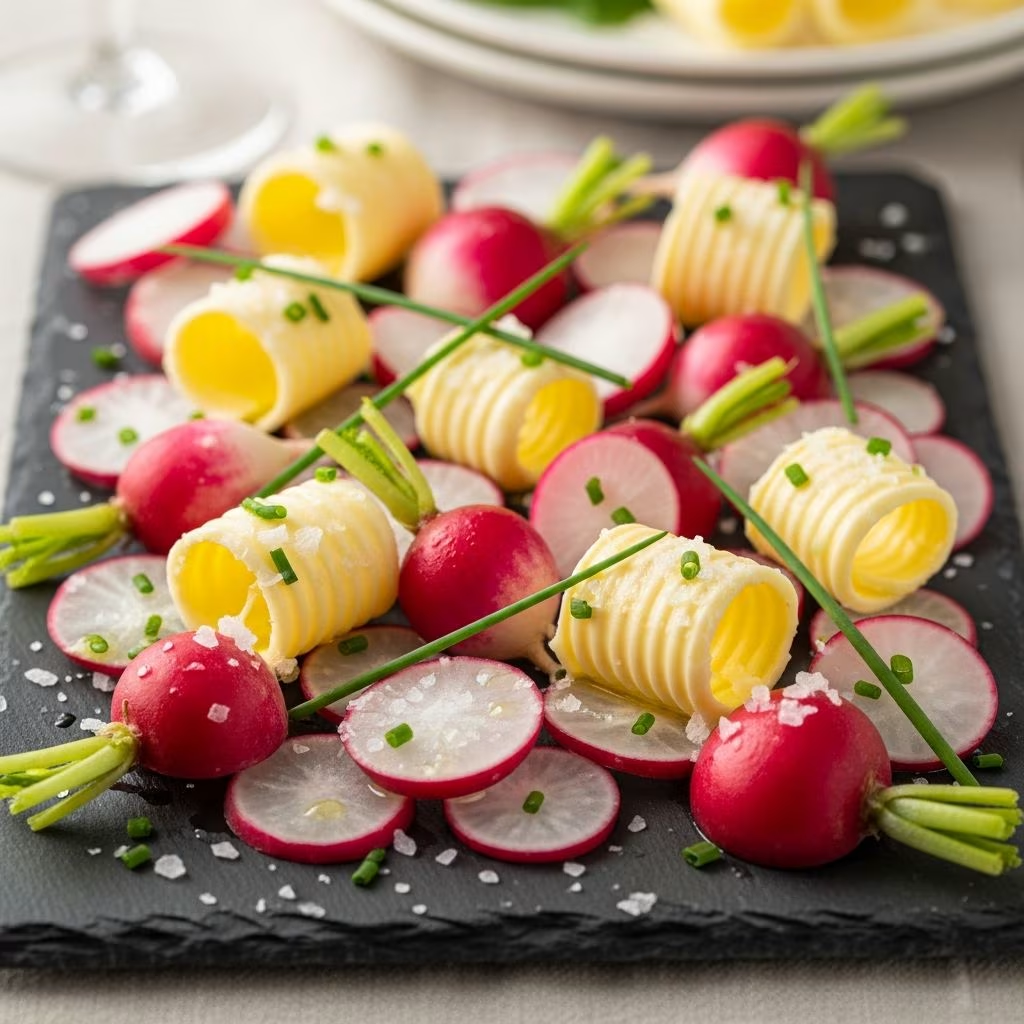
Creating decorative butter curls elevates this dish from simple to stunning. Begin by placing a piping bag fitted with a small star tip. Fill the bag with room-temperature butter—you’ll need approximately two tablespoons for a dozen half-radishes, though you should prepare slightly more to fill the piping bag adequately.
Pipe small rosettes of butter directly onto each radish half using the star tip. This creates an attractive, sculptural presentation that impresses visually while providing optimal butter distribution. The decorative ridges from the piping tip also create textural interest that enhances the eating experience.
Flavor Variations and Creative Adaptations
While the classic version remains unbeatable, several thoughtful variations expand the possibilities of this foundational concept.
Compound Butter Approaches
Softening the basic formula allows for subtle flavor enhancement. Whipping room-temperature butter introduces additional air, creating a lighter, more voluminous consistency that pipes particularly well. This aerated butter also melts differently on the palate, providing an almost mousse-like sensation.
Incorporating minced anchovy paste into whipped butter creates a savory depth that complements the radish’s peppery notes. Those preferring vegetarian approaches might substitute roasted garlic paste, which provides savory complexity without animal products. Fresh herb inclusions—such as finely chopped tarragon, chives, or parsley—add subtle flavor dimensions while introducing flecks of color.
Alternative Serving Formats
For guests preferring a more substantial appetizer, thin radish slices atop freshly baked crostini provide satisfying crunch alongside the butter’s creaminess. The bread acts as an edible base, transforming this finger food into something more substantial without compromising the essential flavor profile.
Thinly shaved radish rounds, standing upright within piped butter rosettes, create architectural presentations suitable for high-end catering situations. This method maximizes visual impact while maintaining the essential simplicity that defines the dish.
Serving Guidelines and Presentation Tips
The manner of presentation significantly influences guest perception and enjoyment of this simple appetizer.
- Temperature Considerations: Serve all components at room temperature. Cold butter becomes too firm to spread and loses its creamy appeal, while warm butter separates and appears unappetizing. Radishes served chilled offer pleasant crispness that contrasts beautifully with room-temperature butter.
- Platter Composition: Arrange trimmed radishes in a visually balanced pattern. If using multiple radish varieties, intersperse colors for maximum visual interest. Create focal points with small bowls or ramekins of butter and salt positioned throughout the platter.
- Timing Considerations: Prepare radish halves and butter hours in advance, storing them separately until final assembly. This advance preparation eliminates last-minute stress while ensuring components reach optimal temperature for serving.
- Garnish Selections: Optional microgreens, fresh herb sprigs, or edible flowers add sophistication without overwhelming the delicate flavor balance. Apply garnishes immediately before serving to maintain visual appeal and prevent wilting.
Why This Appetizer Succeeds
This French classic persists across generations and cultures because it embodies several critical principles of successful entertaining. First, it accommodates various dietary approaches—vegetarian, gluten-free, and low-carbohydrate guests can all enjoy it without modification. Second, it requires minimal preparation time despite delivering refined, impressive results. Third, it costs remarkably little to produce while appearing substantially more expensive and time-intensive than actually required.
Perhaps most importantly, this appetizer demonstrates respect for ingredient quality and flavor integrity. In an era of complicated recipes and elaborate cooking techniques, offering guests something this simple yet this excellent reassures them that culinary excellence doesn’t require pretension or unnecessary complexity.
Frequently Asked Questions
Can I prepare this dish in advance?
Yes. Trim and halve radishes up to one day ahead, storing them in airtight containers in your refrigerator. Remove butter from refrigeration several hours before serving to reach room temperature. Assemble the final dish no more than thirty minutes before service to prevent the butter from softening excessively or the radishes from drying out.
What if I cannot find Maldon sea salt?
Any flaky sea salt of good quality will work adequately. Avoid ultra-fine table salt, which provides neither the satisfying texture nor mineral complexity that this simple dish requires. Kosher salt offers a reasonable alternative, though its larger crystals may make it less refined for formal presentations.
Are there dairy-free alternatives?
Unfortunately, the butter comprises such an essential element of this dish’s identity that suitable substitutes remain limited. Quality plant-based butter alternatives with cultured profiles might work, though results differ from the traditional version. Tahini or other nut butters offer creaminess but significantly alter the flavor profile.
How should leftover butter be stored?
Return unused butter to your refrigerator immediately after the event concludes. Cultured butter typically remains excellent for several weeks when refrigerated. The small amount typically leftover can be used for cooking or baking without any waste.
Mastering This Timeless Recipe
The journey from humble ingredients to elegant appetizer teaches valuable lessons about cooking fundamentals. This dish rewards those who commit to sourcing premium components, who understand the importance of temperature management, and who recognize that simplicity, when executed with care and quality ingredients, constitutes sophistication itself.
Whether you’re hosting an intimate dinner party or seeking an impressive yet effortless appetizer, radish and butter curls deliver reliably. They remind us that the most memorable meals often feature not the most complicated preparations, but rather the highest quality ingredients treated with appropriate respect and presented with thoughtful intention.
References
- The Mediterranean Dish – Radish with Butter and Salt — The Mediterranean Dish. Accessed April 2026. https://www.themediterraneandish.com/radish-and-butter/
- Beautiful Radish and Butter Bites — Home Cooks Guide. Accessed April 2026. https://homecooksguide.com/beautiful-radish-and-butter-bites/
- Radishes with Butter and Sea Salt — Kitchen Konfidence. 2011. https://www.kitchenkonfidence.com/2011/03/radishes-with-butter-and-sea-salt
- Roasted Radishes with Butter & Chives — My Delicious Blog. Accessed April 2026. https://www.mydeliciousblog.com/roasted-radishes-with-butter-chives/