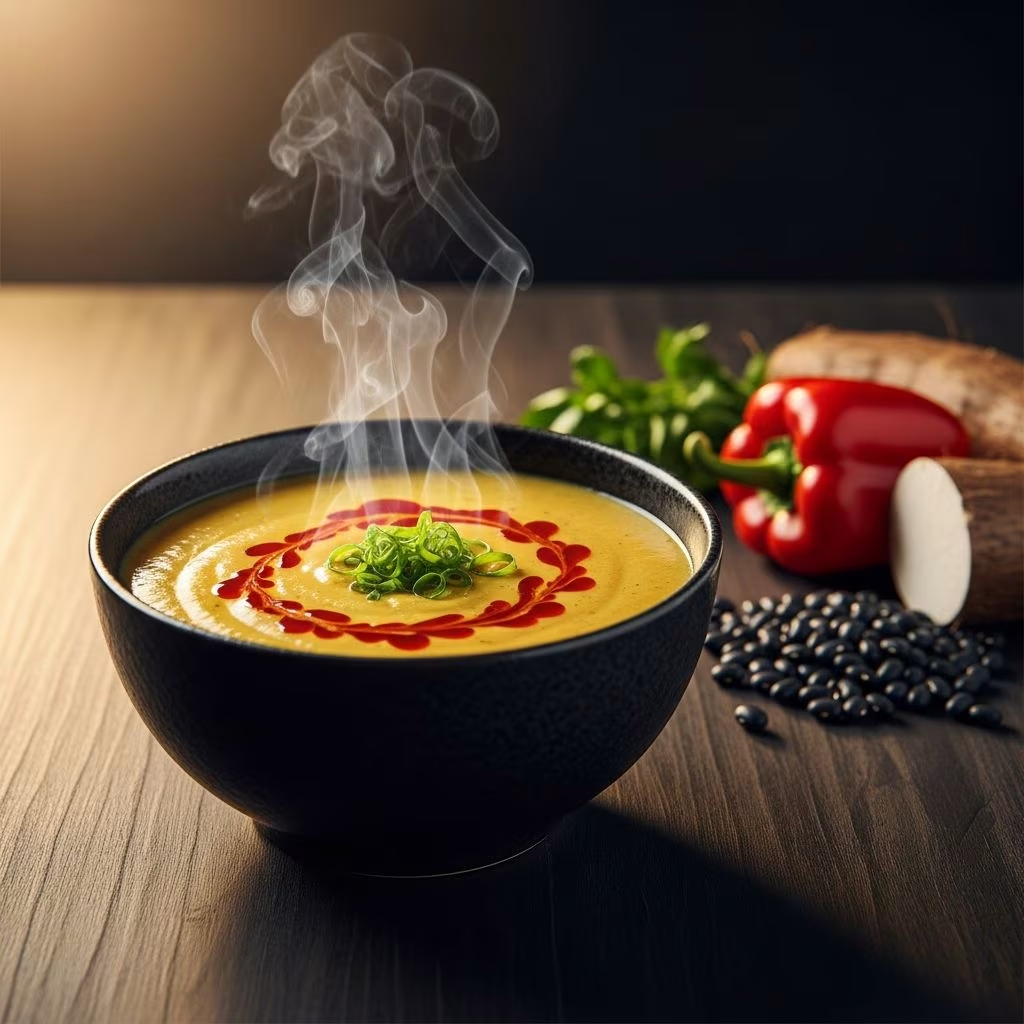
Gbegiri stands as a cornerstone of Yoruba culinary tradition, offering a creamy, comforting soup derived from simple beans transformed into a luxurious puree. This dish captivates with its smooth texture and rich flavors, making it a staple in Nigerian homes and street food scenes alike.
The Roots and Rise of Gbegiri in West African Kitchens
Originating from the Yoruba people of southwestern Nigeria, Gbegiri has deep cultural ties, often featured in communal meals and celebrations. Its name evokes the soup’s characteristic smoothness, achieved through meticulous bean preparation. Historically, it forms part of ‘Abula,’ a trio including ewedu (jute leaf soup) and ata (pepper stew), served alongside swallows like amala from yam flour or tuwo shinkafa from rice.
Beans like ewa oloyin (honey beans) or black-eyed peas provide the base, chosen for their quick cooking time and subtle sweetness. These legumes are soaked, peeled, and boiled to tenderness before blending, ensuring no gritty remnants disrupt the signature silkiness.
Core Ingredients That Define Authentic Gbegiri
Authenticity hinges on a handful of pantry staples, each contributing distinct layers of taste and aroma.
- Honey Beans or Black-Eyed Peas: The heart of the dish, peeled for creaminess. Ewa oloyin offers a natural sweetness.
- Palm Oil: Provides vibrant color and nutty depth; heated but not bleached to preserve nutrients.
- Crayfish and Locust Beans (Iru): Umami boosters; ground crayfish adds seafood notes, while iru ferments for earthy tang.
- Peppers and Onions: Habanero or cayenne for heat, pureed onions for savory base.
- Seasonings: Stock cubes, salt, and optional smoked fish or meats for protein richness.
These elements balance simplicity with bold West African flavors, adaptable yet true to tradition.
Step-by-Step Guide to Crafting Perfect Gbegiri
Preparing Gbegiri rewards patience, yielding a soup that thickens dramatically upon cooling. Here’s a reliable method for 4-6 servings.
- Prepare the Beans: Soak 2 cups of honey beans or black-eyed peas for 1-2 hours. Rub between palms or pulse in a blender with water to remove skins, rinsing thoroughly.
- Boil to Mush: Place peeled beans in a pot with 4-5 cups water. Cook on medium heat 45-60 minutes until disintegrating, adding water as needed. Avoid salt initially to prevent tough skins.
- Blend Smooth: Transfer to a blender or use an immersion blender for a velvety puree. Strain if lumps persist for ultra-smooth results.
- Build the Flavor Base: In a dry pot, heat 3-4 tbsp palm oil 2-3 minutes. Add blended onions (1 large), 1-2 tsp ground pepper, 2 tbsp crayfish, 1 tsp iru, and seasonings. Stir 5 minutes until fragrant.
- Combine and Simmer: Pour bean puree into the pot, stirring vigorously. Simmer 10-15 minutes on low, adjusting thickness with stock. Add pre-cooked meats if desired.
- Rest and Serve: Let thicken off heat; reheat with water if needed. Ladle over swallows.
Pro Tip: Use a pressure cooker to halve bean cooking time, ideal for busy cooks.
Classic Pairings: Elevating Gbegiri to Abula Glory
Gbegiri shines brightest in combination. The traditional Abula platter features:
| Component | Description | Why It Works |
|---|---|---|
| Amala | Dense yam flour swallow | Absorbs soup’s creaminess without overpowering |
| Ewedu | Jute leaf soup with dawadawa | Slippery contrast to Gbegiri’s thickness |
| Obe Ata | Smoky pepper stew with meats | Adds spicy punch and proteins |
| Tuwo Shinkafa | Rice-based swallow | Lighter option for everyday meals |
Layer Gbegiri at the base, ewedu in the middle, and ata on top for the full experience.
Innovative Twists on Traditional Gbegiri
Modern kitchens experiment while honoring roots. Consider these fusions:
- Gbegiri Shakshuka: Simmer pre-made Gbegiri, poach eggs directly in the bubbling soup with black pepper. Garnish with feta and parsley for a North African crossover.
- Protein-Packed Versions: Incorporate turkey, shaki (tripe), or smoked fish during simmering for heartiness.
- Herbal Infusions: Fresh dill or turmeric for aromatic lifts, blending global influences.
- Vegan Adaptations: Skip meats, amp up crayfish and iru for plant-based umami.
These variations maintain the soup’s essence while appealing to diverse palates.
Nutrition Profile: Why Gbegiri Fuels Nigerian Vitality
Beyond taste, Gbegiri packs nutritional punch. A serving (about 1 cup) offers:
- High plant protein (15-20g) from beans, supporting muscle repair.
- Fiber for digestion, aiding gut health.
- Vitamins A, C from peppers; iron from crayfish.
- Healthy fats from palm oil, rich in vitamin E.
Low glycemic index makes it suitable for balanced diets, though moderation on oil and salt is key.
Common Pitfalls and Troubleshooting Tips
Achieving perfection requires avoiding errors:
- Lumpy Texture: Blend thoroughly and strain; undercooked beans cause grit.
- Too Thick/Thin: Gbegiri firms on standing—thin with hot stock when reheating.
- Bitter Oil: Heat palm oil briefly without smoking.
- Flat Flavor: Ferment iru overnight or toast spices first.
Store in fridge up to 3 days; freezes well for 1 month.
Cultural Significance and Regional Variations
In Yoruba culture, Gbegiri symbolizes hospitality, often sold by vendors like grandmothers in bustling markets. Lagos street eats feature it steaming in giant pots, drawing long lines. Variations span Nigeria: some add bone marrow for luxury, others keep it plain.
Globally, diaspora communities adapt with available beans, spreading its fame via chefs like Tunde Wey.
FAQ
What beans are best for Gbegiri?
Honey beans (ewa oloyin) for sweetness, or black-eyed peas as substitute.
Can I make Gbegiri without peeling beans?
Peeling ensures smoothness; skipping yields grainy results.
Is palm oil essential?
Yes for authentic color and taste; substitute neutral oil cautiously.
How long does Gbegiri last?
3 days refrigerated; thicken with water on reheat.
Vegan Gbegiri possible?
Absolutely—omit meats, rely on crayfish and spices.
Embrace Gbegiri’s simplicity and depth; it’s more than soup—it’s heritage in every spoonful.
References
- Mastering Gbegiri The Secret to a Perfectly Smooth & Tasty Soup — Gozy’s Kitchen. 2023. https://www.youtube.com/watch?v=G6-OX2iKC7U
- Gbegiri Shakshuka: A Beany Take on a Classic — Egunsi Foods. 2023. https://egunsifoods.com/blogs/recipes/gbegiri-shakshuka-a-beany-take-on-a-classic
- Gbegiri Soup Recipe — Sisi Jemimah. 2015-09-03. https://sisijemimah.com/2015/09/03/gbegiri-soup-recipe/
- Tunde Wey’s Gbegiri (Nigerian Bean Soup) — Rancho Gordo. 2023. https://www.ranchogordo.com/blogs/recipes/chef-tunde-wey
- Abula (How to make Gbegiri) — My Active Kitchen. 2023. https://www.myactivekitchen.com/gbegiri-abula/