When the workday winds down and hunger strikes, the last thing anyone wants is to spend hours in the kitchen. Stir-fry cooking offers a solution that combines speed, nutrition, and satisfaction into one convenient dinner format. This Asian-inspired cooking method transforms simple ingredients into flavorful meals in approximately 20 minutes, making it an ideal solution for hectic schedules.1
Understanding the Fundamentals of Stir-Fry Cooking
Stir-frying represents a time-honored cooking technique that originated in Asian cuisine and has become increasingly popular in Western kitchens. The method involves cooking ingredients rapidly over high heat while continuously stirring and tossing them in a minimal amount of oil. This approach locks in the natural flavors of vegetables and proteins while maintaining their nutritional integrity.1
The beauty of this cooking style lies in its efficiency. Unlike traditional cooking methods that require extended preparation and cooking times, stir-frying condenses the entire process into a manageable timeframe. Most stir-fry dishes reach completion in under 20 minutes from the moment you begin chopping ingredients to when you plate the final dish.1
Traditional stir-frying utilizes either a wok—a rounded-bottomed pan designed specifically for this technique—or a large skillet as an alternative for Western kitchens. The high, sloped sides of these cooking vessels allow for easy tossing and movement of ingredients throughout the cooking process.
Essential Equipment and Preparation Strategies
Success in stir-fry cooking depends significantly on proper preparation before you begin cooking. Professional chefs emphasize the importance of mise en place, a French culinary term meaning having all ingredients prepared and organized before cooking begins. This approach prevents scrambling for ingredients mid-cook and ensures consistent results.
Key equipment needs include:
- A large skillet or wok with a heavy bottom for even heat distribution
- Sharp knives for efficiently cutting vegetables into uniform pieces
- Measuring spoons and cups for accurate sauce proportions
- A heat-resistant spatula or wooden spoon for stirring
- Small bowls for organizing pre-measured ingredients
- A cutting board with adequate workspace
Preparation involves slicing vegetables into similarly-sized pieces to ensure even cooking. Harder vegetables like carrots and broccoli require smaller cuts than softer items like mushrooms or peppers, allowing everything to reach the desired texture simultaneously.
Building Flavor Through Sauce Development
The sauce forms the foundation of a memorable stir-fry, transforming ordinary vegetables into an extraordinary dish. Creating a balanced sauce involves combining salty, sweet, sour, and umami elements.3 Standard sauce components include soy sauce for saltiness and depth, a sweetener such as honey or sugar for balance, rice vinegar or similar acids for brightness, and sesame oil for aromatic richness.3
Additional flavor enhancers include fresh garlic, ginger, and red pepper flakes, which can be whisked directly into the sauce or toasted separately in oil before adding vegetables. Cornstarch acts as a thickening agent, creating a glossy coating that clings to ingredients rather than pooling at the pan’s bottom.3
Preparing sauce in advance prevents the rush of multitasking while cooking at high temperatures. Combining all liquid components in a small bowl allows flavors to meld while you prepare vegetables and proteins.
Protein Options Beyond Traditional Choices
While chicken remains a popular protein choice for stir-fries, numerous alternatives accommodate different dietary preferences and flavor profiles. Tofu provides an excellent vegetarian option, absorbing surrounding flavors while contributing a satisfying texture to the dish.1 Using firm or extra-firm tofu varieties prevents mushiness and allows better incorporation into the stir-fry.
Salmon offers a nutritious seafood alternative, introducing omega-3 fatty acids and creating sophisticated flavor combinations with ingredients like lime and honey.1 Shrimp cooks quickly, making it ideal for time-constrained weeknights, while maintaining tender texture when not overcooked.
For vegetarian preparations, quinoa provides complete protein containing all essential amino acids. This ancient grain pairs beautifully with Asian-inspired seasonings and creates hearty, satisfying meals without meat or tofu.1
Vegetable Selection and Combination Strategies
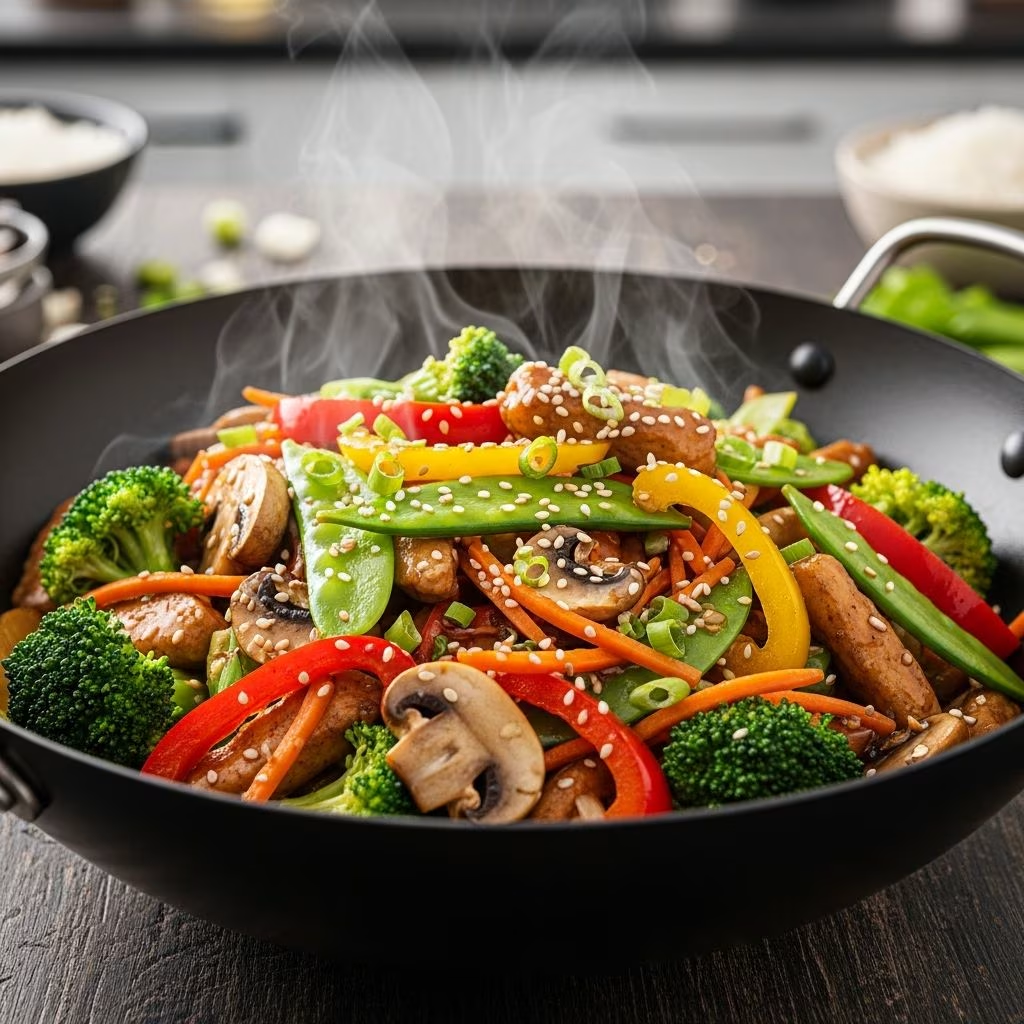
The versatility of stir-fry cooking accommodates virtually any vegetable, though certain combinations create particularly harmonious dishes. Colorful vegetables like red and yellow peppers, broccoli, and carrots provide visual appeal while delivering varied nutritional profiles.3 Mushrooms and asparagus offer unique umami qualities that enhance the overall flavor complexity of the dish.1
Vegetables naturally contain different moisture levels and cooking times. Firmer options like carrots and broccoli require earlier addition to the pan, ensuring they soften adequately before plating. Faster-cooking ingredients like snap peas and mushrooms benefit from later introduction, maintaining their crisp-tender bite and preventing mushiness.3
Leftover vegetables from previous meals transition beautifully into stir-fry preparations, making this cooking method an excellent resource recovery strategy. Pre-cut vegetables can be combined with aromatics and sauce to create complete meals from kitchen remnants.
Noodle and Grain Foundations
Stir-fry dishes traditionally serve over steamed rice, but modern variations accommodate diverse dietary preferences and tastes. Whole grain options provide increased nutritional density compared to white rice varieties.2 Rice vermicelli noodles offer quick-cooking convenience, requiring merely hot water soaking before incorporation into the finished dish.2
Soba noodles made from buckwheat provide a gluten-free alternative suitable for individuals with celiac disease or gluten sensitivity.1 This traditional Japanese noodle variety introduces nutty flavors that complement Asian-inspired ingredients beautifully.
For lower-carbohydrate preparations, spiralized zucchini or other vegetable noodles substitute effectively for traditional starches while maintaining satisfying portion sizes. These alternatives reduce overall caloric density while increasing vegetable consumption.
Cooking Technique and Timing Mastery
Successful stir-fry execution depends on understanding proper technique and heat management. Initial oil heating at high temperatures creates the necessary environment for rapid cooking and flavor development. Aromatics like garlic and ginger require careful attention, as their delicate nature causes rapid burning when exposed to extreme heat for extended periods.2
Adding vegetables after aromatics prevent charring while allowing their flavors to infuse the cooking oil. Constant stirring and tossing ensure even exposure to heat and prevent sticking. Vegetables should reach a crisp-tender texture—fully cooked but still maintaining slight resistance when bitten—within three to four minutes of cooking.3
Final sauce addition occurs near the cooking’s conclusion. Reducing heat to medium allows the sauce to thicken properly without causing ingredients to overcook. This final minute or two of cooking binds all components together into a cohesive dish ready for serving.
Adaptable Recipes for Dietary Variations
Vegetarian and vegan preparations embrace the stir-fry format enthusiastically, replacing animal proteins with plant-based alternatives. Traditional Asian flavors like soy sauce and ginger complement vegetable-forward dishes while maintaining authentic taste profiles.1
Celiac-friendly versions utilize gluten-free soy sauce and certified gluten-free noodle varieties, allowing individuals with gluten sensitivity to enjoy this quick cooking method without concern.1 Budget-conscious preparations emphasize affordable ingredients and straightforward techniques that don’t compromise flavor or nutritional value.4
Flavor Profiles Worth Exploring
Asian cuisine encompasses numerous distinct flavor traditions, each offering unique possibilities for stir-fry preparations. Traditional Chinese stir-fries emphasize soy sauce, ginger, and garlic, creating savory, umami-rich dishes. Indian-inspired variations incorporate turmeric, red chili flakes, ground ginger, and coconut sugar, introducing warm spice and complexity.1
Thai-influenced preparations embrace bold flavors through the combination of lime, sriracha, and peanut components, creating dishes that balance heat, acidity, and richness. Mediterranean adaptations introduce olive oil and fresh herbs, demonstrating the technique’s flexibility beyond traditional Asian applications.
Frequently Asked Questions
How can I ensure my vegetables maintain a crisp texture?
Cut vegetables into uniformly-sized pieces and avoid overcooking by cooking for only three to four minutes. Firmer vegetables should be added first, with softer varieties introduced later in the cooking process. Removing the pan from heat while vegetables retain slight firmness allows residual heat to finish cooking without turning them soft and mushy.
What makes a successful stir-fry sauce?
Balance represents the key principle. A proper sauce combines salty, sweet, sour, and umami elements in proportions that complement rather than overpower. Soy sauce provides saltiness and depth, honey or sugar adds sweetness, vinegar contributes brightness, and sesame oil provides aromatic richness. Cornstarch acts as a thickening agent, creating a glossy coating.
Can I prepare stir-fry ingredients in advance?
Yes. Chopping vegetables and storing them in the refrigerator several hours before cooking streamlines the process. Preparing sauce completely in advance allows even more time savings. However, delicate ingredients like tofu and fresh herbs should be prepared closer to cooking time to maintain optimal texture and appearance.
What equipment alternatives work if I lack a wok?
A large skillet produces excellent stir-fry results, though the cooking technique may differ slightly due to the pan’s shape. The flat bottom and straighter sides require more careful stirring but achieve comparable results when proper heat and technique are applied.
Making Stir-Fry a Regular Weeknight Staple
Incorporating stir-fries into regular meal rotation provides numerous advantages beyond mere convenience. The technique accommodates leftover ingredients creatively, reducing food waste while providing economical meal preparation.4 Customization possibilities mean individual family members can enjoy personalized variations suited to their preferences and dietary requirements.
Building a personal stir-fry repertoire through experimenting with different protein and vegetable combinations prevents meal monotony while maintaining the cooking method’s fundamental efficiency. Mastering basic technique and sauce development creates a foundation for endless variation and creativity in the kitchen.
References
- 8 Quick Stir-Fry Recipes for Healthy Weeknight Dinners — Daily Burn. https://dailyburn.com/life/recipes/stir-fry-recipes-weeknight-dinners/
- 3 Irresistible Stir-Fry Recipes for Busy Weeknights — YouTube. https://www.youtube.com/watch?v=SYDhkrVafCg
- Easy Veggie Stir Fry Recipe — Love and Lemons. https://www.loveandlemons.com/stir-fry-recipe/
- 17 Stir-Fry Recipes — Budget Bytes. https://www.budgetbytes.com/stir-fry-recipes/