Nothing captures the spirit of celebration quite like a steaming pot of corned beef and cabbage. This beloved dish, synonymous with St. Patrick’s Day, brings families together around tables laden with tender meat, vibrant vegetables, and aromatic spices. While its roots trace back to Irish immigrants in America, it has evolved into a comfort food staple worldwide. In this guide, we’ll explore everything from its fascinating history to foolproof cooking methods, ensuring your version rivals any restaurant’s.
The Origins and Cultural Significance
Corned beef and cabbage emerged as a culinary fusion in the 19th century among Irish Americans. Traditional Irish diets favored fresh beef or pork, but in the U.S., corned beef—beef brisket preserved with saltpeter (giving it a pink hue)—became affordable and accessible via delis in cities like New York. Paired with cabbage, a cheap staple vegetable, it symbolized resourcefulness and festivity during March 17th parades and gatherings.
Today, it’s more than a holiday dish; it’s a symbol of heritage. According to the U.S. Census Bureau’s historical data on immigration patterns, Irish arrivals peaked between 1840-1860, coinciding with the dish’s rise. The Library of Congress notes its prominence in American cookbooks by the early 1900s, cementing its place in cultural lore.
Key Ingredients Breakdown
Selecting quality components is crucial for success. Here’s what you’ll need for a crowd-pleasing batch serving 6-8:
- Corned Beef Brisket: 4-5 lbs, point-cut for more fat and flavor (flat-cut is leaner). Look for packages with spice packets.
- Cabbage: 1 large green head, firm and heavy for its size.
- Potatoes: 2 lbs Yukon Gold or red, for creaminess.
- Carrots: 6 large, peeled and chunked.
- Onions: 2 large, quartered.
- Spices: Mustard seeds, coriander, bay leaves, peppercorns (or use packet).
- Extras: Guinness or beef broth, horseradish, mustard for serving.
Pro tip: Rinse the brisket under cold water to remove excess salt before cooking.
Step-by-Step Cooking Mastery
Achieving melt-in-your-mouth tenderness requires patience. Follow this stovetop method for authentic results, or adapt for oven/slow cooker.
- Prep the Brisket: Place in a large pot, cover with water or beer/broth by 2 inches. Add spices, onions, and garlic. Bring to boil, skim foam, then simmer covered for 3-4 hours until fork-tender (internal temp 195°F).
- Add Vegetables: In the last 45 minutes, add carrots and potatoes. 20 minutes later, add cabbage wedges. Avoid overcooking to prevent mushiness.
- Rest and Slice: Remove meat, tent with foil for 15 minutes. Slice against the grain for juiciness.
For oven: Braise at 325°F covered. Slow cooker: Low for 8-10 hours. Per USDA guidelines, ensure brisket reaches 145°F for safety, though 195°F yields optimal texture.
Flavor Enhancements and Variations
Elevate the basics with these twists:
| Variation | Key Additions | Cook Time Adjustment |
|---|---|---|
| Guinness-Glazed | Reduce stout with brown sugar, glaze last 30 min | +20 min |
| Spicy Southwest | Chili powder, cumin, jalapeños | Same |
| Asian Fusion | Ginger, soy, star anise | +15 min simmer |
| Vegetarian | Tempeh or mushrooms instead of beef | Halve time |
Glazing with a mustard-honey mix adds caramelized crust. For gluten-free, skip beer or use GF alternatives.
Perfect Pairings and Serving Ideas
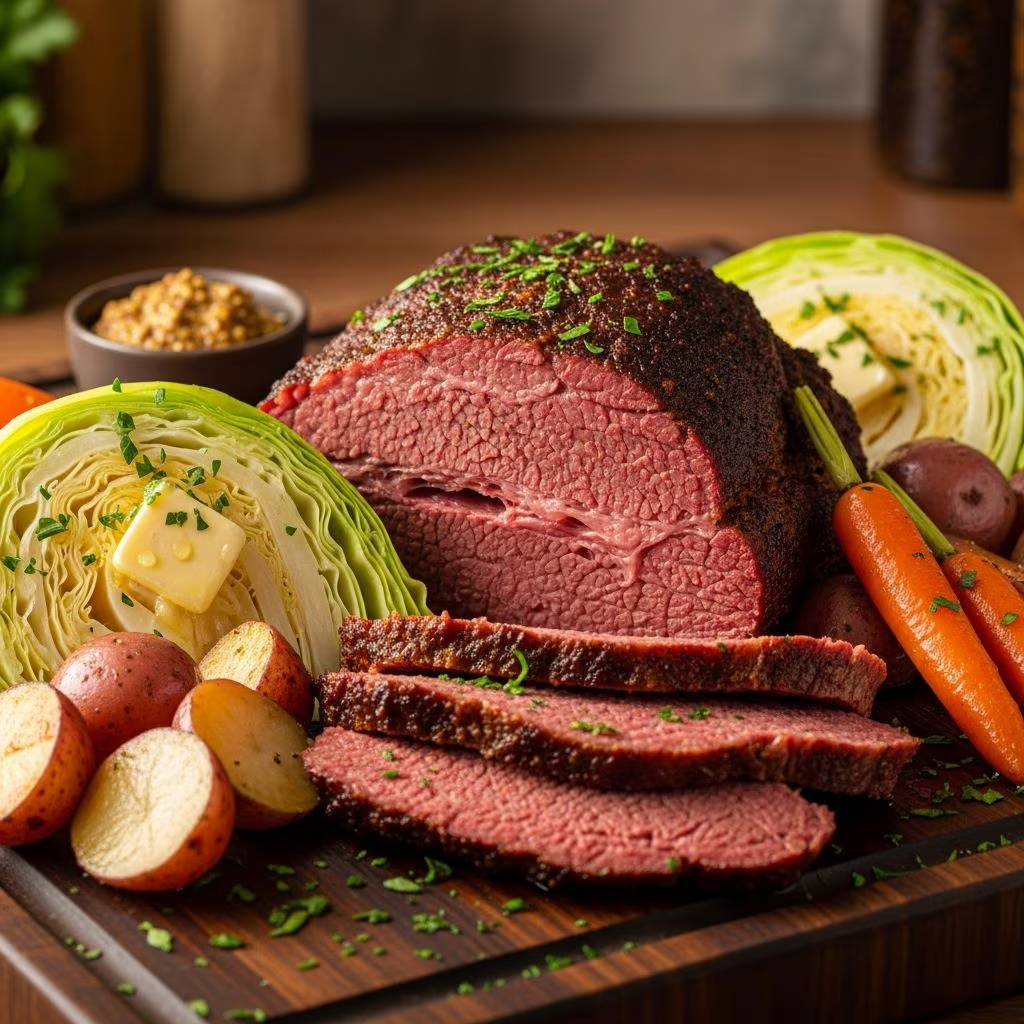
Serve sliced beef atop cabbage beds, with potatoes and carrots fanned out. Accompany with:
- Irish soda bread or rye for sopping juices.
- Horseradish cream sauce: Mix sour cream, prepared horseradish, chives.
- Grainy mustard or whole-grain Dijon.
- Pickled red onions for tang.
Drinks? A crisp Guinness, green-tinted ale, or whiskey sour. For sides, roasted parsnips or colcannon (mashed potatoes with kale) complement beautifully.
Common Mistakes and Troubleshooting
Avoid these pitfalls:
- Tough Meat: Caused by high heat or slicing with grain. Solution: Low-slow cook, rest properly.
- Soggy Veggies: Time additions precisely; cabbage last.
- Too Salty: Soak brisket 1-2 hours pre-cook, change water twice.
- Watery Broth: Strain and reduce for gravy base with cornstarch slurry.
If reheating, slice first and steam gently to retain moisture.
Nutritional Profile and Health Tips
A 4oz serving offers ~250 calories, 20g protein, but watch sodium (1200mg). Lean cuts and vegetable focus balance it. Per USDA FoodData Central, brisket provides iron and B12. Modify with low-sodium spice packets or extra veggies for lighter versions.
Make-Ahead and Storage Strategies
Prep spices day before. Cook fully up to 2 days ahead; store submerged in broth. Freezes well up to 3 months. Reheat in simmering liquid.
St. Patrick’s Day Feast Planning
Scale for crowds: ½ lb per person. Timeline: Start at 10 AM for 6 PM dinner. Add shepherd’s pie or soda bread for full menu.
Frequently Asked Questions (FAQs)
What cut of corned beef is best?
Point-cut for flavor, flat-cut for even slices. Both work great.
Can I use a slow cooker?
Yes! Low 8-10 hours, add veggies last 2 hours.
Is corned beef Irish?
Irish-American adaptation; traditional Ireland used bacon.
How do I fix overcooked cabbage?
Next time, add late. Overcooked? Chop for slaw.
Gluten-free options?
Use GF beer/broth; check spice packet.
With these insights, your corned beef and cabbage will be legendary. Experiment confidently—happy cooking!
References
- Historical Background on Irish Immigration — U.S. Census Bureau. 2024. https://www.census.gov/library/stories/2020/03/irish-immigration-to-america.html
- Beef Brisket Cooking Guidelines — USDA Food Safety and Inspection Service. 2023-05-15. https://www.fsis.usda.gov/food-safety/safe-food-handling-and-preparation/meat-fish/beef-brisket
- Nutrient Database for Corned Beef — USDA FoodData Central. 2025-01-10. https://fdc.nal.usda.gov/fdc-app.html#/food-details/168879/nutrients
- Irish-American Culinary Traditions — Library of Congress. 2022. https://www.loc.gov/collections/recipes-from-our-american-village/articles-and-essays/irish-american-food/
- Slow Cooking Safety Tips — FDA. 2024-08-20. https://www.fda.gov/food/buy-store-serve-safe-food/slow-cookers-and-food-safety