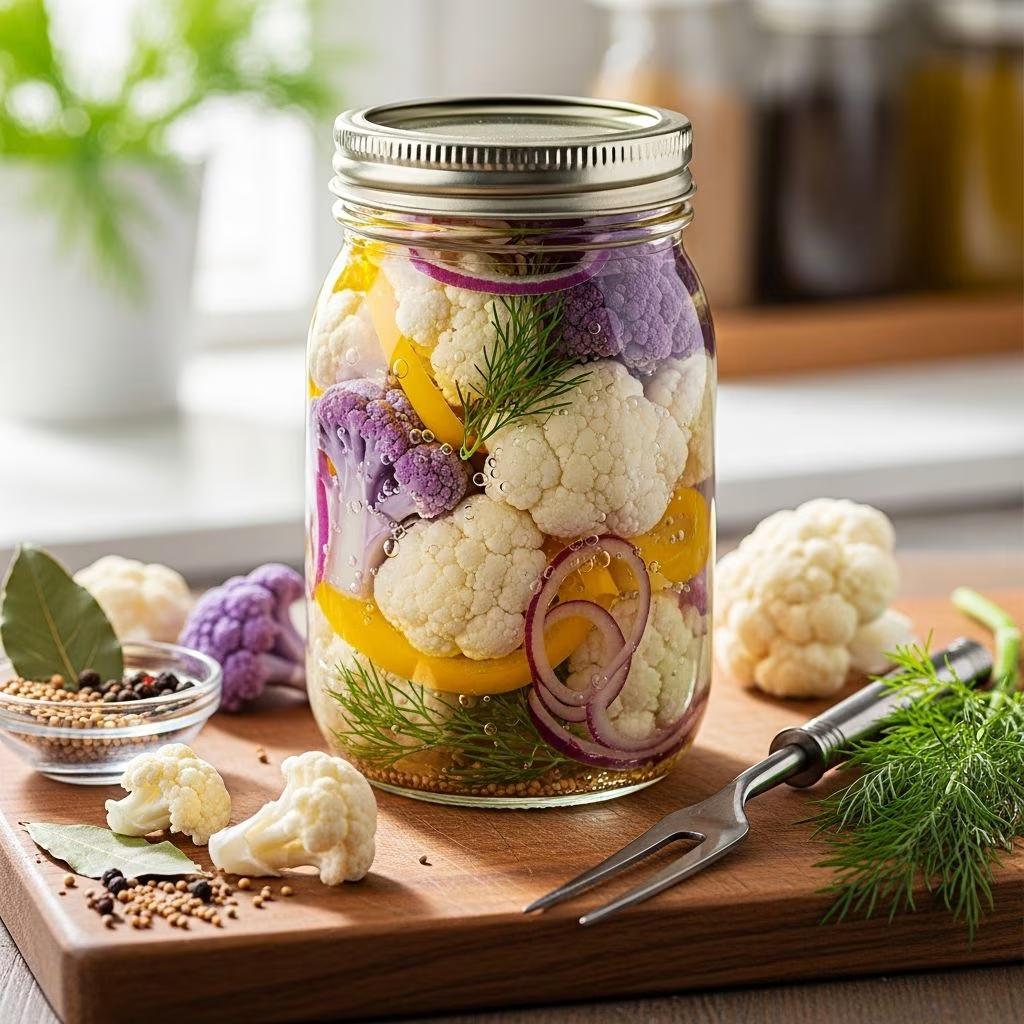
Transform ordinary cauliflower into a zesty, crunchy delight with quick pickling techniques that require no special equipment or canning process. This method delivers bold flavors in hours, making it ideal for home cooks seeking fresh, tangy additions to meals.
Why Quick Pickled Cauliflower Deserves a Spot in Your Kitchen
Cauliflower’s mild, versatile nature makes it an excellent candidate for pickling. When steeped in a vinegar brine infused with spices, it develops a satisfying crunch and tangy profile that complements a wide array of dishes. Unlike traditional canning, quick pickling uses refrigeration for preservation, yielding results ready to enjoy within a day.
Health enthusiasts appreciate its low-calorie appeal, packed with vitamins C and K, fiber, and antioxidants. The fermentation-like process enhances digestibility while adding probiotics from the natural lactobacillus in vegetables. Cooks value its speed—prep in 15 minutes, pickle overnight.
Essential Ingredients for Perfect Pickled Cauliflower
Gather fresh, high-quality components for optimal texture and taste. Core items include:
- Cauliflower: 1 medium head (about 1-1.5 lbs), cut into small, uniform florets for even pickling.
- Vinegar: 1-2 cups white, apple cider, or rice vinegar for acidity (5% strength ideal).
- Water: Equal parts to vinegar for balanced brine.
- Salt: 1-2 tbsp kosher or pickling salt, non-iodized to avoid cloudiness.
- Sweetener: 1-2 tbsp sugar, honey, or maple syrup to mellow tartness.
Spice up with aromatics: garlic cloves (crushed), peppercorns (black or mixed), mustard seeds, dill sprigs, red pepper flakes, bay leaves, or sliced onions and peppers for color and heat.
| Ingredient | Quantity (1 Quart Jar) | Role |
|---|---|---|
| Cauliflower Florets | 3-4 cups | Main vegetable base |
| White Vinegar | 1 cup | Preserves and adds tang |
| Water | 1 cup | Dilutes acidity |
| Kosher Salt | 1 tbsp | Enhances flavor, crisps |
| Sugar | 1-2 tbsp | Balances sharpness |
| Garlic & Spices | 2-4 cloves + 1 tsp each | Aroma and depth |
Step-by-Step Guide to Making Quick Pickled Cauliflower
Follow these precise steps for foolproof results. Total time: 20 minutes active, plus chilling.
Prepare the Cauliflower: Rinse a fresh head under cool water. Remove leaves and core. Break into 1-2 inch florets—smaller pieces pickle faster and evenly. Pat dry to prevent dilution.
Pack the Jar: Use clean pint or quart mason jars (sterilize by boiling if desired). Layer florets with spices: start with garlic, peppercorns, mustard seeds at bottom, add sliced onions or jalapeños midway, top with florets. Leave ½-inch headspace.
Make the Brine: In a saucepan, combine vinegar, water, salt, and sugar. Heat over medium until simmering (do not boil vigorously). Stir until dissolved, 2-3 minutes. Add fresh herbs like dill last to preserve flavor.
Pour and Seal: Carefully pour hot brine over vegetables, ensuring full submersion—use a spoon to press down. Tap jar to release air bubbles. Seal loosely at first to cool, then tighten.
Chill and Wait: Cool to room temperature (30 minutes), then refrigerate. Best after 24 hours; peaks at 3-5 days. Shake daily for even flavor distribution.
Flavor Variations to Suit Every Palate
Customize your batch for unique twists:
- Spicy Kick: Add sliced jalapeños, red pepper flakes, or habaneros. Include cumin seeds for smoky heat.
- Herbaceous: Fresh dill, thyme, or oregano sprigs. Bay leaves add subtle earthiness.
- Sweet & Tangy: Apple cider vinegar with honey; mix in grated ginger or turmeric for golden hue.
- Curried Delight: Coriander, fennel, and curry powder for Indian-inspired warmth.
- Mixed Veggies: Combine with carrots, bell peppers, celery, or green beans for a pickle medley.
Experiment with vinegars—rice for mildness, malt for robustness—but maintain 5% acidity for safety.
Storage, Shelf Life, and Safety Essentials
Store in the fridge door for easy access. Pickles last 2-4 weeks, though flavor intensifies over time. Signs of spoilage: off odors, mold, or mushiness—discard immediately.
For food safety, use precise ratios: at least 50% vinegar by volume. Acid prevents bacterial growth like botulism. Always use clean utensils; avoid double-dipping.
Creative Ways to Serve and Enjoy
Quick pickled cauliflower shines in diverse applications:
- Snacking: Straight from the jar as a low-carb crunch.
- Salads: Chopped into grain bowls, potato salad, or coleslaw for brightness.
- Sandwiches & Tacos: Tops burgers, falafel, or fish tacos with pickle punch.
- Charcuterie: Pairs with cheeses, cured meats, and olives.
- Stir-Ins: Elevates tuna salad, deviled eggs, or hummus.
Pro tip: Drain and toss with olive oil for a quick side dish; roast briefly for caramelized edges.
Beginner Troubleshooting and Pro Tips
Avoid common pitfalls:
- Soggy Texture?: Blanch florets 30 seconds in boiling water, then ice bath. Or use fresher, firmer cauliflower.
- Not Crunchy Enough?: Add 1 tsp calcium chloride (pickle crisp) per quart, available online.
- Too Salty?: Dilute brine next time; taste before pouring.
- Cloudy Brine?: Use filtered water, non-iodized salt.
Scale up for gifts: Pretty jars with ribbon make thoughtful hostess presents. Track batches in a notebook for favorite combos.
Nutrition at a Glance
Per ½ cup serving (approximate):
| Nutrient | Amount | % Daily Value |
|---|---|---|
| Calories | 25 | 1% |
| Fiber | 2g | 7% |
| Vitamin C | 50mg | 56% |
| Sodium | 400mg | 17% |
Values vary by recipe; low-carb, keto-friendly, vegan.
Frequently Asked Questions
Can I reuse the brine?
Yes, for same-day batches if fully submerged and spices remain potent. Strain, boil, cool before next use. Limit to 1-2 reuses.
Is canning possible?
For shelf-stable, process in water bath per USDA guidelines. Quick method is fridge-only.
How long until ready to eat?
Technically 1 hour, but 24-48 optimal for flavor penetration.
Can I use frozen cauliflower?
No—thawing causes mushiness. Fresh only for best crunch.
What if I don’t have mason jars?
Any airtight glass container works; avoid metal or plastic reacting with acid.
Scaling Recipes for Crowds or Small Batches
Double brine ingredients for two quarts; maintain ratios strictly. For single servings, halve everything into a 12-oz jar. Bulk prep: Use a large bowl for mixing, then divide into jars.
Meal prep hack: Pickle weekly, portion into small jars for grab-and-go lunches.
Seasonal Twists and Sourcing Tips
Spring: Purple cauliflower for antioxidants. Summer: Pair with farmers’ market peppers. Fall: Add apples for sweetness. Source organic to minimize pesticides.
Grow your own: Cauliflower thrives in cool weather; harvest young heads for tenderness.
References
- USDA Complete Guide to Home Canning — United States Department of Agriculture. 2023-01-15. https://nchfp.uga.edu/publications/publications_usda.html
- Pickling Vegetables: Science and Safety — National Center for Home Food Preservation. 2024-05-20. https://nchfp.uga.edu/how/pickle.html
- Cauliflower Nutrition Data — USDA FoodData Central. 2025-02-10. https://fdc.nal.usda.gov/fdc-app.html#/food-details/169986/nutrients