When time is scarce and hunger calls, pasta emerges as the ultimate solution for busy cooks seeking both satisfaction and speed. A well-executed pasta dish can transform an ordinary weeknight into a culinary experience without demanding hours in the kitchen. The beauty of pasta-based meals lies in their flexibility—they accommodate dietary preferences, leftover ingredients, and varying skill levels while maintaining exceptional taste. This comprehensive guide explores a variety of approaches to crafting delicious pasta dinners that come together in approximately 20 minutes or less.
The Foundation of Fast Pasta Cooking
Success with quick pasta meals begins with understanding the mechanics of efficient cooking. The key lies in maximizing parallel preparation—starting water for pasta while simultaneously preparing other components. One-pot cooking methods dramatically reduce both cooking time and cleanup, making them ideal for hectic schedules. Rather than juggling multiple pans and pots, consolidated cooking spaces allow flavors to meld while ingredients soften together. This approach eliminates the traditional step of draining cooked pasta separately, instead letting the starch from the pasta naturally thicken the sauce.
When using one-pot techniques, uncooked pasta combines directly with vegetables, sauce, and liquid, then simmers until everything reaches perfect doneness. The pasta absorbs flavors throughout cooking rather than after assembly, creating more cohesive and satisfying results. Stirring every couple of minutes prevents sticking and ensures even cooking across all ingredients.
Building Flavor with Minimal Ingredients
Quality pasta dishes don’t require extensive ingredient lists or complicated techniques. Five-ingredient recipes prove that simplicity and deliciousness coexist beautifully. These streamlined combinations focus on complementary flavors that enhance rather than compete with one another.
Consider how garlic serves as a flavor foundation in many quick preparations. Minced fresh garlic releases its aromatic compounds rapidly when heated, creating depth without lengthy cooking. Combining garlic with quality olive oil creates an immediate flavor base that elevates even the most basic pasta. Adding protein elements like chorizo, prosciutto, or shrimp introduces savory complexity that transforms simple pasta into restaurant-quality fare within minutes.
Vegetable-Forward Approaches
Fresh vegetables offer nutritional balance while contributing essential flavors and textures to rapid pasta preparations. Seasonal produce delivers peak flavor and affordability, making vegetable-based dishes both practical and delicious.
- Zucchini: Quick-cooking and mild, this vegetable works both as traditional pasta accompaniment or spiralized alternative for lower-carbohydrate versions
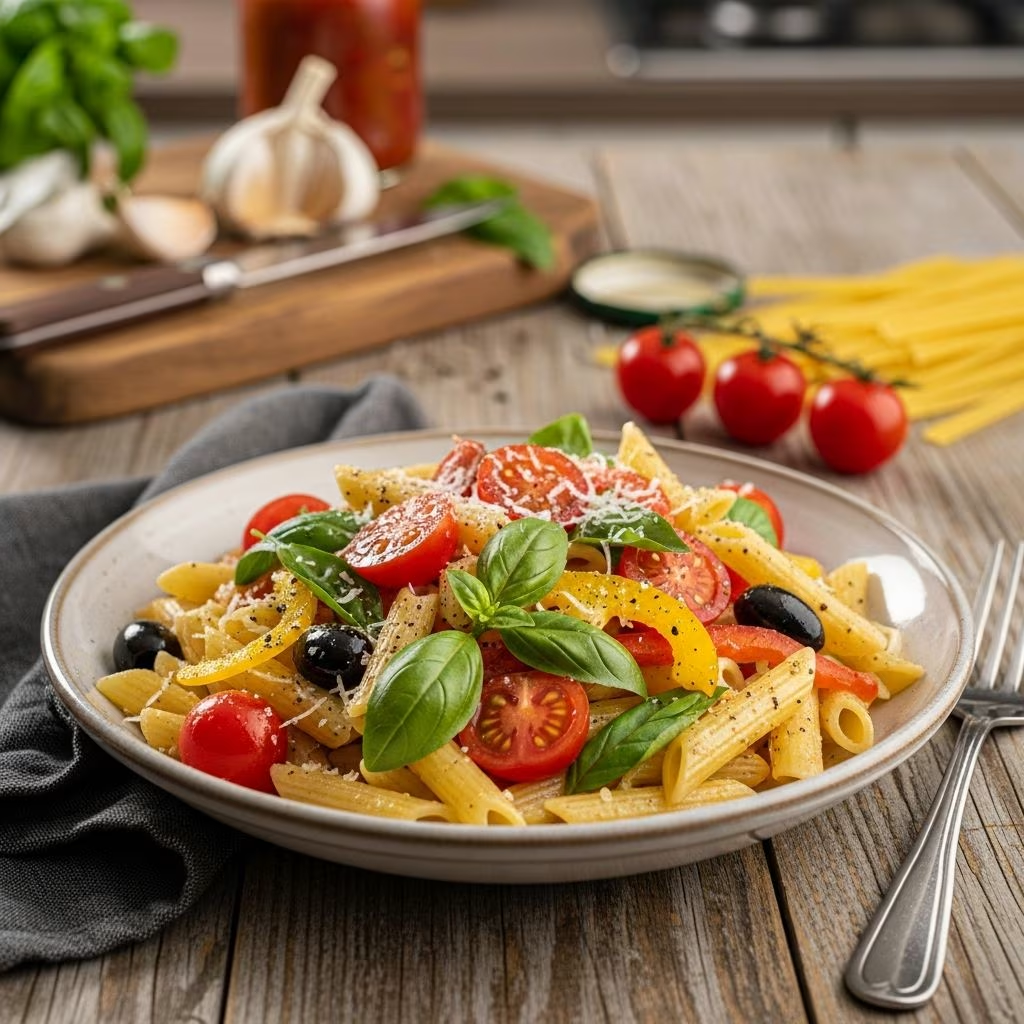
- Cherry tomatoes: These burst when heated, releasing their juice into natural sauce without requiring additional liquid
- Mushrooms: Various varieties add umami depth and meaty texture, particularly when sliced and quickly sautéed
- Spinach: Leafy greens wilt almost instantly, adding nutrition and visual appeal without extending cooking time
- Broccoli: Florets soften sufficiently in 15-20 minutes while maintaining slight firmness and nutritional integrity
These vegetables excel in one-pot preparations where they soften gradually in the cooking liquid, infusing everything with vegetable essence. Fresh herbs like basil, thyme, or oregano amplify vegetable flavors and require no cooking—simply stirring them in at the end preserves their aromatic properties.
Protein Options for Satisfying Meals
While vegetable-based pasta dishes deliver complete nutrition, adding protein creates more substantial meals that satisfy hearty appetites. Different proteins offer distinct advantages depending on cooking time and flavor profile goals.
| Protein Type | Cooking Method | Time Required | Flavor Profile |
|---|---|---|---|
| Shrimp | Direct addition to simmering pasta | 3-5 minutes | Delicate, slightly sweet |
| Chorizo | Browned separately, then combined | 8-10 minutes | Spicy, smoky, rich |
| Prosciutto | Added at end or crisped first | 2-3 minutes | Salty, savory, delicate |
| Italian Sausage | Browned with vegetables | 10-12 minutes | Herbaceous, bold, hearty |
Quick-cooking proteins like shrimp integrate seamlessly into one-pot pasta recipes, reaching perfect doneness as the pasta finishes cooking. Precooked proteins such as ham or bacon offer even faster assembly since they simply need warming through. For cold pasta salads, any protein works beautifully after cooling—these variations become perfect for lunch containers and picnic spreads.
Sauce Strategies for Rapid Preparation
Traditional pasta sauces often require extended simmering, but quick sauce methods deliver concentrated flavor through smart technique choices. Oil-based sauces require virtually no cooking—simply combining quality olive oil with garlic, herbs, and optional protein creates instant complexity. Cream-based sauces develop richness almost immediately when dairy combines with pasta starch and seasoning.
Tomato-based sauces accelerate significantly when using canned tomatoes rather than fresh, since they’ve already undergone heat processing. Cherry tomatoes burst quickly into sauce form when heated directly, creating chunky, fresh-tasting results. Vegetable-forward sauces develop flavor through the moisture released by zucchini, mushrooms, or other produce rather than requiring separate sauce components.
Creating creamy textures without heavy cream is entirely possible through pasta water incorporation. The starch in pasta-cooking liquid naturally emulsifies with oil and cheese, creating silky sauces reminiscent of traditional cream-based preparations. This technique reduces fat content while maintaining luxurious mouthfeel.
Textural Variety and Satisfaction
Successful quick pasta dishes balance soft and firm elements, creating interest and satisfaction with each bite. Tender pasta contrasts beautifully with crispy components like toasted breadcrumbs, crispy prosciutto, or pan-seared vegetables. Fresh herbs sprinkled over finished dishes provide brightness that cuts richness and adds complexity.
Nuts add both crunch and nutritional benefits—pine nuts, walnuts, or almonds contribute healthy fats and texture. Cheese selections ranging from sharp Parmesan to creamy mascarpone introduce umami depth. When added at the end rather than cooked into dishes, cheese maintains distinctive character rather than melting uniformly throughout.
Seasonal Inspiration and Ingredient Flexibility
The fundamental advantage of quick pasta recipes lies in their adaptability to available ingredients. Rather than requiring exact substitutions, these flexible formulas accommodate whatever vegetables appear in markets or refrigerators.
- Spring: Asparagus, fresh peas, and lemon create light, bright preparations
- Summer: Abundant tomatoes, zucchini, and fresh basil inspire vegetable-forward dishes
- Autumn: Roasted mushrooms and root vegetables add earthiness and comfort
- Winter: Preserved tomatoes, dried herbs, and hearty greens maintain flavor and satisfaction
This seasonal approach naturally aligns with affordability—when ingredients cost less, dishes become more economical. Cooking with seasonal produce also supports local agriculture and reduces environmental impact from extensive transportation.
Specialized Dietary Approaches
Modern pasta recipes accommodate diverse dietary preferences without sacrificing taste or speed. Vegetarian preparations thrive when built on flavorful foundations like garlic, herbs, and quality olive oil. Legume-based or vegetable proteins replace animal products while maintaining satisfying heartiness.
Vegan pasta dishes eliminate dairy entirely while creating creamy textures through plant-based ingredients. Cashew-based sauces, nutritional yeast, and coconut milk offer richness without animal products. These preparations often cook faster than traditional versions since fewer separate steps apply.
For those avoiding gluten, numerous pasta alternatives cook within similar timeframes to traditional wheat varieties. Bean-based and lentil pastas offer higher protein content, though they require careful attention to prevent overcooking and texture degradation. Short-cut pasta shapes work particularly well in quick preparations since smaller pieces reach doneness faster.
Equipment Considerations for Efficiency
The right tools accelerate pasta preparation significantly. Large pots with deep sides accommodate one-pot pasta recipes while preventing boiling overflow. Heavy-bottomed cookware distributes heat evenly, reducing burning and sticking concerns during the stirring process. Quality knives and cutting boards streamline vegetable preparation, reducing prep time substantially.
Colanders aren’t required for one-pot methods, but they remain useful when using traditional cooking techniques. Microplane graters make quick work of cheese additions and lemon zest contributions. Wooden spoons prevent damage to pot surfaces while stirring vigorously.
Common Questions About Quick Pasta Cooking
Can I use fresh pasta for 20-minute recipes?
Fresh pasta cooks significantly faster than dried varieties—typically reaching doneness in 3-5 minutes. While this accelerates overall meal preparation, dried pasta actually works better for one-pot methods since it requires longer cooking time that allows sauce flavors to develop. Fresh pasta is ideal for more traditional cooking approaches where sauce and pasta combine after separate preparation.
Should I salt my pasta water?
For traditional cooking, salting water seasoned the pasta directly. In one-pot preparations, adding salt directly to the cooking liquid seasons everything uniformly. Starting with approximately one teaspoon per quart of liquid provides adequate seasoning without oversalting—you can adjust as needed based on other components’ saltiness.
What’s the best way to prevent sticking?
Frequent stirring—approximately every two minutes—prevents pasta from adhering to pot bottoms. In one-pot recipes, this stirring also helps distribute heat evenly. Using adequate liquid (usually around 2 cups per 8 ounces pasta) ensures sufficient moisture for proper cooking.
Can I prepare these dishes ahead?
Most pasta dishes taste best served immediately, but cold pasta salads improve when flavors meld overnight in refrigeration. Warm pasta dishes can be partially prepared in advance—vegetables can be chopped and proteins browned hours earlier, with final assembly taking just 20 minutes at mealtime.
How do I store leftovers?
Cooked pasta dishes store in airtight containers for three to four days. Reheat gently with a splash of water or additional sauce to restore moisture lost during storage. Freezing works for most pasta preparations, though cream-based sauces sometimes separate upon thawing—oil-based and tomato-based versions freeze more successfully.
Building Your Quick Pasta Repertoire
Mastering several basic combinations allows for spontaneous meal preparation without consultation of recipes. Learning how garlic, olive oil, and pasta create a foundational canvas opens unlimited possibilities for additions. Understanding that vegetables release liquid you can harness for sauce creation eliminates perceived complexity. Recognizing that cream sauces develop instantly rather than requiring extended simmering transforms perceived cooking limitations into advantages.
The most successful quick cooks develop intuition through repetition—preparing the same basic combinations several times builds confidence and speed. Once fundamentals become automatic, improvisation flourishes. A cook who has prepared garlic pasta five times can confidently add any available vegetables to the next preparation.
Quick pasta cooking ultimately celebrates straightforward, honest food prepared with intention and attention. These dishes prove that speed and quality aren’t opposing forces—they’re compatible partners when approached with understanding and technique.
References
- One Pot Pasta – From My Bowl — From My Bowl. Accessed 2026. https://frommybowl.com/easy-one-pot-pasta/
- 10 Happy Pasta Recipes Done in 20 Minutes — Chop Happy. Accessed 2026. https://chophappy.com/recipes/10-simple-pasta-recipes-done-in-20-minutes-or-less/
- The Top 20 Best Quick and Easy Pasta Recipes — 3 Farm Daughters. Accessed 2026. https://3farmdaughters.com/blogs/sisters-kitchen/the-top-20-best-quick-and-easy-pasta-recipes