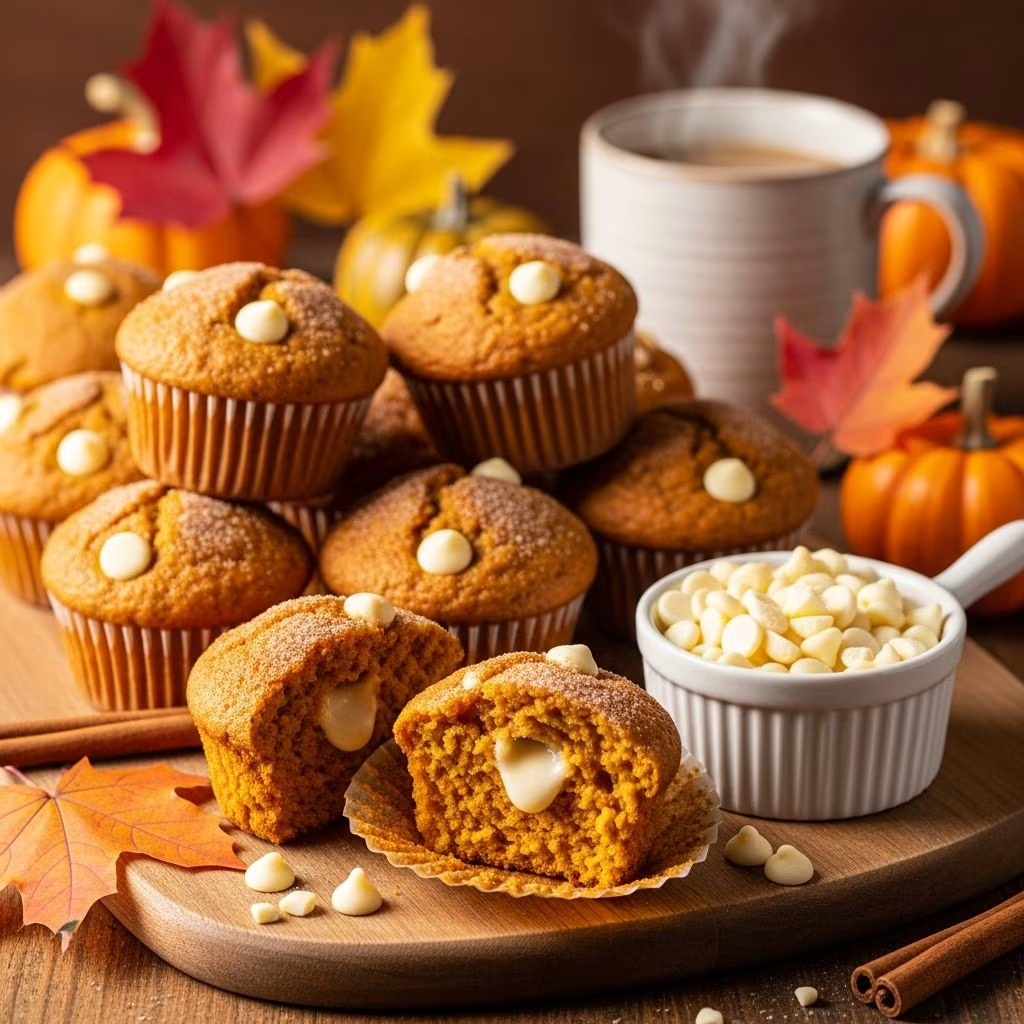
When autumn arrives, the aroma of pumpkin spice permeates kitchens everywhere, inspiring home bakers to create comforting treats that capture the essence of the season. Among the most beloved creations are pumpkin muffins enhanced with the subtle sweetness of white chocolate chips. This classic combination transforms a simple breakfast staple into a sophisticated indulgence that satisfies both nostalgic cravings and refined palates. The interplay between earthy pumpkin, warm spices, and creamy white chocolate creates a multidimensional flavor profile that lingers pleasantly on the palate.
Understanding the Foundation: Core Ingredients Explained
Creating exceptional pumpkin and white chocolate muffins begins with understanding each ingredient’s role in the final product. The foundation rests on several key components that work in harmony to produce muffins with optimal texture, moisture, and flavor.
Pumpkin puree serves as the primary wet ingredient, providing natural moisture while contributing a subtle earthiness that defines the muffin’s character. Unlike fresh pumpkin, canned pumpkin puree offers consistency and convenience without sacrificing quality. A typical batch utilizes approximately one cup of puree, which yields the ideal moisture-to-flour ratio necessary for tender crumb structure.
Sugar appears in both granulated and brown forms in most recipes. Granulated sugar contributes sweetness and aids in leavening, while brown sugar adds moisture and a hint of molasses complexity. The combination typically ranges from three-quarters to one and one-quarter cups, depending on desired sweetness levels.
Vegetable oil replaces traditional butter in many modern recipes, creating exceptionally moist muffins with a tender crumb. The oil distributes evenly throughout the batter, preventing the dense texture sometimes associated with butter-based versions. Approximately one-half to three-quarters cup maintains the perfect moisture balance.
Eggs bind ingredients while contributing structure and richness. Most recipes call for two large eggs, which provide sufficient binding power without creating an eggy flavor profile. Eggs also incorporate air during mixing, contributing to the light, fluffy texture.
White chocolate chips introduce sweetness and creaminess that complements rather than overwhelms the pumpkin base. Between three-quarters and one and one-half cups distributed throughout the batter ensures every bite contains delightful pockets of chocolate.
The Dry Ingredient Blend: Spices and Leavening Agents
The dry ingredient combination determines the muffin’s structural integrity and flavor complexity. All-purpose flour provides the structural backbone, typically requiring between one and one-quarter and one and three-quarter cups per batch. The flour’s gluten network traps air bubbles and moisture, creating the characteristic crumb structure.
Leavening agents—baking powder and baking soda—work synergistically to create rise and lightness. Baking powder, ranging from one to one and one-half teaspoons, provides immediate lift during baking. Baking soda, typically one-half to one teaspoon, requires acidic components to activate effectively and adds additional lift while promoting browning.
The spice profile elevates these muffins beyond ordinary breakfast fare. Cinnamon contributes warmth and familiarity, appearing in quantities from one-half to one tablespoon. Ground nutmeg, ranging from one-quarter to one-half teaspoon, adds subtle complexity and warmth. Some recipes incorporate cardamom or cloves in minimal quantities—approximately one-quarter teaspoon—for depth and sophistication. Pumpkin pie spice blends, containing multiple spices in predetermined ratios, offer convenience for bakers preferring simplified ingredient lists.
Salt, though often overlooked, enhances all flavor components while preventing excessive sweetness. Kosher salt works particularly well, with approximately one-quarter to one-half teaspoon sufficing for most recipes.
Mastering Mixing Techniques for Optimal Results
The methodology employed during mixing significantly impacts the final muffin quality. Proper technique balances ingredient incorporation with avoiding overdevelopment of gluten, which creates tough, dense results.
The wet ingredient phase begins by combining pumpkin puree, eggs, oil, and sugar in a large mixing bowl. Some recipes suggest whisking eggs separately before adding, which incorporates air and promotes even distribution. Mixing continues until the wet ingredients achieve a smooth, uniform consistency—approximately one to two minutes—without overmixing, which can cause deflation.
The dry ingredient phase involves whisking together flour, baking powder, baking soda, salt, and spices in a separate bowl. This preliminary combination ensures even spice distribution and activates leavening agents. Sifting, while optional, improves incorporation and removes lumps.
The combining phase requires gentle precision. Add the dry ingredients to the wet mixture in batches, folding gently with a spatula rather than whisking vigorously. This technique preserves air incorporation while achieving thorough mixing. Mixing continues only until no streaks of flour remain visible—typically twenty to thirty seconds per batch. Overmixing at this stage develops gluten, resulting in tough muffins with tunneling and dense crumb.
Chocolate chip incorporation happens during the final moments of mixing. Reserve one-half cup of chips for topping, then fold the remaining chips into the batter using minimal strokes. This timing prevents the chocolate from breaking apart during mixing.
Baking Parameters and Temperature Control
| Oven Temperature | Baking Time | Muffin Size | Special Notes |
|---|---|---|---|
| 350°F | 24-27 minutes | Standard (12-cup) | Lower temperature permits even baking |
| 375°F | 20-25 minutes | Standard (12-cup) | Moderate temperature balances browning |
| 400°F | 18-20 minutes | Standard (12-cup) | Higher temperature creates darker tops |
| 425°F (5 min) then 375°F | 10-12 minutes additional | Standard (12-cup) | Two-temperature method prevents burning |
Temperature control substantially influences muffin quality. Preheating the oven for at least fifteen minutes ensures accurate internal temperature, which promotes even baking. Oven thermometers verify actual temperature, as many household ovens drift significantly from their dial settings.
Muffin tin preparation prevents sticking and facilitates easy removal. Paper liners provide convenient removal while maintaining appealing presentation. Alternatively, greasing tins with butter or non-stick spray followed by light flour dusting prevents stubborn adhesion. Some bakers combine methods, using both liners and light greasing for maximum security.
The doneness test—inserting a toothpick or cake tester into the center—provides reliable confirmation. The pick should emerge clean or with only a few moist crumbs adhering; if wet batter clings to the pick, additional baking time is necessary. Visual cues supplement this test: properly baked muffins display golden-brown tops that spring back when gently pressed.
Troubleshooting Common Muffin Mishaps
Even experienced bakers occasionally encounter challenges. Understanding common issues enables prompt correction and recipe adjustment.
Dense, Heavy Crumb typically results from overmixing during the combining phase, which overdevelops gluten. Prevention requires using gentle folding motions and mixing only until flour disappears. Excess baking soda or baking powder can paradoxically create density; verify measurements carefully.
Tunneling—large holes running through the muffin interior—indicates excessive mixing or inadequate batter distribution in cups. Tapping the filled muffin tin gently on the counter releases trapped air bubbles. Using an ice cream scoop ensures uniform batter distribution.
Dry, Crumbly Texture suggests overbaking or insufficient oil content. Reduce baking time by two to three minutes for the next batch. If persistent, gradually increase oil by one tablespoon increments until desired moisture returns.
Sunken Centers result from underbaking, insufficient leavening, or oven temperature inaccuracy. Verify oven temperature with a thermometer. Ensure baking powder and baking soda haven’t expired, as their potency diminishes over time.
Greasy, Separated Batter occurs when oil hasn’t properly emulsified with wet ingredients. Ensure eggs are room temperature before mixing, which facilitates better emulsification. Mixing wet ingredients longer—two to three minutes—before adding dry components improves integration.
Storage and Preservation Strategies
Proper storage maintains muffin quality and extends enjoyment beyond the initial baking day. Completely cooled muffins store in airtight containers at room temperature for three to four days. Layering parchment paper between muffins prevents sticking and facilitates removal.
Refrigeration extends storage to one week when muffins remain in sealed containers. The cooler temperature slows mold growth while maintaining acceptable texture, though muffins may taste slightly drier than fresh-baked versions. Gentle reheating in a 300°F oven for five minutes restores appealing texture.
Freezing accommodates longer preservation—up to three months in freezer-safe containers or bags. Freeze baked muffins in single layers before transferring to containers, preventing clumping. Thawing overnight at room temperature or gentle microwave reheating (approximately thirty seconds per muffin) restores satisfying texture and flavor.
Creative Variations and Flavor Enhancements
The basic pumpkin and white chocolate formula permits numerous adaptations accommodating different preferences and dietary considerations.
Spice Intensity Adjustments allow customization of the flavor profile. Doubling the cinnamon creates a more assertive spice presence, while reducing it by half yields subtle warmth. Experimenting with additional nutmeg, ginger, or a small quantity of cayenne pepper personalizes the recipe.
Chocolate Mix-ins expand beyond white chocolate alone. Combining white and dark chocolate chips introduces complexity. Chocolate chunks substitute for chips, creating larger pockets of richness. Some bakers incorporate toffee bits, providing sweet crunch that complements pumpkin’s earthiness.
Add-in Ingredients introduce textural and nutritional elements. Chopped pecans or walnuts contribute nutty depth and satisfying crunch. Dried cranberries or raisins provide tartness and chewy texture. Streusel toppings—combining brown sugar, cinnamon, and butter—create appealing crunch on the muffin exterior.
Dietary Modifications accommodate various requirements. Whole wheat flour replaces one-quarter to one-half of the all-purpose flour, increasing nutritional density and fiber content while creating slightly nuttier flavor. Gluten-free flour blends substitute one-to-one for all-purpose flour. Reducing sugar by one-quarter cup satisfies those preferring less sweetness. Plant-based milk mixed with ground flax seed replaces eggs for vegan adaptations.
Frequently Asked Questions
Can I make pumpkin muffins without white chocolate?
Absolutely. Omit the white chocolate chips and increase vanilla extract to two teaspoons for added depth. Alternatively, incorporate other mix-ins like chopped nuts, dried fruit, or chocolate chunks.
What’s the difference between baking powder and baking soda?
Baking powder is a combination of baking soda and acid that activates with moisture. Baking soda requires acidic ingredients like buttermilk or yogurt to activate. Most muffin recipes use both for optimal rise and browning.
How do I prevent white chocolate from burning?
Add white chocolate chips during the final mixing stage and reserve some for topping after baking begins. White chocolate’s lower melting point makes it susceptible to scorching if baked too long. Using a lower oven temperature, like 350°F, also reduces burning risk.
Can I use fresh pumpkin instead of canned?
Yes, though it requires additional preparation. Fresh pumpkin must be roasted, pureed, and thoroughly drained to remove excess moisture. Use the same volume as canned puree, but verify the consistency matches commercial versions.
Why are my muffins sticking to the liners?
Ensure liners are fully inserted into muffin cups. Grease the liners lightly with non-stick spray before filling. Allow muffins to cool in the tin for five minutes before removing, which permits the base to set slightly.
References
- Pumpkin and White Chocolate Muffins Recipe — Mom Foodie. Accessed April 10, 2026. https://momfoodie.com/pumpkin-and-white-chocolate-muffins/
- White Chocolate Chip Pumpkin Muffins — Away From the Box. Accessed April 10, 2026. https://www.awayfromthebox.com/pumpkin-white-chocolate-chip-muffins/
- Pumpkin White Chocolate Chip Muffins — My Gorgeous Recipes. Accessed April 10, 2026. https://www.mygorgeousrecipes.com/pumpkin-chocolate-chip-muffins/
- Pumpkin Muffins with White Chocolate — Kylee Cooks. Accessed April 10, 2026. https://www.kyleecooks.com/pumpkin-muffins/
- White Chocolate Chip Pumpkin Muffins — Crave The Good. Accessed April 10, 2026. https://www.cravethegood.com/white-chocolate-chip-pumpkin-muffins/
- White Chocolate Pumpkin Muffins — Oh Sweet Basil. Accessed April 10, 2026. https://ohsweetbasil.com/pumpkin-white-chocolate-chip-muffins/