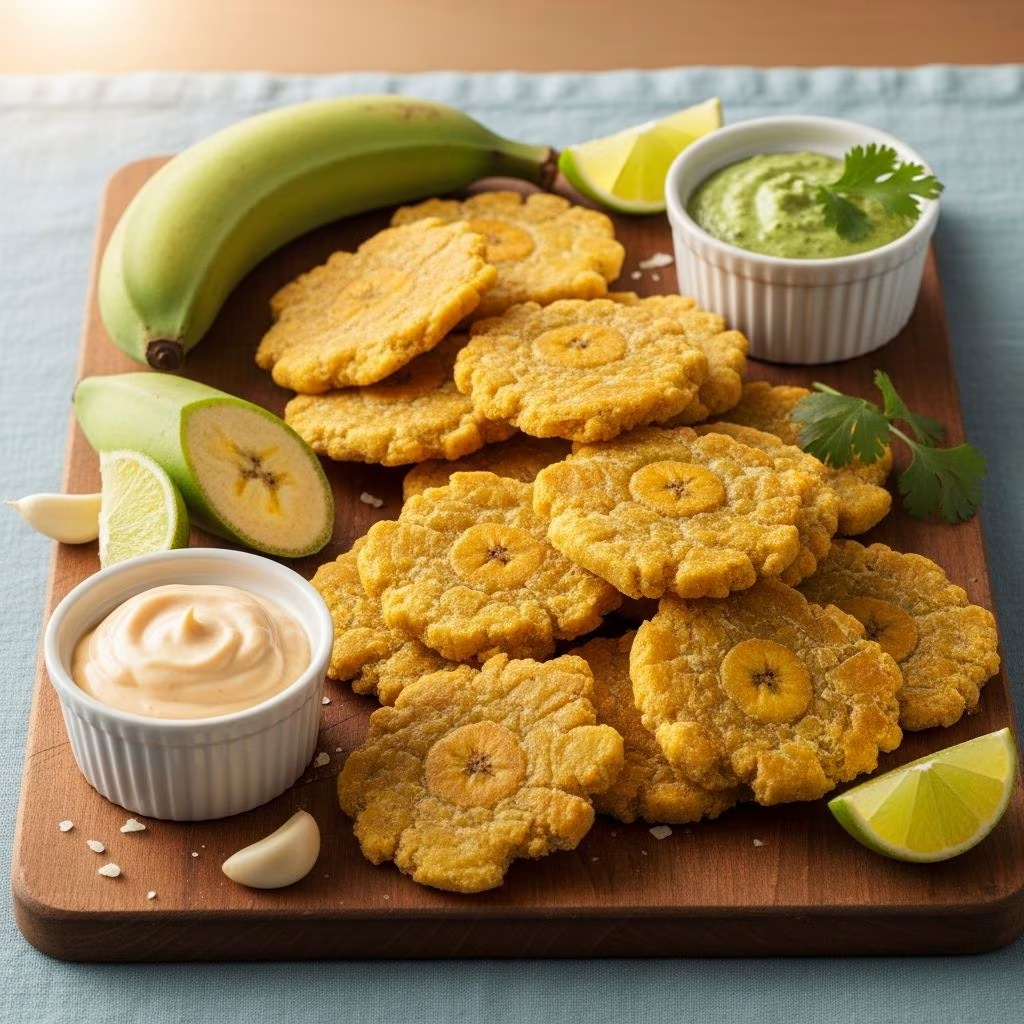
Golden, crunchy, and irresistibly flavorful, Puerto Rican tostones represent a cornerstone of Caribbean cuisine. These twice-fried plantain slices transform humble green plantains into a versatile side dish, snack, or appetizer that pairs perfectly with meals or stands alone. Originating from Puerto Rico, tostones—also known as patacones in other regions—capture the essence of island cooking with their simple preparation and bold taste. This comprehensive guide will walk you through everything from selecting the right plantains to achieving that perfect crunch, complete with variations, tips, and serving ideas.
Understanding Tostones: A Puerto Rican Staple
Tostones are made exclusively from unripe green plantains, which differ significantly from sweet ripe bananas. Green plantains are starchy rather than sweet, providing the ideal base for frying into crisp patties. The process involves an initial fry to soften the slices, smashing them flat, and a second fry for crispiness. This double-frying technique is key to their signature texture: tender inside with a shatteringly crunchy exterior.
In Puerto Rican culture, tostones appear at every gathering, from family dinners to street food stalls. They’re often seasoned simply with salt but elevated with garlic-infused dips or sauces like mayo-ketchup. Their popularity stems from accessibility—plantains are inexpensive and widely available—and their ability to complement rich proteins like pork or seafood.
Essential Ingredients for Perfect Tostones
Gathering the right ingredients ensures success. Focus on fresh, green plantains and high-smoke-point oil for frying. Here’s a breakdown:
- 3-4 large green plantains: Firm and unripe; avoid any with yellow or black spots for maximum starchiness.
- 2-3 cups vegetable, canola, or neutral oil: Enough to submerge slices halfway; peanut oil works for extra flavor.
- Salt: For seasoning post-fry; sea salt or adobo adds depth.
- Water mixture (optional but recommended): 4 cups water, juice of 1 lime, 1 tsp salt, minced garlic or adobo for soaking smashed plantains.
For dips, prepare mayo-ketchup (3 tbsp mayo, 2 tbsp ketchup, ¼ tsp garlic powder) or mojo de ajo (¼ cup olive oil infused with 2 tsp minced garlic).
| Ingredient | Quantity | Purpose |
|---|---|---|
| Green Plantains | 3-4 | Main base for starch and crunch |
| Oil | 2-3 cups | Frying medium |
| Lime Juice & Garlic | 1 lime, 3 cloves | Seasoning soak for crispiness |
| Salt/Adobo | To taste | Flavor enhancer |
Step-by-Step Recipe: How to Make Tostones
Preparation takes about 10 minutes, with 20 minutes cooking time. Yields 4 servings as a side.
Prepare the plantains. Trim ends, slice lengthwise shallowly to peel easily (use a spoon if stubborn). Cut into 1-2 inch diagonal slices for even frying.

- Heat oil. In a heavy skillet or deep pan, heat oil to 350°F (medium-high). Oil should be ½-inch deep.
- First fry. Add slices in batches (avoid crowding). Fry 3-5 minutes per side until golden but soft (fork pierces easily). Drain on paper towels.
- Smash gently. Cool slightly, then flatten to ¼-inch thick using a tostonera, glass bottom, or plates. Don’t over-smash to prevent crumbling.
- Optional soak for extra crunch. Dip smashed pieces in garlic-lime-salt water for 5-30 seconds (or 4-5 minutes). Drain and pat dry. This step rinses excess starch, promoting crispiness.

- Second fry. Return to hot oil (high heat) for 2-5 minutes per side until deep golden and edges crisp. Drain, salt immediately.
- Serve hot. Pair with dips for the full experience.
Pro Tip: Maintain oil temperature between fries to avoid soggy results. Fry in small batches for consistency.
Pro Tips for the Crispiest Tostones Ever
- Plantain selection: greener = crispier; ripe ones turn mushy.
- Oil management: Use a thermometer; too low = greasy, too high = burnt.
- Soak debate: Soaking enhances crunch by removing surface starch, though some skip it for simplicity.
- Tools: Invest in a tostonera for uniform smashing; otherwise, sturdy kitchen items suffice.
- Storage: Best fresh, but re-crisp in 350°F oven for 5 minutes. Freeze pre-smashed for up to a month.
Delicious Dipping Sauces to Elevate Your Tostones
Tostones shine with sauces. Try these Puerto Rican classics:
- Mayo-Ketchup: Mix mayo, ketchup, garlic powder. Creamy, tangy, addictive.
- Mojo de Ajo: Simmer olive oil with garlic, season with salt/pepper. Earthy and aromatic.
- Garlic-Lime Dip: Blend soaked water remnants with mayo for zesty kick.
Experiment with salsas or hot sauces for variety.
Common Mistakes and How to Avoid Them
Even seasoned cooks falter. Here’s how to sidestep pitfalls:
| Mistake | Why It Happens | Solution |
|---|---|---|
| Soggy texture | Low oil temp or over-crowding | Monitor heat at 350°F, small batches |
| Cracked plantains | Over-smashing or too hot first fry | Gentle pressure post-cooling |
| Bitter taste | Brown/black plantains | Use only vibrant green |
| Oily finish | Insufficient draining | Pat dry before second fry |
Nutritional Profile and Dietary Adaptations
One serving (about 6 pieces): ~200 calories, mostly from oil. High in potassium (like bananas) and resistant starch for gut health. Adaptations:
- Air-fryer version: Spray with oil, 400°F for 8-10 min per stage (less crisp but healthier).
- Vegan/gluten-free: Naturally so; use adobo without MSG.
- Low-oil: Shallow pan with minimal oil, flip often.
Pairing Ideas: Tostones in Puerto Rican Meals
Incorporate tostones into full meals:
- With pernil (roast pork) or mofongo (mashed plantain dish).
- As appetizers with shrimp or ceviche.
- Breakfast side with eggs and avocado.
- Topped with pulled chicken for tostones tacos.
They’re a canvas for creativity while honoring tradition.
Frequently Asked Questions (FAQs)
What are tostones made of?
Tostones are made from sliced green plantains that are fried twice, smashed in between.
Can I use ripe plantains?
No, ripe (yellow/black) plantains are sweet; green ones are starchy for crispiness.
What’s the best oil for frying tostones?
Vegetable, canola, or peanut oil with high smoke point.
How do I peel green plantains easily?
Cut ends, score ridges lengthwise, pry skin with fingers or spoon.
Can tostones be made ahead?
Fry first stage ahead, smash/fry second just before serving for freshness.
Are tostones healthy?
Moderately; baked/air-fried versions reduce oil content significantly.
Exploring Variations Across the Caribbean
While Puerto Rican style emphasizes garlic soaks, Dominican versions might add vinegar dips, and Cuban patacones pair with black beans. Experiment to find your favorite.
Mastering tostones opens doors to Puerto Rican cooking. With practice, you’ll produce restaurant-quality results at home.
References
- Crispy Puerto Rican-Style Tostones — Salima’s Kitchen. 2023. https://salimaskitchen.com/tostones/
- Best Tostones Recipe (Twice-Fried Plantains) — The Novice Chef. 2023. https://thenovicechefblog.com/tostones-recipe/
- Puerto Rican Tostones – Fried Plantain & MayoKetchup — Kitchen Gidget. 2022-04-20. https://www.kitchengidget.com/2016/01/03/puerto-rican-tostones-fried-plantains-mayoketchup/
- Authentic Puerto Rican Tostones Recipe | Episode 39 — YouTube (Buen Provecho TV channel equivalent). 2023. https://www.youtube.com/watch?v=xIFjC9UDAHc