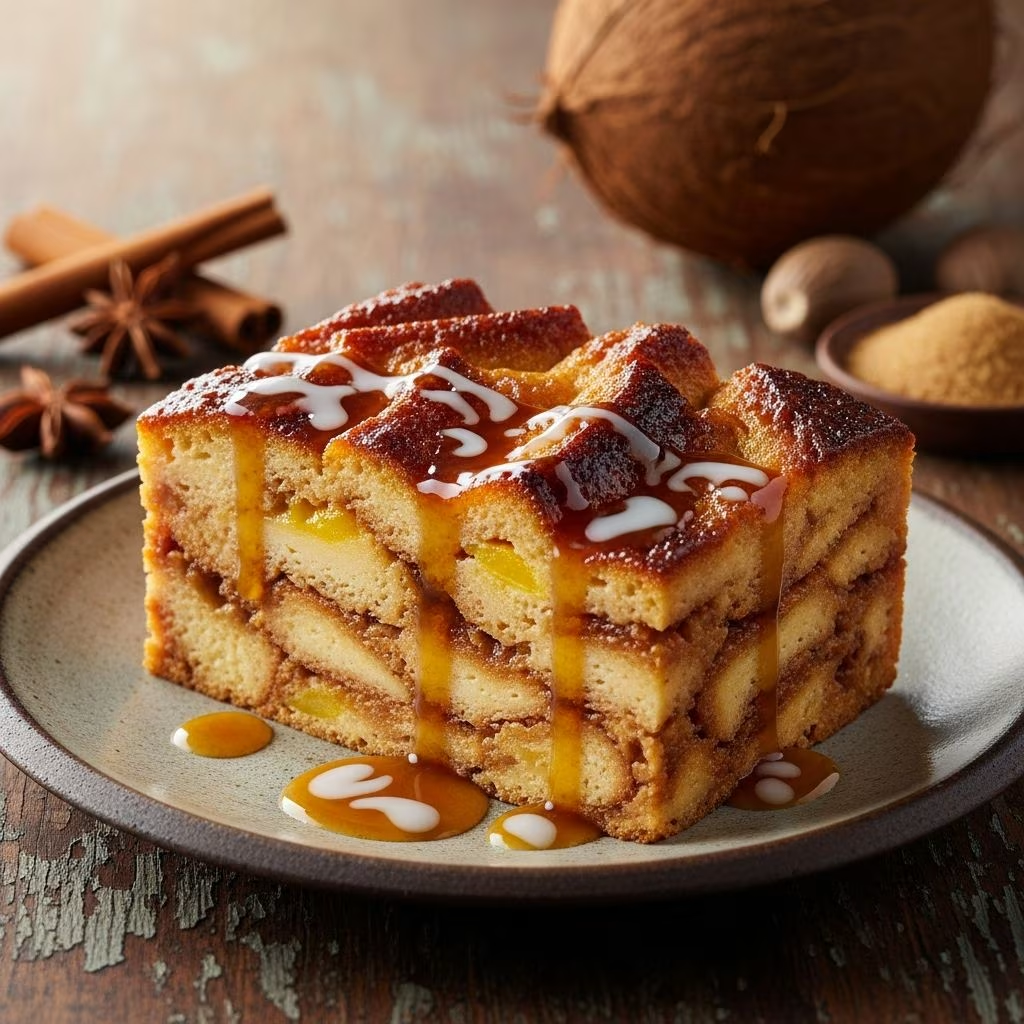
Puerto Rican budín stands out as a beloved dessert that captures the island’s vibrant culinary heritage. This bread pudding transforms humble stale bread into a luxurious treat through a custard of evaporated milk, sweetened condensed milk, and coconut milk, enriched with cinnamon and vanilla. Baked in a water bath over a layer of golden caramel, it develops a silky texture with a caramelized top that’s both spongy and creamy.
The Roots and Cultural Importance of Budín
Budín de pan emerged from resourceful Puerto Rican kitchens where day-old bread found new life. Influenced by Spanish flan traditions and local tropical ingredients, it became a staple at family gatherings, holidays, and celebrations. Unlike denser American bread puddings, Puerto Rican versions emphasize a light, mashed consistency achieved by thoroughly mixing the bread into the custard base.
Passed down through generations, budín symbolizes comfort and ingenuity. Families often gather to prepare it, adding personal touches like raisins soaked in rum or fresh guava paste for a fruity twist. Its popularity peaks during Christmas, paired with coquito or coffee, highlighting Puerto Rico’s fusion of African, Spanish, and Taíno flavors.
Essential Ingredients for Authentic Budín
Selecting quality ingredients ensures the signature flavor and texture. Start with a one-pound loaf of day-old bread, preferably brioche, pan sobao, or baguette for optimal absorption without sogginess.
- Stale bread (1 lb): Cubed or torn; brioche yields richness, while pan sobao adds authentic chew.
- Sweetened condensed milk (14 oz can): Provides intense sweetness and creaminess.
- Evaporated milk (12 oz can): Adds body without watering down the custard.
- Coconut milk (7 oz): Infuses tropical notes; shake well before use.
- Eggs (3-4 large): Bind the mixture for structure.
- Butter (4 tbsp, melted): Enhances moisture and flavor.
- White sugar (1 cup for caramel): Melts into a glossy base.
- Spices and flavorings: Cinnamon (1 tsp), vanilla extract (2 tsp), pinch of salt; optional ginger, nutmeg, or cloves for depth.
- Add-ins: Raisins (½-¾ cup), cranberries, or guava paste for variety.
These components create a balanced profile: sweet, spiced, and subtly coconutty.
Mastering the Caramel Base
The caramel layer is budín’s crowning glory, adding a bittersweet contrast. In a saucepan over medium-low heat, melt 1 cup sugar without stirring until it liquifies into amber. Swirl gently to prevent burning, then pour immediately into a greased 9×5-inch loaf pan. Tilt to coat evenly and let harden.
Pro Tip: If crystallization occurs, add a teaspoon of water early and brush pan sides with a wet pastry brush. This technique, rooted in flan-making, ensures a smooth, crack-free surface.
Step-by-Step Recipe: Classic Puerto Rican Budín
Prep time: 20 minutes | Bake time: 40-50 minutes | Serves: 8-10
- Prepare bread: Cube or tear 1 lb day-old bread into 1-inch pieces. Leave overnight or toast lightly at 300°F for 10 minutes to stale.
- Mix custard: Whisk eggs, condensed milk, evaporated milk, coconut milk, melted butter, vanilla, cinnamon, and salt in a large bowl until smooth.
- Incorporate bread: Add bread cubes; stir and mash vigorously for 2-3 minutes until mushy paste forms. This step is crucial for the creamy-spongy texture. Fold in raisins if using.
- Assemble: Pour mixture over set caramel in loaf pan. Tap to release air bubbles.
- Water bath setup: Place loaf pan in a larger roasting pan; fill outer pan with hot water halfway up the loaf pan sides.
- Bake: Preheat oven to 350°F. Bake covered with foil for 30 minutes, then uncover for 10-20 minutes until toothpick tests clean and top is golden.
- Cool and invert: Rest 20-30 minutes out of water bath. Run knife around edges, invert onto platter. Caramel should drizzle beautifully.
Serve warm or chilled, drizzled with rum syrup for extra indulgence.
Variations to Elevate Your Budín
Customize budín to suit seasons or preferences with these inspired twists.
| Variation | Key Add-Ins | Baking Adjustment | Flavor Profile |
|---|---|---|---|
| Coquito Budín | Prepared coquito (coconut-rum drink), sweetened coconut flakes, dark raisins plumped in rum | Bake 1 hour covered, 20-30 min uncovered | Coconutty, boozy holiday delight |
| Guava Budín | Guava paste slices on caramel, extra evaporated milk | Same as classic; add 10 min if fruit-heavy | Tropical, tangy sweetness |
| Spiced Budín | Ginger (½ tsp), nutmeg (¼ tsp), cloves (¼ tsp), cranberries | No change | Warm, aromatic depth |
| Dairy-Free | Coconut/almond milks, dairy-free condensed milk | Reduce bake by 5 min | Light, vegan-friendly |
Perfect Baking Techniques and Troubleshooting
Achieve flawless results with these expert methods. The water bath (baño maría) prevents cracking and ensures even cooking by maintaining gentle heat. Use foil to cover initially for steaming, then uncover for browning.
Common Issues:
- Watery texture: Use fully stale bread and mash thoroughly; insufficient mashing leaves chunks.
- Cracked top: Overbaking or no water bath; check at 40 minutes.
- Stuck caramel: Grease pan well before pouring; chill briefly if needed.
- Not sweet enough: Taste custard before adding bread; adjust sugar in milk mix.
Store leftovers covered in fridge up to 5 days; reheat slices in microwave or oven.
Pairing and Serving Suggestions
Budín shines solo but pairs excellently with Puerto Rican staples. Serve with hot café con leche to cut richness, or alongside arroz con gandules at feasts. For dessert boards, slice thin and top with whipped cream, toasted coconut, or a rum toffee sauce made by simmering butter, brown sugar, and coquito.
Portion into ramekins for individual servings at parties, or scale up for potlucks using two loaf pans.
Nutrition and Dietary Notes
One slice (1/10th recipe) offers approximately 350 calories, rich in calcium from milks and carbs from bread. Customize for gluten-free with GF bread, or low-sugar by reducing condensed milk. It’s naturally vegetarian; vegan adaptations work seamlessly.
Frequently Asked Questions (FAQs)
What type of bread is best for budín?
Day-old brioche, pan sobao, or baguette absorbs custard best without disintegrating.
Can I make budín without a water bath?
Not recommended; it leads to uneven cooking and dry edges. The bath mimics steaming for creaminess.
How do I store and reheat budín?
Refrigerate up to 5 days; freeze slices up to 2 months. Reheat at 300°F covered with foil.
Is budín gluten-free?
Use gluten-free bread and check milk labels for cross-contamination.
Why mash the bread so much?
Mashing creates the signature smooth-spongy texture unique to Puerto Rican style.
Conclusion: Bring Budín to Your Table
With its irresistible caramel top and custardy interior, Puerto Rican budín deserves a spot in your dessert rotation. Experiment with variations while honoring tradition—your kitchen will fill with the aromas of island joy.
References
- Puerto Rican-Style Baked Budin (Bread Pudding) — Salima’s Kitchen. 2023-12-15. https://salimaskitchen.com/budin/
- Budin (Puerto Rican Bread Pudding) — Delish D’Lites. 2022-11-20. https://www.delishdlites.com/recipe-index/baking-recipes/budin-puerto-rican-bread-pudding/
- Coquito Bread Pudding (Budín de Coquito) — Sense & Edibility. 2021-12-10. https://senseandedibility.com/coquito-bread-pudding-budin-de-coquito/
- The Best Budin de Guayaba or Guava Bread Pudding — Familia Kitchen. 2023-05-05. https://familiakitchen.com/the-best-budin-de-guayaba-or-guava-bread-pudding/