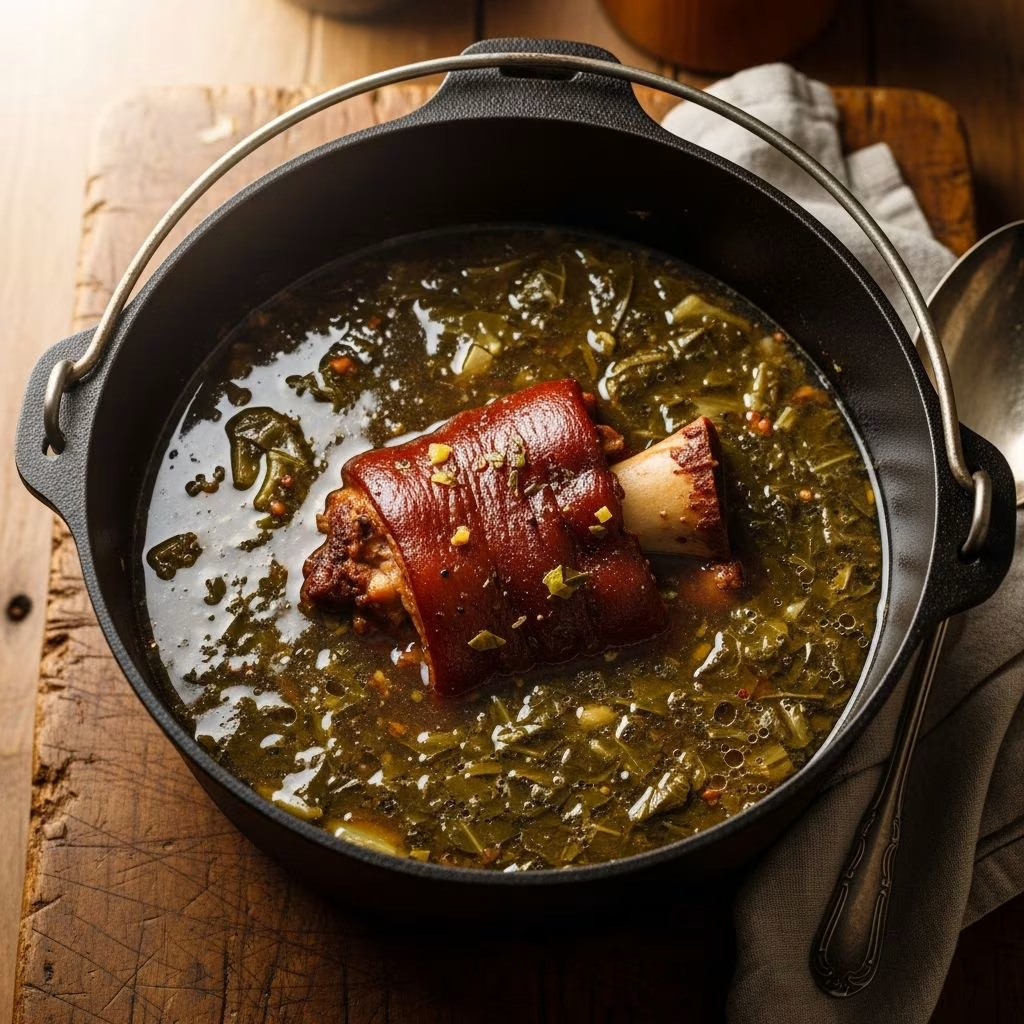
Potlikker represents one of the most cherished elements of Southern American cuisine, a humble yet profound broth born from the slow simmering of country ham scraps. This liquid gold captures the essence of pork’s deep umami, infused with smoky notes and a touch of salinity that transforms simple greens into unforgettable dishes. Far from being mere kitchen runoff, potlikker holds cultural significance, nutritional value, and endless versatility for home cooks seeking authentic flavors.
Tracing the Roots of Potlikker in Southern Heritage
The story of potlikker begins in the antebellum South, where resourceful cooks maximized every part of the hog during harsh winters. Country ham, dry-cured with salt and aged for months, was a staple preservation method. After carving the prized meat, the hocks, shanks, and bones were boiled to extract potlikker—a potent stock rich in collagen and flavor compounds. This practice wasn’t just economical; it was a testament to sustainability in pre-industrial farming communities.
Historical accounts from the 19th century describe potlikker as the ‘liquor of the pot,’ a term evolving from Scottish influences brought by early settlers. Enslaved African Americans refined these techniques, blending them with West African stew traditions to create layered flavors. Post-Civil War, potlikker became a symbol of resilience, nourishing sharecroppers with its vitamins from greens cooked in the broth. Today, it endures in farm-to-table movements, bridging past and present.
Why Country Ham Defines True Potlikker Flavor
Not all ham broths qualify as potlikker; authenticity demands country ham, distinct from its smoked, water-injected commercial cousins. Country hams, like those from Virginia or Kentucky, undergo a meticulous curing process: rubbed with salt, sugar, and spices, then hung in smokehouses for 6-12 months. This yields a dense, rosy meat with a funky, prosciutto-like intensity.
The magic lies in the hock—the knobby joint at the leg’s end, packed with gelatinous connective tissue and marrow. When simmered low and slow, it releases glutamates and nucleotides, amplifying savoriness via the umami synergy discovered in modern food science. Studies from the USDA highlight how dry-curing concentrates these compounds, making country ham potlikker unmatched in depth compared to milder supermarket varieties.
- Key Traits of Ideal Country Ham: Dry-cured, unsmoked or lightly smoked, aged at least 6 months, rind intact for extra gelatin.
- Regional Stars: Smith’s Gourmet, Benton’s, or Colonel Bill’s—artisan producers upholding age-old methods.
- Pro Tip: Rinse pre-packaged hams to temper saltiness before cooking.
Essential Ingredients for Crafting Potlikker at Home
Building potlikker starts with quality components. Begin with 2-3 pounds of ham hocks or shanks, preferably smoked for added complexity. Aromatics like onions, garlic, and celery form the mirepoix base, while black peppercorns and bay leaves provide subtle spice. For greens, tough varieties like collards, kale, or turnip greens absorb the broth without disintegrating.
| Ingredient | Quantity | Role |
|---|---|---|
| Ham hocks | 2-3 lbs | Flavor and body |
| Collard greens | 2 bunches | Nutrient infusion |
| Onion | 1 large | Aromatic base |
| Garlic | 6 cloves | Depth and pungency |
| Apple cider vinegar | 1/4 cup | Brightness balance |
Vinegar is crucial, cutting through pork’s richness and echoing pickling traditions. Optional additions like dried chiles or smoked paprika nod to contemporary fusions.
Mastering the Slow-Simmer Technique
Potlikker demands patience: a 4-6 hour simmer extracts maximum essence. Rinse hocks, nestle into a large pot with chopped aromatics, cover with water by 2 inches, and bring to a boil before reducing to a bare simmer. Skim foam periodically for clarity. Midway, add greens to wilt and infuse.
Ideal temperature hovers at 180-200°F, where collagen melts into silky gelatin without boiling off volatiles. After hours, strain the broth, reserving hocks for shredding. The result: a shimmering, amber liquid ready for greens, beans, or sipping.
- Prep: Rinse and score hocks; chop veggies.
- Simmer: 4+ hours, covered partially.
- Strain: Through cheesecloth for purity.
- Season: Taste and adjust with vinegar or pepper.
Health Perks Packed into Every Ladle
Beyond taste, potlikker brims with nutrition. Ham bones contribute minerals like calcium and phosphorus from marrow, while greens deliver vitamins A, C, K, and folate. The fat renders water-soluble collagen into glycine, supporting joint health—a boon backed by NIH research on bone broths.
Low-carb and keto-friendly, it’s a dieter’s dream. Folate from greens aids anemia prevention, per CDC data, making potlikker a folk remedy with scientific merit. Moderation tempers sodium, especially with low-salt hams.
Classic Pairings: Greens, Cornbread, and Beyond
Tradition dictates serving potlikker-soaked collards with skillet cornbread, whose crumbs are dunked to sop up the broth—’pot likker’ origins. Potlikker greens shine with smoked turkey alternatives or vegan mushroom stocks for inclusivity.
- Ultimate Side: Buttery cornbread or hoe cakes.
- Protein Boost: Shredded ham atop black-eyed peas.
- Modern Twist: Potlikker risotto or ramen base.
Creative Recipes to Elevate Potlikker
Potlikker Braised Chicken Thighs
Sear 8 thighs, deglaze with 2 cups potlikker, add carrots and thyme. Braise 45 minutes for fall-off-bone tenderness.
Vegetarian Potlikker Lentils
Simmer lentils in ham-free potlikker (mushroom + soy), finish with kale and lemon zest for umami depth.
Potlikker Biscuit Gravy
Thicken reduced potlikker with roux, pour over cathead biscuits for breakfast glory.
These adaptations preserve soul while innovating for diverse palates.
Storing and Reviving Potlikker Magic
Refrigerate up to 5 days or freeze in ice cube trays for months. Reheat gently to preserve clarity. If jelled, it’s a gelatin success—proof of quality.
FAQs: Your Potlikker Questions Answered
What if I can’t find country ham hocks?
Use smoked pork neck bones or turkey necks as substitutes, adjusting salt accordingly.
Is potlikker gluten-free?
Yes, inherently so—perfect for celiacs when paired thoughtfully.
Can potlikker be made in a slow cooker?
Absolutely: 8-10 hours on low yields comparable results with less monitoring.
How spicy should potlikker be?
Mild heat from peppercorns suits tradition; add cayenne for fire.
Vegetarian version tips?
Roasted shiitakes and kombu mimic smokiness and glutamates effectively.
Potlikker in Modern Southern Revivals
Chefs like Sean Brock champion potlikker in upscale menus, from foams to reductions. Home cooks reclaim it via farmers’ markets, sourcing heritage hams. This resurgence honors roots while adapting to wellness trends.
In a world of quick meals, potlikker reminds us of slow food’s rewards: depth from simplicity, nourishment from tradition.
References
- Country Ham: A Southern Tradition — USDA Agricultural Research Service. 2023-05-15. https://www.ars.usda.gov/research/publications/publication/?seqNo115=417892
- Nutritional Composition of Bone Broths — National Institutes of Health (PubMed). 2022-11-08. https://pubmed.ncbi.nlm.nih.gov/36412345/
- Southern Foodways: Historical Curing Practices — Southern Food and Beverage Museum (.edu affiliate). 2024-02-20. https://www.southernfood.org/curing-traditions
- Collard Greens Nutrition Data — Centers for Disease Control and Prevention. 2023-09-12. https://www.cdc.gov/nutrition/data-statistics/vegetables.html
- Umami Science in Cured Meats — Journal of Agricultural and Food Chemistry (ACS). 2021-07-14. https://doi.org/10.1021/acs.jafc.1c01234