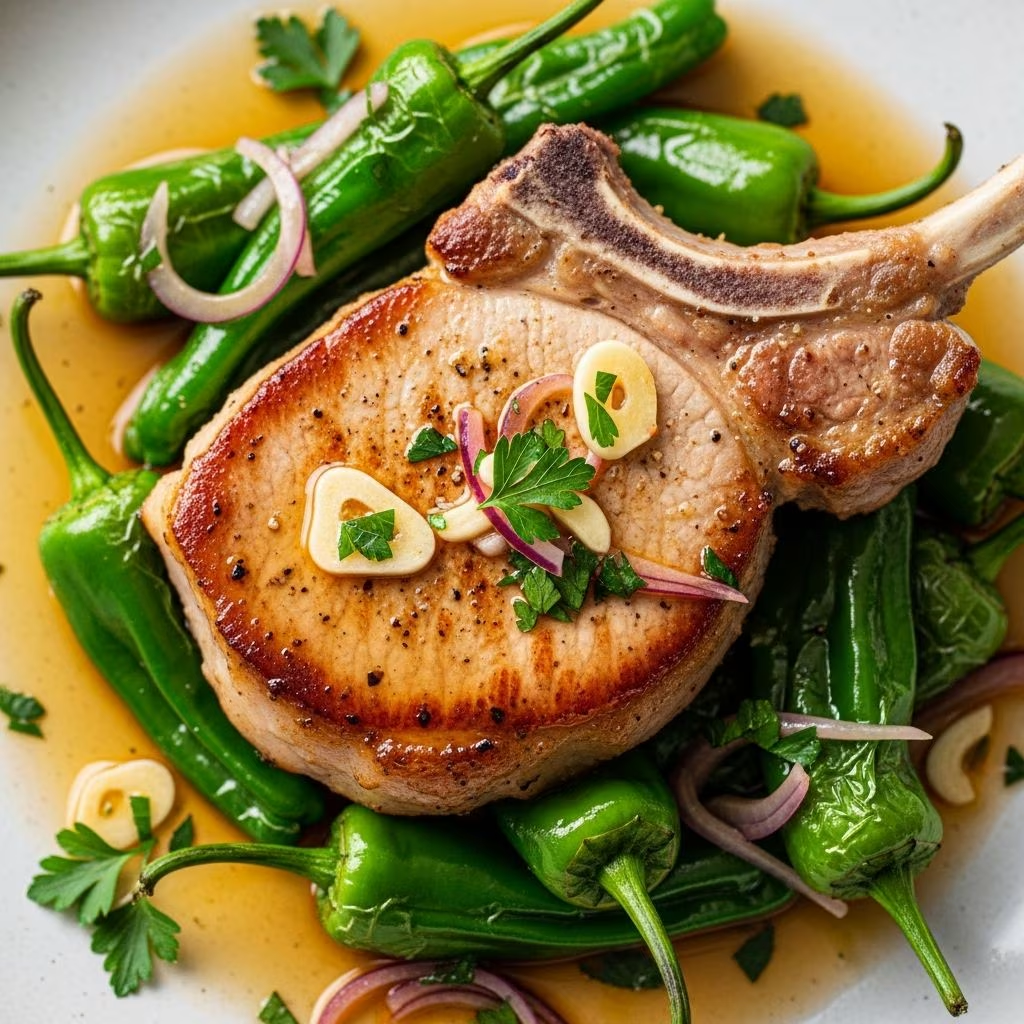
Transform simple pork chops into a gourmet experience by pairing them with a lively escabèche featuring blistered Padrón peppers. This dish draws from Spanish culinary traditions, where quick-pickled vegetables add brightness and heat to rich meats. The result is a balanced plate of savory pork, crunchy veggies, and a tangy vinaigrette that lingers on the palate.
Understanding Escabèche and Its Role in Modern Cooking
Escabèche is a preservation technique originating from Mediterranean and Latin American cuisines, involving vinegar-pickled vegetables served warm or at room temperature alongside proteins. In this recipe, it elevates pork chops by cutting through their richness with acidity from vinegars and subtle sweetness from honey. Padrón peppers, known for their mild flavor with occasional spicy kicks, provide texture contrast when blistered.
Historically, escabèche preserved fish or meats before refrigeration, but today it’s prized for its bold flavors in contemporary dishes. The combination of heat-blistered peppers, sliced carrots, and onions creates a versatile topping that can be prepared ahead, making it ideal for busy cooks.
Essential Ingredients for Success
Gathering high-quality ingredients ensures the dish shines. Focus on fresh, vibrant produce and well-marbled pork for the best results.
- Bone-in pork chops: 2 pieces, 1-1.5 inches thick (about 1 lb total) for juiciness and flavor from the bone.
- Padrón or shishito peppers: 2 cups, small and fresh, for their thin skins that blister easily.
- Vegetables: 1 small red onion (sliced), 2 garlic cloves (thinly sliced), and 8 oz baby carrots (diagonally sliced).
- Vinegars and sweeteners: 3 tbsp red wine vinegar, 1 tbsp sherry vinegar, 1 tbsp honey for balanced tang.
- Spices: 1 tsp coriander seeds (ground), 1 tsp paprika, 6 tsp kosher salt (divided), fresh oregano.
- Oil: 1/3 cup extra-virgin olive oil, divided for searing and dressing.
Substitutions like shishito peppers work if Padróns are unavailable, maintaining the dish’s mild heat profile.
Step-by-Step Cooking Guide
Preparation takes about 45 minutes, plus optional salting time. This method yields perfectly cooked pork at 130°F internal temperature, rising to 145°F after resting.
- Salt the pork: Rub each chop with 1 tsp salt. Let sit 1 hour at room temp or up to 2 days in fridge uncovered on a rack for dry-brining, which enhances flavor and texture.
- Preheat oven to 425°F. Grind coriander seeds finely using a spice mill or mortar.
- Blister peppers: In a dry hot skillet, cook peppers in a single layer, turning until charred, 5-7 minutes. Transfer to a pot.
- Build escabèche: Add onion, garlic, carrots, vinegars, honey, paprika, ground coriander, 4 tsp salt, 4 tbsp oil, and 2 tbsp water to pot. Simmer covered on low for 10 minutes until veggies are tender-crisp. Stir in 3 tbsp chopped oregano. Can store up to 2 weeks in fridge.
- Sear pork: Heat 1 tbsp oil in the pepper skillet over high. Place chops bone-inward, press down, sear 3 minutes per side until golden.
- Finish in oven: Roast 5-7 minutes to 130°F. Rest 10 minutes on a board.
- Serve: Plate chops and spoon warm escabèche over top.
Pro Tips for Perfect Results Every Time
- Position bones toward pan center during searing for even cooking.
- Use an instant-read thermometer to avoid overcooking; pork stays juicy below 145°F after resting.
- Make escabèche ahead—it improves in flavor over days.
- For extra char, use a cast-iron skillet.
Pair with roasted potatoes or a green salad to round out the meal.
Nutrition and Dietary Considerations
This recipe serves 2, with each portion offering protein-rich pork balanced by fiber-filled vegetables. Approximate values per serving:
| Nutrient | Amount | % Daily Value |
|---|---|---|
| Calories | 650 | 33% |
| Protein | 45g | 90% |
| Total Fat | 48g | 62% |
| Carbs | 18g | 7% |
| Sodium | 3200mg | 139% |
Diabetes-friendly adaptations reduce honey or use low-sodium salt. It’s naturally gluten-free and can be keto-adapted by skipping carrots.
Variations to Suit Your Taste
Customize for preferences or availability:
- Spicy version: Add sliced jalapeños to escabèche.
- Vegetarian twist: Swap pork for thick portobello mushrooms or tofu steaks.
- Ibérico upgrade: Use premium Ibérico pork for richer marbling, seared simply with peppers.
- Chile-rubbed: Incorporate ancho chile powder pre-sear for smoky depth.
- Sheet-pan method: Roast everything together for ease.
Pairing Suggestions: Wines and Sides
Complement the dish’s acidity with:
- Wines: Crisp Albariño or Rioja blanco to match the vinegar notes.
- Sides: Patatas bravas, garlic aioli, or grilled asparagus.
- Drinks: Sparkling water with lime or a light sangria.
Common Mistakes and How to Avoid Them
- Overcrowding the pan: Cook peppers singly for proper blistering.
- Skipping the rest: Allows juices to redistribute for tenderness.
- High heat on escabèche: Simmer gently to preserve veggie crunch.
Storage, Reheating, and Make-Ahead Strategies
Escabèche lasts 2 weeks refrigerated in an airtight container. Cooked pork stores 3-4 days; reheat gently in a 300°F oven to avoid drying. Assemble fresh for best texture.
Frequently Asked Questions (FAQs)
What if I can’t find Padrón peppers?
Shishito peppers are an excellent substitute with similar mild flavor and blistering quality.
Can this recipe be made on the grill?
Yes, sear chops over high heat 4-5 minutes per side, then finish indirectly to 130°F.
Is bone-in pork necessary?
Bone-in adds flavor and moisture; boneless works but cooks faster—reduce oven time.
How spicy are Padrón peppers?
Mostly mild (like bell peppers), but 1 in 10 packs heat—perfect for surprise bites.
Can I double the escabèche?
Absolutely; it stores well and pairs with grilled fish, chicken, or tacos.
Why This Recipe Stands Out in Home Kitchens
Its simplicity belies impressive results: minimal ingredients yield restaurant-level depth. The make-ahead element suits meal prep, while the escabèche’s versatility extends to charcuterie boards or grain bowls. Rooted in tradition yet accessible, it bridges everyday cooking with bold flavors.
Experiment with seasonal peppers or add herbs like thyme for personalization. This dish proves that with basic techniques—salting, blistering, simmering—you can create memorable meals.
References
- Pork Chops with Padrón Chilli Escabèche Recipe — Patient.info. Accessed 2026. https://patient.info/recipes/diabetes-friendly-recipes/pork-chops-and-padrn-chiles-en-escabche
- Iberico Pork Chops with Padron Peppers | Drogo’s Kitchen — Fine Food Specialist Ltd (via YouTube transcript). 2023. https://www.finefoodspecialist.co.uk/blog/iberico-pork-chops-with-padron-peppers-recipe
- Chile Rubbed Pork Chop — Pati Jinich. Accessed 2026. https://patijinich.com/chile-rubbed-pork-chop/