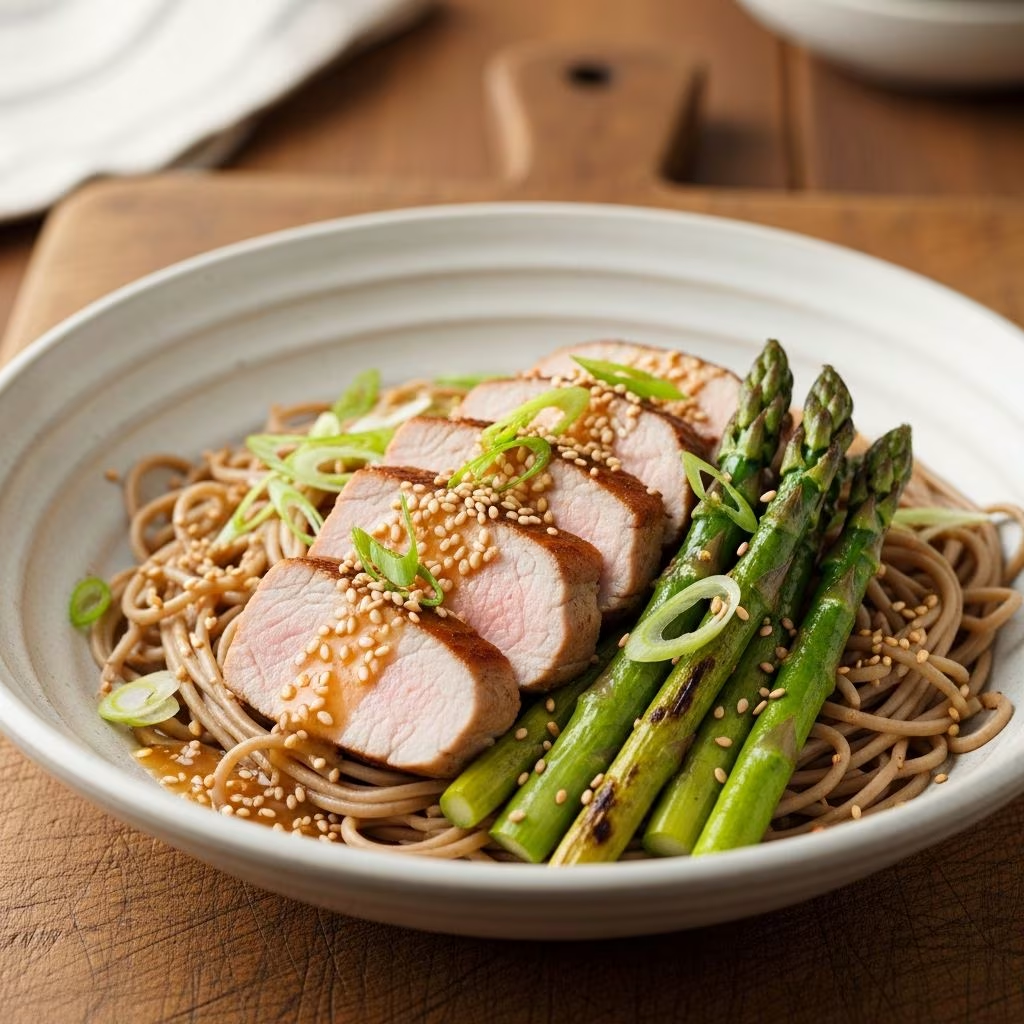
Combining the nutty essence of soba noodles with the tenderness of ground pork and the fresh snap of asparagus creates a dish that’s both comforting and vibrant. This recipe draws inspiration from Asian fusion cuisine, blending creamy tahini with spicy chili crisp for a sauce that clings beautifully to every strand of noodle. Ideal for those seeking a balance of spice, crunch, and savoriness, it’s a go-to option for family dinners or meal prep.
Why This Dish Stands Out in Your Recipe Rotation
Soba noodles, made from buckwheat flour, offer a hearty texture and subtle earthiness that pairs perfectly with proteins and vegetables. When tossed with seasoned pork and seasonal asparagus, the result is a meal that’s nutrient-dense yet indulgent. The sauce, a harmonious mix of tahini for creaminess, chili crisp for heat, soy sauce for umami, and rice vinegar for brightness, elevates simple ingredients into something restaurant-worthy.
Preparation takes about 30 minutes, making it faster than takeout. Asparagus provides vitamins A, C, and K, while pork offers protein, and soba adds fiber—turning this into a wholesome choice without sacrificing taste.
Essential Ingredients for Success
Gather these pantry staples and fresh produce for four generous servings:
- 12-12.8 oz dried soba noodles: Choose 100% buckwheat for authentic flavor and gluten-free option.
- 1 lb ground pork: Freshly ground for best texture; pork shoulder works too if slicing thin.
- 1 bunch asparagus: Trimmed and cut into 2-inch pieces for even cooking.
- 5 tbsp chili crisp: The star for spicy, crunchy depth; adjust for heat preference.
- 5 tbsp tahini: Provides silky richness; well-stirred for smoothness.
- 3 tbsp soy sauce: Low-sodium if watching salt; plus extra for tasting.
- 3 tbsp rice vinegar: Unseasoned for tangy balance.
- 2 tbsp vegetable oil: Neutral for high-heat cooking.
- Garnishes: Scallions, cilantro, toasted sesame seeds (½-1 tbsp).
These components create layers of flavor: heat from chili, nuttiness from tahini and sesame, freshness from herbs, and crunch from veggies.
Step-by-Step Cooking Guide
Follow these instructions for foolproof results. Work in stages to keep everything crisp.
Prepare the sauce: In a bowl, whisk 5 tbsp chili crisp, 5 tbsp tahini, 3 tbsp soy sauce, and 3 tbsp rice vinegar until smooth. Taste and add more soy or vinegar if needed for balance. Set aside to let flavors meld.
Toast sesame seeds: Spread ½-1 tbsp seeds on a baking sheet. Bake at 350°F for 5-10 minutes, stirring halfway, until golden and fragrant. This enhances their nutty aroma.
Cook noodles and asparagus: Boil a large pot of water. Add soba noodles; cook 2 minutes until nearly al dente. Add asparagus pieces; cook 1 more minute until bright green and crisp-tender. Drain, reserving 1 cup pasta water. Rinse under cool water to stop cooking and prevent sticking.
Brown the pork: Heat 2 tbsp oil in a skillet over medium-high. Add ground pork in an even layer; cook undisturbed 5 minutes until deeply browned. Break up and stir 3 more minutes until cooked through. Use a splatter screen to manage oil pops.
Combine everything: Stir sauce into pork, scraping browned bits for extra flavor (1 minute). Return noodles, asparagus, and pork to the pot. Add ⅔ cup reserved water; toss over medium heat 2 minutes, adding more water if needed for saucy consistency.
Serve hot: Divide into bowls. Top with sliced scallions, cilantro, and sesame seeds.
| Nutrient | Amount | % Daily Value |
|---|---|---|
| Calories | 550 | 28% |
| Protein | 28g | 56% |
| Carbs | 45g | 16% |
| Fat | 32g | 41% |
| Fiber | 4g | 14% |
Ingredient Substitutions and Variations
Adapt this recipe to your pantry or dietary needs without losing appeal.
- Protein swaps: Ground chicken, turkey, or tofu for vegetarian; thinly sliced pork shoulder.
- Veggie alternatives: Broccoli, snap peas, or bok choy instead of asparagus.
- Noodle options: Rice noodles or spaghetti if soba unavailable.
- Spice level: Reduce chili crisp to 3 tbsp for mild; add sriracha for extra kick.
- Creamy twist: Swap tahini for peanut butter for a satay vibe.
- Miso glaze variation: Marinate pork in miso before grilling, pair with soba.
These tweaks keep the dish versatile for all seasons.
Pro Tips for Restaurant-Quality Results
- Rinse soba immediately after draining to avoid gumminess—buckwheat starch is sticky.
- Brown pork well; those fond bits amplify sauce flavor.
- Reserve pasta water religiously—it’s starchy magic for emulsions.
- Prep all mise en place; the cook happens fast.
- Adjust sauce post-cooking; flavors intensify as it sits.
Pairing Suggestions to Complete the Meal
Elevate with simple sides:
- Drinks: Crisp green tea, chilled sake, or light lager to cut richness.
- Starters: Cucumber salad with sesame dressing or edamame.
- Sides: Steamed rice or quick-pickled radishes for contrast.
- Dessert: Fresh mango or mochi ice cream.
Storage, Reheating, and Make-Ahead Strategies
This dish stores well for 3-4 days.
- Fridge: Cool completely; store in airtight containers. Sauce may thicken—loosen with water when reheating.
- Reheat: Stovetop with a splash of water or broth; microwave in short bursts, stirring.
- Freeze: Up to 1 month; thaw overnight before reheating. Avoid freezing asparagus for best texture.
- Make-ahead: Sauce up to 3 days ahead; cook pork and veggies fresh.
Health Benefits and Nutritional Insights
Beyond taste, this meal nourishes: Asparagus aids digestion with prebiotics; soba provides antioxidants from buckwheat; pork supplies B vitamins and iron. The sauce’s tahini offers healthy fats and calcium. Balanced macros make it satisfying without heaviness.
Common Mistakes to Avoid
- Overcooking asparagus—it turns mushy fast.
- Skipping the rinse on soba—leads to clumping.
- Not tasting sauce iteratively—personalize salt and acid.
- Crowding the pan—pork steams instead of browns.
FAQs
What if I can’t find chili crisp?
Make a substitute: Fry 2 tbsp dried chilis, garlic, and shallots in oil until crispy. Store-bought gochujang mixed with oil works too.
Is this recipe gluten-free?
Yes, with 100% buckwheat soba and tamari instead of soy sauce.
Can I use frozen asparagus?
Thaw and pat dry first; add later to avoid sogginess.
How spicy is it?
Mild-medium; depends on your chili crisp. Start low and build.
Vegetarian version?
Swap pork for crumbled tempeh or mushrooms; same method.
Exploring Similar Recipes
Love this? Try soba with miso-glazed pork and grilled asparagus for a smoky twist, or Bittman’s pork shoulder stir-fry for heartier bites.
References
- Pork & Asparagus Soba Noodles with Tahini-Chili Crisp Sauce — The Brook Cook. 2023-04-27. https://thebrookcook.wordpress.com/2023/04/27/pork-asparagus-soba-noodles-with-tahini-chili-crisp-sauce/
- Pork, Asparagus, and Soba — The Bittman Project. N/A. https://bittmanproject.com/recipe/pork-asparagus-and-soba/
- Pork and Asparagus Soba — My Lilikoi Kitchen. 2023-05-18. https://www.mylilikoikitchen.com/2023/05/18/pork-and-asparagus-soba/
- Miso-Glazed Pork and Grilled Asparagus with Spring Onion Soba Noodles — Dinnerly. N/A. https://dinnerly.com.au/menu/139345-miso-glazed-pork-and-grilled-asparagus-with-spring-onion-soba-noodles