The Pittsburgh ham barbecue represents one of America’s most distinctive regional dishes, embodying the working-class traditions and culinary ingenuity of Western Pennsylvania. This iconic preparation transforms simple ingredients into a flavorful, satisfying meal that has graced family dinners, picnics, and community gatherings for generations. Unlike traditional barbecued meats that require hours of smoking or grilling, the Pittsburgh version offers a straightforward stovetop approach that makes this beloved dish accessible to home cooks everywhere. The combination of tender chipped ham, homemade sauce, and toasted bread creates a harmonious blend of flavors that continues to captivate food enthusiasts seeking authentic American comfort cuisine.
Understanding the Regional Significance
Pittsburgh’s culinary heritage reflects the city’s industrial past and the diverse immigrant communities that shaped its food culture. The ham barbecue emerged as a practical solution for feeding large groups efficiently while maximizing flavor through economical ingredients. This dish transcends its humble origins to become a symbol of Pittsburgh pride, appearing regularly at church functions, family reunions, and casual weeknight dinners throughout the region.
The preparation method distinguishes Pittsburgh ham barbecues from other barbecued meat preparations found across the United States. Rather than relying on slow-cooking techniques or smokehouses, this regional favorite employs a quick stovetop method that produces results in under thirty minutes. This efficiency made the dish particularly appealing to working families who needed nutritious, flavorful meals without extensive preparation time.
Essential Components for Authentic Preparation
Selecting the Right Ham
The foundation of any respectable Pittsburgh ham barbecue begins with choosing appropriate ham cuts. Chipped ham, specifically the paper-thin variety found in deli cases, serves as the traditional choice for this dish. This particular cut differs dramatically from standard thin-sliced deli ham; chipped ham arrives almost translucent, so delicate that individual slices tend to clump together within their packaging. The extreme thinness of chipped ham allows it to absorb sauce efficiently while creating the signature texture that distinguishes authentic Pittsburgh versions.
Home cooks who prefer alternatives have options beyond traditional chipped ham. Thick-cut deli ham can be hand-chopped into appropriately sized pieces for similar results. Additionally, leftover roasted or baked ham offers another viable substitute, though the cooking time may require adjustment depending on the thickness of the cut pieces. The flexibility in ham selection makes this recipe adaptable to whatever varieties available in local markets or leftover from previous meals.
Crafting the Barbecue Sauce
The sauce represents the true soul of this preparation, balancing multiple flavor dimensions into a cohesive whole. Traditional Pittsburgh barbecue sauce combines ketchup as the primary base ingredient with brown sugar for sweetness, creating the signature sweet undertone. Apple cider vinegar introduces acidity that brightens the overall flavor profile, while Worcestershire sauce and mustard add complexity and depth.
The construction of this sauce follows a logical progression that allows flavors to meld properly. Combining dry ingredients like brown sugar and seasonings with wet ingredients in a mixing bowl ensures even distribution before introducing the ham. This approach prevents pockets of concentrated flavoring or uneven sweetness distribution. Onion powder provides aromatic depth without requiring fresh onion preparation, though some regional variations include sautéed onions melted directly into the sauce base.
The sauce recipe demonstrates flexibility that encourages home cooks to adjust proportions based on personal preferences. Those seeking additional tanginess can increase apple cider vinegar measurements, while individuals preferring deeper sweetness may boost brown sugar quantities. Some regional variations incorporate barbecue relish, adding texture and additional flavor complexity to the mixture.
The Cooking Process Explained
Preparation Steps
Beginning with sauce preparation establishes the foundation for successful results. Combine brown sugar, ketchup, apple cider vinegar, Worcestershire sauce, mustard, salt, and pepper in a large mixing bowl, stirring thoroughly to create an even consistency. Onion powder should be whisked into the mixture at this stage, distributing its aromatic qualities throughout the sauce base.
Adding ham to the prepared sauce requires attention to coating consistency. Stir the chipped ham thoroughly, ensuring every morsel receives adequate sauce coverage. This initial mixing in the bowl prevents clumping and promotes even flavor absorption before heat application begins.
Heating and Cooking Methodology
Transfer the ham and sauce combination to a large skillet or heavy-bottomed pan positioned on medium heat. The goal involves bringing everything to a gentle simmer while stirring occasionally to maintain even heating and prevent sticking. This process typically requires fifteen to twenty minutes, during which the sauce gradually thickens while flavors intensify and meld together.
Home cooks have the option to bypass stovetop heating entirely by transferring the ham and sauce directly to a slow cooker on the warm setting. This alternative approach works particularly well when preparing for gatherings where maintaining consistent temperature matters more than active cooking. The slow cooker method requires only enough time for the mixture to reach serving temperature, typically thirty minutes to an hour depending on the appliance.
An alternative cooking method begins by melting butter in the skillet before adding softened onions. Once onions achieve a tender consistency, incorporate remaining sauce ingredients before adding the ham. This approach builds additional aromatic depth through sautéed alliums, creating a slightly more complex flavor foundation.
Serving and Presentation Techniques
Bread Selection and Preparation
The choice of bread significantly impacts the overall eating experience of Pittsburgh ham barbecues. Kaiser rolls represent the traditional Pittsburgh choice, offering sturdy structure that withstands sauce saturation without becoming mushy. Brioche rolls provide a sweeter, richer profile that complements the savory-sweet sauce balance. Standard hamburger buns work adequately for casual preparations, while more ambitious cooks might explore specialty varieties such as ciabatta or focaccia.
Toasting bread before assembly elevates the presentation and improves textural contrast. Butter the cut side of rolls generously and place buttered-side-down on a hot griddle for two to three minutes until achieving a golden-brown color and slight crispness. This toasting step prevents soggy bread while adding richness through butter absorption.
Assembly and Accompaniments
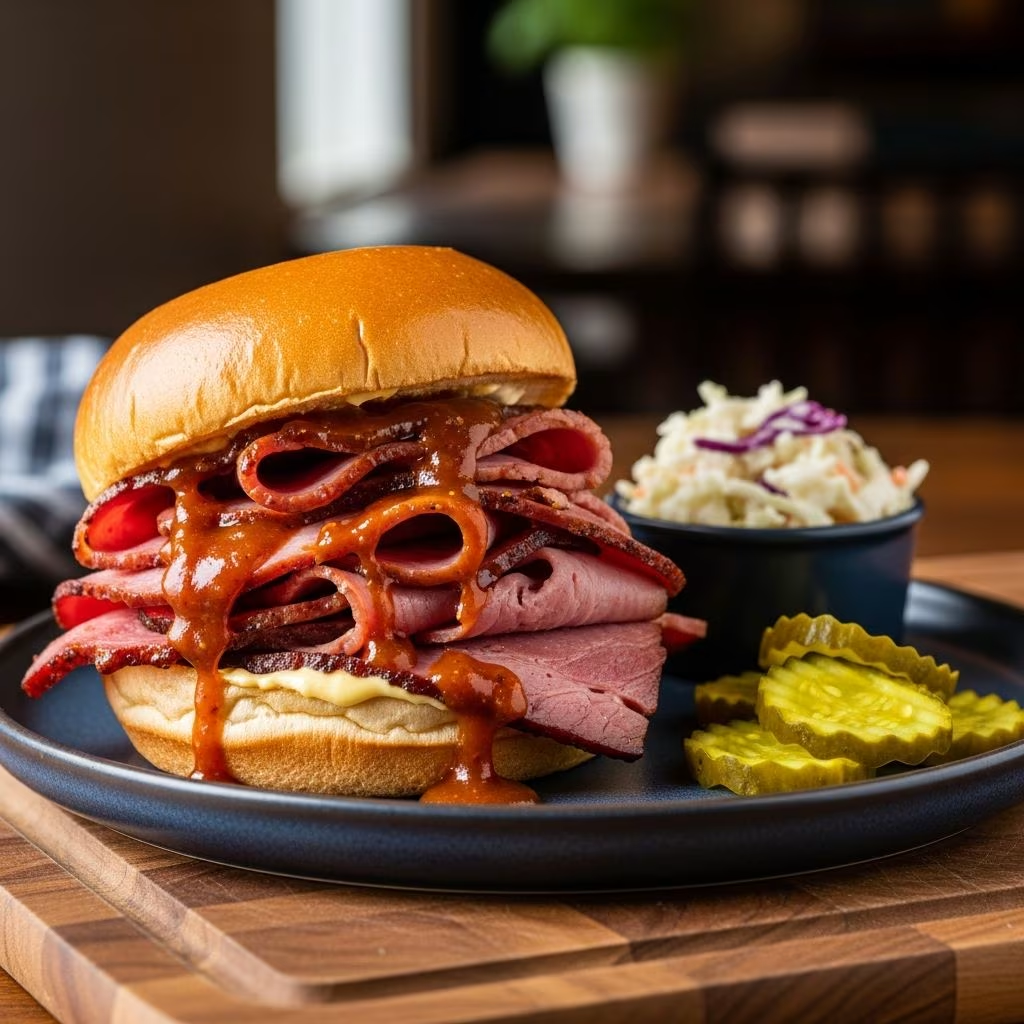
Constructing individual sandwiches requires layering components strategically. Place a generous spoonful of the hot ham and sauce mixture directly onto the toasted bread base. Top with a slice of sharp cheddar cheese, allowing the residual heat to soften the cheese slightly before placing the top bun. The cheese selection matters less rigidly than with other preparations, though sharp cheddar, pepper jack, colby jack, and Swiss varieties all complement the flavors admirably.
Serving suggestions enhance the complete meal experience. Homemade air fryer potato chips provide satisfying crunch and salty contrast to the sweet-savory sandwich. Fresh vegetable accompaniments such as carrot sticks or cucumber slices offer refreshing palate cleansing between bites. Warm soups, particularly cheesy cauliflower or hearty potato varieties, create comfortable, filling meals perfect for casual family dinners or gatherings.
Recipe Variations and Regional Adaptations
Sauce Customization Options
While the foundational recipe maintains consistency across Pittsburgh, individual households develop personalized variations reflecting family preferences and available ingredients. Some preparation methods incorporate additional vinegar and sugar to create saucier mixtures better suited to longer warming periods. Others reduce these quantities for concentrating flavors into thicker, clingier coatings that adhere more densely to ham particles.
Ingredient substitutions work within reason without compromising the dish’s essential character. Different vinegar varieties—such as white vinegar or red wine vinegar—can replace apple cider vinegar while maintaining acidity levels. Honey or molasses offer alternatives to brown sugar for sweetness, creating subtly different flavor profiles that remain authentically Pittsburgh in character. Worcestershire sauce substitutions prove more challenging without significantly altering the finished flavor, though soy sauce or tamari provide umami depth in emergency situations.
Serving Format Variations
While sandwiches represent the most common serving presentation, creative cooks have adapted Pittsburgh ham barbecues to different formats suited for various occasions. Serving the ham and sauce mixture over rice creates a main course plate presentation appealing to those preferring non-sandwich formats. Layering the preparation within phyllo dough cups produces elegant appetizer portions suitable for cocktail parties or formal gatherings. Combining ham and sauce with mashed potatoes generates a casserole-style preparation perfect for large group feeding scenarios.
Practical Cooking Guidance
Timing Considerations
The complete preparation process from ingredient assembly to plated service requires approximately thirty minutes, making this recipe suitable for weeknight dinners when time constraints matter. Actual cooking time occupies only fifteen to twenty minutes once ingredients reach the skillet, with most effort concentrated on initial sauce assembly and bread preparation. This efficiency makes Pittsburgh ham barbecues an attractive option for busy families seeking satisfying homemade meals without extensive kitchen time.
Scaling Recipes for Different Group Sizes
The foundational recipe yields four servings, though scaling adjustments accommodate both smaller and larger groups easily. Doubling all ingredient quantities produces eight servings with virtually no modification to cooking times or techniques. Reducing quantities for couples or individuals requires proportional adjustments to all components, though minimum sauce quantities should never drop below what adequately coats available ham portions.
Preparing large quantities for gatherings necessitates strategic adjustments. Cooking ham and sauce in batches prevents overcrowding, which can reduce heating efficiency and prevent even flavor development. Alternatively, multiplying ingredient quantities and using larger cooking vessels accommodates greater volume while maintaining similar cooking times and temperature management.
Storage and Make-Ahead Preparation
Refrigeration Guidelines
Leftover ham barbecue mixture stores reliably in