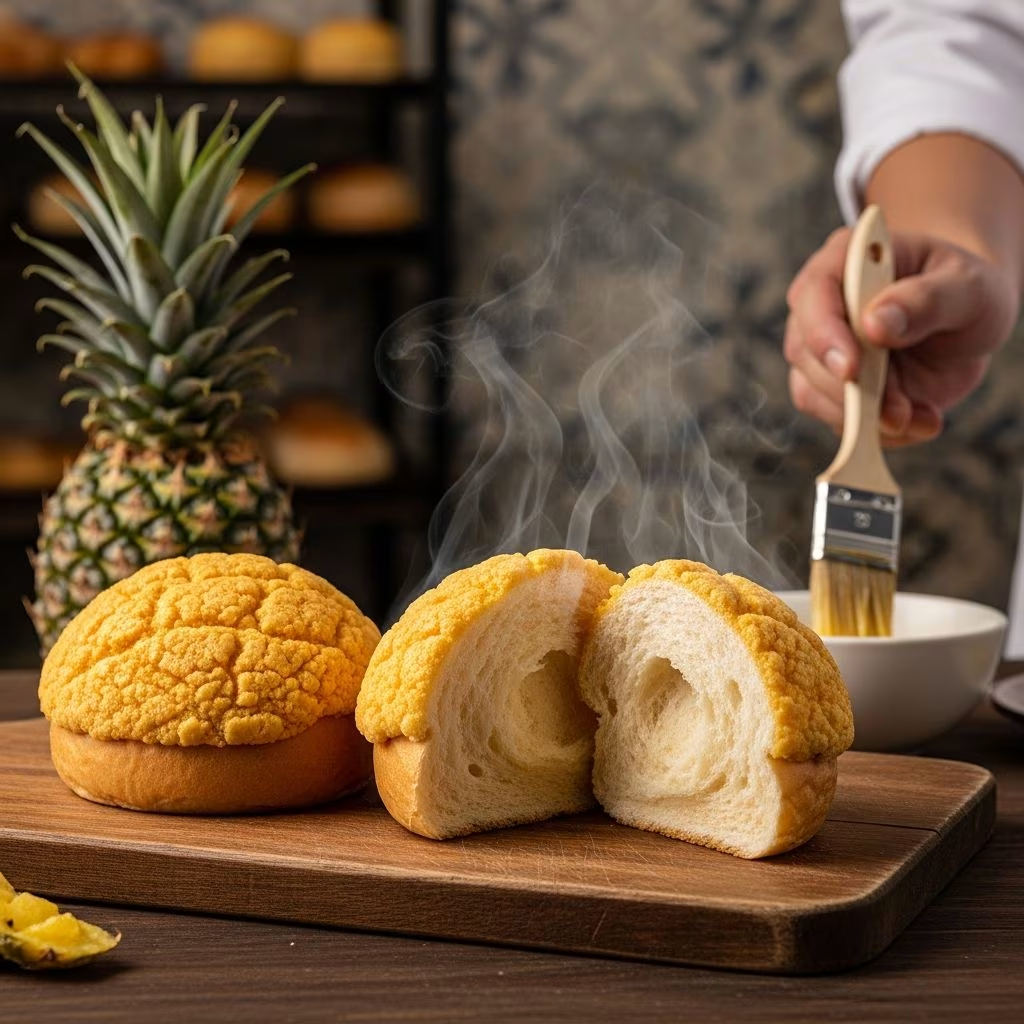
Pineapple buns represent one of the most intriguing examples of culinary naming conventions in global baking. Despite their evocative name, these delightful confections contain absolutely no pineapple whatsoever. Instead, their nomenclature derives from the distinctive appearance of their golden, textured topping, which bears visual resemblance to the bumpy surface of a pineapple fruit. Known in Cantonese as “bolo bao,” this pastry has become a staple in Chinatown bakeries across North America and remains extraordinarily popular throughout its native Hong Kong and broader Asian regions.
The Origin Story and Cultural Significance
The pineapple bun emerged from Hong Kong’s unique fusion of Eastern and Western culinary traditions. This pastry exemplifies how Asian baking traditions have evolved, despite the relative scarcity of dedicated baking chapters in traditional Asian cookbooks. The bun’s creation represents an adaptation of European baking principles to Asian tastes and ingredients, resulting in a confection that feels distinctly modern yet deeply rooted in local food culture.
What makes pineapple buns particularly fascinating is their international evolution. Variations of this style now appear throughout Asia and in diaspora communities worldwide. Some regions have developed their own interpretations, such as the Mexican Coffee Bun, which employs similar construction principles but features a piped topping instead of a traditional scored cookie layer. This global adaptation demonstrates how beloved pastries transcend geographical boundaries while maintaining their essential character.
Understanding the Dual-Dough Architecture
The fundamental structure of a pineapple bun comprises two distinct dough components that work in concert to create the final product. This dual-element composition distinguishes pineapple buns from simpler bread-based pastries and requires bakers to understand both dough systems thoroughly.
The Bread Foundation
The base consists of a soft, pillowy bread dough that provides the structural framework for the entire bun. This dough must achieve a delicate balance between moisture content and structural integrity. Professional bakers employ a specialized technique involving a heated flour-water mixture—known as a “tangzhong” or “roux starter” in Asian baking terminology—which gelatinizes the starch in flour. This process traps additional water within the dough matrix without creating a slack or overly sticky consistency. The result is bread with exceptional moisture retention properties, ensuring the final bun remains tender and fluffy even after baking and cooling.
The technique works by heating flour and water together to approximately 150°F in a microwave or stovetop, creating a paste that gelatinizes the starch. When this paste is incorporated into the remaining dough ingredients, it adds substantial moisture while maintaining optimal dough texture. This approach shares conceptual similarities with techniques employed in French pastry-making, though its application here produces distinctly different results suited to Asian baking preferences.
The Cookie Topping Layer
The second component is a cookie dough that creates the signature textured exterior. This topping dough is substantially different from the bread base—it is denser, richer, and deliberately designed to become brittle and crackly during baking. The topping dough combines butter, eggs, milk, sugar, and flour with a chemical leavener such as baking powder. This mixture creates a dough that is noticeably crumbly in texture before baking.
The critical step involves properly chilling the topping dough before forming it atop the bread buns. When adequately refrigerated, the topping dough becomes easier to handle and maintains its structural integrity during placement on the buns. Professional bakers often shape this topping into a cylindrical log, chill it thoroughly, then slice it into individual portions that correspond to the number of bread buns being prepared.
Construction Methodology and Technique Variations
The assembly process for pineapple buns encompasses several methodological approaches, each producing slightly different textural outcomes:
Traditional Cookie Dough Method
The classical approach involves rolling the chilled topping dough to a specific thickness, cutting it into appropriate portions, and placing these pieces directly atop unbaked bread buns. The cookie layer typically develops natural cracking and crater formations during baking, creating the characteristic pineapple-skin appearance that gives these pastries their common name. This method produces thinner, more delicate topping layers that shatter satisfyingly when bitten.
Piped Topping Technique
A more contemporary variation involves piping the topping mixture directly onto the bread buns using a pastry bag, inspired by Mexican coffee bun techniques. This method offers several practical advantages: it provides better portion control, accelerates the assembly process, and produces a slightly thicker topping layer. When baked, the piped topping undergoes a remarkable transformation—it melts and spreads while simultaneously developing the desired crackled surface texture. The visual effect of watching this transformation through an oven window is remarkably satisfying and has become popular subject matter for food-focused video content.
Step-by-Step Preparation Guide
Successfully creating pineapple buns requires attention to timing and sequencing. The optimal workflow follows this progression:
- Topping Preparation First: Begin by making the cookie topping dough, as it requires extended refrigeration time. Combining butter, milk, egg yolk, vanilla extract, and sugar creates a wet base, followed by incorporation of flour and baking powder. The resulting crumbly dough must be pressed into a dense log and wrapped for chilling.
- Bread Dough Development: Prepare the bread dough using the tangzhong method, heating a portion of flour and water before combining with remaining ingredients. Allow adequate rising time until the dough approximately doubles in volume.
- Shaping Bread Components: Once risen, divide the bread dough into 16 equal pieces and shape each into a smooth ball. Arrange on parchment-lined baking sheets and allow a second rise of approximately 30 minutes.
- Topping Application: Remove the chilled topping log from refrigeration, slice it into 16 portions, and place each piece atop a bread bun. If using the piped method instead, fill a pastry bag and create decorative patterns across each bun’s surface.
- Baking: Bake at the appropriate temperature—typically around 375–400°F—until the bread is golden and the topping develops its characteristic crackled appearance.
Filling and Flavor Variations
While many bakeries serve pineapple buns plain, filled versions offer additional flavor dimensions and textural interest.
Pastry Cream Filling
The simplest filling option is a lightly sweetened pastry cream, which provides a delicate vanilla flavor and smooth texture that contrasts beautifully with the crispy topping and soft bread. This filling is piped into the completely cooled bun through a small opening, typically on the bottom or side, ensuring even distribution without collapsing the bun’s structure.
Savory Barbecued Pork Filling
For those preferring savory applications, Chinese barbecued pork—known as char siu—offers an entirely different flavor profile. This filling introduces umami-rich, slightly sweet pork with smoky undertones. The inclusion of char siu requires a modified assembly technique: the bread dough is partially flattened and draped over muffin tin cavities before topping application, allowing filling placement within the formed cup before baking. This method ensures even distribution and prevents filling from leaking during the baking process.
Common Challenges and Solutions
| Challenge | Potential Cause | Solution |
|---|---|---|
| Dry, dense bread interior | Insufficient tangzhong roux or improper hydration | Ensure roux reaches 150°F and is thoroughly incorporated; verify precise flour-to-liquid ratios |
| Topping does not crack or develop texture | Topping dough too soft or inadequately chilled | Refrigerate topping dough for full recommended time; avoid working with warm dough |
| Bread and topping separate during baking | Insufficient surface moisture or weak adhesion | Ensure bread surface is slightly moist before topping application; press topping firmly into place |
| Uneven bun sizes | Inconsistent dough portioning | Use kitchen scale to measure each piece for precise 62–63 gram portions |
Troubleshooting Topping Texture
The topping dough presents particular challenges due to its inherently crumbly nature. When rolling the chilled topping dough becomes difficult, an acceptable alternative involves gently pressing the dough using fingertips to create a flattened layer rather than rolling it. This modified approach produces a thicker topping that may not completely cover the bread surface beneath, but the final baked result maintains excellent flavor and satisfying texture without compromising quality.
Baking Science and Maillard Reactions
The distinctive golden-brown appearance and complex flavor of pineapple bun toppings result from Maillard reactions—chemical processes occurring when proteins and sugars combine under heat. The cookie topping’s higher sugar content compared to bread dough enables more extensive Maillard development, producing deeper browning, richer flavors, and the characteristic crispy texture. The contrast between the topping’s intense color and the bread’s lighter hue creates both visual appeal and complementary flavor profiles.
Storage and Freshness Considerations
Freshly baked pineapple buns are optimal when consumed within 24 hours of baking. The bread component remains moist due to the tangzhong technique, though the topping gradually loses crispness over time. For extended storage, individual buns can be wrapped in plastic wrap and frozen for up to one month. Thawing at room temperature or brief reheating in a 300°F oven restores crispness to the topping layer while maintaining interior moisture.
Equipment and Ingredient Essentials
Successful pineapple bun preparation requires basic but essential equipment: a kitchen scale for precise measurements, mixing bowls, a bench scraper for dough division, parchment paper for baking sheets, and either a rolling pin or hand-pressing technique for topping formation. A microwave suffices for preparing the tangzhong roux, though a stovetop alternative works equally well. A pastry bag proves invaluable for piped topping variations and filling application.
Essential ingredients include bread flour or all-purpose flour, butter, eggs, milk, sugar, yeast (active dry or instant), salt, and vanilla extract. Optional ingredients for enhanced flavor include cardamom, sesame seeds scattered atop the topping before baking, or alternative fillings such as red bean paste or custard cream.
Frequently Asked Questions
Why are they called pineapple buns if they contain no pineapple?
The name references the visual appearance of the bun’s textured topping, which resembles the bumpy surface of a pineapple fruit. The cracking pattern that develops during baking creates a craggy, pitted appearance similar to pineapple skin.
Can pineapple buns be made without the tangzhong method?
While possible, the tangzhong method significantly improves moisture retention and texture. Without it, bread buns are more likely to become dry or dense over time. The technique is worth learning for substantially superior results.
How long does the topping dough need to chill?
Adequate chilling in the refrigerator (not freezer) makes the dough significantly easier to work with. Most bakers recommend at least 30 minutes to 1 hour of refrigeration, though longer chilling poses no problems.
Are there nutritional considerations when consuming pineapple buns?
Pineapple buns are indulgent desserts containing significant sugar, butter, and eggs. They should be enjoyed in moderation as part of a balanced diet.
What makes the topping crack the way it does?
The topping dough’s high sugar content and deliberate crumbly texture allow it to expand and contract at different rates than the bread beneath during baking. This differential expansion creates natural crack lines and the crater-like appearance characteristic of the pineapple skin pattern.
References
- Pineapple Buns – No Actual Pineapple, But Fun to Make, Fill and Eat — The Splendid Table. 2016-11-29. https://www.splendidtable.org/story/2016/11/29/pineapple-buns-no-actual-pineapple-but-fun-to-make-fill-and-eat
- Pineapple Buns (Bolo Bao) — Omnivore’s Cookbook. 2024. https://omnivorescookbook.com/pineapple-buns/