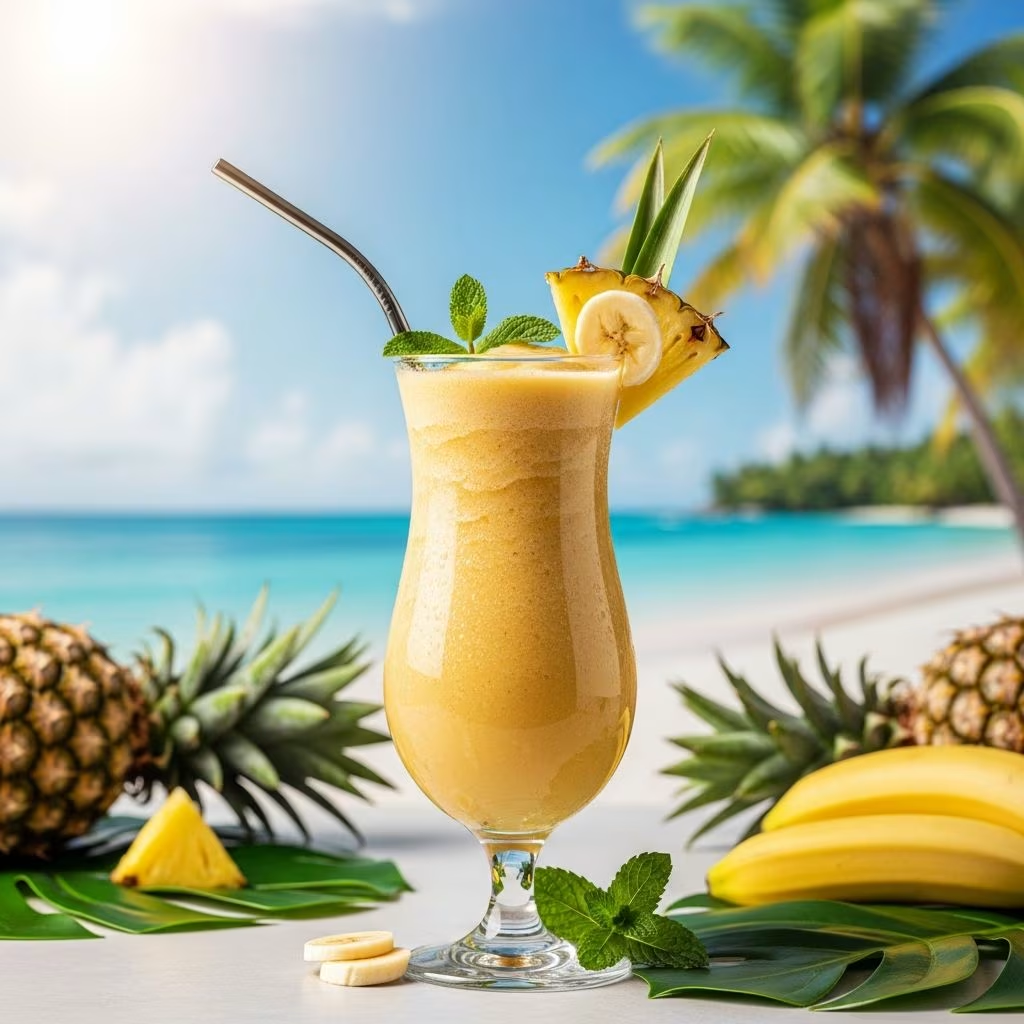
Experience the vibrant essence of the tropics with a pineapple banana smoothie that combines the juicy tang of pineapple and the creamy sweetness of banana into one irresistible drink. This simple recipe requires minimal ingredients and blending time, making it an ideal choice for busy mornings, post-workout refreshment, or anytime you crave a nutrient-packed treat.
Why This Smoothie Stands Out
Pineapple and banana create a perfect harmony of flavors—pineapple’s bright acidity cuts through banana’s mellow richness, resulting in a balanced, naturally sweet profile without added sugars. Enhanced with yogurt for creaminess and a splash of juice or milk for smoothness, this blend delivers a satisfying texture that’s thick yet sippable. It’s versatile too, customizable for dietary needs like dairy-free or low-sugar versions.
- Quick prep: Ready in under 5 minutes.
- Nutrient boost: High in vitamins C and B6, potassium, and fiber.
- Family-friendly: Appeals to kids and adults alike.
Essential Ingredients for Success
Gather these core components to craft your smoothie. Quantities serve 2, but scale as needed.
| Ingredient | Amount | Purpose |
|---|---|---|
| Frozen pineapple chunks | 2 cups | Provides tartness, chill, and thickness |
| Ripe banana (frozen or fresh) | 1 medium | Adds natural sweetness and creaminess |
| Greek yogurt (plain or flavored) | 1 cup | Boosts protein and creates velvety texture |
| Almond milk or pineapple juice | 1 cup | Thins to perfect consistency |
| Honey or maple syrup (optional) | 1 tbsp | Extra sweetness if fruits aren’t ripe |
Pro tip: Freeze bananas by peeling, slicing, and storing in bags for grab-and-go convenience. Use fresh pineapple for juicier results or frozen for year-round availability and instant chill.
Step-by-Step Blending Guide
Master the process with these straightforward steps for a lump-free, frosty result.
- Prep fruits: Chop banana if fresh; measure pineapple chunks.
- Layer in blender: Start with liquids (milk/juice), then yogurt, banana, and pineapple on top. This order prevents clogging.
- Blend progressively: Begin on low speed to break down fruits, then ramp to high for 1-2 minutes until silky smooth. Scrape sides as needed.
- Adjust texture: Add more liquid for thinner consistency or ice for extra frostiness.
- Serve immediately: Pour into chilled glasses; garnish with pineapple wedges or banana slices.
Expect a vivid yellow hue with a piña colada-like aroma that’s utterly inviting.
Health Benefits of Pineapple and Banana
This smoothie isn’t just delicious—it’s a powerhouse of nutrition. Pineapple supplies bromelain, an enzyme aiding digestion and reducing inflammation, alongside ample vitamin C for immune support. Bananas contribute potassium for heart health and muscle function, plus prebiotic fiber for gut wellness. Yogurt adds probiotics and protein, promoting satiety and bone health.
- Vitamin C from pineapple: Supports collagen production and antioxidant defense.
- Potassium from banana: Helps regulate blood pressure.
- Protein from yogurt: Keeps you full longer, ideal for meal replacement.
Approximate per serving: 250 calories, 5g protein, 50g carbs (mostly natural sugars), 3g fiber. A guilt-free indulgence!
Creative Variations to Try
Keep things exciting by tweaking the base recipe.
- Green detox version: Add spinach or kale—mild flavor won’t overpower fruits.
- Tropical twist: Incorporate mango, coconut milk, or a teaspoon of ginger for zing.
- Protein-packed: Swap yogurt for protein powder; use oat or soy milk.
- Dairy-free delight: Opt for coconut or almond yogurt and plant-based milk.
- Spiced edition: Dash of cinnamon or turmeric for warmth and anti-inflammatory perks.
Experiment with frozen berries for antioxidants or chia seeds for omega-3s and thickness.
Perfect Pairings and Serving Ideas
Elevate your smoothie experience with thoughtful accompaniments.
- Breakfast bowl: Thicken with extra banana or oats; top with granola, nuts, and berries.
- Post-gym fuel: Pair with toast or eggs for balanced recovery.
- Snack time: Serve in popsicle molds for frozen treats.
- Kid-approved: Use fun straws and shape like unicorns with fruit skewers.
For entertaining, layer in jars with granola for a parfait effect.
Storage and Make-Ahead Tips
Fresh is best, but plan ahead effortlessly.
- Fridge storage: Keeps 24 hours in airtight container; stir before drinking as separation occurs.
- Freezer prep: Portion ingredients in bags; blend straight from frozen.
- Batch cooking: Double recipe for the week; thaw overnight.
Avoid long-term storage to preserve vitamins and texture.
Frequently Asked Questions
Can I use fresh instead of frozen fruit?
Yes, but add ice cubes to achieve the signature chill and thickness. Frozen fruit yields better creaminess without dilution.
Is this smoothie vegan?
Easily! Replace yogurt with a plant-based alternative like soy or coconut yogurt.
How do I make it sweeter without sugar?
Choose overripe bananas (brown spots indicate peak sweetness) or add dates/medjool pits.
What’s the best blender for smoothies?
High-speed models (1000+ watts) handle frozen ingredients effortlessly; personal blenders work for smaller batches.
Can I add protein powder?
Absolutely—vanilla or unflavored blends seamlessly; start with 1 scoop per serving.
Nutrition Comparison Table
Compare base vs. variations for informed choices.
| Variation | Calories | Protein (g) | Fiber (g) |
|---|---|---|---|
| Base (with yogurt) | 250 | 10 | 4 |
| Dairy-free | 220 | 5 | 4 |
| With spinach | 260 | 11 | 6 |
| Protein boost | 300 | 25 | 4 |
Common Mistakes to Avoid
Achieve pro results every time.
- Overloading the blender: Blend in batches if needed.
- Skipping ripe fruit: Unripe bananas taste starchy.
- Ignoring liquid order: Liquids first ensure smooth blending.
- Forgetting to taste: Adjust sweetness/acidity before serving.
With practice, you’ll perfect this tropical staple.
References
- USDA FoodData Central: Pineapple, raw — United States Department of Agriculture. 2023-05-15. https://fdc.nal.usda.gov/fdc-app.html#/food-details/2344718/nutrients
- USDA FoodData Central: Bananas, raw — United States Department of Agriculture. 2023-05-15. https://fdc.nal.usda.gov/fdc-app.html#/food-details/2344720/nutrients
- Harvard T.H. Chan School of Public Health: The Nutrition Source – Yogurt — Harvard University. 2024-01-10. https://nutritionsource.hsph.harvard.edu/dairy/yogurt/
- NIH Dietary Supplement Fact Sheet: Vitamin C — National Institutes of Health. 2024-06-20. https://ods.od.nih.gov/factsheets/VitaminC-HealthProfessional/
- NIH Dietary Supplement Fact Sheet: Potassium — National Institutes of Health. 2023-11-05. https://ods.od.nih.gov/factsheets/Potassium-HealthProfessional/