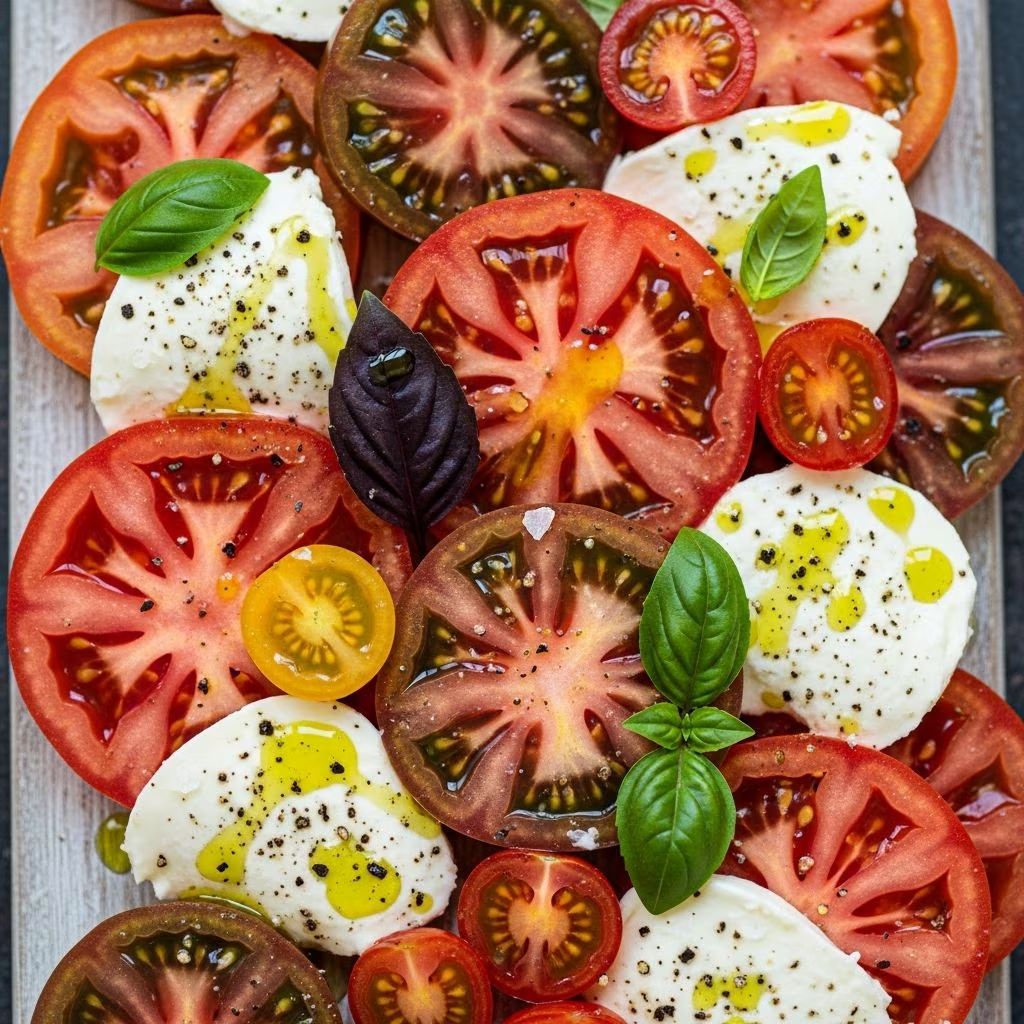
The Caprese salad stands as a timeless emblem of Italian culinary simplicity, where a handful of pristine ingredients harmonize to create a symphony of flavors. Hailing from the sun-drenched island of Capri, this dish celebrates the peak of summer produce with its medley of ripe tomatoes, creamy mozzarella, fragrant basil, and a drizzle of olive oil. Far from a mere side, a well-executed Caprese can steal the show at any meal, offering freshness that cuts through richer courses or shines solo as a light lunch. In this guide, we’ll dive deep into transforming basic components into an extraordinary plate, exploring everything from sourcing the finest produce to innovative plating ideas that will impress your guests.
Understanding the Essence of Caprese
At its core, Caprese salad embodies the philosophy of cucina povera—poor kitchen cooking—that prioritizes quality over quantity. Originating in the 1920s or possibly earlier, it mirrors the Italian flag with red tomatoes, white cheese, and green herbs, though its roots are more about local abundance than patriotism. The magic lies in balance: the acidity of tomatoes tempers the mild richness of mozzarella, while basil adds aromatic punch, all bound by olive oil’s silkiness. To master it, grasp that seasonality is non-negotiable; off-season versions pale in comparison, lacking the juiciness and perfume that define authenticity.
Why does it endure? Science plays a role—tomatoes release glutamates that enhance umami when paired with mozzarella’s proteins, creating a flavor boost backed by food chemistry research from the University of California Davis. A study there highlights how fresh mozzarella’s whey proteins interact with tomato lycopene for heightened taste perception. This isn’t just folklore; it’s why a great Caprese feels addictive.
Selecting Supreme Ingredients
Ingredient quality dictates success. Start with tomatoes: heirloom varieties like Brandywine or Cherokee Purple offer superior flavor depth over supermarket hybrids. Look for fruits heavy for their size, with taut skins and a deep, even color. According to USDA guidelines on fresh produce, peak ripeness occurs when tomatoes yield slightly to pressure and emit a fruity aroma at the stem end.
Mozzarella demands freshness—opt for buffalo if possible, prized for its softer texture and higher fat content, which melts subtly on the tongue. Ciliegine or bocconcini pearls work for individual servings, but hand-torn pieces preserve integrity better than pre-sliced. Basil should be vibrant green, leaves unblemished; Genovese basil is ideal for its sweet, peppery notes. Extra-virgin olive oil, cold-pressed from Italian olives, provides grassy undertones—check harvest dates for freshness, as advised by the International Olive Council.
- Tomatoes: 4-5 medium heirlooms, varied colors for visual appeal
- Mozzarella: 1 lb fresh, preferably buffalo
- Basil: 1 large bunch, leaves only
- Oil: High-quality EVOO, about 1/4 cup
- Seasonings: Flaky sea salt, cracked black pepper
Precision Slicing and Assembly Techniques
Slicing is artistry. Use a sharp serrated knife for tomatoes to avoid bruising—aim for 1/4-inch thickness. For mozzarella, a similar width ensures even layering. Alternate slices on a platter: tomato, cheese, basil leaf, repeat. Resist stacking vertically unless for formal presentation; the horizontal fan allows flavors to mingle naturally.
Season strategically: sprinkle salt post-assembly to draw out tomato juices, creating a natural dressing. Pepper adds bite, but go light. Drizzle oil in a zigzag for even coverage, never pooling. For advanced flair, incorporate a balsamic reduction: simmer high-quality balsamic vinegar until syrupy, about 10 minutes, yielding a tangy glaze that elevates without overpowering.
| Technique | Tool | Tip |
|---|---|---|
| Serrated knife slice | Long bread knife | Gentle sawing motion preserves juices |
| Tear basil | Hands | Releases essential oils better than chopping |
| Oil drizzle | Spoon or bottle | Height of 6 inches prevents sogginess |
Seasonal Variations and Twists
While purists shun modifications, creative riffs keep Caprese relevant. In summer, add sliced peaches for sweetness contrasting tomato acidity—a nod to Southern Italian fruit pairings. Winter calls for roasted cherry tomatoes and stracciatella cheese for creaminess. Vegan adaptations swap mozzarella for marinated tofu or cashew-based curd, maintaining textural fidelity.
Grilled versions amplify smokiness: char tomato halves and mozzarella briefly over high heat, then assemble with extra basil. For stuffed Caprese, hollow mini tomatoes and fill with herbed cheese. These keep the 3-2-1 ratio (three core elements) intact, ensuring harmony.
Pairing Perfection: Wines and Sides
Caprese’s acidity and freshness pair with light whites like Vermentino or Prosecco, whose bubbles cleanse the palate. Rosé from Provence complements the fruitiness. Avoid heavy reds; they clash with brightness. Sides? Grilled bread for bruschetta-style scoops or prosciutto for salty contrast, but sparingly to honor simplicity.
Common Mistakes to Dodge
Over-salting early drowns flavors; watery tomatoes from fridge storage ruin texture—keep at room temp. Pre-slicing mozzarella hours ahead leads to weeping. Skimping on basil or using dried herbs kills aroma. Finally, cheap oil tastes rancid—invest wisely.
Storage and Make-Ahead Strategies
Caprese hates waiting; assemble just before serving. If prepping, store components separately: tomatoes and basil at room temp, mozzarella in whey brine. Leftovers? Layer in a jar with oil for a next-day panzanella base. Freezing isn’t viable—freshness is key.
Health Benefits of This Italian Gem
Beyond taste, Caprese nourishes. Tomatoes deliver lycopene, an antioxidant linked to heart health per Harvard T.H. Chan School of Public Health studies. Mozzarella provides calcium and protein; basil offers anti-inflammatory eugenol. At under 300 calories per serving, it’s a guilt-free powerhouse.
Step-by-Step Recipe for Beginners
- Wash and dry tomatoes, basil thoroughly.
- Slice tomatoes and mozzarella evenly.
- Arrange alternately on a chilled platter.
- Tuck basil leaves between slices.
- Season with salt, pepper; drizzle oil and balsamic glaze.
- Serve immediately with crusty bread.
Serves 4-6. Prep time: 15 minutes.
Frequently Asked Questions
Can I make Caprese salad ahead?
Partially—slice ingredients separately and assemble at the last minute to avoid sogginess.
What’s the best mozzarella for Caprese?
Fresh buffalo mozzarella for superior creaminess, but cow’s milk fior di latte works well too.
How do I ripen tomatoes faster?
Place in a paper bag with an apple; ethylene gas speeds the process, per USDA advice.
Is balsamic vinegar traditional?
Not strictly, but a reduction adds modern depth without straying far from roots.
Can I use dried basil?
Avoid it—fresh basil’s volatile oils are irreplaceable for authentic flavor.
Scaling Up for Crowds
For parties, use a large wooden board for family-style presentation. Double ingredients, but slice thinner for bite-sized pieces. Add cherry tomatoes halved for variety. Prep a double balsamic batch ahead. This scales effortlessly, feeding 10-12 with minimal effort.
References
- Fresh Produce Handling Guidelines — USDA Agricultural Marketing Service. 2023-05-15. https://www.ams.usda.gov/services/auditing/gfhp/food-safety-resources
- Umami Enhancement in Foods — University of California, Davis Food Science & Technology. 2022-11-10. https://wineserver.ucdavis.edu/industry-info/enology/methods-and-techniques/common-chemical-reagents/umami
- Olive Oil Standards and Testing — International Olive Council. 2024-01-20. https://www.internationaloliveoil.org/olive-oil-standards/
- Lycopene and Cardiovascular Health — Harvard T.H. Chan School of Public Health. 2023-08-05. https://www.hsph.harvard.edu/nutritionsource/antioxidants/
- Tomato Ripening Science — USDA ARS. 2021-07-12. https://www.ars.usda.gov/research/publications/publication/?seqNo115=347890