Pickled squash offers a vibrant way to enjoy the mild, tender flavors of summer produce long after the harvest season ends. Yellow crookneck, straightneck, or zucchini varieties transform into crisp, tangy treats when preserved in vinegar brines infused with spices. These pickles serve as versatile additions to sandwiches, charcuterie boards, salads, or straight from the jar as a refreshing snack. Whether opting for quick refrigerator versions ready in hours or shelf-stable canned batches, the process is straightforward and rewarding for home cooks.
Why Pickle Squash?
Summer squash grows abundantly, often overwhelming gardens with its prolific yields. Pickling extends shelf life, locks in nutrients like vitamin C and fiber, and intensifies natural sweetness with acidity. Unlike softer vegetables, squash holds its texture well in brines, providing crunch without sogginess. Home pickling avoids preservatives found in commercial products, allowing customization of sweetness, heat, and aromatics.
Selecting the Best Squash for Pickling
Choose firm, unblemished squash measuring 6-8 inches long for optimal tenderness. Smaller specimens yield the best crunch, as larger ones can develop tougher skins and larger seeds. Freshness is key—look for vibrant color, smooth surfaces, and heavy weight for size. Both yellow summer squash and zucchini work interchangeably, though yellow varieties lend appealing golden hues to finished jars.
- Yellow crookneck or straightneck: Curved or straight shapes with buttery flavor.
- Zucchini: Mild and versatile, slices evenly.
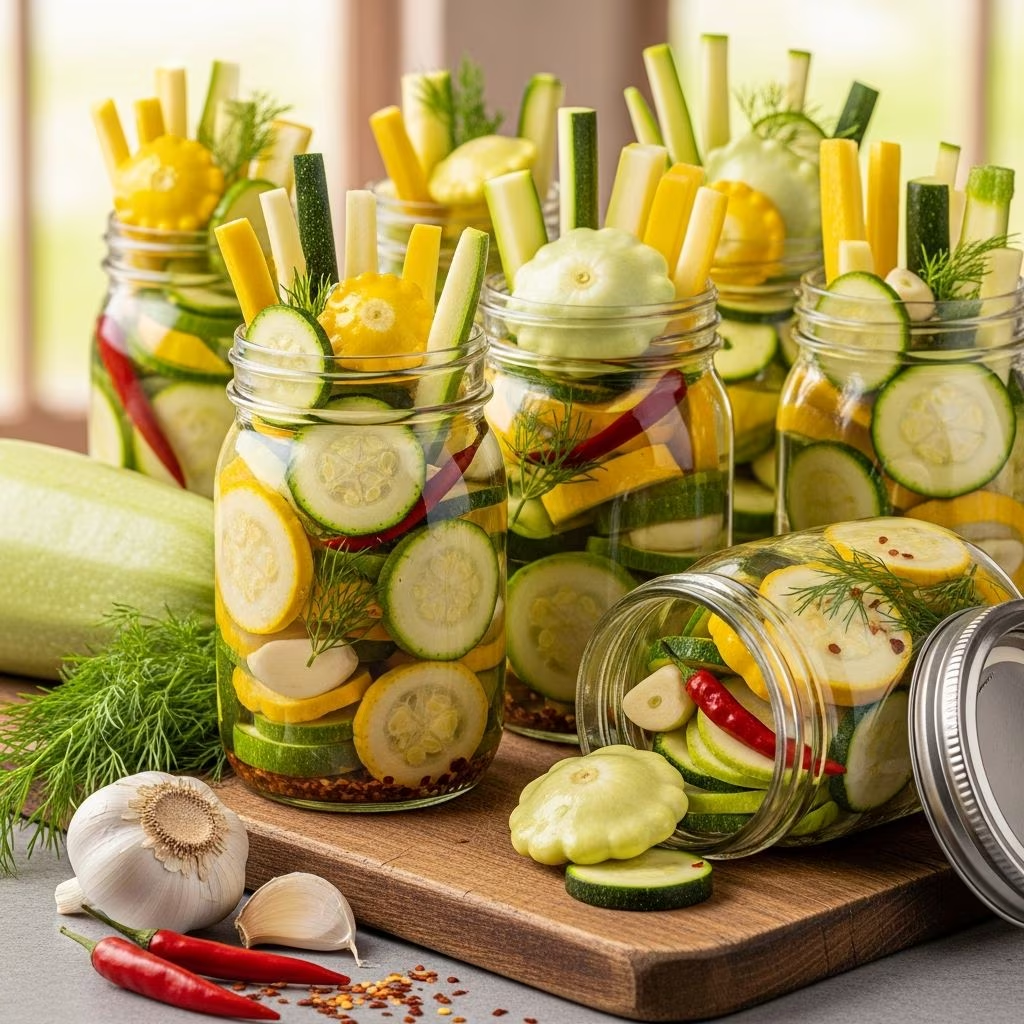
- Pattypan: Scalloped edges add visual appeal; use in mixed batches.
Wash thoroughly and trim ends before slicing into 1/8 to 1/4-inch rounds, spears, or ribbons using a mandoline for uniformity. Thin cuts absorb brine faster while maintaining bite.
Essential Ingredients for Squash Pickles
A basic brine balances vinegar’s sharpness with sugar’s mellowing effect, enhanced by spices for depth. Common components include:
| Ingredient | Purpose | Variations |
|---|---|---|
| White or apple cider vinegar (5% acidity) | Preserves and tenderizes | Rice vinegar for milder tang |
| Sugar (granulated or honey) | Balances acidity | Brown sugar for caramel notes |
| Kosher salt | Draws out moisture pre-brine | Pickling salt to avoid clouding |
| Mustard/celery seeds, turmeric | Aromatics and color | Pickling spice blend, dill |
| Onions, peppers, garlic | Flavor boosters | Red pepper flakes for heat |
Quick Refrigerator Pickled Squash
Ideal for immediate gratification, these no-cook or low-heat pickles store in the fridge for weeks. Prep time: 20 minutes. Yield: 2 quarts.
Ingredients (for 1.5 lbs squash):
- 1.5 lbs yellow squash and zucchini, thinly sliced
- 1/3 cup thinly sliced onion
- 9 sprigs fresh cilantro (or dill)
- 3 garlic cloves, halved
- 1 tbsp mixed peppercorns
- 1.5 tsp coriander seeds
- 1 tbsp crushed red pepper flakes
- 1.25 cups apple cider vinegar
- 1.25 cups water
- 2 tsp kosher salt
- 2.5 tbsp honey
Step-by-Step Directions:
- Pack sliced squash, onion, herbs, garlic, and spices into a 2-quart jar.
- Boil vinegar, water, salt, and honey until dissolved; pour over vegetables, ensuring submersion.
- Cool to room temperature, seal, and refrigerate 4 hours (best after 2 days).
These pickles develop bold flavors quickly, with honey softening the vinegar’s edge and spices adding warmth. Enjoy on tacos, grain bowls, or cheese plates.
Canned Pickled Squash for Long-Term Storage
For pantry staples lasting a year, water-bath canning ensures safety. Process pints for 10-15 minutes (adjust for altitude). Yield: 7 pints from 3 lbs squash.
Ingredients:
- 3 lbs yellow squash, sliced 1/8-inch thick
- 2 large onions, sliced
- 1 green bell pepper, 1 red bell pepper, sliced
- 1/3 cup kosher salt (for salting)
- 5 cups white vinegar
- 4 cups sugar
- 2 tbsp mustard seeds
- 2 tbsp celery seeds
- 1 tbsp ground turmeric or mustard
Directions:
- Layer squash, onions, peppers; salt generously. Rest 1 hour, rinse, drain.
- Boil vinegar, sugar, spices; add vegetables, simmer 1 minute.
- Pack hot into sterile pints, leave 1/2-inch headspace, process 10 minutes.
Turmeric imparts a sunny glow, while seeds provide pops of earthy spice. Always follow USDA guidelines for safe canning.
Flavor Variations to Try
Customize brines for diverse profiles:
- Spicy Dill: Add dill seed, fresh dill, garlic, and jalapeños.
- Sweet Heat: Incorporate crushed red pepper and extra honey.
- Turmeric Mustard: Ground turmeric with mustard seeds for golden, zesty slices.
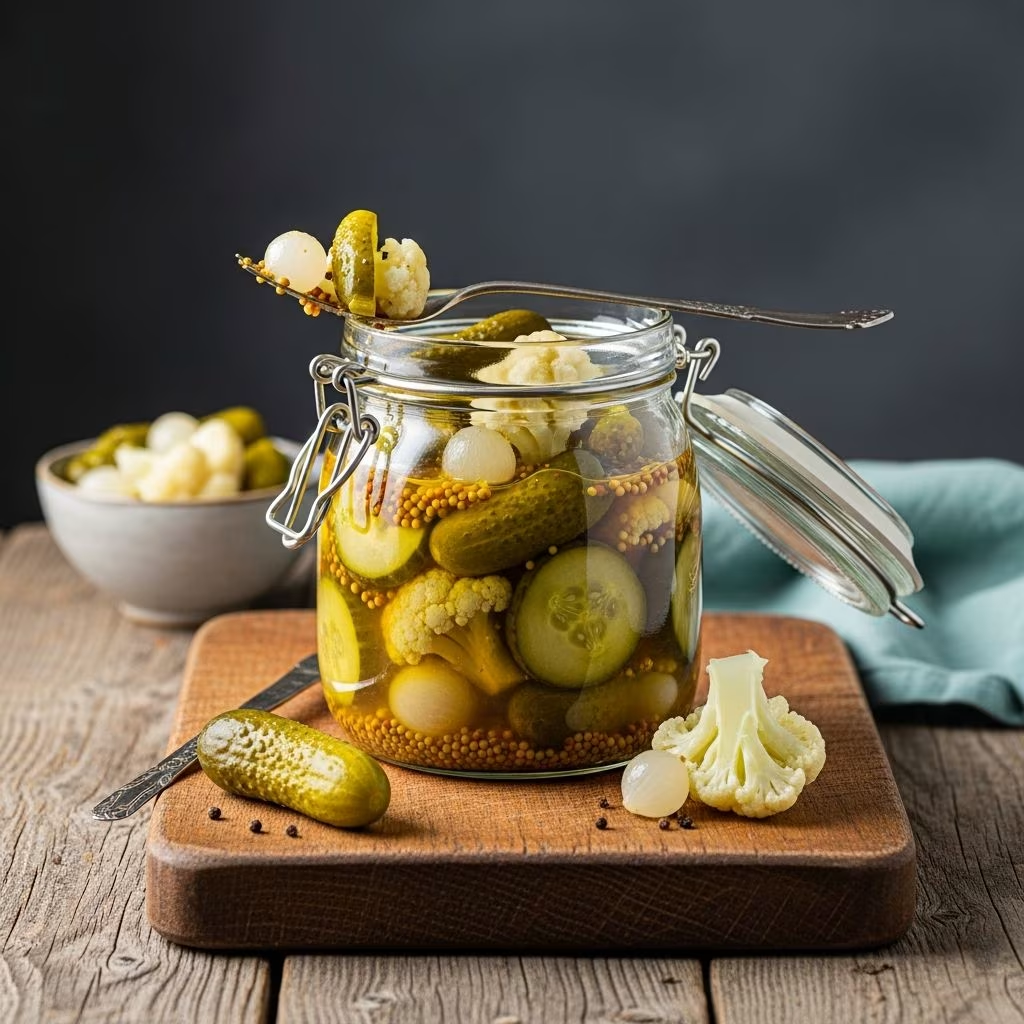
- Mixed Veggie: Combine with cucumbers, carrots, or cauliflower.
- Herb-Infused: Cilantro, coriander, or fennel for aromatic twists.
Experiment with brine ratios: 1:1 vinegar-water for mild, full vinegar for puckering tang.
Preparation Techniques for Perfect Texture
Salting draws excess water, preventing mushiness—rinse thoroughly to avoid over-saltiness. Uniform slicing ensures even pickling; a mandoline speeds this up safely. For spears, cut to jar height. Press vegetables under brine to eliminate air pockets, which cause spoilage.
Safety Tips for Home Pickling
Maintain 5% acidity vinegar; test pH if experimenting. Sterilize jars by boiling 10 minutes. Check seals post-processing: lids should not flex. Refrigerate opened jars and discard if off-odors, mold, or softness appear. Low-acid veggies like squash require precise recipes to inhibit botulism.
Storage and Shelf Life
| Method | Shelf Life | Storage Conditions |
|---|---|---|
| Refrigerator Pickles | 2-4 weeks | 40°F or below, submerged in brine |
| Water-Bath Canned | 12-18 months | Cool, dark pantry; 50-70°F |
Freshly made pickles peak in flavor after 1-2 weeks as spices meld.
Creative Ways to Use Pickled Squash
- Layer in burgers or sandwiches for crunch.
- Chop into potato salad or coleslaw.
- Top pizzas, nachos, or deviled eggs.
- Mix into rice bowls with grilled meats.
- Pair with cheeses and cured meats on platters.
Their versatility elevates everyday meals with minimal effort.
Common Mistakes and Fixes
- Soggy pickles: Skip salting or overcook—salt 1 hour max, simmer briefly.
- Cloudy brine: Use pickling salt, not iodized.
- Failed seals: Wipe rims clean, finger-tighten lids.
- Too salty: Rinse salted veggies multiple times.
Scaling Recipes for Your Needs
Double ingredients for larger batches, maintaining ratios. Small yields? Halve for single pints. Track weights for consistency: 10 cups sliced squash ≈ 5 lbs raw.
FAQs
Can I use overgrown squash?
Scoop out seeds and peel tough skin; texture may soften.
Is canning equipment necessary?
No for fridge pickles; yes for shelf-stable—use a rack in a deep pot.
How do I know if pickles are safe?
Sealed jars vacuum-seal; boil 10 minutes before eating if unsure.
Can I reduce sugar?
Yes, but test pH <4.6 for safety; sugar aids preservation.
What if I lack fresh herbs?
Dried work: use 1/3 amount.
References
- National Center for Home Food Preservation — USDA. 2023-05-15. https://nchfp.uga.edu/
- Complete Guide to Home Canning — USDA. 2022-08-10. https://www.fsis.usda.gov/food-safety/safe-food-handling-and-preparation/food-safety-basics/complete-guide-home-canning
- Pickling Produce — University of Georgia Extension. 2024-02-20. https://extension.uga.edu/publications/detail.html?number=B989&title=pickled-products