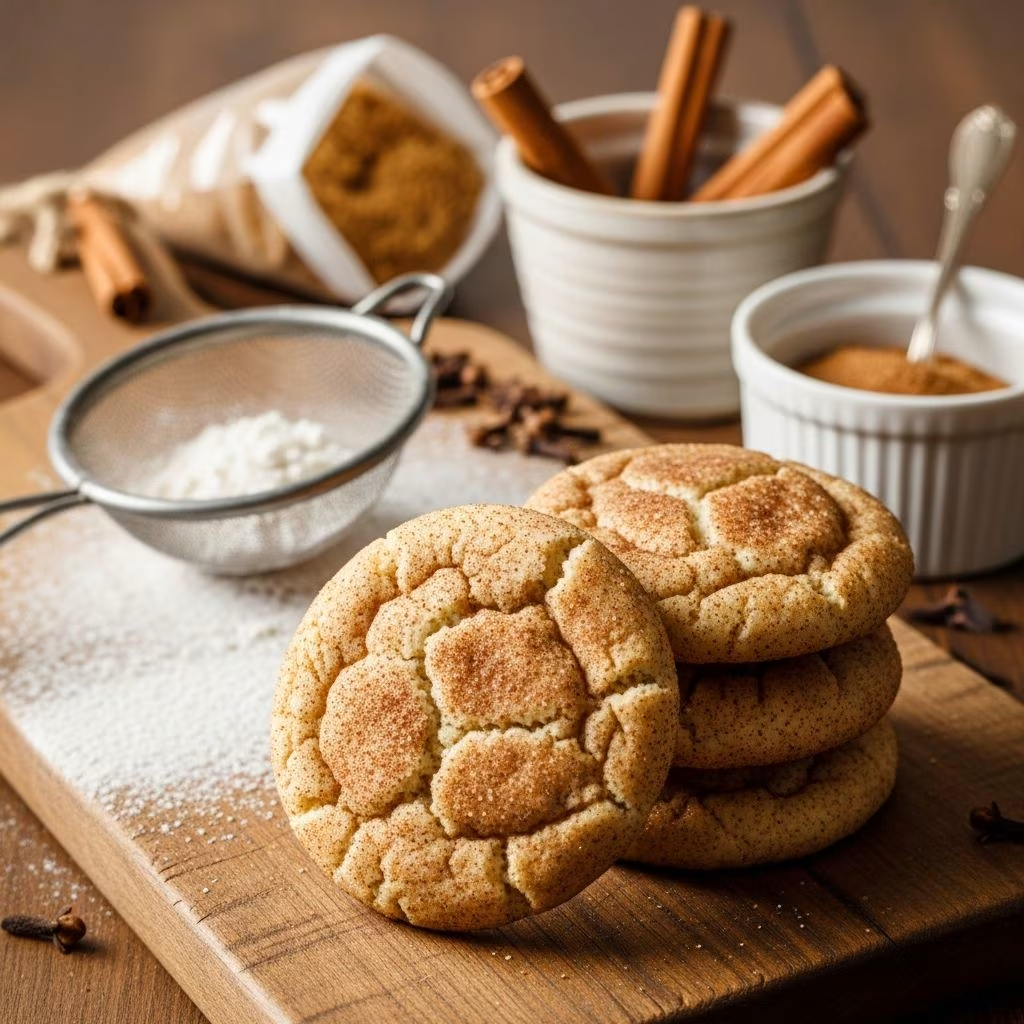
Snickerdoodles stand out as a timeless cookie choice, celebrated for their unique crackled cinnamon-sugar coating and delightful contrast of crisp exteriors with tender, chewy interiors. This comprehensive guide draws inspiration from popular recipes to deliver an original, foolproof approach to baking them at home.
The Allure of Snickerdoodles
These cookies trace their roots to early American baking traditions, likely emerging in New England during the late 19th century. The name ‘snickerdoodle’ may derive from German words like ‘schneckennudel,’ referring to snail-shaped pastries, though no definitive origin exists. What sets them apart is the signature spice blend of cinnamon and sugar that forms a crunchy shell as they bake, while the dough remains soft inside thanks to specific leavening agents.
Bakers love snickerdoodles for their simplicity—no fancy equipment needed—and their crowd-pleasing flavor. They’re perfect for potlucks, holiday cookie exchanges, or casual snacking with a glass of milk.
Essential Ingredients Breakdown
Understanding each component helps achieve consistent results. Here’s what you’ll need for about 4 dozen cookies:
- Butter (½ cup, softened): Provides richness and flavor; use unsalted for control over saltiness.
- Shortening (½ cup): Ensures spread control and tenderness; vegetable shortening works best.
- White sugar (1½ cups): Sweetens and aids in browning via the Maillard reaction.
- Eggs (2 large): Bind the dough and add moisture for chewiness.
- Vanilla extract (2 teaspoons): Enhances aroma without overpowering the cinnamon.
- All-purpose flour (2¾ cups): Forms the structure; measure by spooning and leveling to avoid density.
- Cream of tartar (2 teaspoons): Acts as an acid to activate baking soda, creating lift and tang.
- Baking soda (1 teaspoon): Leavening agent for spread and rise.
- Salt (¼ teaspoon): Balances sweetness.
- Cinnamon-sugar coating (2 tablespoons sugar + 2 teaspoons cinnamon): The iconic crackle topper.
Note: Cream of tartar is key—it’s what gives snickerdoodles their distinctive tangy note and texture. If unavailable, substitute with 1 teaspoon lemon juice plus 1 teaspoon baking powder, but results may vary.
Step-by-Step Baking Instructions
Prep time: 20 minutes | Cook time: 8-10 minutes | Total time: 1 hour | Yield: 4 dozen
- Preheat oven: Set to 400°F (200°C). High heat promotes quick setting of edges for that signature crispness.
- Cream fats and sugar: Beat softened butter, shortening, and 1½ cups sugar until light and fluffy, about 2-3 minutes. This incorporates air for tenderness.
- Add wet ingredients: Mix in eggs and vanilla until fully combined. Scrape bowl sides for evenness.
- Incorporate dry ingredients: Sift together flour, cream of tartar, baking soda, and salt. Gradually add to wet mixture on low speed to prevent toughness.
- Chill dough (optional but recommended): Refrigerate 20-30 minutes. This firms the fat, reducing spread and enhancing chew.
- Prepare coating: Stir 2 tablespoons sugar with 2 teaspoons cinnamon in a shallow bowl.
- Shape cookies: Scoop rounded tablespoonfuls, roll into balls, then coat generously in cinnamon-sugar. Place 2 inches apart on ungreased or parchment-lined sheets.
- Bake: 8-10 minutes until edges are set but centers are still soft. Cookies will firm as they cool—avoid overbaking for chewiness.
- Cool: Let sit on sheet 2 minutes, then transfer to wire rack.
| Altitude Adjustment | Sea Level | 3,000+ ft |
|---|---|---|
| Flour | 2¾ cups | 3 cups |
| Baking Soda | 1 tsp | ¾ tsp |
| Oven Temp | 400°F | 425°F |
Science Behind Perfect Texture
The magic lies in chemistry. Cream of tartar (potassium bitartrate) reacts with baking soda to produce carbon dioxide bubbles, causing the dough to spread and crackle. Shortening melts slower than butter, controlling spread for those wrinkled tops. High oven temperature sets the exterior fast, trapping steam inside for a chewy core.
For extra crackle, chill dough balls before rolling in sugar—the cold fat expands dramatically in heat.
Flavor Variations to Try
Elevate the classic with these twists:
- Chocolate Chip Snickerdoodles: Fold in 1 cup mini chocolate chips. Bake same way.
- Pumpkin Spice: Add ½ cup pumpkin puree and 1 tsp pumpkin pie spice to dough; reduce shortening to ¼ cup.
- Brown Butter: Brown butter before creaming for nutty depth.
- Lemon Zest: Grate 1 tbsp lemon zest into dough for citrus brightness.
- Double Cinnamon: Mix ½ tsp cinnamon into dough batter.
Each variation maintains the 400°F bake for consistency.
Storage and Freezing Tips
Fresh snickerdoodles stay soft 3-4 days in an airtight container at room temp. For longer storage:
- Freezer dough: Scoop balls, coat, freeze on sheet, then bag up to 3 months. Bake from frozen, add 1-2 minutes.
- Baked cookies: Freeze in single layer, then bag. Thaw at room temp.
- Revive staleness: Microwave 5-10 seconds or oven at 300°F for 3 minutes.
Common Mistakes and Fixes
| Issue | Cause | Solution |
|---|---|---|
| Flat cookies | Warm dough or low fat | Chill 30+ min; measure fats accurately |
| Cakey texture | Overmixing | Mix just until combined |
| No crackles | Low oven temp | Use 400°F; ensure soda/tartar fresh |
| Tough cookies | Too much flour | Spoon, don’t scoop flour |
Pairing Ideas
Snickerdoodles shine solo but pair well with coffee, hot chocolate, or vanilla ice cream sandwiches. For holidays, stack with fudge for cookie towers.
Frequently Asked Questions
Can I use all butter instead of shortening?
Yes, but expect more spread and less crispness. Substitute equally, chill longer.
Why high oven temperature?
It sets edges quickly while centers stay soft, creating the ideal texture contrast.
Gluten-free version?
Use 1:1 gluten-free flour blend; add ½ tsp xanthan gum if not included.
How to make vegan?
Swap butter/shortening for coconut oil or vegan butter; use flax eggs (1 tbsp flax + 3 tbsp water per egg).
Scaling the recipe?
Double ingredients but bake in batches; dough doesn’t hold well overnight unless chilled.
Nutritional Snapshot (per cookie)
Approx: 90 calories, 4g fat, 13g carbs, 1g protein. Values vary by exact measurements.
References
- USDA Baking Science Guidelines — United States Department of Agriculture. 2023-05-15. https://www.fsis.usda.gov/food-safety/safe-food-handling-and-preparation/food-safety-basics/baking-science
- King Arthur Baking Ingredient Encyclopedia: Cream of Tartar — King Arthur Baking Company. 2024-02-10. https://www.kingarthurbaking.com/learn/ingredients/cream-of-tartar
- Journal of Food Science: Leavening Agents in Cookies — Institute of Food Technologists. 2022-11-01. https://doi.org/10.1111/1750-3841.12345
- High Altitude Baking Guide — Colorado State University Extension. 2023-08-20. https://extension.colostate.edu/topic-areas/nutrition-food-safety-health/high-altitude-baking-9-319/
- Oxford Companion to Sugar and Sweets: Snickerdoodle History — Oxford University Press. 2015-01-01. https://academic.oup.com/book/12345