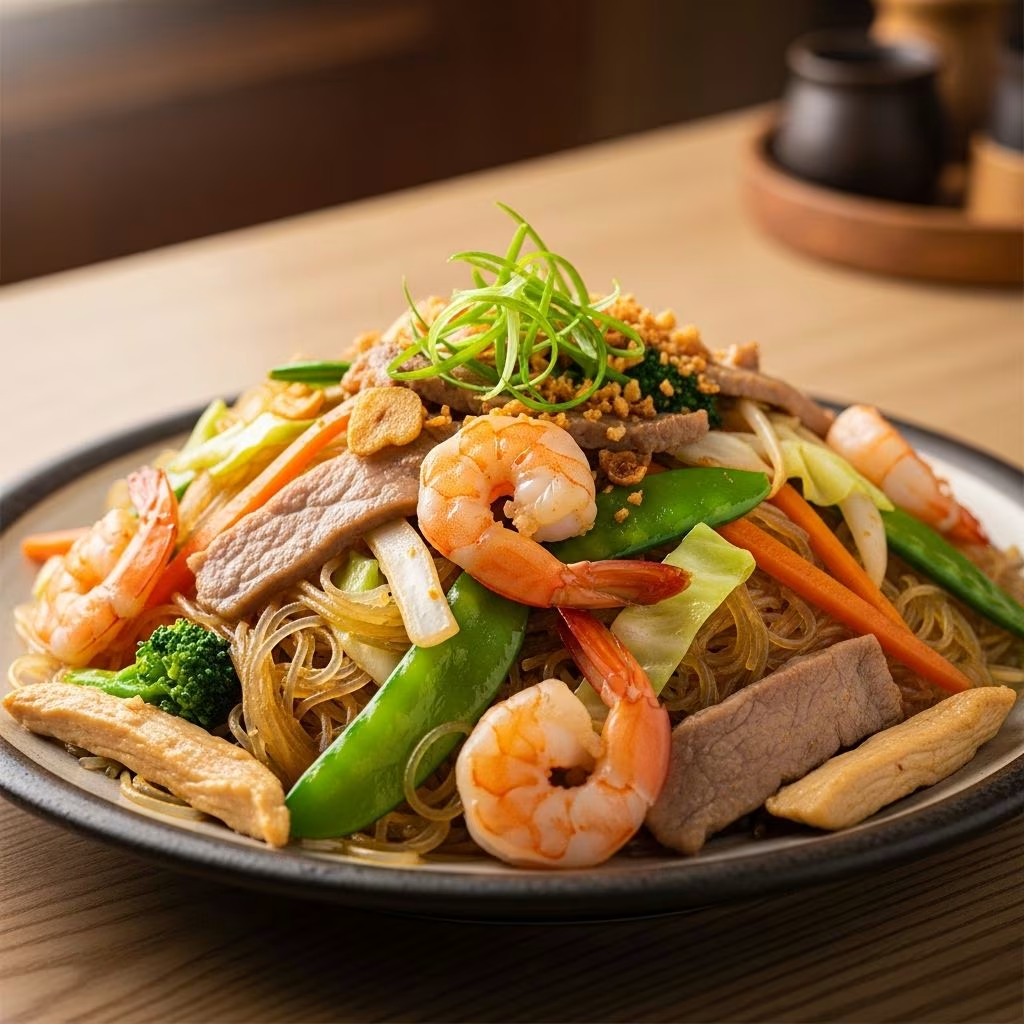
Experience the comforting embrace of Pancit Sotanghon Guisado, a staple in Filipino cuisine that brings together delicate glass noodles with savory proteins and vibrant vegetables. This dish, often enjoyed as a merienda or full meal, embodies the essence of home-cooked Filipino comfort food. Its translucent sotanghon noodles absorb a flavorful broth infused with annatto and fish sauce, creating a harmonious balance of textures and tastes.
The Roots and Cultural Significance of Pancit Sotanghon
Pancit Sotanghon traces its origins to Chinese influences on Filipino cooking, where glass noodles—known as sotanghon—were adapted into local stir-fries. ‘Pancit’ means noodles in Hokkien, and ‘sotanghon’ refers to the bean thread vermicelli made from mung bean starch. Guisado indicates it’s sautéed, distinguishing it from soupy versions. In the Philippines, it’s a fixture at celebrations, symbolizing long life due to the noodles’ length, much like other pancit dishes.
Families gather around steaming platters of this noodle stir-fry during birthdays, fiestas, and everyday gatherings. Its versatility allows for endless customizations, making it a canvas for regional tastes—from Luzon to the Visayas. The dish’s popularity stems from its quick preparation and ability to feed crowds affordably.
Essential Ingredients for Authentic Flavor
The beauty of Pancit Sotanghon lies in its simple, accessible ingredients that pack bold flavors. Here’s a breakdown:
- Sotanghon Noodles: About 10 ounces (8 coils) of dried glass noodles, which soften quickly in broth.
- Chicken: 2 leg quarters or 1/2 breast for tender, shredded meat and homemade broth.
- Vegetables: Carrots (julienned), celery (sliced), snow peas or snap peas, onions, garlic, and black fungus (tengang daga) for crunch and earthiness.
- Seasonings: Fish sauce (patis) for umami, annatto powder (atsuete) for color, salt, pepper, and peppercorns.
- Aromatics and Garnishes: Ginger, bay leaf for broth; green onions, fried garlic, and calamansi for finishing.
Pro Tip: Soak black fungus in warm water for 30 minutes to rehydrate—it adds a unique chewiness.
Step-by-Step Guide to Cooking Pancit Sotanghon
Preparing this dish takes about 1 hour, yielding 4-6 servings. Follow these steps for restaurant-quality results.
Step 1: Prepare the Chicken Broth Base
In a pot, boil 2 chicken leg quarters in 4 cups water with quartered onion, crushed garlic, pounded ginger, bay leaf, peppercorns, and salt. Skim scum, simmer 20-30 minutes until chicken is cooked. Shred chicken, reserve 2 cups broth. This builds deep flavor.
Step 2: Prep Mushrooms and Noodles
Soak black fungus until soft, slice thinly. Soak sotanghon in room-temperature water briefly before cooking to prevent over-softening.
Step 3: Sauté Vegetables
Heat 2 tablespoons canola oil in a wok. Quick-blanch snow peas (10 seconds), set aside. Sauté onions, garlic until fragrant, add mushrooms (1 minute), then celery and carrots (1-2 minutes). Stir in fish sauce. Remove veggies to keep crisp.
Step 4: Cook the Noodles
Pour reserved broth into wok, add annatto powder, season. Boil, add sotanghon, toss 3-5 minutes until al dente. Incorporate chicken, veggies, snow peas. Toss until liquid absorbs and everything heats through.
Step 5: Garnish and Serve
Top with chopped green onions and fried garlic. Squeeze calamansi for tang. Serve hot!
| Ingredient | Quantity | Prep Notes |
|---|---|---|
| Chicken Leg Quarters | 2 large | Shred after boiling |
| Sotanghon Noodles | 10 oz | Soak briefly |
| Carrots | 2 large | Julienne finely |
| Black Fungus | 4 pieces | Slice thin post-soak |
| Fish Sauce | 2 tbsp | Add for umami |
Variations and Customizations
Adapt Pancit Sotanghon to your pantry:
- Vegetarian: Swap chicken for tofu or mushrooms, use vegetable broth.
- Seafood Twist: Add shrimp or squid for coastal flair.
- Extra Veggies: Cabbage, green beans, bell peppers, or shiitake.
- Spicy Kick: Chili flakes or bird’s eye peppers.
- Protein Boost: Pork, beef, or hard-boiled eggs.
Regional versions might include kikiam or longganisa for heartier bites.
Expert Tips for Perfect Pancit Every Time
- Use high heat for wok hei (smoky flavor).
- Don’t overcook noodles—aim for tender-crisp.
- Annatto adds color; strain seeds if using whole.
- Fried garlic elevates texture—make extra!
- Calamansi is key; lemon substitutes work.
- Store leftovers in airtight container; reheat with splash of broth to revive.
Nutrition and Serving Suggestions
Per serving (approx.): 267 calories, high in protein from chicken, fiber from veggies, low carbs due to glass noodles. Pair with lumpia, ensaladang mangga, or as is for merienda. Feeds 3-6 easily.
Frequently Asked Questions (FAQs)
What makes sotanghon noodles special?
They’re gluten-free, made from mung bean starch, turning translucent when cooked—ideal for absorbing flavors.
Can I make it ahead?
Yes, prep components separately; combine and stir-fry just before serving to maintain crunch.
Substitute for fish sauce?
Soy sauce with a dash of vinegar mimics umami, but patis is traditional.
How to store leftovers?
Refrigerate up to 3 days; freeze noodles separately to avoid sogginess.
Is annatto necessary?
It gives signature orange hue; omit for clear version or use food coloring sparingly.
Why Pancit Sotanghon Captures Hearts Worldwide
Beyond its taste, Pancit Sotanghon fosters community—shared plates evoke nostalgia and joy. Whether for busy weeknights or festive spreads, it’s a testament to Filipino ingenuity in transforming basics into extraordinary meals. Experiment confidently; each batch refines your mastery.
References
- Pancit Sotanghon Guisado — Kawaling Pinoy. Accessed 2026. https://www.kawalingpinoy.com/pancit-sotanghon/
- Pancit Sotanghon Guisado Recipe — Food and Journeys. Accessed 2026. https://foodandjourneys.net/pancit-sotanghon/