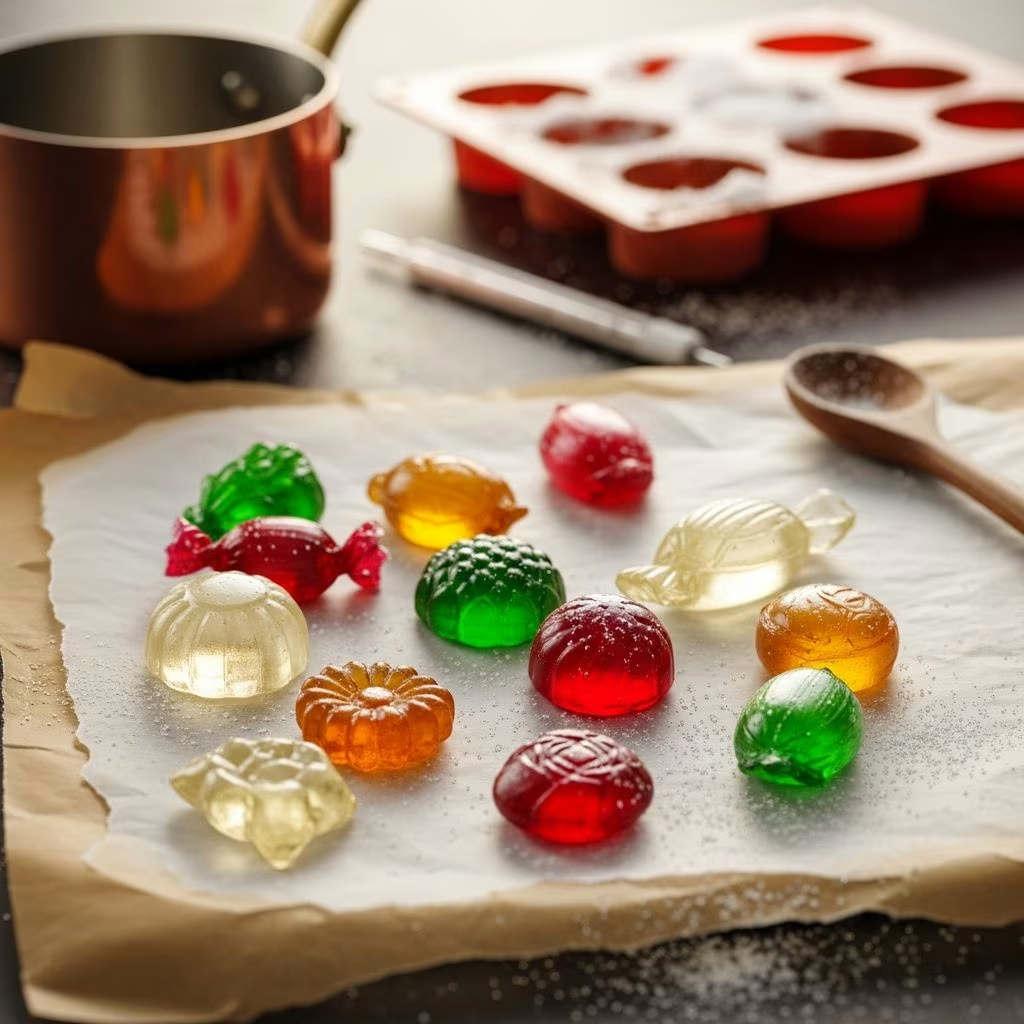
Creating **classic hard candy** at home brings back the charm of traditional confectionery, where simple ingredients transform into glossy, flavorful pieces that shatter with a satisfying crunch. This treat, reminiscent of penny candy from bygone eras, relies on precise heating of sugar syrup to achieve the perfect texture. With a few pantry staples and careful monitoring, anyone can produce batches of vibrant, customized candies ideal for parties, gifts, or personal indulgence.
Understanding the Science of Hard Candy
Hard candy forms when a sugar solution reaches the **hard crack stage**, typically between 300°F and 310°F (149°C to 154°C). At this point, the syrup’s water content evaporates almost entirely, leaving behind a brittle, glass-like solid. Corn syrup plays a crucial role by preventing sugar crystallization, ensuring a smooth, clear finish rather than a grainy one.
The process involves dissolving granulated sugar in water and corn syrup, then boiling without stirring to concentrate the sugars. Flavor oils and colors are added post-cooking to preserve their potency, as high heat can degrade extracts. Powdered sugar dusting prevents sticking, mimicking the matte finish of vintage candies.
Gathering Your Ingredients
For a standard batch yielding about 1.5 pounds of candy, assemble these essentials:
- Granulated sugar: 2 to 3¾ cups, the sweet foundation.
- Light corn syrup: ¾ to 1½ cups, inhibits crystal formation.
- Water: 1 cup, to dissolve the sugars initially.
- Flavoring oil: 1 teaspoon or 10-20 drops (e.g., cinnamon, cherry, spearmint); oils are more concentrated than extracts.
- Food coloring: Gel or liquid, 3-10 drops for vivid hues.
- Powdered sugar: For dusting surfaces and pieces to avoid adhesion.
Variations in quantities appear across recipes—smaller batches use 2 cups sugar, larger ones up to 3¾ cups—but ratios remain consistent for reliable results.
Essential Tools for Success
Invest in durable equipment to handle high heat safely:
- Heavy-bottomed saucepan (2-4 quarts) to prevent scorching.
- Candy thermometer: Clip-on style for accuracy; digital models offer precision.
- Silicone spatula or heatproof spoon for stirring.
- Baking sheets with rims, lined with parchment, foil, or silicone mats.
- Sharp knife for scoring; mallet or hammer for breaking.
- Heatproof gloves and long tongs for safety.
Without a thermometer, test stages by dropping syrup into ice water: hard crack forms brittle threads instantly.
Step-by-Step Preparation Guide
Prepare workspace: Line baking sheets with parchment or foil. Generously dust with powdered sugar, creating a thick base to catch the hot syrup.
Combine base ingredients: In the saucepan, mix sugar, corn syrup, and water. Stir over medium heat until sugar fully dissolves, about 5-10 minutes. Avoid boiling prematurely.
Boil to hard crack: Insert thermometer. Cease stirring to prevent crystals. Simmer at a steady bubble for 15-45 minutes until 300°F-310°F. Mixtures with more sugar take longer.
Add flavors: Remove from heat. Cool 1 minute. Stir in flavor oil and coloring quickly and thoroughly.
Pour and spread: Transfer hot syrup to prepared sheets using a spatula. Spread evenly to ¼-inch thickness. Dust with more powdered sugar.
Score while warm: After 5-10 minutes, when pliable but not hard, cut 1-inch grid lines with a oiled knife for uniform breaks.
Cool completely: Allow 1-2 hours at room temperature. Avoid refrigeration to prevent moisture softening.
Break and dust: Snap along scores or tap with mallet. Toss pieces in powdered sugar, shaking off excess.
Flavor and Color Ideas
Customize endlessly with potent LorAnn oils: butterscotch for warmth, peppermint for chill, strawberry for fruitiness. Use separate batches for multi-flavor assortments, pouring into powdered sugar troughs.
| Flavor | Drops/Oil Amount | Color Pairing |
|---|---|---|
| Cinnamon | 10-15 drops | Red gel |
| Cherry | 1 tsp | Pink liquid |
| Lemon | 10 drops | Yellow gel |
| Spearmint | 3.7 ml bottle | Green |
| Butterscotch | 1 tsp | Orange |
Gels yield bolder colors than liquids; start sparingly to avoid overpowering.
Troubleshooting Common Issues
- Sticky candy: Undercooked—boil longer next time. Insufficient dusting exacerbates this.
- Grainy texture: Stirred after dissolving or used dark corn syrup. Stick to light syrup and no-stir rule.
- Cloudy appearance: Crystallization from impurities. Wipe pan rim with wet cloth during boiling.
- Weak flavor: Added too early or used extracts. Opt for oils post-heat.
- Uneven cooling: Drafts or thin spots. Spread uniformly on rimmed sheets.
Safety Precautions
Boiling sugar exceeds 300°F, risking severe burns. Keep children away. Use back burners. If spilled, cool with ice, not water. Work in a ventilated area to disperse fumes.
Storage and Shelf Life
Store in airtight containers at room temperature, separated by parchment. Properly made hard candy lasts 1-2 months, though humidity shortens this. For longer storage, vacuum-seal pieces.
Scaling and Variations
Double recipes for crowds, but cook in larger pots to avoid overflow. Try clear candy sans color for purity, or infuse with herbs pre-boiling (strain well). Sugar-free versions use isomalt, requiring adjusted temps.
Perfect for Gifting and Holidays
Package in cellophane bags with ribbons for festive treats. Mix flavors for rainbow assortments, evoking fairground nostalgia. Ideal for Christmas, Halloween, or weddings.
Frequently Asked Questions
Can I make this without a candy thermometer?
Yes, drop small amounts into ice water. Hard crack stage forms rigid, brittle strands that snap cleanly.
Why use corn syrup?
It interferes with sugar molecule alignment, yielding smooth candy instead of fudge-like crystals.
How do I clean the sticky pot?
Fill with hot water, add dish soap, simmer 10 minutes. Scrape while warm; residue dissolves easily.
Is this recipe gluten-free?
Yes, all ingredients are naturally gluten-free. Confirm flavor oils if allergies concern you.
Can I reuse broken odd pieces?
Melt gently with water for lollipops, but avoid reheating hard crack syrup directly—it scorches fast.
Nutritional Snapshot
| Serving (5 pieces) | Calories | Sugar | Fat |
|---|---|---|---|
| Approx. 20g | 80 | 20g | 0g |
Primarily sugar; enjoy in moderation.
References
- Old Fashioned Homemade Hard Candy Recipe — I Heart Naptime. 2023. https://www.iheartnaptime.net/hard-candy/
- Easy Homemade Hard Candy – old fashioned recipe — Persnickety Plates. 2022. https://www.persnicketyplates.com/homemade-hard-candy/
- Old Fashioned Hard Candy — My Country Table. 2021. https://mycountrytable.com/old-fashioned-hard-candy/
- Easy Old Fashioned Hard Candy — Analida’s Ethnic Spoon. 2020. https://ethnicspoon.com/how-to-make-old-fashioned-hard-candy/
- Hard Tack Candy Recipe – Old Timey Candy Is Easy to Make! (Video Transcript) — YouTube (CaketasticCakes). 2022. https://www.youtube.com/watch?v=95dDyeyBuEw