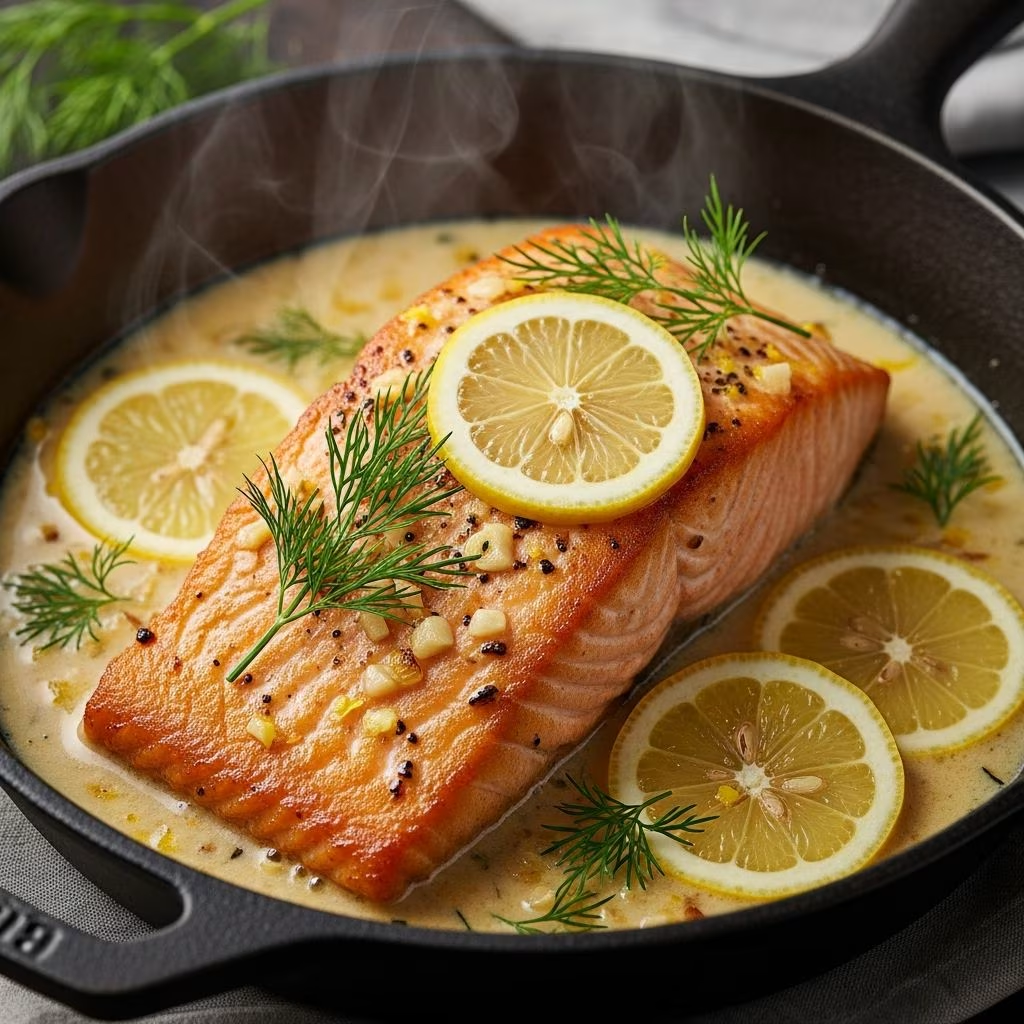
Preparing restaurant-quality salmon at home requires nothing more than quality ingredients, proper technique, and understanding the science behind creating the perfect sauce. This elegant dish combines tender, flaky salmon with a velvety cream sauce infused with bright citrus and aromatic garlic, delivering a meal that feels indulgent yet comes together in approximately 20 minutes.
Understanding Salmon Selection and Preparation
The foundation of any exceptional salmon dish begins with selecting quality fish. Fresh salmon fillets should display firm flesh with a vibrant color ranging from deep orange to pale pink, depending on the species. Before cooking, it’s beneficial to remove salmon from refrigeration approximately 20 minutes prior to preparation, allowing the internal temperature to rise slightly for more even cooking throughout the fillet.
Pat the salmon dry using paper towels on both sides—this crucial step removes surface moisture that would otherwise inhibit browning and crust formation. Moisture on the fish surface creates steam, preventing the Maillard reaction that produces the desirable golden crust. Seasoning should be applied generously just before cooking, using salt, pepper, and garlic powder distributed evenly across both sides of each fillet.
Achieving the Perfect Sear
The cooking process begins with heating a combination of butter and olive oil in a large skillet over medium-high heat. This dual-fat approach provides the best results: olive oil raises the smoke point while butter contributes essential flavor and helps achieve browning. Once the fat is shimmering and hot, carefully place salmon fillets skin-side up into the pan.
Allow the salmon to sear undisturbed for 3 to 4 minutes, resisting the urge to move or flip the fish prematurely. This patience permits proper crust development and prevents the delicate flesh from sticking or tearing. The underside should develop a golden-brown exterior, indicating proper heat transfer and flavor development through the Maillard reaction.
After the initial sear, flip each fillet and cook for an additional 2 to 3 minutes on the second side. The internal temperature should reach approximately 145°F (63°C) for medium doneness, though individual preference may warrant slight adjustments. Remove the cooked salmon to a clean plate, allowing it to rest while preparing the sauce.
Building the Lemon Garlic Cream Sauce
The sauce transforms this dish from simple to sophisticated. In the same skillet used for the salmon, reduce heat to medium and add minced garlic, cooking for approximately 30 seconds until fragrant. This brief cooking period prevents garlic from browning excessively, which would impart bitterness.
Next, deglaze the pan by adding chicken broth or dry white wine, scraping the bottom with a wooden spoon to release flavorful browned bits (fond) accumulated during the searing process. These caramelized particles contribute significant depth to the final sauce. Allow the liquid to reduce by half, concentrating flavors and creating a more robust base.
Whisk together heavy cream with additional seasonings—lemon juice, zest, Dijon mustard, Italian seasoning, and additional salt and pepper according to taste preferences. Pour this mixture into the reduced broth, stirring continuously until fully incorporated and smooth. Simmer for 2 to 3 minutes, allowing the sauce to thicken slightly while the cream and broth emulsify.
Finishing Touches and Flavor Balance
Return the seared salmon to the skillet, nestling it gently into the cream sauce. Allow everything to simmer together for 1 to 2 minutes, just long enough to warm the salmon through without overcooking. The residual heat from the sauce will gently continue cooking the interior while maintaining the desired texture.
Fresh herbs provide the perfect finishing element. Parsley, dill, or chives offer complementary flavors that brighten the richness of the cream sauce. These garnishes should be added just before serving to preserve their vibrant color and fresh taste. A final squeeze of fresh lemon juice heightens acidity and prevents the dish from tasting overly heavy.
Key Ingredients Explained
- Salmon Fillets: Select 4-6 ounce portions for even cooking and individual presentations
- Heavy Cream: Full-fat cream creates the luxurious texture; half-and-half can substitute for a lighter version
- Butter: Unsalted butter allows seasoning control and provides richness to both the searing process and sauce
- Fresh Garlic: Minced garlic delivers more potent flavor than garlic powder; use 3-4 cloves for a balanced sauce
- Lemon: Both juice and zest contribute brightness; fresh-squeezed juice offers superior flavor over bottled varieties
- Chicken Broth or White Wine: These liquids deglaze the pan and create the sauce base; dry white wine adds complexity
- Olive Oil: Quality oil with a high smoke point prevents burning during the searing stage
Common Techniques for Success
Temperature control represents the most critical variable in achieving consistent results. Medium-high heat during the searing phase creates browning without overcooking the interior, while reducing to medium for sauce preparation prevents cream separation. A kitchen thermometer removes guesswork, ensuring salmon reaches the ideal doneness.
Whisking the cream mixture thoroughly prevents lumps and ensures a silky, smooth sauce. If the sauce appears too thick, thin it with additional broth or cream. If too thin, continue simmering to allow evaporation and concentration. Tasting the sauce throughout preparation allows for seasoning adjustments before the final plating.
Serving Suggestions and Pairings
This salmon dish pairs beautifully with various accompaniments. Roasted vegetables absorb the flavorful sauce and balance the richness. Asparagus, Brussels sprouts, or green beans complement the delicate fish without overwhelming it. Creamy pasta such as fettuccine or spaghetti provides an elegant side, with the sauce coating each strand.
For lighter accompaniments, serve alongside steamed rice or quinoa, allowing the cream sauce to mingle with the grain. A crisp green salad with vinaigrette offers textural contrast and refreshing acidity. Crusty bread serves the practical purpose of soaking up every drop of the luxurious sauce.
Nutritional Considerations
Salmon provides exceptional nutritional value, delivering high-quality protein and omega-3 fatty acids linked to cardiovascular and cognitive health. Heavy cream contributes calories and saturated fat, though the overall nutritional profile remains balanced. Lemon juice and garlic add flavor while contributing minimal calories and potential health benefits from antioxidants and anti-inflammatory compounds.
Storage and Make-Ahead Options
While this dish achieves peak quality when prepared and consumed immediately, leftovers store well in airtight containers for up to 2 days. Reheat gently on the stovetop over low heat to prevent cream sauce separation. Alternatively, prepare components separately: cook salmon and store sauce independently, combining just before serving for optimal freshness.
Variations and Adaptations
Experiment with different herb combinations—tarragon, thyme, or chervil offer sophisticated alternatives to parsley. Substitute the white wine with dry vermouth for additional complexity. Dijon mustard can increase or decrease according to personal preference, with wholegrain mustard offering textural interest. For a lower-fat version, substitute half-and-half or Greek yogurt for traditional heavy cream, adjusting cooking temperature to prevent curdling.
Troubleshooting Common Issues
If salmon sticks to the pan, ensure adequate fat is present and the pan is sufficiently hot before adding fish. Overcrowding the pan reduces heat and prevents proper browning; cook in batches if necessary. Cream sauce separation occurs when temperatures exceed the boiling point; maintain a gentle simmer and whisk constantly when adding cream. If the sauce breaks, remove from heat, whisk in a tablespoon of cold cream, and stir until smooth before returning to gentle heat.
Frequently Asked Questions
Can I use frozen salmon? Thaw frozen salmon completely in the refrigerator overnight before preparation. Pat dry thoroughly to remove excess moisture from the thawing process before seasoning and cooking.
What wine should I use for deglazing? Any crisp, dry white wine works well—Sauvignon Blanc, Pinot Grigio, or Chablis all provide suitable acidity and subtle flavors. Avoid sweet wines, which would imbalance the sauce.
How do I prevent the cream from curdling? Maintain medium heat rather than high heat, and never allow the sauce to boil vigorously. Add cream slowly while whisking constantly to achieve proper emulsification.
Can I prepare this dish ahead of time? Cook the salmon fresh, but prepare the cream sauce up to 4 hours in advance. Reheat gently on low heat, whisking occasionally, before combining with the salmon.
What’s the best substitute for heavy cream? Half-and-half, Greek yogurt, or cashew cream offer alternatives, though cooking temperatures and techniques may require adjustment to prevent separation or curdling.
How do I know when salmon is done? Use a meat thermometer to check for 145°F (63°C) internal temperature, or observe that the flesh flakes easily with a fork and appears opaque throughout.
References
- Fish and Aquatic Life: Nutritional Composition of Salmon — U.S. Department of Agriculture National Nutrient Database. 2024. https://fdc.nal.usda.gov/
- Safe Internal Temperature Guide — U.S. Department of Agriculture Food Safety and Inspection Service. 2024. https://www.fsis.usda.gov/food-safety/safe-food-handling-and-preparation/food-safety-basics/safe-internal-temperature-chart
- The Science of Cooking: Understanding the Maillard Reaction — American Chemical Society. 2023. https://www.acs.org/