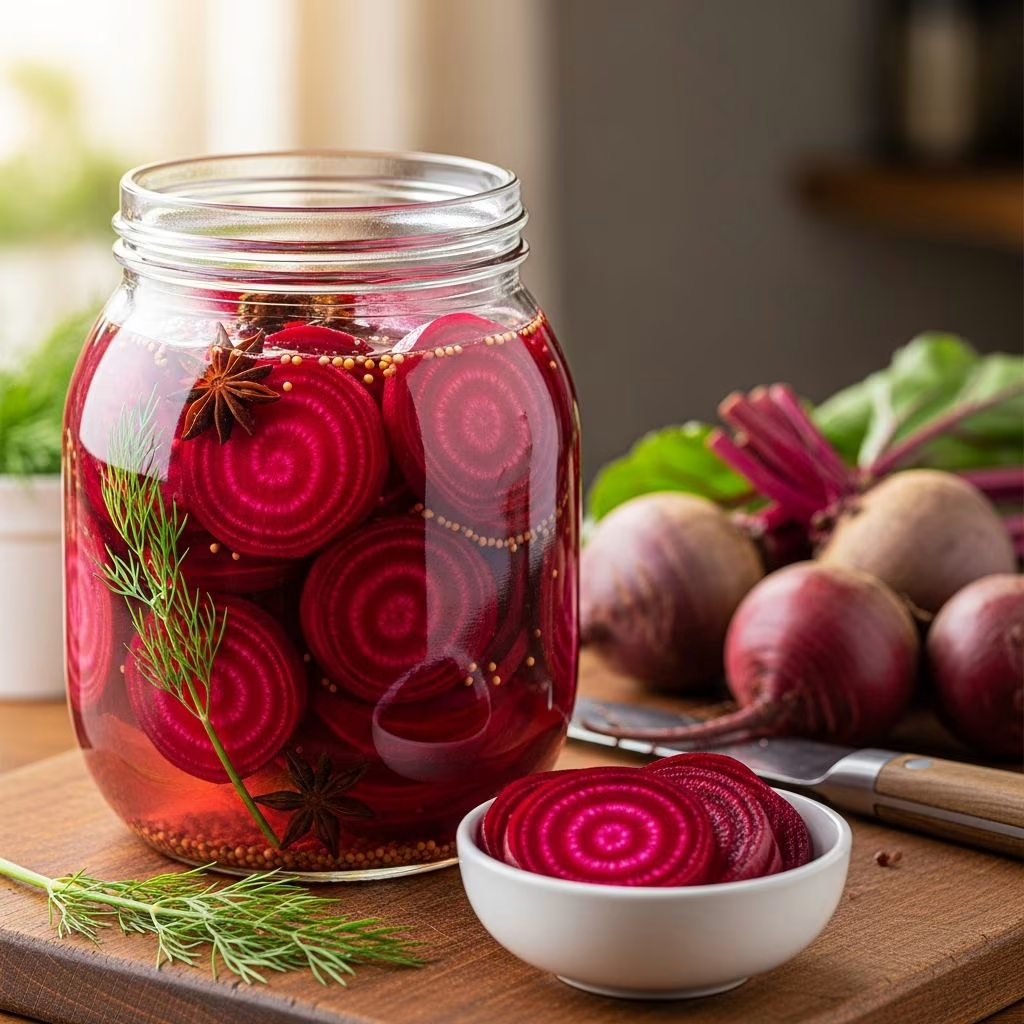
Pickled beets offer a perfect balance of sweetness and tanginess, transforming humble root vegetables into a versatile pantry staple. This recipe draws on time-tested techniques to create jars of jewel-toned beets that add pop to any dish. Whether you’re new to pickling or a seasoned canner, these instructions make the process straightforward and rewarding.
Why Pickle Beets at Home?
Homemade pickled beets surpass store-bought versions in flavor and freshness. The process allows customization of sweetness, acidity, and spices to suit your palate. Beets’ natural earthiness pairs beautifully with vinegar’s sharpness and sugar’s mellowing effect, creating a condiment that’s both refreshing and addictive.
- Freshness control: Use seasonal beets for peak taste and texture.
- Cost savings: Bulk buying beets reduces expense compared to commercial jars.
- Customization: Adjust spices like mustard seeds or peppercorns for unique twists.
- Preservation: Extend beet season’s bounty for year-round enjoyment.
Selecting the Best Beets for Pickling
Choose medium-sized beets, about 2-3 inches in diameter, for even cooking. Red beets deliver classic color, while golden or Chioggia varieties offer milder flavors and stunning visuals. Avoid large, woody beets as they can be tough.
| Beet Type | Flavor Profile | Best Uses |
|---|---|---|
| Red | Earthy, robust | Salads, relishes |
| Golden | Sweeter, less staining | Cheese boards, garnishes |
| Chioggia (candy cane) | Mild, striped | Visual dishes, appetizers |
Scrub beets thoroughly under cold water. Trim greens and roots, leaving 1-inch stems to minimize color bleeding during cooking.
Essential Ingredients Breakdown
Gather these staples for 4-6 pint jars:
- 3 pounds fresh beets (about 12 medium)
- 2 cups apple cider or white wine vinegar (5% acidity)
- 1.5 cups granulated sugar (or honey for nuanced sweetness)
- 1.5 cups water
- 2 teaspoons sea salt
- Spices: 1 tablespoon mustard seeds, 1 teaspoon black peppercorns, 2 bay leaves, optional cinnamon stick or cloves
- 1 medium red onion, thinly sliced (for added crunch)
Vinegar provides the sour punch essential for safe pickling, while sugar tempers it. Spices infuse depth without overpowering the beets’ natural taste.
Step-by-Step Preparation Guide
- Prep the beets: Rinse and place whole beets in a large pot. Cover with water, add a pinch of salt, and boil for 25-40 minutes until fork-tender. Cool in ice water, then slip off skins and slice into 1/4-inch rounds or wedges.
- Prepare jars: Sterilize pint jars by boiling for 10 minutes or running through a dishwasher cycle. Keep hot until filling.
- Make the brine: In a saucepan, combine vinegar, water, sugar, salt, and spices. Bring to a boil, stirring to dissolve sugar, then simmer 10 minutes to meld flavors.
- Pack the jars: Layer beets and onion slices into hot jars, leaving 1/2-inch headspace. Pour hot brine over, ensuring vegetables are submerged. Use a chopstick to release air bubbles.
- Seal and cool: Wipe rims, apply lids and bands fingertip-tight. For refrigerator pickles, cool to room temperature and refrigerate 24-48 hours before eating. For shelf-stable, process in a boiling water bath for 10 minutes (adjust for altitude).
Yield: About 4 pints. Total time: 1.5 hours active, plus cooling.
Flavor Variations to Try
Elevate your batch with these tweaks:
- Spicy kick: Add sliced jalapeños or red pepper flakes.
- Herbal note: Infuse with fresh dill or thyme sprigs.
- Citrus twist: Zest one orange into the brine.
- Honey-forward: Swap half the sugar for local honey.
- Garlic boost: Tuck in peeled cloves between layers.
Storage and Shelf Life
Refrigerator pickles last 2-4 weeks. Canned versions store in a cool, dark pantry for up to a year. Always check for seals: lids should not flex. Once opened, refrigerate and use within a week. Properly pickled beets maintain crunch and color when stored below 50°F.
Nutrition Profile Per Serving (1/4 cup)
| Nutrient | Amount | % Daily Value |
|---|---|---|
| Calories | 80 | 4% |
| Fiber | 2g | 7% |
| Folate | 60mcg | 15% |
| Manganese | 0.4mg | 17% |
| Potassium | 200mg | 4% |
Beets pack betalains, antioxidants linked to reduced inflammation. Pickling preserves most nutrients while adding low-calorie flavor.
Creative Ways to Serve Pickled Beets
These versatile pickles shine in multiple roles:
- Salad star: Toss with greens, goat cheese, and walnuts for a classic combo.
- Burger topper: Stack on patties for sweet-tangy contrast.
- Charcuterie essential: Pair with cured meats, cheeses, and crusty bread.
- Snack attack: Eat straight from the jar with toothpicks.
- Potato salad upgrade: Dice and mix into creamy bases.
For holiday feasts, layer in a trifle with yogurt and herbs for a stunning side.
Troubleshooting Common Issues
Encounter problems? Here’s how to fix them:
- Soft texture: Overcooked beets; test doneness early next time.
- Cloudy brine: Tap water minerals; use filtered water.
- Color fade: Insufficient vinegar; ensure 5% acidity.
- Seal failure: Wipe rims clean before lidding.
For safety, discard any jars with off odors, mold, or spurting liquid upon opening.
Health Benefits of Pickled Beets
Beyond taste, pickled beets support wellness. Their nitrates aid blood flow, potentially lowering blood pressure. Fiber promotes digestion, and folate aids cell function. The vinegar may stabilize blood sugar when paired with carbs. Moderation is key due to sugar content.
Scaling the Recipe
Double for crowds or halve for small batches. Maintain vinegar-sugar-water ratios for balance. More beets mean larger pots and more jars—plan accordingly.
Frequently Asked Questions (FAQs)
Can I use canned beets?
Yes, for quick versions, but fresh yield superior texture and flavor.
Is canning necessary?
No for fridge storage; yes for pantry shelf life.
How long to wait before eating?
24 hours minimum; flavors peak after 3-5 days.
Are these beets gluten-free?
Yes, naturally so.
Can I reuse the brine?
Once for another batch if fully boiled.
Advanced Pickling Tips
For pros: Experiment with low-methoxyl pectin for firmer packs. Use a mandoline for uniform slices. Track pH (below 4.6) with strips for safety. Ferment lightly before pickling for probiotic perks.
Pickling beets connects you to preserving traditions while delivering modern convenience. Stock your kitchen with these tangy treasures and elevate everyday meals effortlessly.
References
- National Center for Home Food Preservation: Guide to Pickling — USDA. 2023-01-15. https://nchfp.uga.edu/publications/uga/
- Beetroot: Health Benefits and Nutritional Information — Harvard T.H. Chan School of Public Health. 2024-05-20. https://www.hsph.harvard.edu/nutritionsource/food-features/beets/
- Complete Guide to Home Canning — USDA. 2022-09-10. https://www.usda.gov/media/blog/2014/08/18/complete-guide-home-canning
- Pickled Beets Nutrition Data — USDA FoodData Central. 2025-02-14. https://fdc.nal.usda.gov/fdc-app.html#/food-details/169145/nutrients
- Safe Pickling Practices — Centers for Disease Control and Prevention (CDC). 2024-11-03. https://www.cdc.gov/foodsafety/food-preservation.html