Preparing fresh fish at home doesn’t require culinary expertise or extensive ingredient lists. One of the most satisfying approaches involves mastering a straightforward technique that highlights the natural delicacy of white fish while adding layers of flavor through a complementary sauce. This preparation method transforms humble cod fillets into an elegant dinner that impresses guests and satisfies home cooks seeking restaurant-quality results without the complexity.
Understanding Cod and Why It Works Well for This Preparation
Cod stands as an excellent choice for both novice and experienced home cooks. This white fish possesses a mild, slightly sweet flavor profile that doesn’t overwhelm the palate, making it an ideal canvas for accompanying sauces and seasonings. The flesh naturally contains enough fat to remain moist during cooking, unlike some leaner fish varieties that risk becoming dry when subjected to heat.
The flaky texture that develops during cooking provides a satisfying contrast to a smooth, buttery sauce. Additionally, cod fillets maintain their structural integrity throughout the searing process, allowing for even browning on both sides without falling apart. This reliability makes it particularly suitable for home cooks who may not regularly prepare fish dishes. The versatility of cod also means it works equally well with various cooking methods, from pan-searing to baking, though the searing approach creates superior crust development and depth of flavor.
Essential Ingredients and Their Functions
Building this dish begins with understanding how each component contributes to the final result. Quality ingredients matter more in simple preparations because fewer elements mean each one becomes more noticeable.
The Foundation: Fresh Cod Fillets
Select cod fillets that appear firm and translucent, avoiding any with an overly fishy odor. Fresh fish smells like the ocean, not like what many mistakenly associate with seafood. If using frozen fillets, allow adequate thawing time in the refrigerator rather than at room temperature to preserve texture and quality. Pat the fillets thoroughly dry before cooking, as excess surface moisture prevents proper browning and creates steam that interferes with crust formation.
The Cooking Medium: Olive Oil
Olive oil serves as the primary cooking fat for searing. Its higher smoke point compared to butter alone makes it ideal for medium-high heat cooking. The oil creates the golden-brown exterior that adds visual appeal and develops complex flavors through the Maillard reaction. Use a neutral, light olive oil rather than premium extra virgin varieties, which possess lower smoke points and impart flavors that might compete with the lemon sauce.
The Enrichment: Unsalted Butter
Butter forms the foundation of the sauce, providing richness and a luxurious mouthfeel. Using unsalted butter allows precise control over the final dish’s salt content. The butter also carries fat-soluble flavors, making it an excellent medium for incorporating lemon juice and fresh herbs while ensuring even distribution across the fish.
The Brightener: Fresh Lemon Juice
Freshly squeezed lemon juice provides acidity that balances the richness of butter and cuts through the fish’s natural oils. This acidity also heightens our perception of other flavors, making the entire dish taste brighter and more refined. Bottled lemon juice lacks the complexity of fresh juice and creates a one-dimensional sour note rather than contributing layered citrus flavor.
The Finisher: Fresh Parsley
Chopped fresh parsley adds a subtle herbal note and provides visual contrast with its vibrant green color. The herb’s light flavor complements rather than competes with other components, and its presence suggests careful preparation and attention to detail.
Seasoning Strategy for Maximum Impact
Proper seasoning creates the foundation for all other flavors. Rather than approaching seasoning as a single step, consider it an ongoing process that builds throughout preparation.
- Salt – Use kosher salt for its larger crystals, which distribute more evenly than table salt. Season the fish before cooking to allow penetration into the flesh.
- Black pepper – Apply freshly ground pepper immediately before cooking to preserve its volatile aromatic compounds.
- Garlic powder – This ingredient adds savory depth without introducing moisture that fresh garlic would contribute. It distributes evenly across the surface when dry.
Equipment Considerations for Superior Results
While basic cookware functions adequately, specific equipment choices influence the final outcome significantly.
| Equipment Type | Benefits | Considerations |
|---|---|---|
| Cast Iron Skillet | Superior heat retention and distribution; develops excellent crust; withstands high temperatures; moves seamlessly from stovetop to oven if needed | Requires proper seasoning and maintenance; heavier than other options; requires time to preheat adequately |
| Stainless Steel Pan | Durable; resists staining; performs well at high temperatures; allows visual monitoring of browning | Can promote sticking without proper fat; doesn’t distribute heat as evenly as cast iron |
| Non-Stick Skillet | Prevents sticking; easier cleanup; suitable for delicate fish | Cannot handle high temperatures; coating degrades over time; limits browning potential |
Cast iron remains the preferred choice for this preparation because its thermal properties create superior crust development while maintaining consistent heat throughout cooking. The even heat distribution prevents hot spots that might cause uneven browning or overcooking specific sections of the fillet.
Step-by-Step Execution for Perfect Results
Preparation Phase: Setting Up for Success
Begin by removing cod fillets from refrigeration 10-15 minutes before cooking. This allows them to reach closer to room temperature, ensuring more even cooking throughout the thickness. While the fish rests, pat it completely dry using paper towels. This single step dramatically impacts crust quality because moisture on the surface converts to steam, which inhibits browning.
Season both sides of each fillet evenly with salt, pepper, and garlic powder. Apply seasoning to one side, then flip and season the opposite side, ensuring complete coverage. This approach prevents over-seasoning any particular area.
The Searing Process: Building the Crust
Heat your skillet over medium-high heat for 2-3 minutes, allowing it to reach the proper temperature before adding oil. The surface should shimmer when oil is added, indicating readiness for cooking. Pour in the olive oil and allow an additional 30 seconds for it to reach the proper temperature.
Carefully place seasoned fillets in the hot oil, positioning them away from your body to avoid oil splatter. Resist the urge to move the fish immediately. Allow 3-4 minutes of undisturbed cooking on the first side, during which a golden-brown crust develops. Avoid repeatedly flipping or adjusting the fish, as movement interrupts the browning process and causes pieces to stick together or break apart.
Once the first side achieves a rich golden color, flip each fillet carefully using a fish spatula. Cook the second side for 2-3 minutes, typically requiring slightly less time than the first side since heat has already penetrated the flesh. The fish is done when it flakes easily with a fork and appears opaque throughout, though the center might retain a slight translucent quality, which indicates proper moisture retention.
Sauce Development: Finishing the Dish
Transfer cooked fillets to a serving plate and immediately reduce heat to medium-low. Add butter to the same skillet, allowing it to melt completely while incorporating any browned bits from the pan. These flavorful particles, called fond, add tremendous depth to the sauce.
Once butter is fully melted and foaming subsides, add freshly squeezed lemon juice and chopped parsley. Stir gently to combine, heating for approximately 30 seconds. Remove from heat immediately to preserve the bright citrus flavor that prolonged heating would diminish.
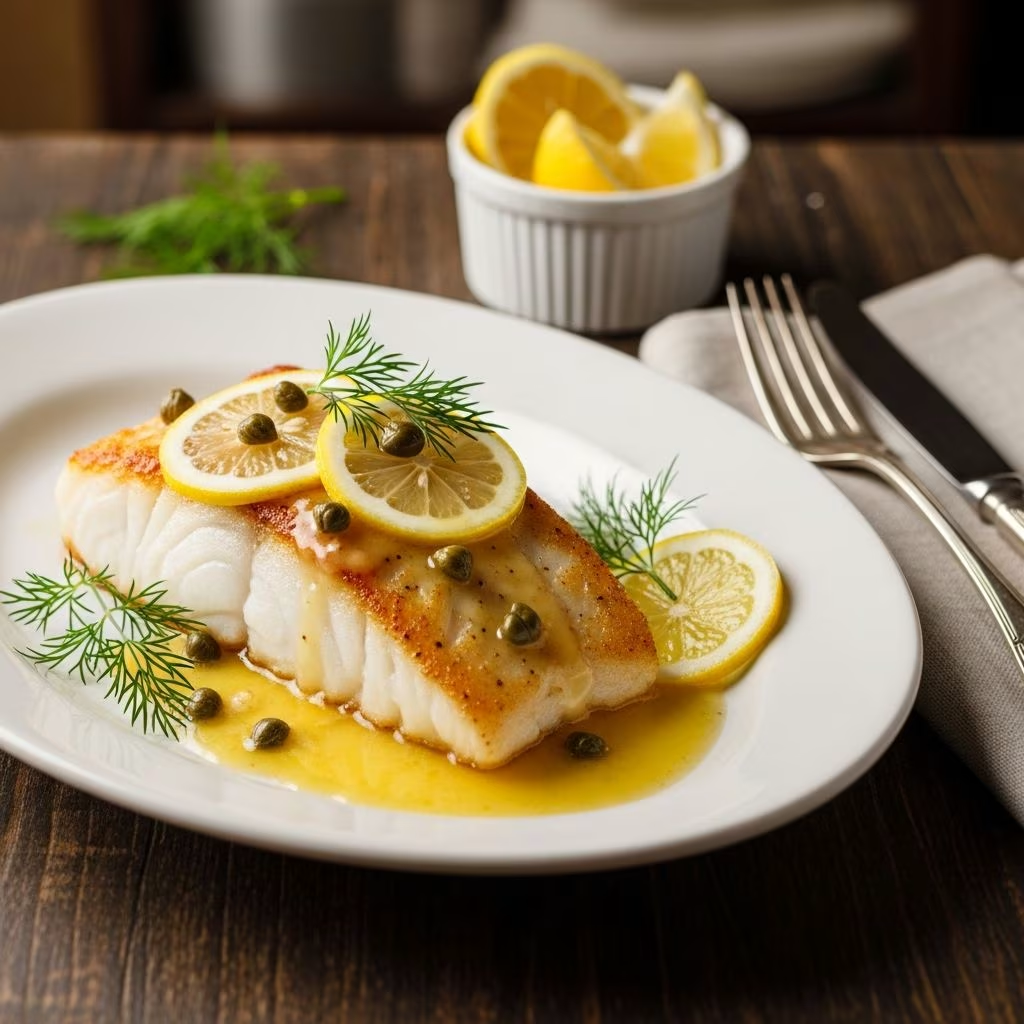
Pour the warm lemon butter sauce over each fillet, allowing it to pool slightly on the plate. Garnish with additional fresh parsley and thin lemon slices, which add both visual appeal and an optional burst of flavor for those who wish to squeeze additional lemon over their portion.
Timing Considerations and Doneness Indicators
Total cooking time rarely exceeds 12-15 minutes, making this an excellent option for weeknight dinners. Proper doneness determines the difference between tender, moist fish and an overcooked, dry disappointment. The most reliable indicator is opacity – the fish should transition from translucent to opaque as proteins coagulate. Visual assessment works well because fishing guides recommend removing fish when a slight translucence remains at the very center, which continues cooking during the brief period before serving.
Texture also provides clues to doneness. Properly cooked cod flakes easily into tender pieces when pressed with a fork, while overcooked fish becomes stringy and separates more aggressively. Undercooked fish appears watery and doesn’t flake cleanly, instead resisting separation into natural pieces.
Common Mistakes and How to Avoid Them
- Inadequate drying – Moisture is the enemy of proper browning. Never skip the drying step, regardless of how dry the fish appears initially.
- Insufficient heat – Medium-high temperatures are essential for crust development. Too-low heat creates steaming rather than searing.
- Excessive movement – Allow the fish to sit undisturbed during cooking. Constant flipping prevents browning and causes breakdown of delicate flesh.
- Overcooking – Fish continues cooking briefly after removal from heat. Remove it slightly before it reaches perfect doneness to account for carryover cooking.
- Using cold fish – Room-temperature fish cooks more evenly than cold fish taken directly from refrigeration.
- Skipping the fond – The browned bits in the pan contain concentrated flavors. Incorporate them into the sauce for maximum depth.
Serving Suggestions and Complementary Sides
This elegant preparation pairs beautifully with various accompaniments. Light pasta dishes like angel hair or linguine work well, as do simple grain preparations such as risotto or couscous. Roasted vegetables maintain the dish’s sophistication without overwhelming delicate fish flavors. Consider asparagus, green beans, or roasted broccoli, which provide textural contrast while their mild flavors complement both the fish and sauce.
For a lighter presentation, serve alongside a fresh salad with vinaigrette that echoes the lemon notes already present in the main course. New potatoes dressed simply with butter and herbs offer comfort without excess, while wild rice provides nutty flavor and pleasant texture variation.
Variations and Adaptations
This foundational preparation welcomes thoughtful modifications. Adding capers to the sauce introduces briny complexity, while incorporating artichoke hearts adds textural interest and subtle earthiness. For those preferring heat, red pepper flakes stirred into the sauce create gentle warmth that enhances rather than overshadows other flavors.White wine can replace a portion of the lemon juice, introducing subtle depth, while fresh herbs beyond parsley – such as dill or tarragon – provide alternative aromatic notes. These adaptations maintain the technique’s integrity while allowing personalization based on preference and ingredient availability.
Frequently Asked Questions
Can I prepare this dish with other white fish varieties?
Yes, halibut, sea bass, and flounder work equally well using identical techniques and timing. Adjust cooking time slightly based on fillet thickness, maintaining the same temperature and methodology for optimal results.
How should I select and store fresh cod?
Choose fillets with firm flesh and no discoloration. Fresh fish maintains its quality in the refrigerator for 1-2 days when stored on ice. Wrap in plastic wrap and place on a plate under the ice to prevent direct contact with water.
Is frozen cod acceptable for this recipe?
Frozen cod produces excellent results provided it’s thawed completely in the refrigerator, not at room temperature. Allow 24 hours for proper thawing, then pat dry thoroughly before cooking.
What wine pairs well with this preparation?
Crisp white wines with good acidity complement the lemon butter sauce beautifully. Sauvignon Blanc, Pinot Grigio, and Albariño all work excellently.
Can I prepare this ahead of time?
Fish is best served immediately after cooking. However, you can prepare and season the fillets several hours ahead, keeping them refrigerated until cooking time. Make the sauce fresh to preserve bright lemon flavor.
References
- Fish Cookery Fundamentals — The Culinary Institute of America. 2024. Educational resource on proper fish preparation techniques.
- Omega-3 Fatty Acids and Fish Quality — USDA FoodData Central. 2025. https://fdc.nal.usda.gov/
- Food Safety Guidelines for Seafood — FDA Center for Food Safety and Applied Nutrition. 2024. https://www.fda.gov/food/seafood-haccp-hazard-analysis-critical-control-point-program
- The Maillard Reaction in Cooking — McGee, Harold. On Food and Cooking. Revised edition. 2004. Comprehensive reference on cooking chemistry and food science.
- Proper Fish Doneness and Safety Standards — National Fisheries Institute. 2024. Technical guidelines for determining appropriate fish preparation endpoints.