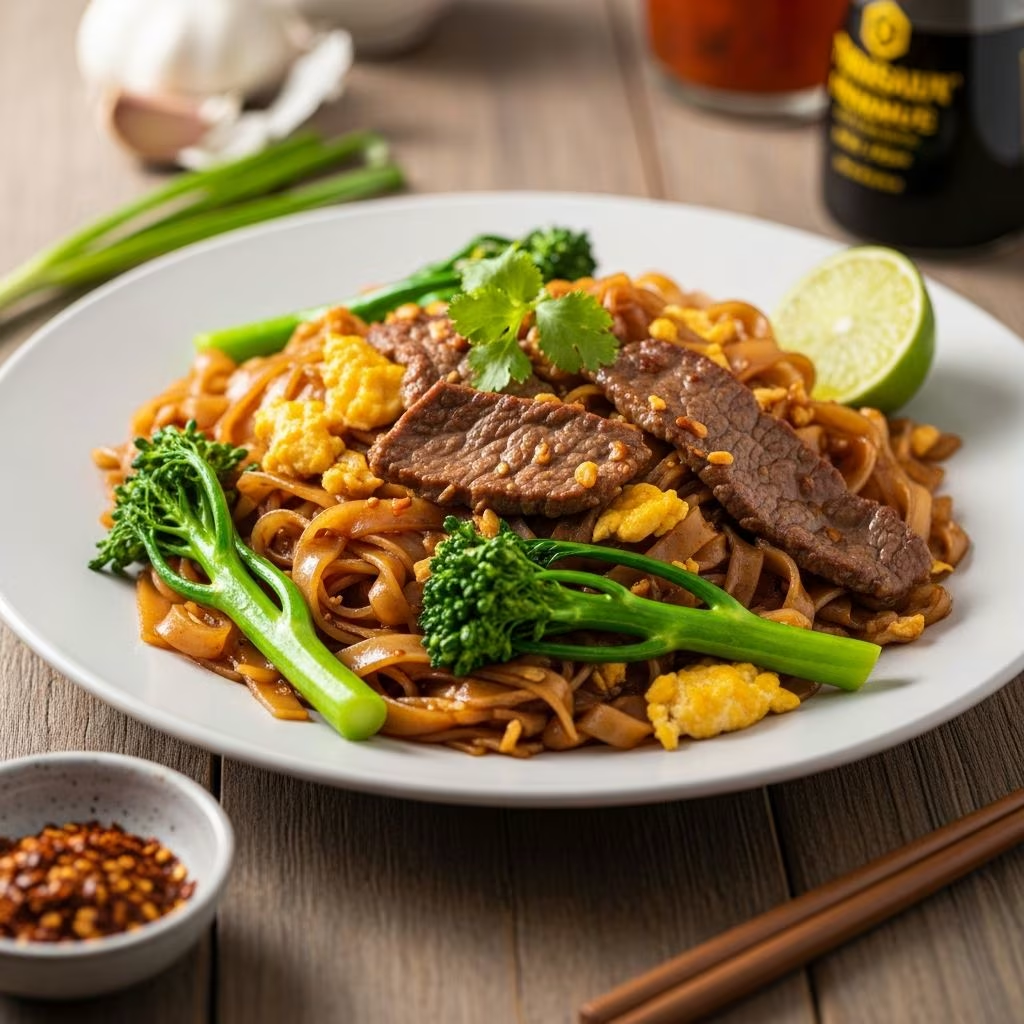
Pad See Ew stands as one of Thailand’s most cherished street foods, a simple yet profoundly flavorful stir-fry that captures the essence of quick, satisfying meals. Translating to “stir-fried with soy sauce,” this dish combines wide rice noodles with a harmonious blend of savory sauces, tender protein, scrambled egg, and crisp Chinese broccoli. Its popularity spans from bustling Thai markets to home kitchens worldwide, offering a balance of sweet, salty, and slightly charred notes that make it irresistible.
Origins and Cultural Significance
Rooted in Chinese immigrant influences, Pad See Ew evolved into a staple of Thai cuisine. The dish mirrors Singapore’s char kway teow, sharing wide noodles and soy-forward seasoning, but distinguishes itself with Thai staples like oyster sauce and fish sauce for depth. In Thailand, it’s a go-to for solo diners at food courts and vendors, akin to a noodle sandwich—fast, affordable, and comforting.
Street vendors achieve the signature wok hei (breath of the wok), that elusive smoky char from high-heat cooking. Home cooks can replicate this with a hot wok or skillet, transforming pantry staples into restaurant-quality results.
Essential Ingredients Breakdown
Success in Pad See Ew hinges on fresh, quality components. Here’s a detailed look:
- Wide Rice Noodles (Sen Yai or Ho Fun): Fresh is ideal for chewiness; dried works if rehydrated properly. Avoid thin vermicelli for authenticity.
- Protein: Thinly sliced beef, pork, chicken, shrimp, or tofu. Marinate briefly for tenderness.
- Chinese Broccoli (Gai Lan): Thick stems sliced thin, leaves chopped. Its crunch contrasts soft noodles; substitute broccolini or bok choy if unavailable.
- Eggs: Scrambled into the wok for richness.
- Sauces: Dark soy for color, light/Thai thin soy for salt, oyster sauce for umami, fish sauce for funk, sugar for balance.
- Aromatics: Garlic and white pepper for punch.
| Ingredient | Role | Substitution |
|---|---|---|
| Dark Soy Sauce | Color and mild sweetness | Regular soy + molasses |
| Oyster Sauce | Umami depth | Mushroom sauce (vegan) |
| Chinese Broccoli | Texture and bitterness | Broccoli + spinach |
| Fish Sauce | Savory funk | Soy sauce + lime (vegan) |
Step-by-Step Cooking Guide
Prepare for one generous serving or two sides. Total time: 15-20 minutes.
Marinate Protein (5 mins): Slice 8 oz beef/pork/chicken thin. Toss with 1 tsp each dark soy, oil, cornstarch, baking soda, and water. Baking soda tenderizes.
Mix Sauce: Combine 1 tbsp oyster sauce, 1 tbsp light soy, 1 tsp dark soy, 1 tsp fish sauce, ½ tsp sugar, pinch white pepper, 3 tbsp water.
Prep Noodles: If dried (8 oz), soak in warm water 10 mins until pliable. Fresh (1 lb): separate gently.
Heat Wok: 3-4 tbsp oil over high heat until smoking. Add 2-4 chopped garlic cloves; stir 10 secs.
Cook Protein: Add marinated meat; stir-fry 1-2 mins until 80% cooked. Push aside.
Scramble Egg: Crack 1-2 eggs; scramble briefly, mixing with meat.
Add Greens: Toss in sliced Chinese broccoli stems first (10 secs), then leaves.
Noodles and Sauce: Add noodles, pour sauce, sprinkle 1-2 tsp sugar. Toss high heat 1-2 mins for wok hei. Noodles should char slightly.
Finish: Taste; adjust with pepper. Serve hot.
Pro Tip: Use carbon steel wok for best heat retention. High flame essential for char.
Customizations and Variations
Adapt Pad See Ew endlessly:
- Vegan Version: Tofu or mushrooms, mushroom oyster sauce, no egg/fish sauce.
- Seafood Twist: Shrimp; skip meat marinade.
- Vegetable Boost: Add carrots, bean sprouts post-noodles.
- Spice Level: Fresh Thai chilies in wok or prik nam som (chili vinegar).
- Noodle Swap: Thin rice vermicelli for lighter texture, common in some regions.
For bulk cooking, portion sauce/noodles separately; cook in batches to maintain wok heat.
Perfecting Texture and Flavor
Chewy noodles, crisp veg, tender meat—balance is key. Common pitfalls:
- Soggy Noodles: Don’t over-soak dried; high heat evaporates moisture.
- No Wok Hei: Medium heat won’t char; crank it up.
- Bland Taste: Layer sauces: dark for color first, then others. White pepper elevates.
- Tough Protein: Slice against grain, marinate with baking soda.
Storage: Best fresh, but leftovers reheat wok-hot with splash water.
Authentic Condiments and Pairings
Elevate with Thai sides:
- Prik Nam Som: ¼ cup vinegar + 3 sliced Thai chilies. Brightens sweetness.
- Lime + Chili Flakes: Squeeze for acid.
- Cucumber Slices: Refreshing crunch.
Pair with iced Thai tea or singha beer. Nutritious: protein, veggies, carbs in one bowl.
Frequently Asked Questions
What if I can’t find Chinese broccoli?
Use broccolini, regular broccoli stems, or bok choy. Aim for sturdy greens with stems.
Can I use dried noodles?
Yes, widest “Pad Thai” style. Soak until soft, not mushy.
Is dark soy sauce necessary?
For iconic dark hue and flavor; substitute regular soy + touch sugar/molasses.
How spicy is Pad See Ew traditionally?
Mild; heat from condiments. Add chilies to taste.
Gluten-free options?
Tamari for soy, gluten-free oyster sauce.
Nutrition Snapshot (Per Serving)
| Nutrient | Amount |
|---|---|
| Calories | ~650 |
| Protein | 30g |
| Carbs | 90g |
| Fat | 20g |
Estimates vary by protein/portion. High in iron from gai lan, complete meal.
References
- Sen Mee Pad See Ew | ผัดซีอิ๊ว — Lion Brand Authentic Thai Rice. Accessed 2026. https://lionbrand.com.au/recipes/sen-mee-pad-see-ew/
- Pad See Ew (Thai Rice Noodles) — The Woks of Life. 2015-10-28. https://thewoksoflife.com/pad-see-ew/
- Authentic Thai Pad See Ew Recipe (with video) — Hot Thai Kitchen. Accessed 2026. https://hot-thai-kitchen.com/pad-see-ew-new/
- 15-Minute Pad See Ew (Thai Stir-Fried Noodles) — YouTube (LookCatchu). Accessed 2026. https://www.youtube.com/watch?v=zPksDFJHIBQ
- Pad See Ew (Thai Stir Fried Noodles) — RecipeTin Eats. 2019-04-10. https://www.recipetineats.com/thai-stir-fried-noodles-pad-see-ew/
- Authentic Vegan Pad See Ew — WoonHeng. Accessed 2026. https://woonheng.com/vegan-pad-see-ew/