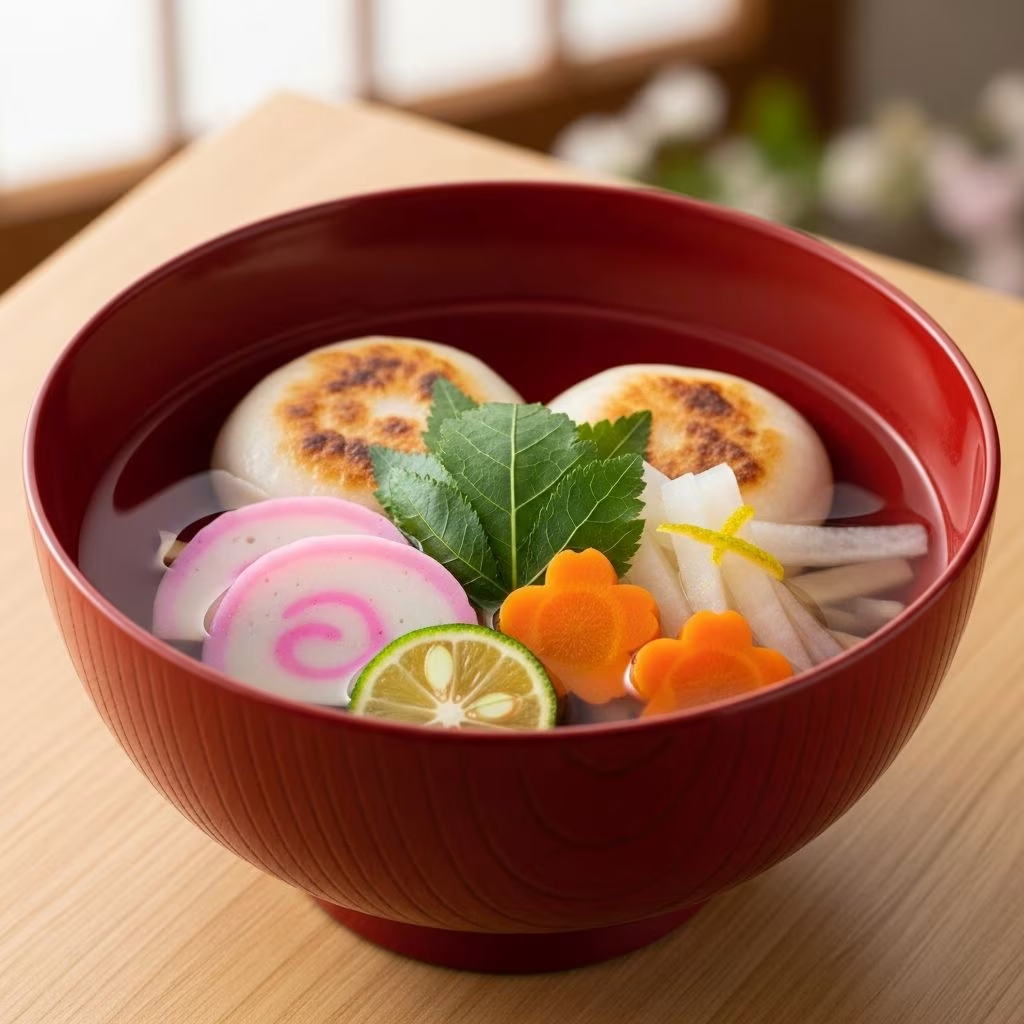
Every January 1st, households across Japan welcome the new year with a steaming bowl of ozoni, a comforting soup that blends chewy mochi rice cakes with tender vegetables, proteins, and aromatic broth. This dish, deeply rooted in Shinto rituals and family gatherings, embodies wishes for health, happiness, and abundance. Far from a mundane breakfast, ozoni sets the tone for oshogatsu—Japan’s most revered holiday—infusing the day with symbolic flavors and textures that promise prosperity.
The Cultural Heart of Ozoni in Japanese New Year Traditions
Ozoni traces its origins to ancient customs where mochi was offered to deities for blessings. By the Heian period (794–1185), it evolved into a festive soup, with records from the 15th century describing it as a noble’s delicacy. Today, it’s the first meal of the year, believed to grant longevity due to mochi’s sticky resilience, mirroring enduring family bonds.
During oshogatsu, families don yukata robes, visit shrines for hatsumode (first temple visit), and share osechi ryori—multi-tiered bento boxes of preserved dishes. Ozoni complements this with its fresh, hot contrast, often served alongside zoni-free versions called oshinko pickles. Regional pride shines through; easterners favor clear dashi, westerners creamy miso, reflecting Japan’s diverse culinary landscape.
Regional Variations: Kanto vs. Kansai Ozoni Styles
Japan’s culinary divide between Kanto (Tokyo region) and Kansai (Kyoto-Osaka) defines ozoni’s character. Kanto ozoni features a translucent kombu or bonito dashi broth, seasoned lightly with soy sauce and sake for umami clarity. Kansai counters with white miso paste, adding nutty depth dissolved gently to preserve probiotics.
| Aspect | Kanto (Eastern) | Kansai (Western) |
|---|---|---|
| Broth Base | Clear dashi (kombu, katsuobushi) | Miso-dashi hybrid |
| Seasoning | Soy sauce, sake, salt | White miso paste |
| Mochi Style | Square kirimochi, toasted | Round marumochi, simmered |
| Common Add-ins | Chicken, spinach, yuzu | Tofu, mizuna, shiitake |
Other areas innovate: Hokkaido adds salmon, Okinawa incorporates chicken thigh and soba base for a tropical twist. These differences highlight local ingredients and histories, like Kanto’s soy production influencing its savory profile.
Essential Ingredients and Their Symbolic Meanings
Ozoni’s components are chosen for more than taste—they carry omens for the year ahead. Mochi, pounded glutinous rice, expands when heated, symbolizing growth and fertility. Its chewiness evokes perseverance.
- Daikon radish and carrots: Sliced into auspicious shapes like sakura flowers or fans, they represent purity (white daikon) and diligence (carrot’s persistence through soil).
- Shiitake mushrooms: Provide earthy umami; their opened caps mimic smiles for joy.
- Chicken or tofu: Chicken thighs offer tender protein for family unity; tofu brings purity in Kansai vegan adaptations.
- Leafy greens (komatsuna, mizuna, spinach): Vibrant green for vitality and spring renewal.
- Garnishes (yuzu peel, scallions, kamaboko fish cake): Citrusy yuzu wards off evil; pink kamaboko evokes the rising sun.
Freshness is paramount; pre-made mochi from New Year’s mochitsuki pounding ensures authenticity.
Step-by-Step Guide to Crafting Authentic Kanto Ozoni
For 4 servings, prepare a clear broth that highlights mochi’s transformation.
- Make dashi: Soak 20g kombu in 4 cups water for 30 minutes, heat to simmer, remove kombu, add 20g katsuobushi flakes, steep 5 minutes, strain.
- Prep vegetables: Peel 100g daikon and 1 carrot (50g), cut into decorative half-moons or plums. Slice 4 shiitake caps thinly.
- Simmer proteins: Add 100g chicken thigh (cubed) to dashi with veggies. Season with 2 tsp usukuchi soy sauce, 1 tsp sake, pinch of salt. Cook 10-15 minutes until tender.
- Toast mochi: Grill 4 square kirimochi pieces over open flame until puffed and golden—about 2 minutes per side.
- Assemble: Place mochi in bowls, ladle hot soup over (mochi softens instantly), garnish with sliced scallions, yuzu zest, and kamaboko slices.
Serve immediately; the mochi’s gooey center contrasts crisp veggies for textural delight.
Adapting Kansai-Style Ozoni for Miso Lovers
Kansai’s miso-forward version suits colder climates. For 4:
- Dashi: 4 cups water, kombu, katsuobushi as above.
- Simmer daikon, carrot, shiitake 15 minutes.
- Off heat, dissolve 4-5 tbsp white miso via sieve to avoid boiling (preserves flavor).
- Add 150g cubed silken tofu, stir gently.
- Top bowls with simmered round mochi, mizuna greens, scallions.
This yields a cloudier, probiotic-rich soup with subtle sweetness.
Modern Twists and Vegan Ozoni Innovations
Contemporary cooks adapt ozoni for dietary needs. Vegan versions swap chicken for aburaage (fried tofu) or mushrooms, using kombu-only dashi. Gluten-free? Opt for tamari instead of soy. Fusion ideas include Hawaiian influences with lotus root and consomme from chicken stock clarified with egg whites.
For American kitchens, substitute jicama for daikon or cilantro for mizuna, maintaining symbolism. Batch-prep for parties: freeze dashi, thaw veggies day-of.
Health Benefits: Nourishment in Every Bite
Ozoni packs nutrition: Mochi provides sustained energy from rice carbs; daikon aids digestion with enzymes; shiitake boost immunity via beta-glucans. Miso offers gut-friendly probiotics, while greens deliver vitamins A and C. Low-calorie yet satiating, it’s an ideal post-holiday reset. A bowl (about 300 calories) balances macros without heaviness.
Pairing Ozoni with Oshogatsu Rituals
Enjoy ozoni after midnight soba (for longevity) or with otoso spiced sake. Follow with shrine visits, kagami-biraki (wine barrel opening). In Hawaii’s Japanese diaspora, it’s paired with cold soba for multicultural flair.
Frequently Asked Questions (FAQs)
What is ozoni made of?
Ozoni features mochi rice cakes in dashi or miso broth with daikon, carrots, shiitake, proteins like chicken or tofu, and greens.
Can I make ozoni ahead of time?
Prepare broth and veggies up to 2 days ahead; store separately. Toast mochi fresh to avoid sogginess.
What’s the difference between ozoni and zoni?
Ozoni includes mochi; zoni is vegetable soup without. Both are New Year’s staples.
Is ozoni gluten-free?
Traditional versions aren’t due to soy sauce; use tamari and gluten-free dashi for adaptation.
How do I store leftovers?
Refrigerate up to 2 days; reheat gently without boiling mochi.
Pro Tips for Perfect Ozoni Every Time
- Use usukuchi (light soy) for visual clarity in Kanto style.
- Shape veggies with metal cutters for festive appeal.
- Source fresh kirimochi from Asian markets post-Christmas.
- Adjust miso to taste—start low, as it intensifies.
- Experiment with kintoki carrots for red luck symbolism.
Mastering ozoni invites Japan’s New Year spirit into your home, fostering connection through shared warmth.
References
- RECIPE: New Year’s Ozoni (Mochi) Soup — Kokoro Cares. Accessed 2026. https://kokorocares.com/blogs/recipes/recipe-new-year-s-ozoni-mochi-soup
- Ozoni お雑煮 (Japanese New Year Mochi Soup) — Okonomi Kitchen. Accessed 2026. https://www.okonomikitchen.com/ozoni-japanese-new-year-mochi-soup/
- Ozoni (Japanese New Year Mochi Soup) — Nutrition by Kylie (Substack). Accessed 2026. https://nutritionbykylie.substack.com/p/ozoni-japanese-new-year-mochi-soup
- New Years Ozoni — Salt & Sand Hawaii. Accessed 2026. http://saltandsandhawaii.com/recipe/ozoni/
- New Year Ozoni Soup (Japanese Rice Cake Soup Recipe) — Cooking with Dog (YouTube). Accessed 2026. https://www.youtube.com/watch?v=7TLoD1IzGlU
- Ozoni (Japanese New Years Soup) — Marc’s Recipes. Accessed 2026. https://marcsrecipes.com/ozoni-recipe/