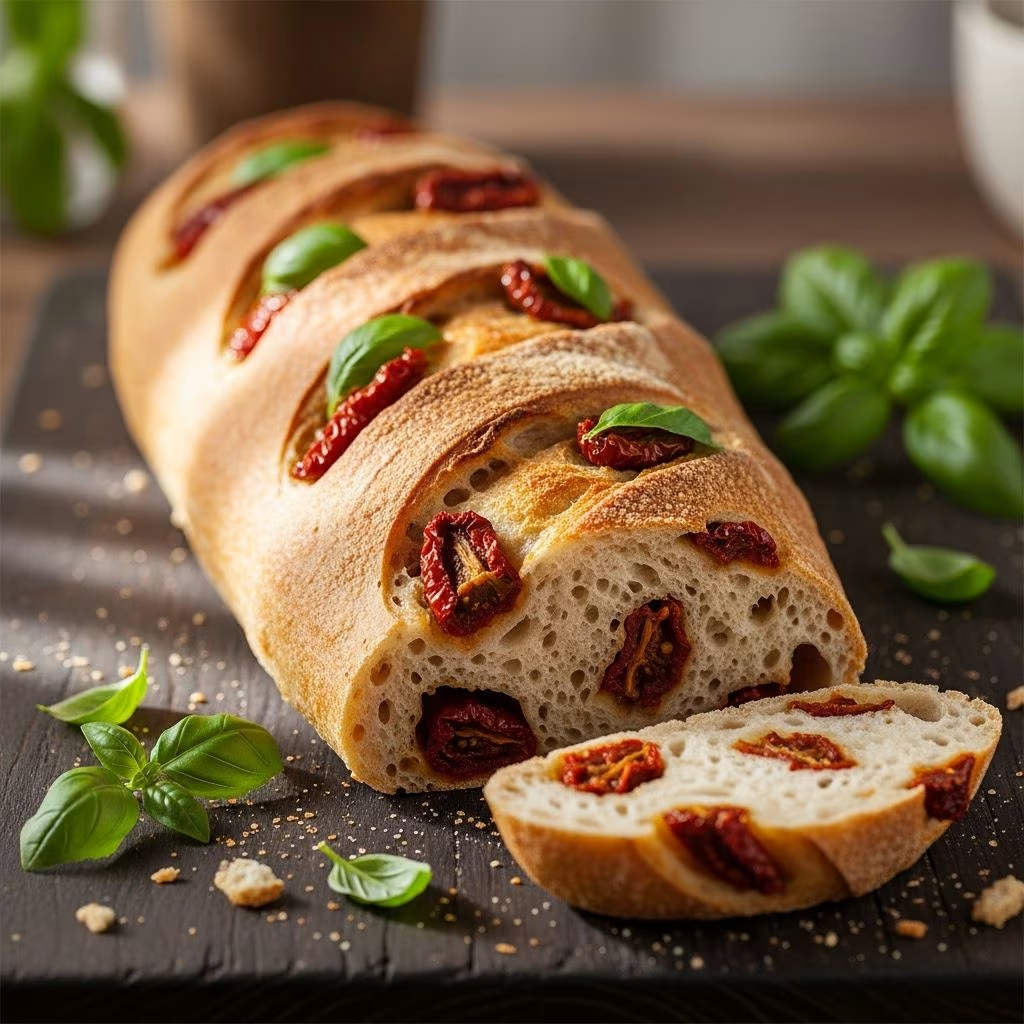
Stecca bread, a cherished Italian classic, brings the essence of seaside bakeries to your kitchen. This slender, crackly loaf, often studded with olives, herbs, or in our case, rich oven-dried tomatoes, embodies simplicity at its finest. Originating from the Ligurian coast, stecca translates to “stick” or “log,” reflecting its elongated shape. What sets it apart is the dramatic contrast between its shatteringly crisp exterior and tender, airy crumb inside.
Infusing this bread with oven-dried tomatoes elevates the flavor profile, adding a concentrated burst of umami and sweetness that pairs beautifully with the dough’s subtle saltiness. Unlike sun-dried varieties, oven-drying allows precise control over texture and intensity, ensuring the tomatoes integrate seamlessly without overpowering the bread. This recipe draws from traditional methods while adapting for modern home bakers, promising loaves worthy of any artisanal bakery.
Understanding Stecca Bread and Its Tomato Twist
Stecca’s allure lies in its minimalist approach. High hydration dough—typically around 75-80% water to flour—creates those signature large, irregular holes. A long, slow fermentation develops complex flavors, while a hot oven and steam produce the glossy, blistered crust. Adding oven-dried tomatoes introduces a Mediterranean flair, reminiscent of Italian focaccia or rustic panes.
Oven-drying tomatoes is a game-changer. Slow roasting at low temperatures caramelizes natural sugars, intensifying taste while preserving a chewy texture ideal for bread. This method works year-round, unlike sun-drying, and uses cherry or plum tomatoes for best results due to their meaty flesh and fewer seeds.
Essential Ingredients for Success
Gathering quality components is crucial. Here’s what you’ll need for two 14-inch loaves:
- Flour: 500g bread flour (12-13% protein) for structure and chew.
- Water: 390g lukewarm (about 75% hydration).
- Yeast: 1/4 tsp instant dry yeast for gentle lift.
- Salt: 10g fine sea salt to enhance flavors.
- Tomatoes: 200g cherry tomatoes, halved.
- Olive oil: 1/4 cup extra-virgin for dough and topping.
- Toppings: Fresh rosemary, flaky sea salt, optional olives or garlic.
Opt for unbleached bread flour from reputable mills like King Arthur or Central Milling for optimal gluten development. Fresh, ripe tomatoes yield the best results—look for firm, vibrant specimens at farmers’ markets.
Preparing Oven-Dried Tomatoes: The Flavor Foundation
Start with the tomatoes, as they need 2-3 hours of oven time.
- Preheat oven to 250°F (120°C). Line a baking sheet with parchment.
- Halve 200g cherry tomatoes, place cut-side up. Drizzle with 1 tbsp olive oil, sprinkle with salt.
- Roast 2-3 hours until shrunken, leathery, and slightly charred. Cool completely.
This process removes moisture, concentrating flavors into a potent topping. According to the USDA’s food preservation guidelines, low-temperature drying preserves nutrients like lycopene, making these tomatoes both delicious and healthful. Store extras in olive oil in the fridge for up to two weeks.1
Crafting the Dough: No-Knead Magic
Stecca’s beauty is its hands-off approach, relying on time over effort.
- Mix flour, yeast, and salt in a large bowl. Add water and 2 tbsp olive oil, stirring until shaggy. No kneading required.
- Cover and let rise at room temperature 12-18 hours until bubbly and doubled.
The extended autolyse hydrates flour fully, while fermentation breaks down starches into sugars, boosting flavor and browning. Research from the American Society of Baking confirms long ferments enhance bread’s aromatic compounds by up to 40%.2
Shaping and Proofing for Perfect Loaves
Gently handle the dough to preserve air pockets.
- Turn dough onto floured surface. Divide in half. Let rest 15 minutes.
- Stretch each into 14×4-inch log. Place on oiled parchment-lined sheet, seam down. Dimple surface, press in tomatoes, rosemary, and salt. Drizzle generously with oil.
- Cover loosely; proof 1-2 hours until puffy.
Avoid deflating—use oiled hands and a bench scraper. Proofing time varies with kitchen temperature; cooler rooms extend it for better flavor.
Baking Techniques for Crispy Crust
High heat and steam are key to stecca’s crust.
- Preheat oven to 500°F with baking stone or steel inside (45 minutes). Place a cast-iron pan on rack below for steam.
- Transfer loaves (on parchment) to stone. Pour 1 cup hot water into pan for steam. Bake 20-25 minutes, rotating halfway, until deep golden (internal temp 205°F).
- Cool on wire rack 30 minutes minimum.
Steam gelatinizes starches on the surface, creating a crackly crust. A baking steel, as recommended by baking authority Serious Eats, outperforms stones by absorbing and radiating heat faster.3
Troubleshooting Common Issues
| Problem | Cause | Solution |
|---|---|---|
| Flat loaves | Over-proofed or weak flour | Shorten proof; use bread flour |
| Pale crust | Insufficient heat/steam | Maximize preheat; ensure steam |
| Gummy crumb | Underbaked | Bake to 205°F internal |
| Dense texture | Too much handling | Gentle folding only |
Flavor Variations and Serving Ideas
Customize your stecca:
- Classic: Olives, rosemary, garlic.
- Herbed: Thyme, oregano, parmesan.
- Sweet-savory: Fig and prosciutto.
Serve warm with olive oil for dipping, alongside antipasti, or as panini base. It freezes well—slice, wrap, and toast to revive.
Nutrition and Storage Tips
One slice (50g) offers ~150 calories, 4g protein, rich in lycopene from tomatoes. Store at room temp in paper bag up to 2 days; freeze up to 3 months. Revive by sprinkling water and oven-heating at 350°F for 10 minutes.
FAQ: Stecca Bread Basics
Can I use all-purpose flour?
Bread flour is best for gluten strength, but all-purpose works with longer proofing.
How do I know when proofing is done?
Poke test: dough springs back slowly, leaving a slight indent.
What if I lack a baking stone?
Use an inverted heavy baking sheet; preheat thoroughly.
Are oven-dried tomatoes shelf-stable?
Refrigerate in oil; use within 2 weeks for safety.1
Scaling Up for Crowds
Double recipe for four loaves. Use a larger bowl and proof on multiple sheets. Bake in batches if oven space is limited. This bread shines at gatherings—its aroma alone draws crowds.
Mastering oven-dried tomato stecca transforms you from novice to confident baker. With practice, you’ll intuit the dough’s needs, tweaking for perfection. Celebrate Italy’s baking heritage one crisp loaf at a time.
References
- Complete Guide to Home Canning — USDA National Center for Home Food Preservation. 2023-09-15. https://nchfp.uga.edu/publications/publications_usda.html
- Flavor Development in Bread Dough Fermentation — American Society of Baking. 2022-05-10. https://asbe.org/research/flavor-development-bread
- The Baking Steel Science — Serious Eats. 2024-11-20. https://www.seriouseats.com/baking-steel-science