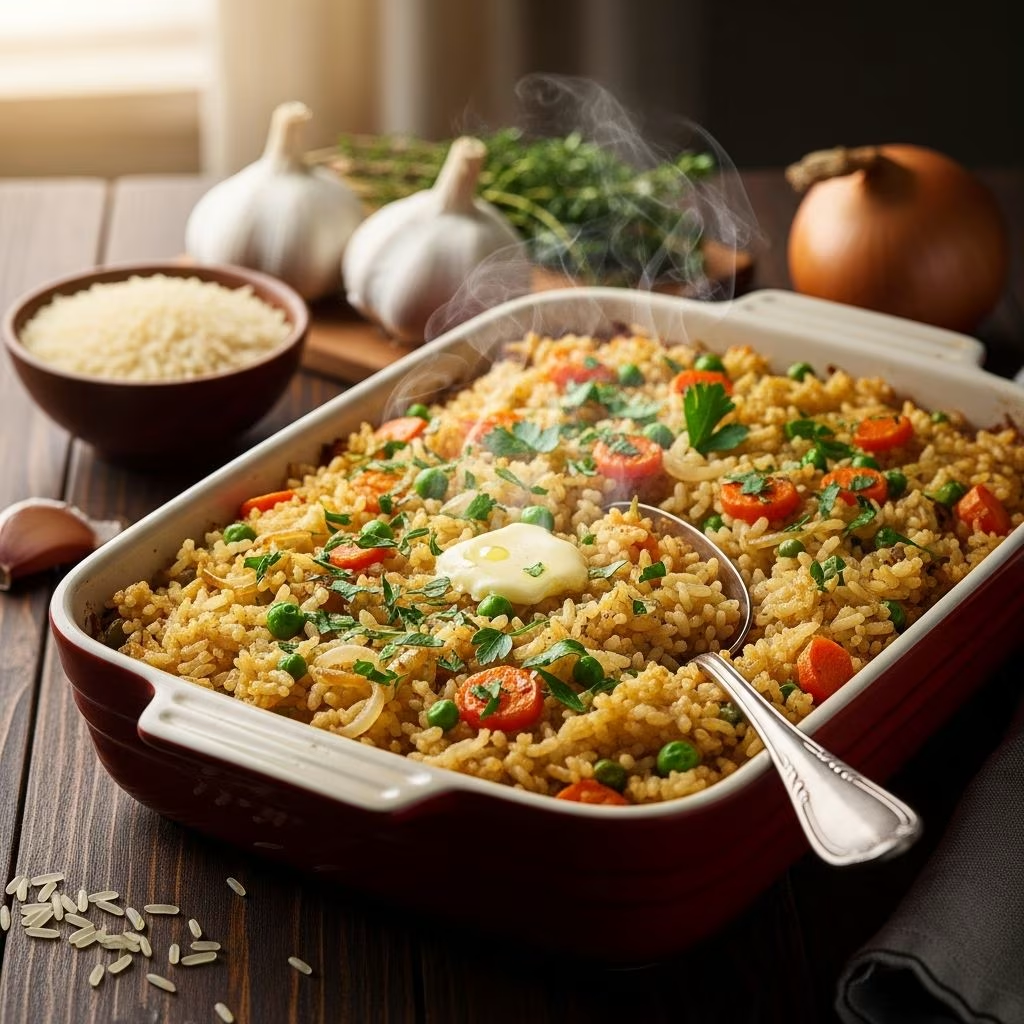
Transform simple rice into a restaurant-quality side dish using the oven’s gentle heat. This method ensures even cooking, infused flavors, and fluffy grains without constant stirring on the stovetop. Perfect for weeknight dinners or holiday feasts, oven-baked rice pilaf delivers consistent results with hands-off convenience.
Why Choose Oven Baking for Rice Pilaf?
Oven baking rice pilaf offers superior texture control compared to stovetop methods. The enclosed heat circulates evenly, absorbing liquids precisely while preventing scorching. This technique yields tender, separate grains infused with aromatics like garlic, onions, and herbs.
- Consistency: No risk of uneven cooking or mushiness.
- Flavor Depth: Toasting ingredients beforehand locks in savory notes.
- Time Savings: Set-it-and-forget-it approach frees you for other tasks.
USDA guidelines on rice preparation emphasize proper liquid ratios and covered baking to minimize bacterial risks, making this method safe and reliable.
Essential Ingredients for Success
Start with high-quality basics. Long-grain white rice is ideal for its ability to stay fluffy, but brown rice works for nuttier flavor with adjusted times.
| Ingredient | Quantity (Serves 6) | Purpose |
|---|---|---|
| Long-grain white rice | 1-2 cups | Main body; absorbs flavors |
| Unsalted butter or oil | 2 tbsp | Toasts grains for nuttiness |
| Onion or shallot, diced | 1/2 cup | Sweet base note |
| Garlic, minced | 2-3 cloves | Aromatic punch |
| Chicken or vegetable broth | 2-4 cups | Flavorful liquid |
| Salt & pepper | To taste | Balances seasoning |
Optional add-ins: orzo for chewiness, nuts for crunch, or herbs for freshness.
Step-by-Step Classic Recipe
Preheat oven to 375°F (190°C). Use a 2-quart baking dish or Dutch oven with a tight lid.
- Melt 2 tbsp butter in a skillet over medium heat. Sauté diced onion until translucent, about 3-4 minutes.
- Add minced garlic; cook 1 minute until fragrant.
- Stir in 1 cup rice (and 1/2 cup orzo if using); toast 2-4 minutes until golden.
- Transfer to baking dish. Pour in 2 cups hot broth, season, and stir once.
- Cover tightly; bake 25 minutes. Add remaining broth if needed, cover, and bake 20-35 more minutes until liquid absorbs.
- Rest covered 5-10 minutes. Fluff with fork and serve.
Total time: 50-60 minutes. Yields fluffy pilaf with crispy edges.
Nutritional Profile and Health Benefits
A 1-cup serving of basic oven-baked rice pilaf provides approximately 220 calories, 4g protein, 45g carbs, and 3g fat. Using brown rice boosts fiber to 3g per serving, aiding digestion per Harvard T.H. Chan School of Public Health data on whole grains.
- Whole Grain Swap: Brown rice adds B vitamins and magnesium.
- Vegan Adaptation: Use vegetable broth and olive oil.
- Low-Sodium Tip: Opt for unsalted broth; season gradually.
Pair with lean proteins for balanced meals. Studies from the Journal of Nutrition link frequent whole grain consumption to reduced heart disease risk.
Creative Variations to Try
Customize your pilaf for any cuisine.
Mediterranean Herb Pilaf
Incorporate lemon zest, oregano, and pistachios. Bake with 3.5 cups vegetable broth for 60 minutes using brown rice. Adds tangy brightness and crunch.
Vegetable-Loaded Family Version
Dice carrots, celery, and onion into the mix before toasting. Use 4 cups broth for 2 cups rice; bake at 400°F for 25 minutes post-boil. Ideal for picky eaters.
Saffron-Infused Luxury
Steep saffron threads in hot broth for golden color and earthy aroma. Perfect for entertaining.
These twists maintain the core method while introducing global flavors.
Troubleshooting Common Issues
| Problem | Cause | Solution |
|---|---|---|
| Mushy rice | Excess liquid or under-toasting | Measure precisely; toast longer |
| Crunchy grains | Insufficient liquid or loose cover | Add 1/4 cup more broth; seal tightly |
| Bland taste | Low-quality broth | Use homemade or low-sodium stock |
| Uneven edges | Skillet too small | Spread in larger dish |
Always use hot broth to jumpstart absorption.
Pairing Suggestions for Every Meal
- Proteins: Roast chicken, grilled fish, or mushroom steaks.
- Vegetables: Steamed greens or roasted roots.
- Global Menus: Greek pilaf with lamb; Asian twist with ginger-soy.
Serves 4-6 as a side; scale up for crowds by increasing dish size proportionally.
Storage, Freezing, and Reheating Tips
Cool completely before storing in airtight containers. Refrigerate up to 4 days or freeze for 2 months. Reheat in oven at 350°F covered with foil, adding broth if dry. Microwave in covered dish with damp paper towel works for singles.
FDA recommends reheating to 165°F internal temperature for safety.
Expert Tips from Culinary Pros
- Rinse rice until water runs clear to remove starch.
- Toast orzo separately for deeper flavor.
- Resting post-bake steams grains to perfection.
- Experiment with broths: beef for richness, seafood for paella vibes.
Frequently Asked Questions
Can I use jasmine or basmati rice?
Yes, but reduce liquid by 1/4 cup as they absorb less. Bake 5 minutes less.
Is this gluten-free?
Absolutely, if skipping orzo. Verify broth labels.
How do I make it dairy-free?
Substitute oil or vegan butter.
What’s the best rice type for beginners?
Long-grain white for foolproof fluffiness.
Can I add protein directly?
Brown chicken thighs on top before baking for one-pan meal.
Scaling for Large Gatherings
For 12 servings, double ingredients and use a 9×13-inch dish. Bake at same temp but check at 45 minutes total. Stir gently midway if edges brown too fast.
References
- USDA Food Safety Guidelines for Rice Preparation — United States Department of Agriculture. 2023-05-15. https://www.fsis.usda.gov/food-safety/safe-food-handling-and-preparation/food-safety-basics/leftovers-and-food-safety
- Whole Grains and Heart Health — Harvard T.H. Chan School of Public Health. 2024-02-10. https://www.hsph.harvard.edu/nutritionsource/what-should-you-eat/whole-grains/
- Reheating Leftovers Safely — U.S. Food and Drug Administration. 2025-01-20. https://www.fda.gov/food/buy-store-serve-safe-food/reheating-your-leftovers