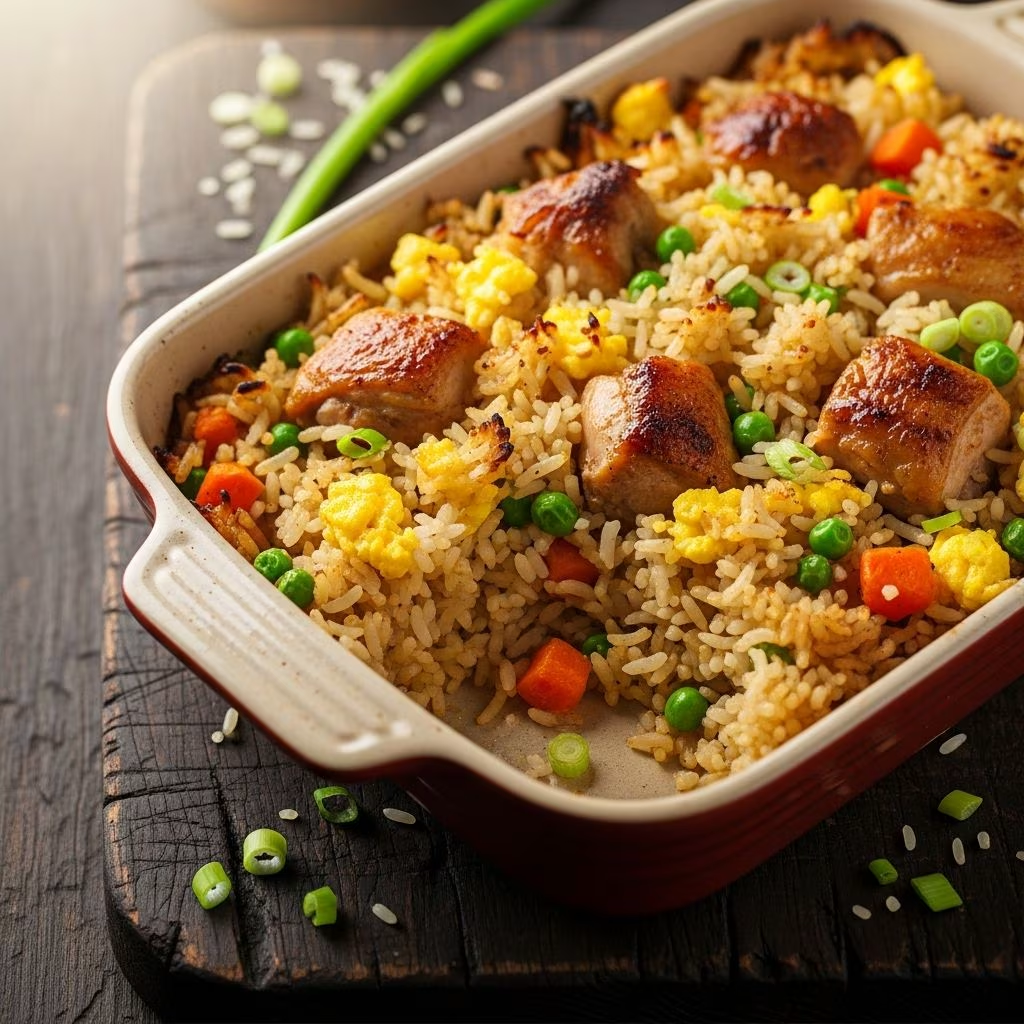
Traditional fried rice requires leftover cooked rice, careful timing, and continuous attention at the stovetop. However, a modern approach to this beloved Asian dish eliminates these barriers by shifting the cooking method entirely to the oven. This baked variation delivers the same satisfying flavors and textures while requiring minimal hands-on time and significantly less skill to execute successfully.
Understanding the Innovation Behind Oven-Baked Fried Rice
The fundamental shift from stovetop to oven cooking transforms fried rice into an accessible weeknight dinner for home cooks of all skill levels. By combining uncooked rice directly with liquid and seasonings in a single pan, this method eliminates the need to plan ahead with leftover rice. The dry grains absorb the flavored stock gradually, developing a tender yet distinct texture that avoids the mushiness associated with some traditional methods.
This approach represents a practical solution to a common cooking challenge. Rather than requiring advance preparation or multiple pans, everything goes into a single metal baking vessel. The controlled, even heat of the oven ensures uniform cooking throughout the dish without the constant stirring demanded by stovetop frying.
Essential Components and Their Functions
The Rice Foundation
Long-grain white rice serves as the structural base for this dish, providing the ideal texture when baked rather than fried. Short-grain varieties tend to become excessively sticky during the extended baking process, resulting in a mushy consistency rather than the desired separate grains. The rice grains maintain their integrity when properly submerged in the flavorful stock, absorbing liquid gradually without becoming saturated.
When selecting rice for this recipe, prioritize consistency and quality. Store-bought long-grain white rice works reliably, though some specialty varieties can also perform well. The key consideration involves ensuring complete submersion of the rice beneath the liquid, which allows even moisture distribution and prevents dry or unevenly cooked patches.
Flavoring Agents and Aromatics
The liquid component combines low-sodium chicken stock with traditional Asian seasonings that infuse the rice with savory depth. Light soy sauce contributes umami without overwhelming the palate with excessive saltiness, while Chinese cooking wine adds subtle complexity and acidity. Minced garlic dispersed throughout the rice base ensures flavor distribution rather than concentrated pockets.
White pepper, used in place of black pepper, provides gentle heat that complements rather than dominates the final dish. This choice reflects professional cooking techniques that prioritize subtle flavor layering over bold spice statements.
Protein and Textural Elements
Chicken thighs, cut into small bite-sized pieces, serve as the primary protein component. Their higher fat content compared to breast meat ensures juiciness throughout the baking process, preventing the dryness that can occur when leaner cuts are subjected to extended oven heat. A preliminary marinade using oyster sauce, cooking wine, soy sauce, sesame oil, and garlic allows the chicken to develop complex flavors before cooking.
Bacon or ham contributes smoky, salty notes that enhance the overall flavor profile. The rendered fat from these cured meats distributes throughout the rice, adding richness without requiring additional oil. Frozen mixed vegetables—typically containing carrots, peas, and corn—provide color contrast, textural variation, and nutritional balance without requiring fresh produce preparation.
Step-by-Step Preparation and Cooking Process
Initial Preparation Phase
Begin by preheating the oven to 200°C (180°C for fan-forced models). This temperature provides sufficient heat for gradual rice hydration without causing rapid evaporation that would leave grains undercooked. Use a metal baking pan measuring approximately 23 by 33 centimeters—this size distributes ingredients evenly across the cooking surface.
Combine uncooked rice with chicken stock, soy sauce, Chinese cooking wine, minced garlic, and white pepper directly in the pan. Stir thoroughly to distribute the rice evenly and ensure complete submersion beneath the liquid. This crucial step prevents uncooked or partially cooked grains from remaining above the waterline.
Distribute frozen vegetables and bacon pieces evenly across the rice surface. Rather than attempting to mix these components thoroughly, a relatively uniform top layer ensures even cooking and prevents certain ingredients from becoming overly concentrated in specific areas. Cover the entire pan tightly with aluminum foil, which traps steam and maintains consistent moisture levels throughout the initial baking phase.
Chicken Preparation and Marination
While the rice begins cooking, prepare the chicken marinade by combining oyster sauce, Chinese cooking wine, light soy sauce, sesame oil, and finely minced garlic in a separate bowl. Cut chicken thigh fillets into uniform 1.5-centimeter pieces, ensuring consistency in size for even cooking. Combine the chicken with the marinade and allow at least 10 minutes for flavor infusion, though 30 minutes produces noticeably more developed taste.
This marination period accomplishes multiple objectives simultaneously. The soy sauce and oyster sauce begin breaking down the chicken proteins, initiating the tenderization process. Sesame oil adds richness and contributes to browning, while the garlic and wine introduce aromatics that will become apparent during the subsequent baking phase.
The Two-Stage Baking Method
After 25 minutes of covered baking, remove the pan from the oven and carefully peel back the foil. At this point, the rice should have absorbed most of the liquid and begun developing distinct grains. Spread the marinated chicken across the rice surface in a relatively even single layer, allowing direct contact between the chicken and the hot rice underneath.
Return the pan to the oven without the foil covering and continue baking for approximately 20 minutes. This uncovered phase allows the chicken to brown slightly while finishing its cooking process. The rice grains continue absorbing any remaining liquid while being exposed to dry oven heat, which helps maintain texture separation.
Final Assembly and Resting
Upon removal from the oven, immediately cover the pan with the reserved foil and allow it to rest for 10 minutes. This resting period allows carryover cooking to complete the process while the residual steam gently continues hydrating any remaining dry grains. The foil covering prevents surface drying during this critical final stage.
After resting, use a rubber spatula to gently fluff the rice, breaking up any compacted areas while maintaining the distinct grain texture. Fold in scrambled eggs if desired, drizzle with sesame oil, and garnish with finely sliced green onion. The gentle mixing action incorporates all components without crushing the individually cooked grains.
Technical Considerations for Success
Cookware Selection
Metal baking pans conduct heat more efficiently than ceramic or glass alternatives, ensuring even cooking throughout the dish. The specific dimensions matter because they affect the surface-area-to-volume ratio, influencing both cooking time and the ratio of rice exposed to direct oven heat versus surrounded by other ingredients.
Ingredient Substitutions and Modifications
Medium-grain white rice and basmati rice can substitute for long-grain varieties, though each produces slightly different texture characteristics. However, risotto rice, paella rice, brown rice, and sushi rice prove unsuitable because their inherent starch content or grain structure creates undesirable consistency in this preparation method.
Light soy sauce provides the ideal balance of saltiness and flavor, though standard all-purpose soy sauce can replace it. Dark soy sauce should be avoided because its stronger flavor and higher salt content can overwhelm the dish. Chinese cooking wine can be substituted with mirin or dry sherry for similar flavor effects. Those preferring alcohol-free preparations can omit the wine entirely while extending the cooking time by one minute and adding additional chicken stock to compensate for lost liquid.
Customization Possibilities
While the basic formula remains consistent, this recipe accommodates numerous variations. Different frozen vegetable combinations can be substituted based on preference or availability. Alternative proteins such as shrimp, pork, or additional beef can replace or supplement the chicken. Vegetarian versions can eliminate the meat components while maintaining the fundamental cooking technique.
Advantages of the Oven-Baked Approach
Minimal Active Preparation: The majority of cooking occurs passively in the oven, freeing the cook to attend to other tasks rather than remaining at the stove.
No Leftover Rice Requirement: Unlike traditional fried rice, this method accepts uncooked rice, eliminating the need to plan meals days in advance.
Single Pan Simplicity: Everything cooks in one vessel, dramatically reducing cleanup while containing all flavors within one cooking environment.
Consistent Results: The even, controlled heat of oven cooking produces reliable texture and doneness regardless of the cook’s experience level.
Scalability: The recipe easily accommodates larger quantities by using multiple pans or proportionally increasing ingredients.
Troubleshooting Common Issues
Excess Moisture or Mushy Texture
If the finished rice appears overly wet or soft, the foil may not have sealed properly, allowing steam to escape. Ensure foil covers the pan completely, creating an airtight seal. Alternatively, the rice-to-liquid ratio may need adjustment based on the specific rice variety used, as different grains absorb moisture at varying rates.
Undercooked Rice or Dry Patches
Insufficient liquid or incomplete submersion of rice grains at the beginning can result in uncooked patches. Always stir the rice and liquid together thoroughly before adding vegetables and bacon. If necessary, add additional stock in small increments before the initial baking phase begins.
Unevenly Cooked Chicken
Ensuring uniform piece sizes allows all chicken to reach doneness simultaneously. Larger chunks may remain partially cooked while smaller pieces become overdone. Spreading the chicken in a single layer also prevents stacking, which could cause bottom pieces to overcook while top pieces remain underdone.
Serving Recommendations and Pairings
This dish functions as a complete one-pan meal requiring no accompaniments, though it pairs well with steamed bok choy, sautéed Chinese broccoli, or a simple cucumber salad. The rich, savory flavors complement lighter vegetable preparations that provide textural contrast and additional nutrition.
Portion sizes depend on whether this dish is served as a main course or as part of a larger meal. As a standalone dinner, this recipe serves four adequately, with leftovers reheating well in either the oven or microwave for convenient subsequent meals.
Storage and Reheating Guidelines
Properly stored in airtight containers, this dish maintains quality in the refrigerator for up to four days. Reheating can occur in a 160°C oven for approximately 15 minutes, covered with foil to prevent surface drying. Microwave reheating requires 2-3 minute intervals with stirring between cycles to ensure even temperature distribution.
Frequently Asked Questions
Can this recipe be prepared ahead of time?
Yes, all components can be prepared up to 24 hours in advance. Store the rice mixture and chicken marinade separately, then combine and bake when ready to cook. This makes the dish particularly convenient for meal planning.
What oven temperature works best?
200°C (180°C fan-forced) provides the ideal balance between cooking speed and even heat distribution. Lower temperatures extend cooking time excessively, while higher temperatures risk over-browning the chicken before the rice fully hydrates.
Is it necessary to use sesame oil?
While sesame oil contributes distinctive flavor and richness, neutral oils like canola or vegetable oil can substitute if unavailable. The finished dish will lack the subtle nutty flavor sesame oil provides.
How can this dish be made vegetarian?
Eliminate the chicken and bacon while maintaining all other ingredients. Increase the quantity of frozen vegetables or add additional protein sources like tofu or legumes. Vegetable stock replaces chicken stock while maintaining flavor integrity.
References
- Magic Baked Chicken Fried Rice — Jamie Oliver Official Website. 2023. https://www.jamieoliver.com/recipes/rice/magic-baked-chicken-fried-rice/
- Nutritional Guidelines for Rice Preparation Methods — Food Safety Standards Authority. 2024. https://www.foodstandards.gov.uk/
- Asian Cooking Techniques and Ingredient Substitutions — Culinary Institute of America. 2024. https://www.ciachef.edu/