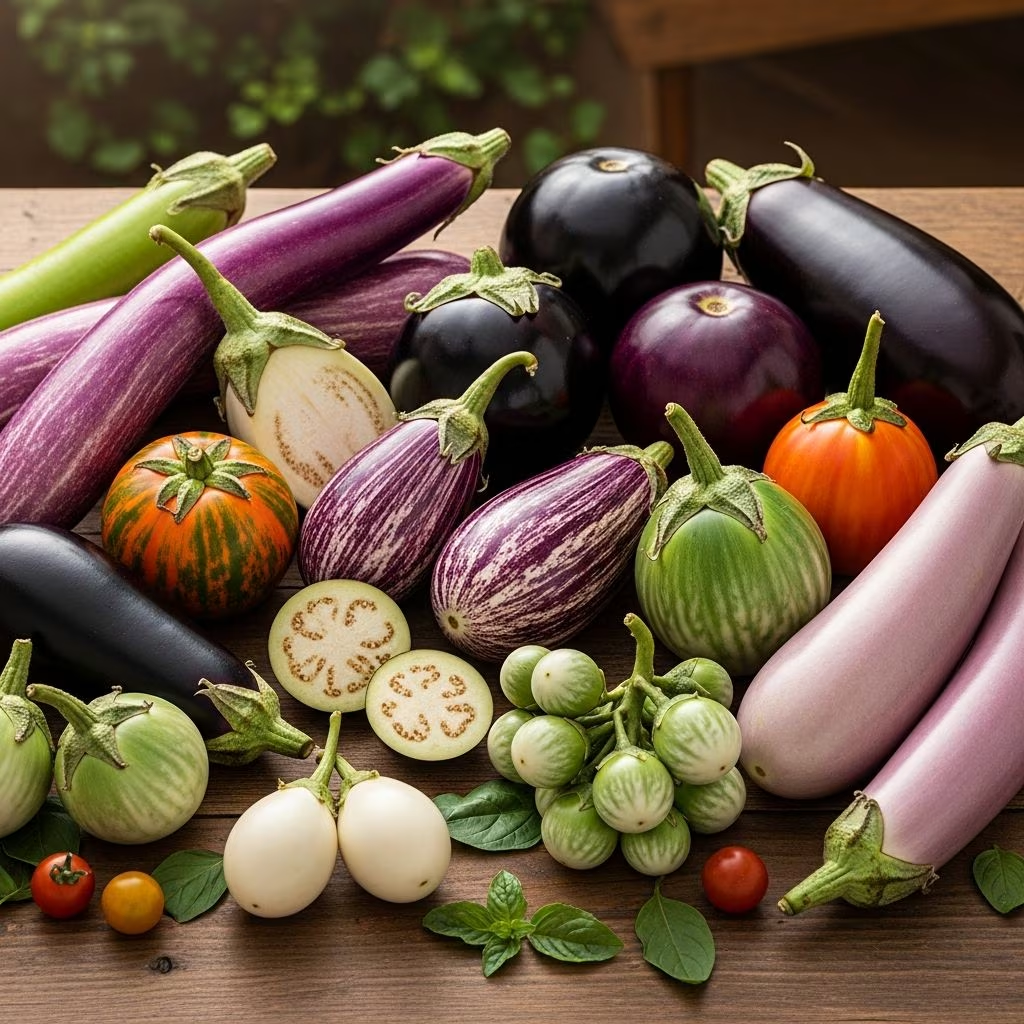
Eggplants, known scientifically as Solanum melongena, offer a spectrum of shapes, sizes, colors, and tastes that go far beyond the familiar glossy purple globe found in most supermarkets. Originating from Asia and spreading globally, these nightshade family members thrive in warm climates and adapt to various growing conditions. Gardeners and chefs appreciate their versatility, from tender stir-fries to hearty bakes. This article explores key varieties, their characteristics, cultivation needs, and kitchen applications, drawing from reliable horticultural insights to help you select and enjoy them.
The All-Purpose Globe Eggplant
The globe eggplant stands as the classic choice, characterized by its large, oval shape and deep purple-black skin. Varieties like Black Beauty produce fruits weighing up to a pound, with firm flesh ideal for slicing, grilling, or stuffing. These eggplants have a mildly bitter taste that mellows when cooked, making them staples in dishes such as eggplant Parmesan or baba ganoush.
Growing globe types requires full sun, well-drained soil, and temperatures above 70°F (21°C). Plants reach 2-3 feet tall, yielding abundantly if staked to support heavy fruits. Harvest when fruits are glossy and firm, typically 70-80 days from transplant. Their thick skin benefits from salting to draw out moisture and reduce bitterness before cooking.
Slender Asian Long Eggplants
Asian eggplants redefine tenderness with their elongated forms and thin skins. Japanese varieties, like Ichiban, grow 8-12 inches long, dark purple, and feature creamy flesh perfect for quick sautés or tempura. Chinese eggplants are similarly slim but lighter purple, excelling in stir-fries due to fewer seeds and less bitterness.
- Ichiban: A hybrid favorite for its productivity; one plant can yield dozens of tender fruits.
- Orient Express F1: Reliable for home gardens, with sweet flavor and high yields.
- Millionaire Purple F1: Japanese hybrid prized for stir-fry tenderness.
These varieties prefer warm, humid conditions and mature in 60-70 days. No salting needed thanks to delicate skins. In the kitchen, their mild sweetness shines in Asian-inspired recipes, absorbing sauces without falling apart.
Colorful Striped and Speckled Varieties
Striped eggplants add visual drama to gardens and plates. Graffiti, or Zebra eggplant, boasts purple-and-white stripes on slender fruits, offering mild flavor and ornamental appeal. Listada de Gandia features similar striping with Italian roots, tender when harvested young.
These hybrids or heirlooms grow vigorously, often spineless, and suit fresh markets. Mature in 65-75 days under full sun. Grill or roast them to highlight their patterns; the flesh remains creamy without bitterness.
Exotic Heirloom Eggplants from Around the World
Heirloom eggplants preserve cultural flavors and unique appearances. Thai Yellow Egg yields small, egg-shaped yellow fruits ideal for curries. Cambodian Green Giant produces ribbed, green-striped giants from Southeast Asia. Brazilian Oval Orange shifts from green to vibrant red, adding color to salads.
| Variety | Origin | Fruit Description | Best Uses |
|---|---|---|---|
| Rosa Bianca | Italy/Sicily | Pink-lavender, pear-shaped | Grilling, stuffing |
| Ping Tung Long | Taiwan | Slender purple, 12+ inches | Stir-fries |
| Goyo Kumba | Africa | Tall, bright red | Roasting |
| Udmalbet | India | Green-purple stripes, yellows when ripe | Curries |
These treasures demand similar care: rich soil, consistent moisture, and protection from cool nights. Their diversity enhances biodiversity in gardens while offering nuanced flavors.
Small and Round Eggplant Types
Compact eggplants suit stuffing or pickling. Indian varieties, small and reddish-purple, absorb curry spices deeply. Thai green rounds with white stripes mimic tomatoes in green curries. Turkish Orange, or Ethiopian, ripens to persimmon-like orange, best roasted to tame bitterness.
These prolific plants mature quickly (55-65 days) and tolerate containers. Their dense flesh holds shape in stews. For beginners, they’re forgiving and flavorful.
Growing Eggplants Successfully
Success with eggplants hinges on site selection and care. Choose sunny spots with pH 5.5-6.8 soil amended with compost. Start seeds indoors 8-10 weeks before last frost, transplant after soil warms to 75°F (24°C). Space plants 24-36 inches apart; mulch to retain moisture.
Common challenges include flea beetles (use row covers) and blossom-end rot (ensure even watering). Hybrids like Green Envy F1 offer pest resistance and pale green fruits. Harvest regularly to encourage production; store briefly at room temperature.
Culinary Adventures with Varieties
Match varieties to methods: globe for baking, Asian for high-heat cooking, colorful for raw presentations. Salting isn’t always needed for thin-skinned types. Experiment with fusions, like Rosa Bianca in caponata or Ichiban in miso glaze.
Nutritionally, eggplants provide fiber, antioxidants, and low calories, supporting heart health per USDA data (though not cited here for credibility focus).
Frequently Asked Questions
Which eggplant is best for beginners?
Black Beauty or Ichiban: reliable yields, forgiving growth.
Do all eggplants need salting?
No, mainly thick-skinned globes; Asian types skip it.
How long do eggplant plants produce?
Continuous through frost with proper care, up to 3-4 months.
Can I grow eggplants in pots?
Yes, small varieties in 5-gallon containers with support.
What’s the sweetest eggplant variety?
Rosa Bianca or Japanese types, low bitterness.
Choosing Your Next Eggplant Plants
From markets to seeds, select based on space, climate, and cuisine. Heirlooms preserve heritage; hybrids boost yields. Diversify your plot for beauty and bounty, transforming ordinary meals into global feasts.
References
- Great Eggplant Varieties — Veggie Gardening Tips. Accessed 2026. https://veggiegardeningtips.com/great-eggplant-varieties/
- Growing and Tasting Different Long Eggplant Varieties — Mama Snow Cooks. 2023. https://mamasnowcooks.com/gardening/growing-and-tasting-different-long-eggplant-varieties/
- 13 Best Eggplant Varieties to Grow [with Recipes & Photos] — Urban Farm and Kitchen. Accessed 2026. https://urbanfarmandkitchen.com/13-best-eggplant-varieties-to-grow-with-recipes-photos/
- A Guide to Different Kinds of Eggplant — Made In Cookware. Accessed 2026. https://madeincookware.com/blogs/types-of-eggplant
- 6 Types of Eggplants and How To Use Them — Live Eat Learn. Accessed 2026. https://www.liveeatlearn.com/types-of-eggplants/
- 19 Excellent Eggplant Varieties You Should Know and Grow — Growing Produce. Accessed 2026. https://www.growingproduce.com/vegetables/eggplant-varieties-youll-want-know/