Creating satisfying meals doesn’t require exotic ingredients or hours of preparation. Many home cooks overlook the potential of combining simple pantry staples into dishes that are both nourishing and memorable. By understanding how basic components work together, you can transform an ordinary evening meal into something that feels intentional and delicious.
The foundation of practical home cooking rests on recognizing which ingredients deserve permanent shelf space. Dried pasta, canned legumes, and vegetable broths represent the backbone of countless global cuisines. When these three elements come together in the right proportions with complementary seasonings, they create meals that satisfy without demanding extensive shopping trips or complicated techniques.
Understanding the Core Components
Why Orzo Works as Your Pasta Foundation
Orzo pasta occupies a unique space in the culinary world. Unlike larger pasta shapes that maintain distinct separation, orzo’s rice-like appearance allows it to absorb flavors throughout the cooking process. This characteristic transforms what could be a simple carbohydrate into a vehicle for sauce and seasonings. The small granules also cook relatively quickly, typically reaching proper texture within ten to twelve minutes when simmered with liquid.
One-pot cooking with orzo differs fundamentally from traditional pasta preparation. Instead of boiling in excess salted water and draining, orzo cooks directly within the flavorful liquid that will become your sauce. This method captures starches that would otherwise wash away, creating a naturally creamy consistency without requiring cream or butter.
The Nutritional Power of Canned Chickpeas
Chickpeas provide substantial plant-based protein, making them an economical choice for building satisfying meals. A single fifteen-ounce can contains approximately twelve to fifteen grams of protein alongside significant dietary fiber. Beyond nutrition, chickpeas contribute a mild, slightly nutty flavor that complements Mediterranean seasonings without competing for attention.
Using canned chickpeas specifically removes preparation barriers. Unlike dried legumes requiring overnight soaking and extended cooking times, canned versions simply need rinsing to remove excess sodium. This practical advantage makes chickpea-based meals accessible for busy weeknights when advance planning hasn’t occurred.
Selecting and Using Your Cooking Liquid
Vegetable broth forms the moisture foundation for one-pot pasta dishes. The quality of your broth significantly influences the final result, though even basic store-bought versions provide adequate flavor. Some cooks prefer homemade broths for superior depth, but the time investment rarely justifies the difference in quick weeknight preparations.
Broth volume requires careful consideration. Too little liquid leaves pasta undercooked and the dish feels dry; excessive liquid produces a soupy result. The target consistency should resemble loose risotto—moisture present but not pooling on the plate. Most recipes balance approximately two and one-half to three cups of broth with one cup of uncooked orzo, producing the desired texture.
Building Flavor Through Strategic Technique
Aromatic Foundation: The First Step Matters
Sautéing onions and garlic in olive oil before adding other ingredients establishes flavor depth that carries through the entire dish. This technique, known as building a flavor foundation, allows aromatic compounds to become volatile and more prominent. Five minutes of gentle cooking over medium heat allows onion juices to release and garlic to soften without browning excessively.
Seasoning at this stage—with salt, pepper, and garlic powder—distributes flavors evenly rather than adding them only at the end. The salt helps break down cell walls in the onion, accelerating its transformation into a savory base. This approach requires less total seasoning while achieving more balanced flavor distribution throughout the final dish.
Toasting Orzo: Unlocking Hidden Flavor
Adding dry orzo directly to the aromatic mixture and cooking it for one to two minutes before introducing liquid represents a subtle but important step. This brief toasting develops nutty undertones in the pasta through the Maillard reaction, the same browning process that creates complexity in roasted vegetables and seared proteins.
The toasting period also ensures even cooking. Pasta particles that have made direct contact with the hot pan’s surface begin their transformation immediately, preventing the uneven cooking that sometimes occurs in one-pot dishes. The stirring motion during toasting coats each piece with flavorful oil, improving overall palatability.
Controlled Simmering and Liquid Absorption
Once broth enters the pan, bringing the mixture to a simmer before reducing heat establishes the proper cooking environment. Rapid boiling can cause uneven cooking and potential boiling over. A gentle simmer—visible bubbles rising slowly rather than aggressive rolling—maintains steady temperature while minimizing evaporation issues.
Covering the pan during simmering serves multiple purposes. It moderates liquid loss, ensuring adequate moisture remains to cook the pasta completely. The trapped steam also begins softening vegetables if any are included. Periodic stirring every few minutes prevents sticking while ensuring even liquid distribution.
Vegetable Integration and Timing
Adding Greens Without Overcooking
Leafy greens like kale or spinach require careful timing to maintain texture and nutritional value. Adding these ingredients during the final two minutes prevents the mushy quality that results from extended cooking. Kale’s heartier structure allows slightly longer cooking than delicate spinach, though both benefit from minimal time on heat.
Chopping greens before cooking accelerates their wilting and ensures uniform texture throughout the dish. Kale specifically should have stems removed, as these fibrous portions resist softening and create unpleasant texture in a creamy sauce. Torn or cut pieces distribute throughout the pasta more evenly than larger leaves.
Fresh Additions and Optional Enhancements
Artichoke hearts, when included, contribute subtle earthiness and interesting texture. These should be drained thoroughly and added late in cooking to maintain structural integrity. Sun-dried tomatoes introduce concentrated flavor and slight tanginess that balances rich, creamy components. Their inclusion requires no additional cooking—simply stir them into the finished dish.
Fresh basil, when available, should be reserved for garnish rather than cooking. Heat destroys the delicate aromatic compounds that make basil distinctive. Tearing leaves rather than chopping prevents bruising and darkening. A few leaves atop each serving provide visual appeal and fresh flavor contrast to the warm, creamy pasta.
Customization Within a Framework
Protein Variations Beyond Chickpeas
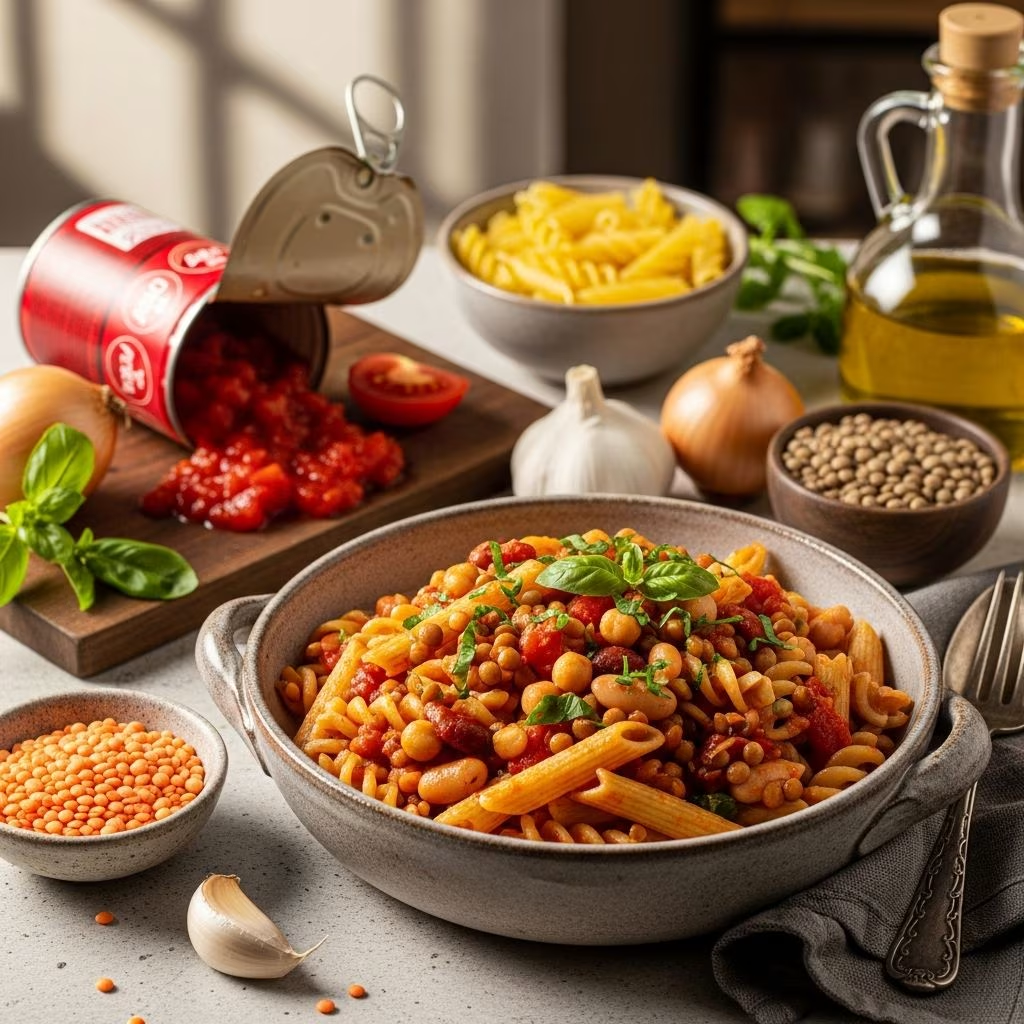
While chickpeas provide the primary protein in pantry-based versions, other legumes offer interesting alternatives. White beans deliver creamier texture due to higher starch content. Lentils introduce earthier flavor and cook more quickly than chickpeas. Black-eyed peas contribute subtle, distinct character. Any fifteen-ounce can of legumes, properly drained and rinsed, substitutes directly for chickpeas without modifying cooking times or proportions.
Flavor Profile Adjustments
The basic framework tolerates numerous seasoning variations. Mediterranean preparation emphasizes garlic, dried oregano, and lemon. Italian-inspired versions highlight basil, sun-dried tomatoes, and Parmesan. Spice-forward preparations increase red pepper flakes and potentially incorporate smoked paprika. The cooking technique remains constant; only the aromatic components shift.
Acid integration—through lemon juice, vinegar, or tomato-based products—brightens cream-based dishes and prevents them from feeling heavy. A squeeze of fresh lemon juice added at the final moment, or a tablespoon of aged vinegar stirred in before serving, lifts flavors and improves overall balance.
Creaminess Options for Dietary Needs
Traditional Dairy Approaches
Heavy cream represents the most straightforward path to richness, adding approximately one-half cup to finished pasta. Whole milk provides lighter results when higher fat content seems excessive. Some recipes incorporate both cream and pasta cooking water—the starch in pasta water creates natural emulsification without requiring additional dairy.
Cheese additions build flavor while contributing minimal additional moisture. Freshly grated Parmesan, stirred in during final minutes, melts into the sauce while maintaining distinct character. Reserve some for garnish to ensure visible pasta flecking in the final presentation.
Plant-Based Alternatives
Coconut milk provides rich creaminess comparable to dairy cream, particularly full-fat varieties. Oat-based or cashew-based plant creams offer neutral flavor profiles that don’t overpower vegetable or herb components. Silken tofu, when blended with broth and added to the pan, creates unexpected creaminess while maintaining vegan compatibility. Nutritional yeast contributes umami and subtle cheese-like quality without dairy ingredients.
Storage and Make-Ahead Considerations
One-pot pasta dishes maintain quality in refrigerated containers for three to four days. The texture becomes slightly creamier as the pasta continues absorbing liquid during storage. Reheating should occur gently over low heat with modest additional broth added to restore proper consistency. Microwave reheating works acceptably when stirred halfway through, though stovetop methods produce better results.
Freezing presents challenges due to texture changes in pasta. Completed dishes freeze adequately and thaw for emergency meals, but quality deteriorates noticeably. The preferable approach involves preparing components separately—cooking and freezing orzo and broth mixture independently from fresh vegetables and cheese additions. This method allows flexibility and maintains optimal texture upon thawing and finishing.
Nutritional Considerations and Serving Context
Building Complete Meals
The orzo and chickpea combination provides substantial carbohydrates and protein but relatively modest dietary fiber compared to whole grain alternatives. Supplementing the plate with robust salads or roasted vegetables balances the meal nutritionally and aesthetically. Bitter greens like arugula or radicchio provide pleasant flavor contrast to creamy pasta components.
Portion Sizing and Yield
Standard recipes produce four generous servings or six lighter portions. This scaling works well for family dinners or meal preparation endeavors. Doubling recipes requires only proportional ingredient increases; cooking times remain essentially unchanged. The one-pot method scales reasonably well up to eight servings using large Dutch ovens or wide, shallow cookware.
Frequently Asked Questions
Can I prepare this dish in advance?
The orzo and chickpea base can be cooked completely and refrigerated for up to four days. Fresh vegetables should be added immediately before serving to maintain optimal texture and nutritional value. If you prefer convenience, assemble all components in appropriate containers, then combine and heat when ready to eat.
What pasta shapes work as orzo substitutes?
Small pasta shapes function similarly to orzo. Ditalini, small shells, or broken spaghetti pieces all work adequately, though cooking times may require slight adjustment based on thickness and size variations. Stick with pasta shapes no larger than your pinky fingernail to ensure relatively even cooking in one pot.
How do I adjust consistency if my dish turns out too thin or thick?
Thin consistency responds to simmering uncovered for several additional minutes, allowing excess moisture to evaporate. Thick results can be remedied by stirring in additional broth or cream, one tablespoon at a time, until proper consistency emerges. Remember that the dish thickens as it cools, so stop adjusting slightly before reaching the perfect warm consistency.
Are canned chickpeas already cooked?
Yes—canned chickpeas are fully cooked and preserved in brine. Rinsing removes excess sodium and brine flavor. While technically edible without heating, cooking them with other ingredients ensures proper flavor integration and allows seasonings to penetrate the legume structure completely.
Can I use dried chickpeas instead?
Dried chickpeas require overnight soaking and approximately one hour of cooking before becoming tender enough for this preparation. Practically speaking, the advantage of pantry convenience diminishes significantly with dried legumes. If you prefer dried chickpeas for cost or preference, prepare them in advance and store in the refrigerator before beginning the one-pot pasta recipe.
References
- Nutritional Data for Chickpeas — United States Department of Agriculture. 2024. https://fdc.nal.usda.gov/
- Food Storage Guidelines for Cooked Pasta Dishes — United States Department of Agriculture Food Safety and Inspection Service. 2024. https://www.fsis.usda.gov/food-safety/safe-food-handling-and-preparation/food-safety-basics
- Cooking Grains and Legumes: Best Practices — Harvard T.H. Chan School of Public Health. 2023. https://www.hsph.harvard.edu/nutritionsource/
- The Maillard Reaction in Food Preparation — McGee, Harold. On Food and Cooking: The Science and Lore of the Kitchen. Revised Edition. Scribner, 2004.
- One-Pot Cooking Methods and Pasta Texture — American Institute of Culinary Arts. 2024. https://www.americancookingfoundation.org/