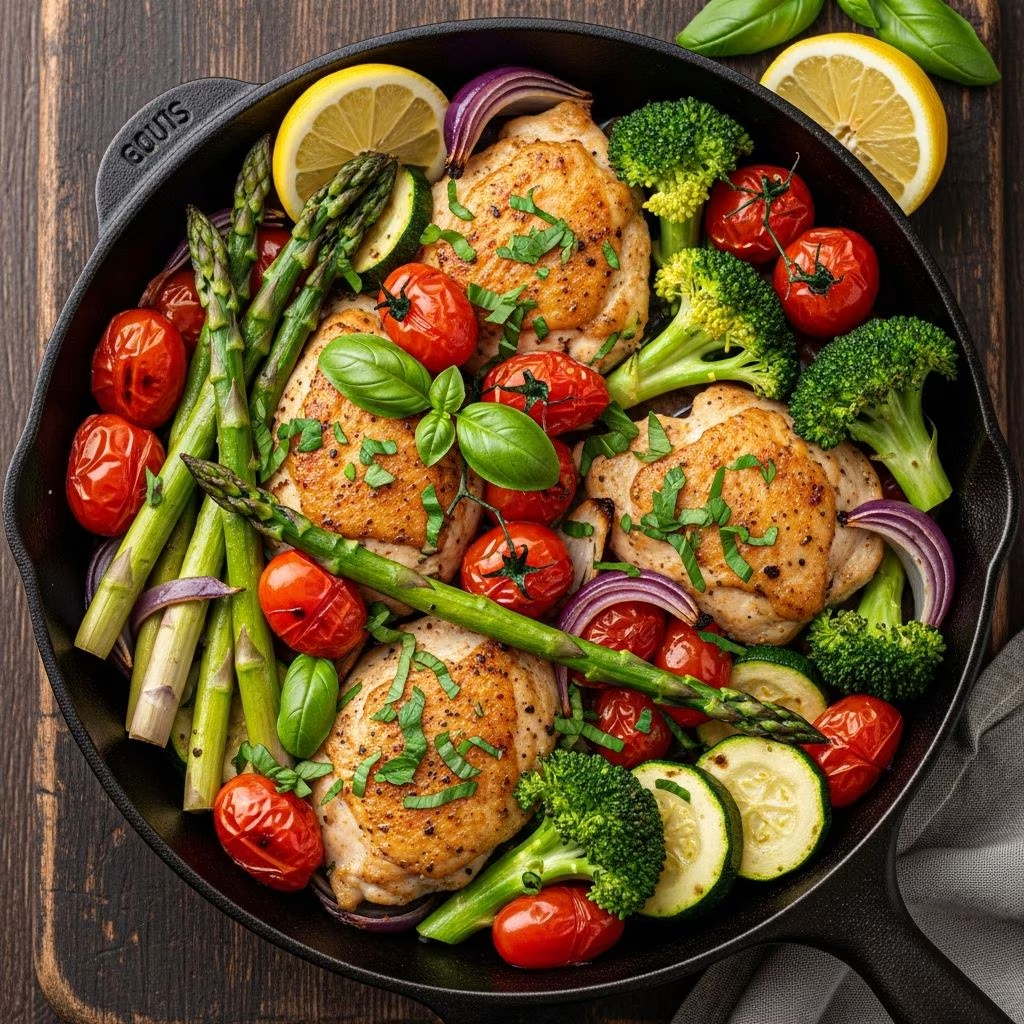
Chicken primavera stands out as a versatile dish that captures the essence of spring with its vibrant vegetables and tender protein, all prepared in a single skillet for maximum convenience. This recipe transforms basic ingredients into a restaurant-quality meal, emphasizing fresh produce like asparagus, snap peas, and peas alongside seasoned chicken. Ideal for busy evenings, it requires minimal prep and cleanup while delivering bold flavors through a silky sauce enhanced by lemon and herbs.
Why Choose One-Pan Chicken Primavera?
Opting for a one-pan approach minimizes dishes and streamlines cooking, making it perfect for weeknight routines. The combination of lean chicken and nutrient-rich vegetables provides balanced nutrition, with high protein and fiber content. Variations across recipes highlight its adaptability—some incorporate pasta for heartiness, while others keep it low-carb with just veggies and sauce. This method ensures even cooking and infused flavors as ingredients share the pan.
- Time-Saving: Ready in 25-35 minutes from start to finish.
- Nutrient-Dense: Packed with vitamins from seasonal veggies.
- Customizable: Swap proteins or vegetables based on availability.
- Family-Friendly: Appeals to kids and adults alike with mild, fresh tastes.
Essential Ingredients for Success
Gathering the right components is key to achieving the dish’s signature brightness and creaminess. Focus on fresh, high-quality produce for optimal texture and taste. Core elements include thinly sliced chicken for quick searing, a medley of spring greens, and pantry staples for the sauce base.
| Category | Ingredients | Quantity | Purpose |
|---|---|---|---|
| Protein | Boneless, skinless chicken breasts or tenders | 1.5-2 lbs, sliced thin | Main protein source, sears quickly |
| Vegetables | Asparagus, sugar snap peas, English peas | 2 cups total, trimmed | Add crunch and freshness |
| Aromatics | Garlic, shallots or onion | 2-3 cloves, 1 medium | Build flavor foundation |
| Sauce Base | Chicken broth, cream or milk, lemon juice | ½ cup each | Creates velvety texture |
| Herbs & Seasonings | Dill, thyme, parsley, salt, pepper | To taste, fresh chopped | Enhance brightness |
Pro tip: Warm milk or cream before adding to prevent curdling, ensuring a smooth sauce every time.
Step-by-Step Cooking Guide
Follow these precise steps to replicate the dish flawlessly. Start with prepping all ingredients mise en place style for seamless execution.
Prepare the Chicken: Pat 1.5 lbs chicken dry, slice into thin cutlets. Dredge in a mix of flour, Italian seasoning, salt, and pepper for a golden crust.
Sear the Protein: Heat 2 tbsp olive oil in a large skillet over medium-high. Cook chicken 3-4 minutes per side until browned and reaching 165°F internally. Remove and tent with foil.
Sauté Aromatics and Veggies: In the same skillet, add remaining oil, garlic, shallots, and asparagus. Stir 3-5 minutes until fragrant and slightly tender.
Build the Sauce: Deglaze with white wine or broth, add lemon juice, warmed milk/cream, broth, and Dijon mustard. Simmer briefly.
Combine and Finish: Stir in peas and snap peas, return chicken to pan. Simmer 3-4 minutes. Off heat, swirl in butter and fresh herbs. Season to taste.
Serve hot, garnished with parsley, alongside crusty bread or over pasta if desired. Total time: 30 minutes.
Nutritional Breakdown and Health Benefits
This dish offers approximately 400-500 calories per serving, with 30g protein, making it a satiating option. Spring vegetables contribute antioxidants, vitamins A and C, and fiber for digestive health. Using skim milk or light cream keeps it waist-friendly without sacrificing creaminess. According to USDA guidelines, incorporating such veggie-packed meals supports daily nutrient goals.
- High in lean protein for muscle maintenance.
- Low glycemic index from non-starchy veggies.
- Heart-healthy fats from olive oil and minimal butter.
Helpful Tips and Common Mistakes to Avoid
Mastery comes from technique. Avoid overcrowding the pan to ensure proper browning. Use a meat thermometer for chicken doneness. If sauce thickens too much, thin with extra broth. For pasta versions, cook noodles directly in the skillet with broth for infused flavor.
- Slice chicken uniformly for even cooking.
- Fresh herbs over dried for superior aroma.
- Taste sauce before adding chicken back.
- Don’t overcook veggies—aim for crisp-tender.
Creative Variations to Try
Adapt the recipe seasonally or to preferences. Add zucchini or bell peppers in summer, or shrimp for seafood twist. For pasta lovers, incorporate bow-tie or penne as in many variations, simmering until al dente. Make it dairy-free with coconut milk and nutritional yeast.
| Variation | Key Changes | Prep Adjustment |
|---|---|---|
| Pasta Primavera | Add 8 oz pasta, extra broth | Simmer covered 10-12 min |
| Low-Carb | Omit flour dredge, use zucchini noodles | Sauté extra 1 min |
| Spicy | Cajun seasoning, red pepper flakes | No change |
| Vegetarian | Tofu or chickpeas for chicken | Reduce cook time 2 min |
Pairing Suggestions for the Perfect Meal
Complement with a crisp white wine like Sauvignon Blanc to match the lemon notes. Side salads or grilled garlic bread round out the plate. For dessert, fresh berries echo the spring theme.
Frequently Asked Questions (FAQs)
Can I make chicken primavera ahead of time?
Yes, prepare up to step 4, refrigerate, and reheat gently with a splash of broth. Best enjoyed fresh.
What if I don’t have fresh herbs?
Use 1/3 the amount of dried herbs, added earlier in cooking.
Is this recipe gluten-free?
Swap flour for almond or gluten-free blend; use tamari if needed.
How do I store leftovers?
Air-tight container in fridge up to 3 days; reheat on stovetop.
Can I use frozen vegetables?
Yes, add 1-2 minutes earlier to thaw properly.
Chicken primavera exemplifies effortless gourmet cooking, blending simplicity with sophisticated flavors. Experiment to make it your signature dish.
References
- USDA FoodData Central: Nutrient profiles for chicken and spring vegetables — United States Department of Agriculture. 2024-01-15. https://fdc.nal.usda.gov/
- Dietary Guidelines for Americans, 2020-2025 — U.S. Department of Agriculture and HHS. 2020-12-01. https://www.dietaryguidelines.gov/