Old-fashioned shortcake stands as a cornerstone of American dessert tradition, evoking memories of family gatherings and sunny afternoons. Unlike modern cake versions, this treat features tender, flaky biscuits that cradle juicy fruits and billowy cream. Its simplicity belies a rich history tied to early American baking, where pantry staples transformed into something extraordinary. This guide dives deep into crafting the perfect shortcake, exploring ingredients, techniques, pairings, and creative twists to elevate your baking game.
The Allure of Traditional Shortcake
At its heart, old-fashioned shortcake is a biscuit elevated to dessert status. The name “shortcake” derives from the high fat content—historically shortening or butter—that creates a “short,” crumbly texture. Bakers from the 19th century prized this for its ability to absorb fruit juices without sogginess. Today, it remains a favorite for its versatility: pair it with strawberries for summer nostalgia or adapt for seasonal fruits.
What sets it apart from scones or biscuits? Shortcake dough is sweeter and lighter, often baked in rounds or squares for easy splitting. The result is a golden exterior with a soft, steamy interior that flakes at the touch. Mastering it requires attention to cold ingredients and minimal handling, ensuring that flaky layers shine.
Essential Ingredients for Authentic Flavor
Great shortcake starts with quality basics. Here’s a breakdown of key components:
- Flour: All-purpose flour provides structure without heaviness. About 2 cups yields two layers or 8-10 servings.
- Fat: Cold butter or shortening (1/2 cup diced) creates tenderness. Butter adds rich flavor; shortening ensures flakiness.
- Leavening: Baking powder (4 teaspoons) delivers lift. Some recipes include cream of tartar for extra tenderness.
- Sweetener: Granulated sugar (1/2 to 1 cup) sweetens subtly, balancing fruit’s tartness.
- Liquid: Milk or buttermilk (1/3 to 2/3 cup) binds without toughening. An egg adds richness in some variations.
- Seasonings: Salt (1/2 teaspoon) and a pinch of nutmeg enhance depth.
These elements, drawn from vintage recipes, prioritize accessibility. No fancy equipment needed—just a bowl, fork, and oven.
Step-by-Step Guide to Baking Success
Follow these precise steps for foolproof results. Prep time: 15 minutes. Bake time: 15-20 minutes. Yields: 8 servings.
- Preheat and Prep: Heat oven to 425-450°F. Grease two 8-9 inch round pans or one square dish.
- Mix Dry Ingredients: Sift 2 cups flour, 1/2-1 cup sugar, 4 tsp baking powder, 1/2 tsp salt, and optional nutmeg into a bowl.
- Cut in Fat: Add 1/2 cup cold, cubed butter. Use a pastry cutter or fingers to form coarse crumbs. Work quickly to keep butter cold.
- Add Wet Ingredients: Beat 1 egg (optional) with 1/3-2/3 cup milk. Stir into dry mix until just combined—dough should be shaggy.
- Shape and Bake: Pat into pans (don’t overwork). Bake 15-22 minutes until golden and toothpick-clean. Cool completely.
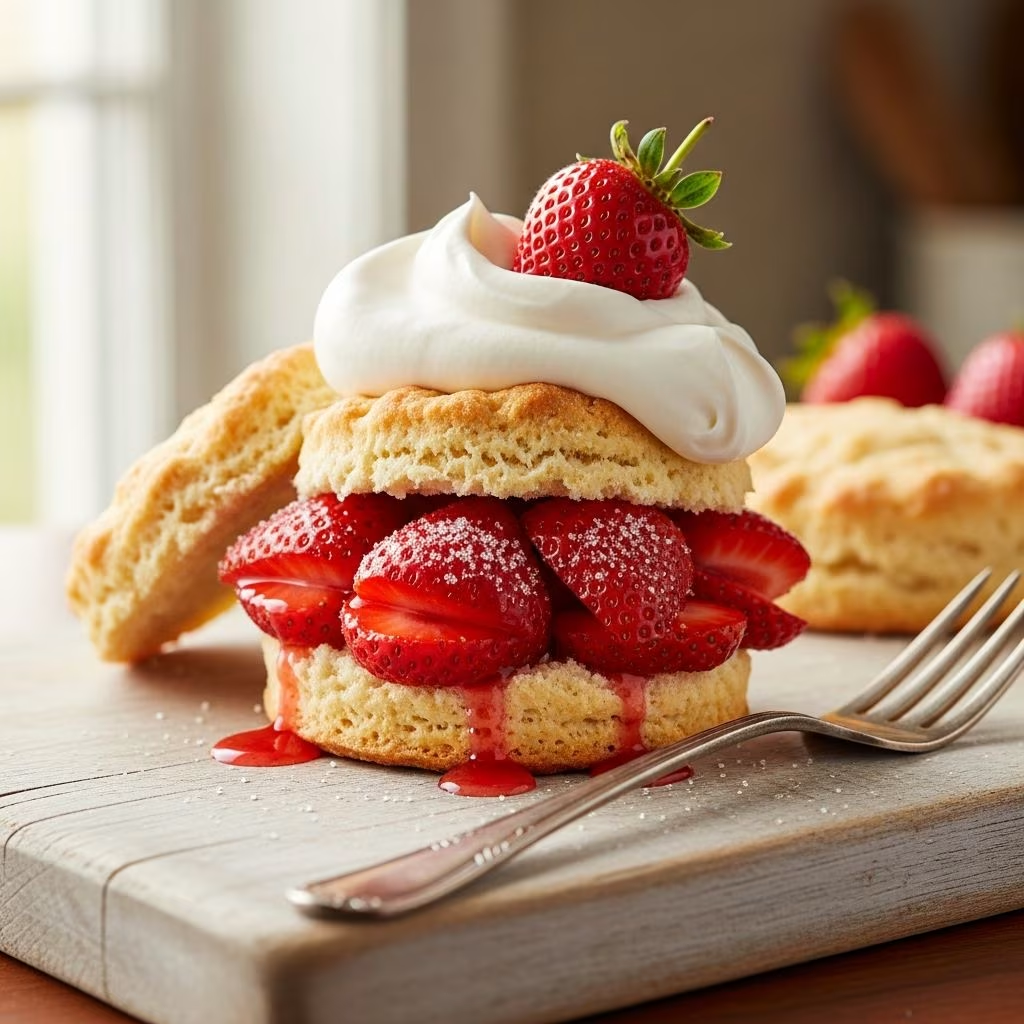
- Split and Serve: Halve horizontally, layer with fillings.
Pro Tip: For biscuits instead of cake, drop dough by spoonfuls onto a sheet pan and bake 10-12 minutes.
Perfect Pairings: Fruits and Creams
Shortcake shines with macerated fruits. Slice 4-6 cups berries, toss with 2-4 tbsp sugar and vanilla. Let sit 30 minutes to release juices.
| Fruit | Sugar Ratio | Rest Time | Best Season |
|---|---|---|---|
| Strawberries | 2 tbsp per 4 cups | 30 min | Summer |
| Blueberries | 3 tbsp per 4 cups | 1 hour | Summer |
| Peaches | 1/4 cup per 4 cups | 45 min | Summer |
| Apples (cooked) | 1/2 cup + cinnamon | N/A | Fall |
For cream: Whip 1-2 cups heavy cream with 2 tbsp powdered sugar and 1/2 tsp vanilla to soft peaks. Avoid overbeating to prevent butter.
Common Mistakes and Fixes
Baking pitfalls are easy to avoid:
- Tough Texture: Overmixing develops gluten. Stir minimally.
- Flat Rise: Warm butter melts instead of steams. Chill everything.
- Dry Crumbs: Underbaking or low fat. Test doneness and measure precisely.
- Soggy Base: Serve immediately after assembling.
Troubleshoot by weighing ingredients—cups can vary by 20% in volume.
Historical Roots and Evolution
Shortcake traces to 16th-century England, where “short” meant brittle from fat. American colonists adapted it with local berries. By the 1800s, it was a harvest celebration staple. 1930s recipes, like those in vintage cookbooks, emphasize simplicity amid scarcity. Modern twists include chocolate or gluten-free versions, but the core remains unchanged.
Creative Variations to Try
Experiment beyond classics:
- Chocolate Shortcake: Add 1/4 cup cocoa to dry mix; top with ganache.
- Savory Twist: Omit sugar, add herbs; serve with savory compote.
- Gluten-Free: Swap flour with 1:1 blend; use dairy-free butter.
- Mini Versions: Use a cookie scoop for individual biscuits.
- Layered Trifle: Cube and layer in a bowl with custard.
These keep the nostalgic feel while suiting diets.
Storage and Make-Ahead Tips
Baked shortcake stores airtight for 2 days at room temp or freezes 1 month (thaw before using). Fruits macerate best fresh. Assemble just before serving for peak texture.
Nutritional Snapshot
Per serving (1/8th, plain): ~250 calories, 12g fat, 35g carbs, 4g protein. Add fruit/cream to boost vitamins and indulgence.
Frequently Asked Questions
Can I use oil instead of butter?
Oil works but yields a denser cake. Stick to cold fats for authenticity.
Why is my shortcake dense?
Likely overworked dough or insufficient leavening. Measure baking powder fresh.
Best pan for even baking?
Metal pie pans or cake tins conduct heat well; glass takes longer.
How to make vegan?
Use plant milk, coconut oil, and aquafaba for egg.
Substitute for baking powder?
Baking soda + cream of tartar (2:1 ratio), but test small batch.
Why Shortcake Endures
Its charm lies in balance: humble ingredients yielding luxury. Whether for picnics or potlucks, old-fashioned shortcake connects generations through shared bites of buttery bliss and fruit-kissed joy. Bake it, share it, savor it.
References
- Standards for Bakery Products — USDA. 2023-05-15. https://www.fsis.usda.gov/food-safety/safe-food-handling-and-preparation/food-safety-basics/baking-safety
- Leavening Agents in Baking — FDA. 2024-01-10. https://www.fda.gov/food/food-ingredients-packaging/ingredients-baking
- Historical American Cookery — Library of Congress. 2022-08-20. https://www.loc.gov/collections/recipes-from-our-american-village/articles-and-essays/shortcake/
- Biscuit Science — King Arthur Baking Company. 2025-03-12. https://www.kingarthurbaking.com/learn/guides/biscuits
- Fruit Preservation Techniques — USDA Extension. 2024-07-05. https://nifa.usda.gov/topics/food-safety/fruit