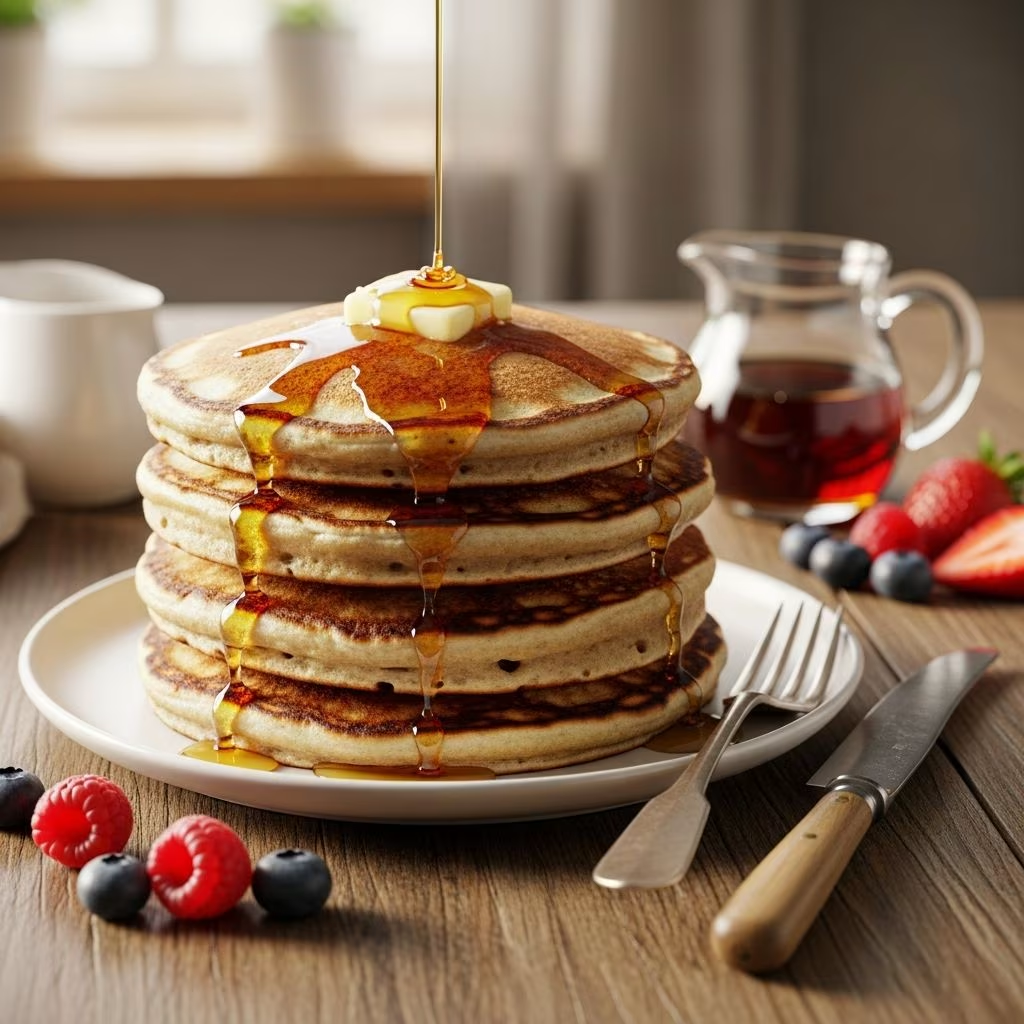
Old-fashioned pancakes represent the pinnacle of simple, comforting breakfast fare. These fluffy delights, with their golden edges and tender centers, have graced family tables for generations. Crafted from basic ingredients like flour, eggs, and milk or buttermilk, they offer a nostalgic taste that surpasses any store-bought mix. This guide dives deep into creating these pancakes at home, exploring techniques for optimal rise, flavor enhancements, and endless customization options to suit modern tastes.
The Magic Behind Fluffy Pancakes
The secret to achieving that signature lightness lies in the chemistry of leavening agents. Baking powder and baking soda react with acidic components like buttermilk to produce carbon dioxide bubbles, which expand during cooking to create air pockets. Buttermilk not only tenderizes the batter but also imparts a subtle tang that balances sweetness. Without it, pancakes can turn dense; however, a quick homemade substitute—milk mixed with lemon juice or vinegar—works wonders in a pinch.
Flour provides structure, while eggs act as binders and contribute to lift. Melted butter or oil ensures moisture and richness, preventing dryness. Sugar aids in browning via the Maillard reaction, forming those crave-worthy crispy edges. Salt enhances all flavors, making the pancakes pop.
Essential Ingredients for Authentic Results
Gathering the right components is straightforward, relying on pantry staples. Here’s a breakdown:
- All-purpose flour (2 cups): The backbone, sifted for lightness to avoid gumminess.
- Granulated sugar (2-3 tablespoons): Sweetens mildly and promotes caramelization.
- Baking powder (1.5-2.75 teaspoons): Primary leavener for reliable rise.
- Baking soda (0.5-1.5 teaspoons): Activates with acidity for extra fluff.
- Salt (¼-½ teaspoon): A pinch elevates taste.
- Buttermilk or milk (1.5-2 cups): Liquid base; buttermilk preferred for tenderness.
- Eggs (1-2 large): For structure and moisture.
- Melted butter or oil (2-4 tablespoons): Adds flavor and prevents sticking.
- Vanilla extract (optional, 1-2 teaspoons): Boosts aroma.
Variations in quantities appear across recipes, but the 2-cup flour base yields about 12-16 pancakes, serving 4.
Step-by-Step Guide to Pancake Perfection
Success hinges on precise mixing and cooking. Follow these steps for foolproof results.
- Prepare dry ingredients: In a large bowl, whisk flour, sugar, baking powder, baking soda, and salt. This ensures even distribution and immediate activation upon wetting.
- Mix wet ingredients: In a separate bowl or directly in the dry mixture’s well, combine buttermilk (or milk), eggs, melted butter, and vanilla. Whisk eggs into liquids first to avoid overworking the batter later.
- Combine gently: Pour wet into dry, stirring from the center outward with a fork or whisk until just incorporated. Lumps are ideal—overmixing develops gluten, yielding tough pancakes. The batter should be thick yet pourable.
- Rest the batter: Let it sit 5-10 minutes. This allows flour to hydrate and leaveners to activate, resulting in taller pancakes.
- Heat the surface: Preheat a cast-iron skillet, griddle, or non-stick pan over medium heat (350°F for electric griddles). Test with a drop of water—it should sizzle and dance.
- Grease and portion: Lightly coat with butter, oil, or spray. Scoop ¼-⅓ cup batter per pancake, spacing them apart.
- Cook first side: Bubbles form on top after 1-2 minutes; edges look set. Flip promptly.
- Finish cooking: Second side takes 1 minute; it should be golden. Keep warm in a 200°F oven on a wire rack.
First pancakes may be imperfect as you dial in heat—adjust as needed.
Pro Tips for Restaurant-Quality Pancakes
- Use room-temperature ingredients for smoother batter integration.
- Avoid pressing down post-flip; it deflates air pockets.
- For even cooking, use a griddle or large skillet.
- Batter thickens over time; thin with a splash of milk if needed.
- Fresh leaveners are crucial—test baking soda by fizzing in vinegar.
- Don’t stack hot pancakes directly; use a rack to prevent sogginess.
Creative Variations to Elevate Your Stack
Transform basics into specialties with these ideas, drawn from traditional tweaks.
| Variation | Add-Ins/Methods | Yield Notes |
|---|---|---|
| Berry Burst | Fold in ¾-1 cup blueberries, raspberries, or mixed berries just before cooking. | Tangy fruit juices enhance fluffiness. |
| Banana Bliss | Mash 1 ripe banana into wet ingredients. | Natural sweetness; top with slices. |
| Nutty Crunch | Toast and chop ½ cup pecans/walnuts; fold in. | Earthy contrast to softness. |
| Whole Grain Twist | Swap half flour for whole wheat, buckwheat, or rye. | Nutty flavor, hearty texture. |
| Apple Cinnamon | Sauté thin apple slices in butter-cinnamon; add to uncooked side before flipping. | Warm fall vibes. |
| Chocolate Chip | Stir in ½ cup chips post-mixing. | Kid-approved indulgence. |
Experiment boldly, but maintain the core batter ratio for reliability.
Perfect Pairings and Toppings
Pancakes shine with thoughtful accompaniments. Classic choices include pure maple syrup (warmed for flow), pats of butter, and fresh fruit like strawberries or bananas. For indulgence, whipped cream or powdered sugar dusting. Savory fans might try bacon bits or fried eggs atop. Beverages? Orange juice, coffee, or milk complement the richness.
Nutritional profile per pancake (approx.): 80-100 calories, 3g protein, 15g carbs, 2g fat—varies by size and add-ins.
Storage, Freezing, and Reheating
Leftovers? Cool completely, then store in an airtight container in the fridge (up to 3 days) or freezer (up to 3 months) layered with parchment. Reheat in a toaster, oven at 350°F, or microwave (10-20 seconds). They crisp up beautifully, tasting nearly fresh.
Common Mistakes and Fixes
- Dense pancakes: Overmixed batter or expired leaveners—mix minimally, check dates.
- Uneven cooking: Wrong heat—medium is key; too high burns outsides.
- Sticking: Insufficient grease—reapply between batches.
- Flat results: Cold ingredients or no rest—plan ahead.
Why Homemade Beats the Box
Box mixes contain preservatives and fillers; from-scratch versions control quality, allowing fresh, customizable results. The process builds skills and memories, turning breakfast into a ritual.
Frequently Asked Questions
Can I make pancakes without buttermilk?
Yes! Mix 1¾ cups milk with 1 tablespoon lemon juice or vinegar; let sit 5 minutes.
How do I know when to flip?
Look for bubbles across the surface and dry edges—about 2 minutes.
Are vegan substitutions possible?
Replace eggs with flax eggs (1 tbsp flax + 3 tbsp water), use plant milk + acid, and vegan butter.
Why rest the batter?
Hydration and leavener activation yield fluffier results.
Best pan type?
Cast-iron for even heat retention; non-stick for ease.
Nutritional Considerations
These pancakes are versatile for dietary needs. Use gluten-free flour blends (add xanthan gum), low-fat milk, or reduce sugar. Pair with yogurt for protein boost.
References
- Classic Old Fashioned Pancakes: Fluffy, Golden, Delicious — Laura Fuentes. 2023. https://www.laurafuentes.com/old-fashioned-pancakes/
- Good Old Fashioned Pancakes — Maplewood Road. 2023. https://maplewoodroad.com/good-old-fashioned-pancakes/
- Old-Fashioned Pancakes — Mad Hungry. 2023. https://madhungry.com/?recipes=old-fashioned-pancakes
- Old Fashioned Pancake Recipe — The Speckled Palate. 2023. https://www.thespeckledpalate.com/old-fashioned-pancake-recipe/
- Old Fashioned Pancakes (Vintage Recipe!) — Valerie’s Kitchen. 2023. https://www.fromvalerieskitchen.com/moms-buttermilk-pancakes/