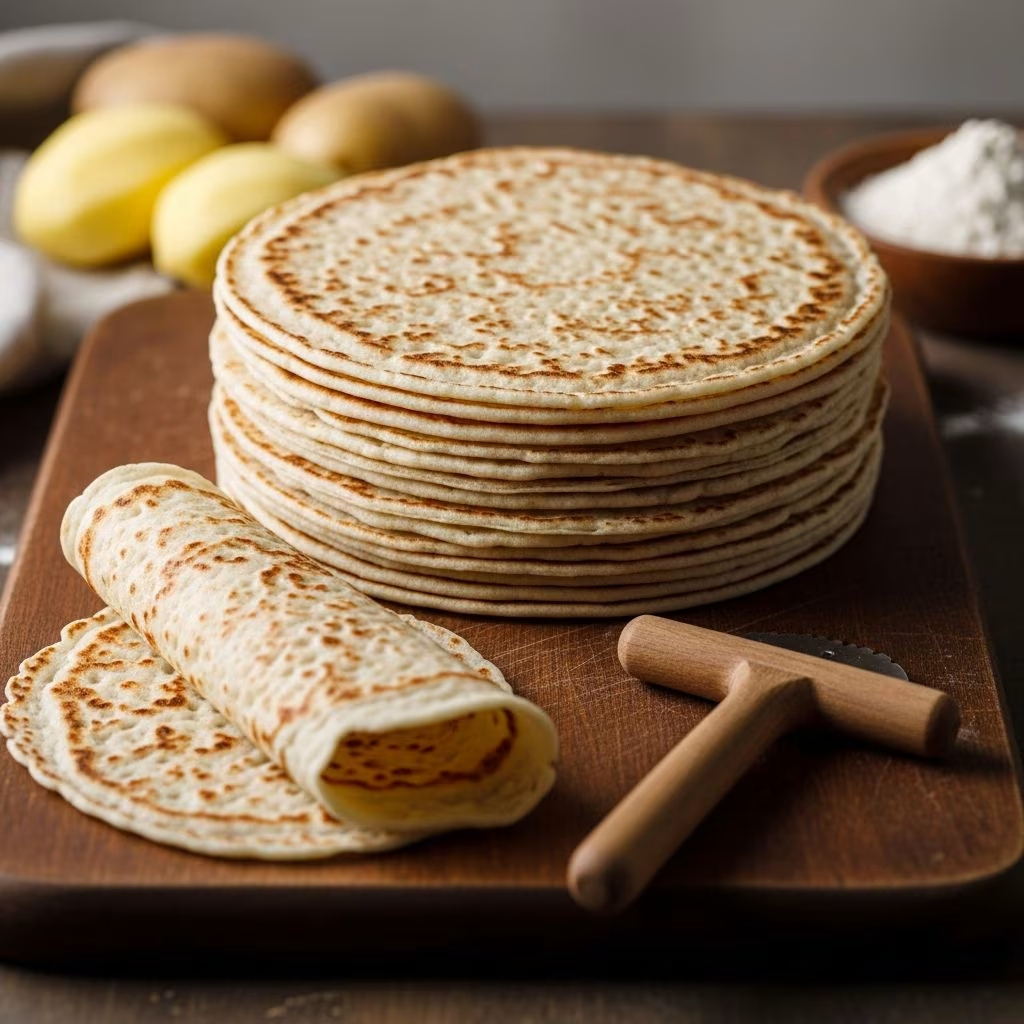
Norwegian potato lefse represents one of Scandinavia’s most cherished culinary traditions, a soft and pliable flatbread that graces breakfast tables and holiday gatherings throughout Norway and among Nordic communities worldwide. Unlike conventional flatbreads that rely solely on flour and water, lefse distinguishes itself through the incorporation of riced potatoes, which create a uniquely tender crumb and subtle earthy flavor. This humble yet sophisticated bread has been passed down through generations, with family recipes often treasured as much as heirloom jewelry, making it an essential element of Norwegian food culture.
Understanding Lefse: History and Cultural Significance
Lefse occupies a special place in Norwegian gastronomy, traditionally enjoyed during breakfast alongside morning coffee. The flatbread’s creation was likely born from practical necessity in Norway’s agricultural regions, where potatoes became a staple crop and creative cooks sought innovative ways to utilize this nutritious ingredient. Over centuries, lefse evolved from a simple peasant food into an iconic symbol of Norwegian heritage, with regional variations reflecting local preferences and available ingredients. In certain Norwegian regions, potato lefse maintains particularly strong cultural significance, with recipes treasured within families and passed down with great care through successive generations.
Essential Ingredients for Authentic Lefse
Creating genuine Norwegian potato lefse requires careful attention to ingredient selection, as each component plays a crucial role in achieving the proper texture and flavor profile.
Potatoes: The Foundation
The choice of potato variety significantly impacts the final product’s quality. Russet potatoes represent the preferred choice for most recipes, offering a starchy composition that yields flatbread with excellent moisture retention and a subtle potato undertone. Red potatoes also feature prominently in traditional Norwegian preparations, providing a slightly different texture profile while maintaining the authentic character of the dish. Many experienced cooks recommend sourcing fresh potatoes rather than relying on pre-packaged mashed potato products, which can introduce undesirable bitter flavors to the finished flatbread.
Dairy Components
High-fat dairy products form the structural backbone of authentic lefse dough. Unsalted butter, preferably European varieties with elevated fat content, creates the rich flavor and provides essential elasticity needed for rolling the dough to paper-thin transparency. The butter should be softened to room temperature before incorporation to ensure even distribution throughout the potato mixture. Heavy cream or heavy whipping cream adds moisture and contributes to the dough’s characteristic softness and workability. Some recipes utilize half-and-half as an alternative, though traditional preparations favor full-fat heavy cream for optimal results.
Flour and Seasonings
All-purpose flour serves as the binding agent, typically incorporated after the potato mixture has properly chilled. The specific flour quantity varies depending on potato moisture content and desired consistency, requiring flexibility during dough preparation. Salt, sugar, and sometimes additional seasonings round out the ingredient list, balancing flavors and contributing to the dough’s structure and browning characteristics during cooking.
Ingredient Ratios and Measurements
| Component | Standard Recipe (3-4 servings) | Large Batch (10+ servings) | Notes |
|---|---|---|---|
| Russet Potatoes | 1-1.75 lbs | 4-5 lbs | Peel and cut into 1-inch pieces |
| Unsalted Butter | 5 tbsp | 0.5 cup | Room temperature or melted |
| Heavy Cream | 0.25 cup | 1.25 cups | Full-fat preferred |
| All-Purpose Flour | 1.5 cups | 3.75 cups | Add gradually as needed |
| Salt | 0.75-1.5 tsp | 1.25-2 tsp | Divided in preparation |
| Sugar | 2 tsp | 2.5 tbsp | Enhances browning |
Step-by-Step Preparation Method
Initial Potato Processing
Begin by selecting medium to large russet potatoes and peeling them carefully. Cut the potatoes into roughly one-inch pieces to promote even cooking. Boil the potato pieces in heavily salted water until completely tender throughout, typically requiring 15-20 minutes depending on piece size. This step is critical—undercooked potatoes will produce lumpy dough and compromise the final texture.
Once the potatoes reach full tenderness, drain them thoroughly using a colander, pressing gently to eliminate excess moisture. While still warm from boiling, rice the potatoes into a large mixing bowl using a potato ricer, which creates exceptionally smooth, lump-free potatoes. For the fluffiest and most refined results, experienced cooks recommend ricing the potatoes a second time through the ricer.
Creating the Base Mixture
Add softened butter to the warm riced potatoes while they retain residual heat, combining thoroughly to create a smooth, evenly distributed mixture. Pour heavy cream into the potato and butter combination, along with sugar and salt, stirring vigorously to ensure complete integration. The mixture should appear smooth, creamy, and consistent at this stage. Cover the bowl and refrigerate the mixture overnight or for a minimum of two to three hours, allowing flavors to meld and the dough to become workable.
Dough Formation and Kneading
Remove the chilled potato mixture from the refrigerator and add the all-purpose flour gradually, incorporating it thoroughly. The consistency should be very soft and pliable but not sticky to the touch. Knead the dough gently for approximately two minutes by hand or using a stand mixer with paddle attachment, just until the dough becomes smooth and homogeneous. Add additional flour or liquid incrementally as needed to achieve the proper consistency.
Portioning and Resting
On a lightly floured work surface, divide the dough into 10 to 16 equal pieces depending on desired thickness and size. Roll each portion into a ball slightly larger than a golf ball and gently press between your palms to form a disk. Arrange the disks on a floured pastry board or cloth, covering them with a clean towel to prevent drying.
Rolling and Cooking Techniques
Achieving Proper Thickness
Proper rolling technique distinguishes successful lefse from unsuccessful attempts. Generously flour a pastry cloth or clean cotton dish towel, creating a work surface that prevents sticking without incorporating excessive flour into the dough. Using a corrugated rolling pin, begin rolling each dough disk gently and evenly, rotating the disk a quarter turn after every two to three rolls. This rotating technique ensures uniform thickness and circular shape.
Continue rolling until the flatbread reaches paper-thin transparency, a stage that requires patience and practice to master. The finished lefse should be thin enough to see your hand through it while remaining intact. Avoid applying excessive pressure, which can create tough, dense flatbread; instead, use gentle, confident strokes with the rolling pin.
Cooking Process
Heat a large skillet or griddle over medium heat until thoroughly heated. Using a lefse stick or wide, thin spatula, carefully transfer the rolled flatbread to the hot cooking surface. Cook for approximately one to two minutes on the first side until the flatbread shows small golden spots and begins to brown lightly. Flip the lefse gently and cook the second side for about 45 seconds to one minute, watching carefully to achieve golden spots without overcooking.
Remove the finished lefse from the griddle and allow it to cool completely for a few minutes on a clean surface. Avoid stacking warm lefse immediately, as the retained steam can cause them to become brittle or stick together. Once cooled, stack lefse carefully for storage or serving.
Equipment Recommendations
Investing in proper equipment transforms the lefse-making experience significantly. A pastry rolling board with a cloth cover provides the ideal surface for rolling, preventing sticking while allowing proper dough manipulation. A ridged or corrugated rolling pin with a matching pin cover enables the precise rolling technique necessary for achieving consistent thinness. A lefse stick—a thin, flat tool specifically designed for transferring delicate flatbread—prevents tearing and damage during the transfer from rolling surface to cooking surface.
Traditional Serving Methods
Sweet Preparations
In traditional Norwegian practice, lefse transitions beautifully between sweet and savory applications. A classic preparation called Kling involves spreading a thin layer of butter mixed with sugar and cream across warm lefse, folding the edges inward to create a rectangle shape. Additional lefse pieces cut into triangles fill the corners, followed by another butter-sugar layer, then folding the rectangle in half and cutting into small serving portions. Served alongside morning coffee, this preparation offers a subtle sweetness and rich buttery flavor.
Strawberries, chocolate sauce, jam, cinnamon sugar, and fresh fruit provide alternative sweet accompaniments. Some families prefer simply spreading butter and cinnamon sugar across warm flatbread for an uncomplicated yet satisfying treat.
Savory Applications
Lefse functions effectively as a vehicle for savory fillings and accompaniments. Serve alongside traditional Norwegian meats and cured proteins, using the flatbread as an edible wrapper for composed bites. The neutral potato flavor provides an excellent complement to both mild and assertively flavored dishes, making lefse a versatile addition to any meal.
Storage and Make-Ahead Strategies
Properly stored lefse maintains quality for several days after preparation. Stack cooled flatbread between parchment paper sheets to prevent sticking, then wrap the entire stack tightly in plastic wrap or place it in an airtight container. Refrigerate for up to one week, or freeze for extended storage of up to three months. To reheat, warm each piece gently in a dry skillet over low heat for approximately 30 seconds per side, or wrap in damp paper towels and microwave briefly to restore softness.
Frequently Asked Questions
Can I use instant mashed potatoes instead of fresh potatoes?
While some recipes utilize boxed mashed potato products, experienced cooks strongly recommend against this substitution. Instant potatoes introduce bitter flavors and inferior texture compared to fresh russet or red potatoes. Fresh potatoes yield superior results and justify the minimal additional effort required.
What causes brittle, overly crispy lefse?
Overcooking represents the primary cause of brittle lefse. Monitor cooking time carefully, removing flatbread from the heat as soon as golden spots appear rather than continuing to cook for deeper browning. High heat settings also contribute to this issue; maintain medium heat throughout the cooking process.
Why is my lefse dough sticky or falling apart?
Dough consistency depends on potato moisture content and room humidity levels. If the mixture remains sticky after incorporating flour, add additional all-purpose flour gradually until the dough holds together smoothly. Conversely, if the dough appears dry or crumbly, add heavy cream or milk in small increments until proper consistency is achieved.
Is European butter necessary for authentic lefse?
European butter, with its higher fat content and richer flavor profile, produces superior results compared to standard American butter. The increased fat content aids in dough elasticity and rolling capability. However, quality unsalted butter of any origin produces acceptable results if European varieties are unavailable.
Troubleshooting Common Issues
Beginning lefse makers frequently encounter specific challenges. If rolled dough tears during transfer, ensure the dough reached proper thickness and temperature before attempting to move it. If the finished flatbread appears dense and heavy, verify that potatoes were fully cooked and properly riced rather than mashed. If lefse fails to brown appropriately, increase heat slightly or ensure the griddle reaches full temperature before adding flatbread.
Conclusion
Mastering Norwegian potato lefse requires practice, patience, and respect for traditional techniques developed over centuries of Nordic culinary tradition. The soft, delicate flatbread rewards careful ingredient selection and precise execution with incomparable flavor and texture that justifies the effort involved. Whether enjoyed as a simple breakfast bread alongside coffee or presented as an elegant vehicle for both sweet and savory preparations, homemade lefse connects diners to authentic Scandinavian heritage and timeless culinary craftsmanship.
References
- Lefse (Norwegian Potato Flatbread) — The Daring Gourmet. https://www.daringgourmet.com/norwegian-potato-lefse/
- Lefse (Norwegian Potato Flatbread) — Skandibaking. https://skandibaking.com/lefse-norwegian-potato-flatbread/
- Traditional Norwegian Lefse Recipe — Tasting Table. https://www.tastingtable.com/1191252/traditional-norwegian-lefse-recipe/
- Norwegian Potato Lefse — Sunday Table. https://sundaytable.co/norwegian-lefse/
- Norwegian Lefse Recipe: How to make perfect lefsa every time — Minnesota Uncorked. https://www.minnesotauncorked.com/how-to-make-perfect-norwegian-lefse/
- Norwegian Potato Lefse Recipe (With Video) — Scandinavian Cookbook. https://scandinaviancookbook.com/norwegian-potato-lefse-recipe/