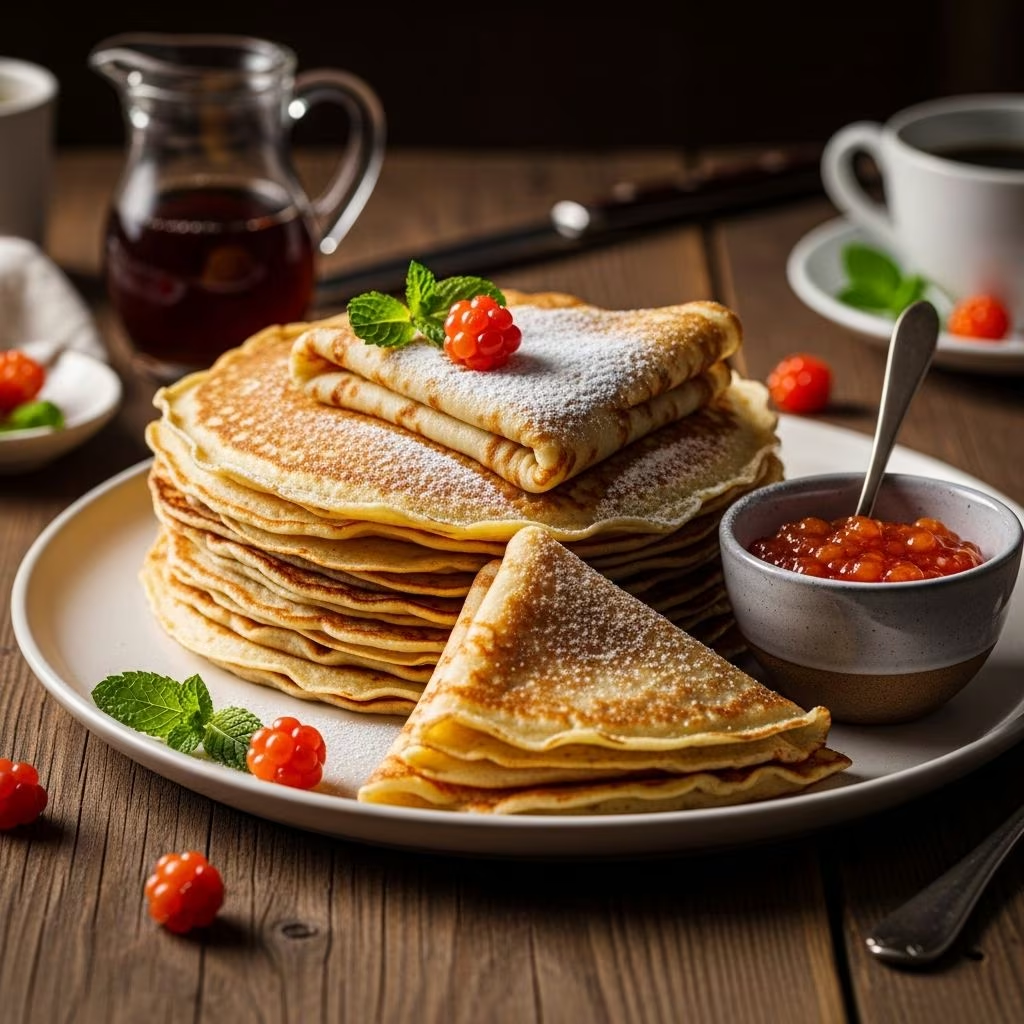
Norwegian pancakes, known as pannekaker, represent a cherished staple in Scandinavian cuisine. These thin, delicate creations fall somewhere between French crepes and American pancakes, offering a light texture that’s versatile for both sweet and savory preparations. Originating from Norway’s rich culinary heritage, pannekaker are often enjoyed during family gatherings, holidays, or lazy weekend mornings. Their simplicity—requiring just a handful of pantry staples—belies their flavorful potential, making them accessible to home cooks everywhere.
The Allure of Norwegian Pancake Tradition
In Norway, pannekaker hold a special place in daily life and celebrations. Families gather around the stove, flipping these thin wonders while sharing stories. Unlike fluffy American pancakes, pannekaker emphasize thinness and even cooking, achieved by swirling batter in a hot pan. This technique ensures a lacy edge and tender center, ideal for wrapping fillings or drizzling with toppings. Historical roots trace back to rural Norwegian farms, where such pancakes maximized limited ingredients like flour, eggs, and milk from local sources.
Today, pannekaker transcend borders, appearing in diaspora communities and global kitchens. Their adaptability shines: sweet versions with jam and sugar evoke childhood nostalgia, while savory ones with ham or bacon add heartiness. Understanding their cultural significance enhances appreciation, turning a simple recipe into a bridge to Nordic traditions.
Essential Ingredients for Perfect Pannekaker
Crafting authentic pannekaker starts with quality basics. Core components include flour, eggs, milk, sugar, and salt, with butter for frying. Variations exist, but consistency yields thin, lump-free batter.
| Ingredient | Classic Amount (4 servings) | Role |
|---|---|---|
| All-purpose flour | 1 cup | Provides structure without heaviness |
| Eggs | 3 large | Binds and adds richness |
| Whole milk | 1.5 cups | Thins batter for crepe-like texture |
| Sugar | 1-2 tbsp | Subtle sweetness, enhances browning |
| Salt | Pinch (¼ tsp) | Balances flavors |
| Butter (melted + for pan) | 2 tbsp + as needed | Adds flavor and prevents sticking |
Optional enhancements like vanilla extract or cardamom introduce depth. Whole milk ensures creaminess; low-fat alternatives work but may yield drier results. Fresh eggs are crucial for lift and color.
Step-by-Step Guide to Making Classic Pannekaker
Preparation takes under 30 minutes, with resting time optional for smoother batter.
- Prepare the batter: Whisk eggs and milk until combined. Gradually sift in flour, sugar, and salt, mixing to eliminate lumps. Stir in melted butter and vanilla. Let rest 15-30 minutes; this hydrates flour for tenderness.
- Heat the pan: Use a 9-10 inch non-stick or cast-iron skillet over medium heat. Add 1 tsp butter; swirl to coat.
- Pour and swirl: Ladle ¼-⅓ cup batter into center. Tilt pan immediately, rotating to spread evenly into a thin circle. Bubbles form quickly.
- Cook first side: Wait 1-2 minutes until edges crisp and top sets (no wet shine). Loosen with spatula.
- Flip and finish: Flip carefully; cook 30-60 seconds more until golden. Stack on a plate, covering with a towel to stay soft.
- Repeat: Re-butter pan lightly between pancakes. Yields 6-8 from standard batch.
Pro tip: Electric mixer banishes lumps efficiently, but a whisk suffices with patience.
Creative Variations to Elevate Your Pannekaker
While classic pannekaker shine plain, variations add excitement.
- Fleskepannekaker (Bacon Pancakes): Fry bacon pieces first, stir into batter or sprinkle on top before flipping. Serve with maple syrup and berry compote for smoky-sweet contrast.
- Sweet Spice Twist: Add ¼ tsp ground cardamom for aromatic warmth, pairing with powdered sugar and fruit preserves.
- Savory Herb Edition: Mix in chopped chives or dill; fill with cheese, ham, or smoked salmon for lunch appeal.
- Gluten-Free Option: Swap all-purpose flour for a 1:1 gluten-free blend; adjust milk for thinness.
- Vegan Adaptation: Use plant milk, flax eggs, and oil instead of butter.
These tweaks maintain tradition while suiting modern diets.
Mastering Cooking Techniques and Common Pitfalls
Success hinges on heat control and batter consistency. Medium heat prevents burning; too low yields soggy results. Batter should pour like heavy cream—if thick, add milk spoonfuls.
Troubleshooting Table:
| Issue | Cause | Solution |
|---|---|---|
| Tearing when flipping | Undercooked or sticky pan | Wait for full set; use more butter |
| Lumpy batter | Flour added too fast | Sift gradually; strain if needed |
| Thick pancakes | Too much batter | Use less per pannekake; swirl vigorously |
| Not browning | Low heat | Increase slightly; ensure dry pan |
Practice yields perfection; first pancake often tests the pan.
Top Toppings and Serving Suggestions
Pannekaker’s thin profile cradles endless combinations.
- Sweet Classics: Butter, granulated sugar, lingonberry jam, or lemon juice—fold into triangles for easy eating.
- Fruit Forward: Fresh berries, whipped cream, or blueberry compote simmered with maple syrup.
- Decadent: Nutella, powdered sugar, sliced bananas.
- Savory Delights: Sour cream and chives, scrambled eggs, or cured meats.
- Brunch Ideas: Stack with yogurt and granola; roll with veggies for wraps.
Serve immediately or keep warm in a 200°F oven. Pair with coffee or Norwegian aquavit for authenticity.
Nutritional Profile and Dietary Notes
A single 10-inch pannekake offers about 180 calories, 8g protein, 20g carbs, and 8g fat, varying by toppings. Rich in B vitamins from eggs and calcium from milk, they’re balanced when filled nutritiously. For lighter versions, reduce butter and opt for low-sugar toppings.
Pannekaker in Modern Kitchens and Global Appeal
Beyond Norway, pannekaker inspire fusion dishes—like Asian-inspired with hoisin and veggies or Mexican with avocado and salsa. Social media brims with #Pannekaker posts, showcasing colorful stacks. They’re quick (25 minutes total), economical, and kid-friendly, fostering family bonding.
Store leftovers in airtight containers up to 2 days; reheat gently. Freeze batter for spontaneous cravings.
Frequently Asked Questions (FAQs)
What makes Norwegian pancakes different from crepes?
Pannekaker are slightly thicker with more eggs for richness, often sweeter, and traditionally served rolled or folded.
Can I make pannekaker ahead?
Yes, batter refrigerates 24 hours; cooked ones freeze well, separated by parchment.
Best pan for cooking?
Non-stick skillet or well-seasoned cast-iron excels for easy release.
How many does one batch serve?
Standard recipe serves 4, yielding 8 pancakes; scale up as needed.
Vegetarian/vegan substitutions?
Skip bacon for fleskepannekaker; use aquafaba for eggs and coconut oil for butter.
Embrace pannekaker for their versatility and joy. Experiment freely—these pancakes invite creativity while honoring Norwegian roots.
References
- Norwegian Pancakes (Pannekaker) — Adamant Kitchen. Accessed 2026. https://adamantkitchen.com/pannekaker/
- Norwegian Pancakes — New Scandinavian Cooking. Accessed 2026. https://www.newscancook.com/baking/norwegian-pancakes
- Norwegian Pancakes — Food Faith Fitness. Accessed 2026. https://www.foodfaithfitness.com/norwegian-pancakes/
- Norwegian Pancakes with Bacon, Syrup and Blueberry Compote — North Wild Kitchen. Accessed 2026. https://northwildkitchen.com/fleskepannekaker/
- Norwegian Pancakes (Pannekaker) — How To Feed A Loon. Accessed 2026. https://howtofeedaloon.com/norwegian-pancakes/