Cornish game hens have become increasingly popular among home cooks seeking elegant protein options for special dinners and entertaining. These diminutive poultry birds, typically weighing between one and two pounds each, offer a refined alternative to standard chicken while maintaining the accessibility of familiar cooking techniques. The beauty of Cornish game hens lies in their tender meat and quick cooking time, making them ideal candidates for impressive presentations that don’t require extensive culinary expertise.
When paired with bold, complex marinades featuring vinegar and dried chiles, these birds transform into restaurant-worthy centerpieces. The combination of acidic elements with aromatic spices creates a depth of flavor that penetrates the delicate meat, resulting in exceptionally moist and flavorful outcomes. This guide explores the methodology behind crafting such marinades and executing the roasting process to achieve optimal results.
Understanding Your Core Ingredient: Selecting Quality Game Hens
The foundation of any successful preparation begins with ingredient selection. When shopping for Cornish game hens, several factors merit consideration. Look for birds that appear plump and have unblemished skin with a uniform color, ranging from pale yellow to deeper golden tones depending on the breed and diet of the bird. The size matters considerably for cooking consistency; birds in the one-and-a-half to two-pound range cook evenly and present individually, allowing each diner their own whole bird.
Examine the packaging for any signs of leakage or discoloration. Fresh birds should feel firm to the touch and emit no off-odors. If purchasing from a butcher counter rather than pre-packaged options, request birds that have been properly cleaned and are ready for immediate use. Some preparations benefit from slightly larger specimens, while more delicate presentations call for the smaller end of the size spectrum.
Constructing the Chile-Vinegar Foundation
The marinade forms the flavor backbone of this preparation. Begin by heating vinegar until it reaches a gentle simmer. This step serves multiple purposes: it opens the flavor profile of the acidic component, removes harshness, and creates an optimal vessel for infusing dried chiles and aromatics. The choice between distilled white vinegar and other varieties influences the final taste profile significantly.
Dried guajillo chiles contribute warmth and subtle sweetness rather than intense heat. Before adding to the hot vinegar, prepare them by removing seeds and cutting into manageable pieces. This preprocessing step ensures even distribution of chile essence throughout the marinade. The seeds, which concentrate heat compounds, should be discarded if a milder result is desired.
Complementary aromatics round out the marinade composition. Fresh ginger, sliced shallots, and minced garlic create a fragrant base that harmonizes with the chiles. Spices like cumin seeds and cayenne pepper introduce layered complexity. Sugar balances the vinegar’s acidity, while salt enhances all flavors and aids in penetration of the marinade into the protein.
Marinade Components and Their Functions:
- Distilled white vinegar: Provides acidic foundation that tenderizes meat while adding brightness
- Dried guajillo chiles: Contribute fruity, warm notes and subtle sweetness without overwhelming heat
- Fresh ginger: Adds pungency and subtle warmth that complements the chiles
- Cayenne pepper: Introduces measured heat and deepens spice complexity
- Cumin seeds: Offer earthy undertones and warm aromatics
- Sugar: Balances acid and aids in browning during roasting
- Shallots and garlic: Provide aromatic depth and natural umami enhancement
The Blending Process: Creating Uniform Texture
After the marinade components have steeped in hot vinegar for approximately ten minutes, allowing flavors to meld and chiles to soften, the mixture requires transformation via blending. This step converts discrete ingredients into a cohesive paste-like consistency that can thoroughly coat the bird’s exterior and interior surfaces. A standard blender performs this task efficiently, creating a smooth emulsion that distributes seasoning evenly.
The blended marinade should achieve a texture resembling thick sauce or thin paste. If the consistency appears too thick, small quantities of additional vinegar or water can adjust it. Conversely, if the mixture seems overly liquid, additional dried chiles or a small amount of ground spice can thicken and intensify the composition.
Preparing the Cornish Hens for Marinating
Proper preparation of the birds ensures optimal marinade penetration and even cooking. Pat the hens completely dry using paper towels, removing any excess moisture that might inhibit marinade adhesion. Any residual giblets or packaging materials should be removed and discarded.
Season each bird lightly with salt, rubbing it evenly over the exterior and inside the cavity. This preliminary salting begins the brining process and ensures seasoning distribution throughout the meat. Apply approximately half the prepared marinade to each hen, working methodically to coat every surface including under the wings, around the thighs, and throughout the internal cavity.
Secure the legs together using kitchen twine, which prevents them from splaying during cooking and promotes even heat distribution. Wrap wing tips with aluminum foil to prevent excessive browning or charring of these delicate extremities. This protection ensures the breast meat reaches proper temperature before the wing tips become overly dark.
Allow the marinated birds to rest at room temperature for approximately thirty minutes before roasting. This resting period permits the marinade to begin its work while allowing the meat to approach ambient temperature, promoting more even cooking throughout.
Preparing the Vegetable Foundation
While the birds marinate, prepare the potatoes that will form the flavorful bed upon which the hens will rest during roasting. Peel potatoes and cut them into uniform two-inch pieces, ensuring consistent sizing for even cooking. Boil these pieces in generously salted water until they yield easily to a knife point but retain their structural integrity. This partial cooking step reduces overall oven time and ensures the vegetables finish simultaneously with the protein.
Drain the parcooked potatoes and transfer them to a roasting vessel. The reserved half of the marinade, combined with additional sliced shallots, minced garlic, and a small quantity of water, creates a flavorful cooking medium. Toss the potatoes with this mixture, coating them thoroughly. This preparation allows the vegetables to absorb the complex flavors from below while the hens cook above, creating a unified dish where every component shares complementary seasoning.
The Roasting Process and Temperature Considerations
Preheat the oven to three hundred seventy-five degrees Fahrenheit, a temperature that promotes gentle, even cooking without excessive exterior browning before the interior reaches food-safe temperatures. Position the prepared potato mixture in the bottom of a large roasting pan or baking dish, creating a stable base.
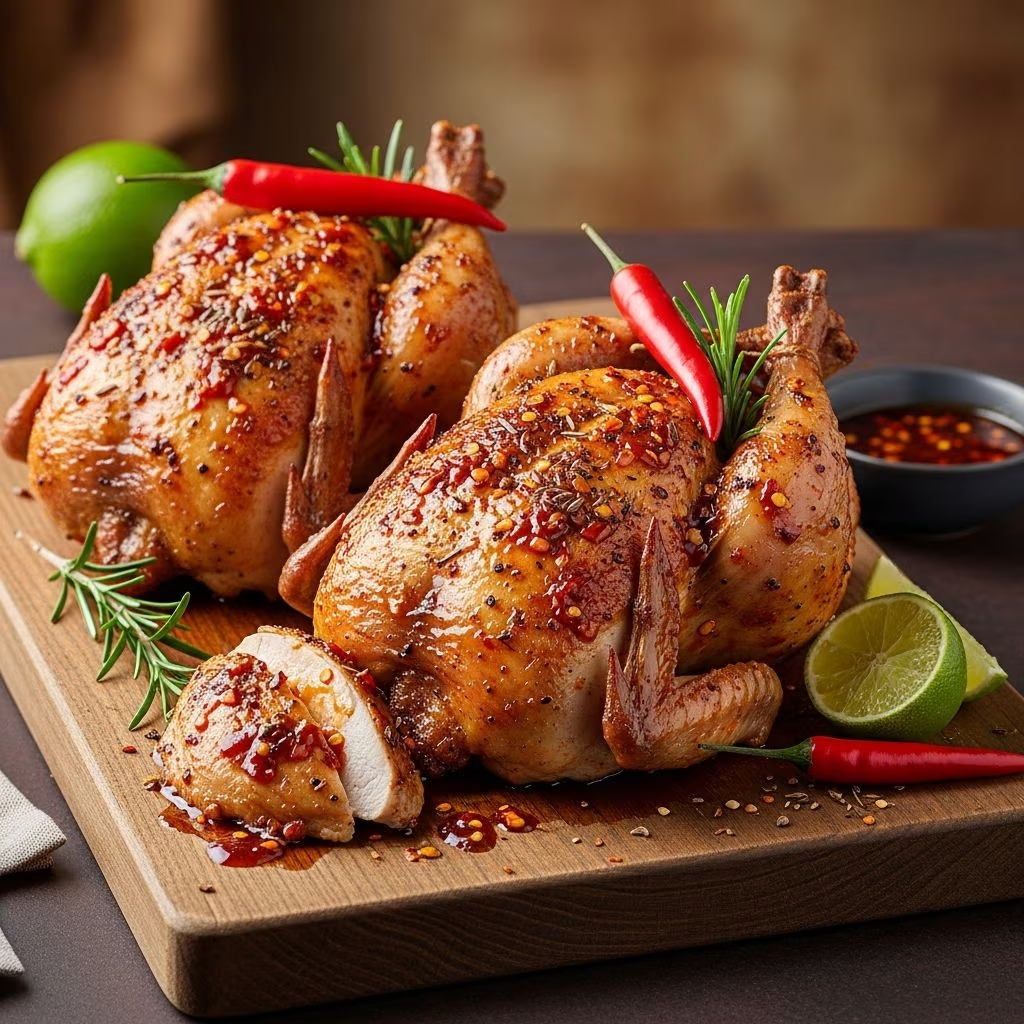
Arrange the marinated hens directly atop the potatoes, skin-side up. Place the entire assembly in the preheated oven. Approximately thirty minutes into the cooking process, baste the hens with additional vegetable oil, encouraging golden browning and additional moisture retention. This basting step, repeated if time permits, contributes significantly to skin crispness and overall appearance.
Cooking time typically ranges from fifty-five to sixty-five minutes, depending on the precise size of individual birds and the accuracy of your oven’s temperature. Insert an instant-read thermometer into the thickest portion of the breast, avoiding contact with bone. Target an internal temperature of one hundred sixty degrees Fahrenheit, which ensures thorough cooking while maintaining meat juiciness.
Upon reaching target temperature, remove the pan from the oven and allow the birds to rest for five minutes before serving. This brief rest redistributes internal juices throughout the meat, ensuring optimal moisture retention when carved.
Finishing Touches and Presentation
Once rested, carefully remove the foil from wing tips and the twine from legs. Transfer the hens to a serving platter, arranging the roasted potatoes attractively around them. Fresh cilantro sprigs and lemon wedges provide visual interest and offer diners the option to add brightness with a squeeze of citrus if desired. The herb also provides a fresh contrast to the deep, spiced flavors of the marinade.
The pan drippings, which accumulate at the bottom of the roasting vessel, can be drizzled over the finished dish or reserved as a light sauce. These concentrated flavors represent the essence of the marinade combined with rendered poultry fat and vegetable juices, creating an aromatic finishing touch.
Exploring Marinade Variations and Flavor Profiles
While the chile-vinegar approach offers exceptional results, the fundamental technique supports numerous variations. Citrus-based marinades using orange juice and warm spices create brighter, less dense flavor profiles. Cuban-inspired preparations featuring lime juice, oregano, and cumin offer entirely different aromatic experiences. Pickle brine combined with apple cider vinegar produces tangy, herbaceous notes that appeal to different palates.
These variations share common principles: acidic liquids that tenderize and preserve, aromatic components that penetrate the meat, and salt that enhances and facilitates seasoning distribution. Home cooks may confidently experiment within these parameters, adjusting ingredient proportions to match personal preferences while maintaining the structural integrity of the preparation.
Serving Suggestions and Complementary Dishes
Cornish game hens prepared using this methodology pair excellently with simple accompaniments that don’t compete for attention. Crusty bread serves as an ideal vehicle for capturing pan drippings and marinade essence. Simple green salads with vinaigrette echo the acidic notes in the marinade without overwhelming the palate. Steamed or roasted vegetables beyond the potatoes already included—such as carrots or green beans—provide textural contrast and nutritional balance.
The elegant presentation of individual birds makes this preparation particularly suited to intimate dinner parties or special family occasions. Each guest receives their own bird, creating an upscale dining experience that rivals restaurant presentations while remaining achievable in home kitchens.
Storage and Make-Ahead Guidance
The marinade can be prepared up to two days in advance and stored in an airtight container in the refrigerator. The marinated hens, once coated and bound with twine, benefit from marinating overnight or up to twenty-four hours, which intensifies flavor penetration. Allow sufficient time for the birds to reach room temperature before roasting, as this promotes even cooking.
Finished hens cool to room temperature within two hours of cooking and can be refrigerated for up to three days. Reheating in a three hundred twenty-five degree oven with minimal moisture until the internal temperature reaches one hundred sixty-five degrees Fahrenheit restores palatability without drying the meat.
References
- Cornish Game Hen: Nutritional Data and Cooking Guidelines — U.S. Department of Agriculture Food Safety and Inspection Service. 2024. https://www.fsis.usda.gov/food-safety/safe-food-handling-and-preparation/food-safety-basics/safe-internal-temperature-chart
- Marinade Chemistry and Meat Tenderization — McGee, Harold. “On Food and Cooking: The Science and Lore of the Kitchen.” Scribner, 2004.
- Safe Handling of Poultry Products — Centers for Disease Control and Prevention. 2023. https://www.cdc.gov/foodsafety/people-at-risk/immune-compromised/poultry-food-safety.html
- Vinegar and Acid-Based Preservation Methods — National Center for Home Food Preservation. 2024. https://nchfp.uga.edu/
- Guajillo Chile: Flavor Profile and Culinary Applications — Instituto Politécnico Nacional, Mexico. Agricultural Sciences Research.