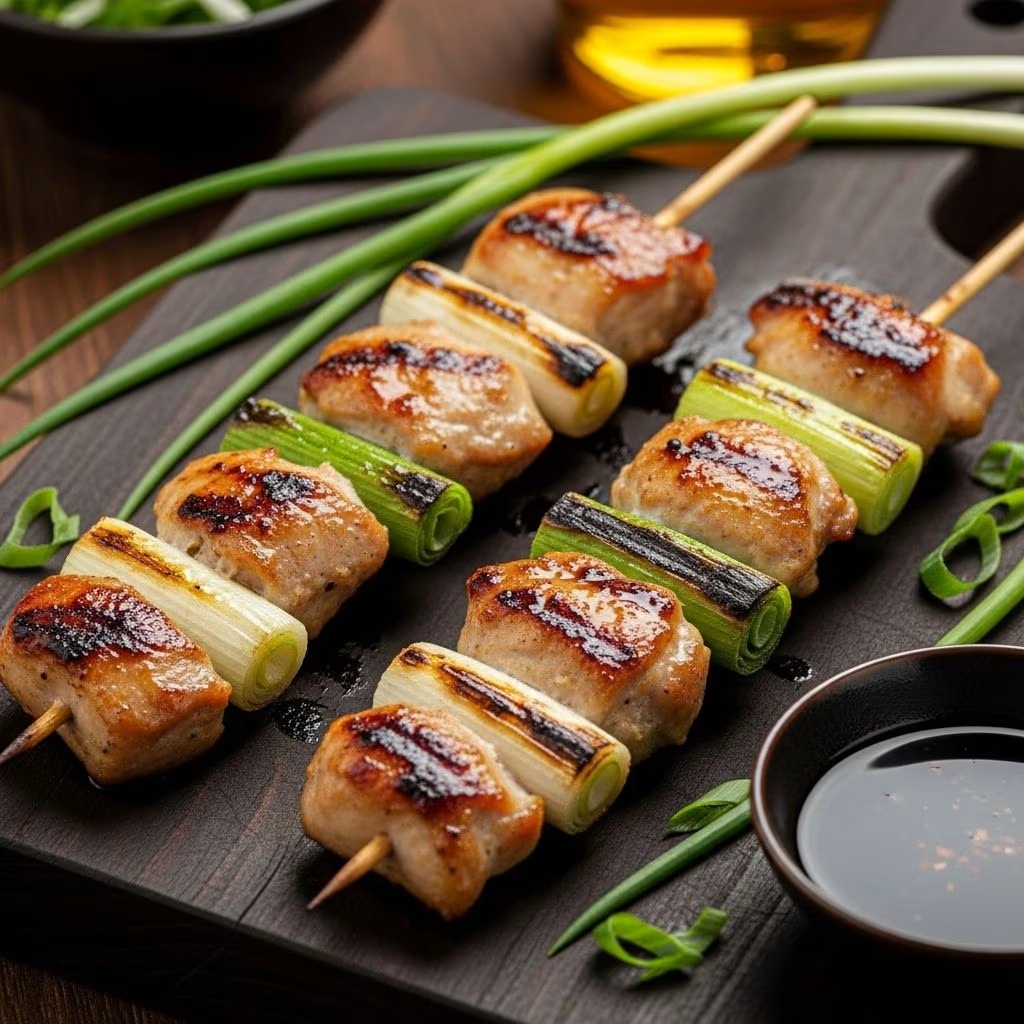
Negima Yakitori stands out as one of Japan’s most beloved street foods, combining succulent chicken with fresh scallions in a simple yet profoundly flavorful skewer. This dish captures the essence of yakitori—grilled bird—through its balance of smoky char, tender meat, and umami-rich glaze. Whether you’re firing up a grill for a backyard gathering or cooking indoors, Negima offers an accessible entry into authentic Japanese grilling traditions.
Understanding the Roots of Negima Yakitori
Yakitori originated in post-war Japan as an affordable way to enjoy chicken, utilizing every part of the bird. Negima specifically pairs **chicken thighs** with **scallions** (known as negi in Japanese), creating a rhythm of rich protein and mild, juicy vegetable on each skewer. The name ‘Negima’ derives from ‘negi’ (scallion) and ‘ma’ (alternating), highlighting the alternating pattern that’s key to its appeal.
Traditionally prepared over binchotan charcoal for intense heat and minimal smoke, this dish has evolved for home cooks. Scallions provide a fresh counterpoint to the chicken’s savoriness, absorbing marinades while staying crisp under high heat.
Essential Ingredients for Authentic Flavor
Selecting quality components ensures your Negima Yakitori shines. Focus on fresh, high-quality chicken thighs for their juiciness and flavor retention during grilling.
- Chicken Thighs: Boneless, skinless, cut into 1-inch cubes. Thighs outperform breasts due to higher fat content, preventing dryness.
- Scallions: Use white and light green parts, sliced into 1-2 inch pieces. Japanese leeks (naganegi) offer superior size and mildness; substitute regular leeks if needed, avoiding thinner green onions.
- Skewers: Bamboo (soaked 20-30 minutes to prevent burning) or metal. Aim for 6-8 inches.
- Sauce Base (Tare): Soy sauce, mirin, sake, sugar. Variations include miso or daikon for depth.
These elements create harmony: chicken’s umami, scallion’s freshness, and tare’s sweet-savory glaze.
Step-by-Step Recipe for Perfect Negima Skewers
This recipe serves 4-6 as an appetizer, ready in under 45 minutes plus marinating time. It yields about 10-12 skewers.
Ingredients
| Ingredient | Quantity |
|---|---|
| Boneless chicken thighs | 1.5 lbs (cut into 1-inch pieces) |
| Scallions (white/light green) | 2 bunches (1-inch pieces) |
| Soy sauce (low-sodium) | ½ cup |
| Mirin | ½ cup |
| Sake | ½ cup |
| Brown sugar | 2 tsp |
| Water | ¼ cup |
| Salt (for shio option) | 1 tbsp |
| Oil (canola/vegetable) | For grilling |
| Sesame seeds (garnish) | 1 tbsp |
Instructions
Prepare skewers: Soak bamboo skewers in water for 20-30 minutes.
Make tare sauce: In a saucepan, combine soy sauce, mirin, sake, sugar, and water. Bring to a boil, then simmer 10-15 minutes until reduced by half. Cool and reserve some for basting/dipping.
Marinate chicken (optional for tare method): Coat chicken pieces in half the tare or a simple soy-miso mix. Refrigerate 2-8 hours for flavor infusion.
Assemble skewers: Thread chicken and scallion alternately, starting/ending with chicken. Leave 2 inches free at ends. Use 3 chicken pieces and 2 scallions per skewer.
Preheat grill to 400°F (or stovetop grill pan). Oil grates lightly.
Grill: For shio (salt) version, sprinkle salt on both sides and grill 10-12 minutes, turning every 2-3 minutes until charred and 165°F internal. For tare, grill until 75% done (8 minutes), baste with sauce, and finish grilling 2-4 minutes.
Rest 2 minutes, garnish with sesame seeds. Serve hot with extra tare.
Pro tip: High heat ensures crispy edges without drying out the meat.
Grilling vs. Pan-Frying: Best Cooking Methods
Grilling delivers authentic smokiness, but pan-frying works for quick weeknights.
- Grill: Binchotan or gas at 400-450°F. Direct heat chars exterior while keeping insides juicy. Rotate frequently.
- Pan-Fry: Heat oil in cast-iron over medium-high. Cook 10-12 minutes, turning often. Baste in final stages for glaze.
- Oven Broil: 450°F, 8-10 minutes per side on a foil-lined tray.
Each method preserves the dish’s integrity, with grilling preferred for parties.
Variations and Substitutions for Creativity
Negima’s versatility shines in adaptations.
- Chicken Parts: Thighs are ideal, but try breast (leaner), wings, skin (crispy), or offal like hearts/gizzards for authenticity.
- Vegetable Twists: Japanese leeks for milder flavor; shiitake mushrooms or bell peppers as alternatives.
- Sauce Options: Shio (just salt) for purity; miso-daikon marinade for tang. Vegan: Tofu or eggplant skewers.
- Spice It Up: Add shichimi togarashi or wasabi for heat.
These keep the spirit of Negima while suiting preferences.
Pairing Suggestions and Serving Ideas
Elevate Negima with thoughtful sides.
- Drinks: Chilled sake, highball, or Japanese lager cuts richness.
- Sides: Cucumber salad, edamame, rice balls, or cabbage slaw.
- Style: Izakaya platter with other yakitori; tapas-style apps; or main with noodles.
Serve immediately for peak texture.
Nutrition and Dietary Notes
Per skewer (tare version): ~220 calories, 20g protein, 10g fat, 8g carbs. High in protein, low-carb friendly. Use low-sodium soy for heart health.
Frequently Asked Questions (FAQs)
What is Negima Yakitori?
Negima is a yakitori style featuring alternating chicken thigh pieces and scallions, grilled and often glazed with tare sauce.
Can I make Negima without a grill?
Yes, pan-fry or broil effectively mimic grill results.
What’s the best chicken cut for Negima?
Thighs for juiciness; skin-on adds crispiness.
How long does tare sauce keep?
Refrigerate up to 1 week; freeze 1 month.
Is Negima gluten-free?
Use tamari instead of soy sauce.
Mastering the Art: Pro Tips for Success
– Uniform cuts ensure even cooking.
– Don’t overcrowd skewers.
– Baste late to avoid burning sugars.
– Rest sauce-boiled chicken before skewering.
– Experiment with charcoal for smoke.
With practice, you’ll replicate izakaya quality at home.
References
- Negima Yakitori – Hapa Nom Nom — Hapa Nom Nom. Accessed 2026. https://hapanom.com/negima-yakitori/
- Negima Yakitori (Japanese Chicken and Scallion Skewers) — Went Here 8 This. Accessed 2026. https://www.wenthere8this.com/yakitori-chicken-thighs-with-green-onion/
- Negima Yakitori (Japanese Chicken Skewers with Scallion) — Made In Cookware. Accessed 2026. https://madeincookware.com/recipes/japanese-chicken-skewers
- Negima Yakitori in A Frying Pan — Sudachi Recipes. Accessed 2026. https://sudachirecipes.com/negima-yakitori/
- Easy Chicken and Scallion Negima Yakitori — Honest Cooking. Accessed 2026. https://honestcooking.com/easy-chicken-and-scallion-negima-yakitori/