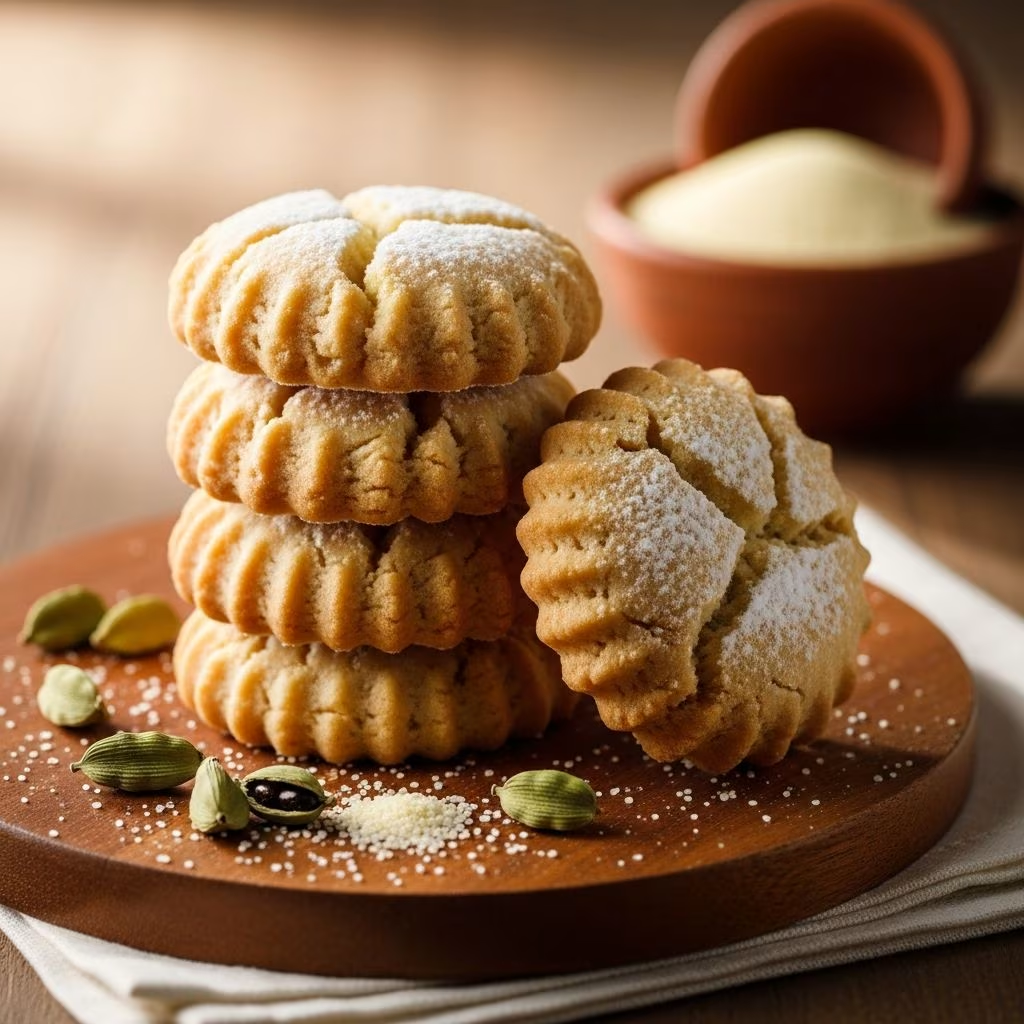
These delicate, crumbly cookies represent a cornerstone of Indian confectionery, cherished for their subtle sweetness and aromatic spices. Made primarily with semolina, ghee, and cardamom, nankhatai offer a satisfying crunch and melt-in-the-mouth texture that pairs perfectly with chai.
The Origins and Cultural Significance of Nankhatai
Nankhatai trace their roots to Persian influences introduced to India during the Mughal era, evolving into a beloved treat across the subcontinent. Originally crafted by Parsi bakers in Surat, these shortbread cookies spread nationwide, becoming staples during festivals like Diwali and Eid, as well as everyday tea accompaniments. Their name derives from the Persian ‘nan’ (bread) and ‘khatai’ (a type of biscuit), reflecting a fusion of culinary traditions.
In modern Indian households, nankhatai symbolize hospitality and simplicity. Bakeries in cities like Mumbai and Surat still produce them fresh daily, but home baking allows for personalization. The cookies’ eggless nature makes them accessible for vegetarian diets, while their short ingredient list appeals to novice bakers seeking authentic flavors without complexity.
Essential Ingredients for Authentic Nankhatai
The magic of nankhatai lies in the harmonious blend of pantry staples that create its signature texture. Semolina provides crunch, ghee ensures richness, and cardamom infuses fragrance.
- Ghee (Clarified Butter): The backbone of flavor, offering a nutty depth that regular butter can’t match. Use semi-solid ghee at room temperature for creaming.
- Semolina (Sooji or Rava): Fine or coarse varieties add crispiness; adding it last enhances texture without toughness.
- All-Purpose Flour or Maida: Forms the base structure; some recipes incorporate besan (chickpea flour) for nuttiness.
- Powdered Sugar: Provides sweetness and aids in achieving a light, fluffy cream.
- Cardamom Powder: Freshly ground pods deliver an unbeatable aroma; nutmeg or saffron strands elevate sophistication.
- Baking Agents: A pinch of baking soda or powder ensures tenderness; salt balances flavors.
Optional garnishes like slivered pistachios, almonds, or saffron boost visual appeal and taste.
Classic Nankhatai Recipe: Step-by-Step Guide
This foolproof recipe yields about 20-25 cookies, ready in under an hour. Preheat your oven to 350°F (175°C) and line trays with parchment.
- Cream ½ cup ghee with ½ cup powdered sugar until pale and fluffy (5-7 minutes by hand or mixer).
- Incorporate ½ tsp cardamom powder, a pinch of saffron, and 1 tsp vanilla if desired.
- Sift 1 cup all-purpose flour, ¼ cup semolina, ¼ cup besan (optional), ¼ tsp baking soda, and a pinch of salt.
- Gently fold dry mix into wet until a soft dough forms; avoid overworking.
- Rest dough for 15-30 minutes to develop flavors.
- Portion into 1-tbsp balls, flatten slightly, and garnish with nuts. Space 2 inches apart on trays.
- Bake 12-15 minutes until edges are golden; centers remain pale.
- Cool completely on racks for crispness.
Store in airtight tins for up to 2 weeks. Perfect crumbly texture develops post-cooling.
Variations to Customize Your Nankhatai
While traditional recipes shine, experimentation keeps this classic exciting. Adjust flours, fats, or add-ins for diverse profiles.
| Variation | Key Changes | Texture/Flavor Notes |
|---|---|---|
| Whole Wheat Version | Replace all-purpose with whole wheat; add 2 tbsp milk if dry. | Nutty, hearty crunch; ideal for health-conscious baking. |
| Butter-Based | Substitute ghee with unsalted butter; include 1 egg for richness. | Softer, Western shortbread vibe with subtle egg flavor. |
| Saffron-Infused | Soak 10-15 saffron strands in 1 tsp warm milk; mix in. | Luxurious golden hue and floral notes. |
| Nutty Delight | Incorporate 2 tbsp almond flour; top with chopped cashews. | Enhanced nuttiness and extended shelf life. |
| Vegan Twist | Use coconut oil or vegan butter; almond milk for binding. | Plant-based melt-in-mouth goodness. |
Each tweak maintains the core semolina crunch while introducing new dimensions.
Mastering the Perfect Texture: Pro Baking Tips
Achieving that iconic sandy, crisp bite requires attention to detail.
- Temperature Control: Room-temp ghee creams best; chilled dough prevents spreading.
- Semolina Stage: Mix in after flour for distinct granules that crisp up.
- Oven Vigilance: Rotate trays midway; overbaking leads to hardness.
- Resting Ritual: Dough rest hydrates semolina; post-bake cooling sets structure.
- Tools Matter: Use a microplane for fresh cardamom; digital scale for precision.
Common pitfalls include dense cookies from overmixing or soggy results from improper storage—always use airtight containers.
Pairing Nankhatai with Beverages and Occasions
These cookies elevate simple moments. Pair with masala chai for spice synergy, or coffee for contrast. During festivals, serve alongside mithai; for high tea, dust with powdered sugar.
Nutritional perks: Moderate calories (about 80 per cookie), gluten-adaptable, and rich in healthy fats from ghee. Mindful indulgence fits balanced diets.
Frequently Asked Questions (FAQs)
What makes nankhatai different from regular shortbread?
Semolina adds unique crunch, while ghee and cardamom provide distinctly Indian aromatic richness.
Can I make nankhatai without ghee?
Yes, butter or coconut oil works, though flavor alters slightly.
How long do nankhatai stay fresh?
Up to 2 weeks in airtight storage; freeze dough for 1 month.
Why are my nankhatai hard?
Overbaking, insufficient creaming, or coarse semolina—rest dough longer next time.
Are nankhatai gluten-free?
Not traditionally; substitute with gluten-free flour blends, adjusting semolina.
Nutritional Breakdown and Health Adaptations
A standard nankhatai (20g) offers ~100 calories, 6g fat, 10g carbs, 1g protein. Ghee provides butyrate for gut health; semolina adds fiber. For diabetics, use almond flour and stevia.
Explore besan-heavy versions for protein boost or oats for fiber enrichment.
References
- Butter Me Up Nankhatai (Traditional Indian Shortbread) — Turmeric Me Crazy. Accessed 2026. https://turmericmecrazy.com/butter-me-up-nankhatai-traditional-indian-shortbread/
- Nankhatai: Traditional Indian Shortbread Cookies — Home Baking Association. Accessed 2026. https://www.homebaking.org/recipe-items/nankhatai-traditional-indian-shortbread-cookies/
- Nankhatai Recipe – Indian Shortbread Cookies — My Ginger Garlic Kitchen. Accessed 2026. https://www.mygingergarlickitchen.com/nankhatai-indian-shortbread-cookies-video-recipe/
- Nankhatai Recipe (Indian Shortbread Cookies) — Cook Click N Devour. Accessed 2026. https://www.cookclickndevour.com/nankhatai-recipe-indian-shortbread-cookies/
- Nan Khatai (Crisp Semolina Shortbread) — CDKitchen. Accessed 2026. https://www.cdkitchen.com/recipes/recs/330/CrispSemolinaShortbreadNan70935.shtml