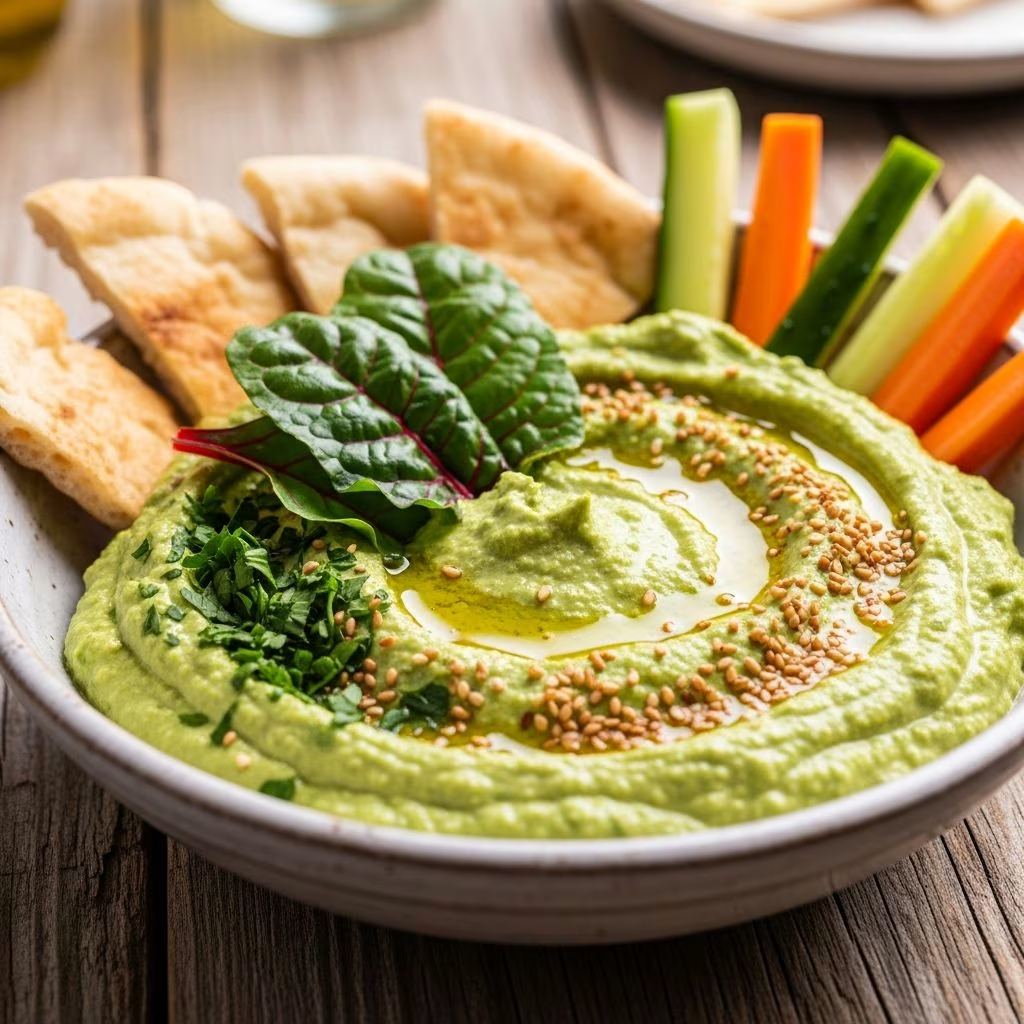
This creamy dip transforms humble Swiss chard ribs into a flavorful masterpiece inspired by Lebanese culinary heritage. Known regionally as Mutabal Silik or Silik bi Tahene, it blends tender greens with smooth tahini, bright lemon, and aromatic garlic for a versatile dish served warm or chilled.
Origins and Cultural Significance
In the rich tapestry of Middle Eastern cuisine, vegetable-based dips hold a special place, especially those featuring tahini—a sesame paste central to dishes like hummus and baba ganoush. Mutabal Silik stands out by spotlighting Swiss chard ribs, often overlooked in Western cooking but prized in Levantine traditions for their earthy taste and texture. Families in Lebanon and surrounding areas have passed down recipes like this for generations, using seasonal greens to create nourishing appetizers that accompany flatbreads, vegetables, or meze spreads.
The name ‘Mutabal Silik’ roughly translates to ‘beaten chard,’ reflecting the mashing technique that gives the dip its signature consistency. Variations exist across households—some add yogurt for tang, others incorporate herbs like mint or parsley—but the core remains tahini-dressed chard, celebrating resourcefulness with garden produce.
Why Choose Swiss Chard for Dips?
Swiss chard, with its vibrant stems and robust leaves, offers nutritional depth. The ribs, thick and celery-like, provide structure when cooked, absorbing flavors without disintegrating. Rich in vitamins A, C, and K, plus magnesium and potassium, chard supports heart health and immunity, making this dip as healthful as it is delicious.
- Nutritional Edge: Low-calorie yet fiber-packed, ideal for plant-based diets.
- Versatility: Stems cook tender in minutes, pairing perfectly with creamy tahini.
- Seasonal Appeal: Abundant in spring and fall, promoting sustainable eating.
Compared to spinach or kale, chard’s milder bitterness allows the tahini and lemon to shine, creating balance in every bite.
Essential Ingredients Breakdown
Gathering the right components ensures authentic taste. Focus on fresh, high-quality items for optimal results.
| Ingredient | Quantity | Role |
|---|---|---|
| Swiss chard ribs | 1.1 lbs (about 2 large bunches) | Base provides texture and earthiness |
| Tahini | 1/6 cup | Creamy binder with nutty depth |
| Fresh lemon juice | 1/8 cup | Bright acidity to cut richness |
| Garlic | 1 clove, crushed | Pungent aroma and savoriness |
| Salt | 2/3 tsp + pinch for boiling | Enhances all flavors |
| Sweet paprika | 1/4 tsp | Subtle warmth and color |
| Olive oil & mint (optional) | To taste | Garnish for freshness and gloss |
Tahini quality matters—opt for smooth, runny varieties from Middle Eastern grocers. Fresh lemon juice is non-negotiable for zing; bottled lacks vibrancy.
Step-by-Step Preparation Guide
Ready in under 45 minutes, this recipe yields about 36 tablespoons, serving 6-8 as an appetizer.
- Prep the Chard: Trim leaves (save for other uses like salads). Peel tough strings from ribs with a knife or peeler. Slice into 1/2-inch pieces for even cooking.
- Boil to Tenderness: Submerge in salted boiling water (pinch of salt per quart). Cook 15-20 minutes on medium until fork-tender. Drain, rinse under cold water to stop cooking, and squeeze dry firmly—this removes excess moisture for thicker dip.
- Mash the Base: In a bowl, roughly mash ribs by hand for texture or use a fork/food processor for smoothness. Personalize consistency to preference.
- Incorporate Flavors: Stir in tahini, lemon juice, minced garlic, salt, and paprika. Taste and adjust—more lemon for tang, salt for balance. Mix until uniform.
- Rest and Serve: Let sit 10 minutes for flavors to meld. Drizzle with olive oil, sprinkle paprika or chopped mint. Enjoy warm, room temp, or chilled.
Pro Tip: For ahead prep, make a day early; flavors intensify overnight in the fridge.
Customization Ideas for Every Palate
Adapt this base to suit dietary needs or whims.
- Spicy Kick: Add Aleppo pepper or chili flakes.
- Herb Boost: Mix in parsley, cilantro, or dill.
- Creamier Version: Blend with Greek yogurt or labneh (non-vegan).
- Nutty Twist: Toast sesame seeds for topping.
- Gluten-Free/Vegan: Naturally compliant; pair with rice crackers.
For larger crowds, double the batch—it’s scalable and stores well up to 4 days refrigerated.
Perfect Pairing Suggestions
Elevate meze tables or snack boards.
- Breads: Pita, lavash, or sourdough for scooping.
- Veggies: Cucumber, carrots, bell peppers for crunch.
- Main Companions: Hummus, falafel, tabbouleh for full spread.
- Drinks: Sparkling water with lemon or chilled white wine.
As a side, it complements grilled meats, fish, or grain bowls, adding moisture and zest.
Storage, Freezing, and Reheating Tips
Maximize freshness with proper handling.
- Fridge: Airtight container, up to 4 days. Stir before serving.
- Freezer: Portion into bags, freeze up to 2 months. Thaw overnight, avoid refreezing.
- Reheat: Gently on stovetop with splash of water, or microwave in bursts. Warm serving enhances creaminess.
Avoid metal utensils post-prep to prevent discoloration from lemon’s acidity.
Health Benefits and Nutrition Snapshot
This dip aligns with wellness goals: vegan, gluten-free, low-carb.
- Per 2-tbsp serving (approx.): 45 calories, 4g fat, 3g carbs, 1g protein, 2g fiber.
- Key Nutrients: High in antioxidants from chard, healthy fats from tahini.
Supports digestion via fiber, bone health via vitamin K. A mindful indulgence.
Frequently Asked Questions
Can I use chard leaves instead of ribs?
Ribs are traditional for texture, but leaves work—cook shorter (5-7 min) and squeeze extra dry to avoid watery dip.
Is tahini the same as sesame paste?
Yes, tahini is hulled sesame paste. Choose smooth for best blend; stir well if separated.
How do I fix a too-thick or thin dip?
Thin: Add lemon juice/water. Thick: More tahini or olive oil. Mash less for chunkier feel.
Substitutes for Swiss chard?
Celery ribs or bok choy stems mimic texture; adjust cook time.
Make it kid-friendly?
Omit/reduce garlic, add mild yogurt for creaminess.
Advanced Variations for Home Chefs
Experiment confidently.
- Roasted Chard: Oven-roast ribs at 400°F for 20 min pre-mashing for caramelized notes.
- Smoky Edition: Add smoked paprika or char garlic.
- Fusion Twist: Incorporate miso for umami or za’atar for spice.
These tweaks keep the dish exciting for repeat enjoyment.
Conclusion: A Staple for Modern Tables
Mutabal Silik bridges tradition and simplicity, proving everyday greens yield extraordinary flavors. Whip it up for your next gathering—its crowd-pleasing profile and ease make it indispensable.
References
- Swiss Chard Tahini Dip – Plant Based Folk — Plant Based Folk. 2023-05-15. https://plantbasedfolk.com/swiss-chard-tahini-dip/
- Swiss Chard — USDA FoodData Central. 2024-01-10. https://fdc.nal.usda.gov/fdc-app.html#/food-details/170401/nutrients
- Tahini Nutrition Facts — Harvard T.H. Chan School of Public Health. 2023-11-20. https://www.hsph.harvard.edu/nutritionsource/food-features/tahini/
- Lebanese Meze Traditions — BBC Good Food. 2024-03-05. https://www.bbcgoodfood.com/howto/guide/lebanese-meze-recipes