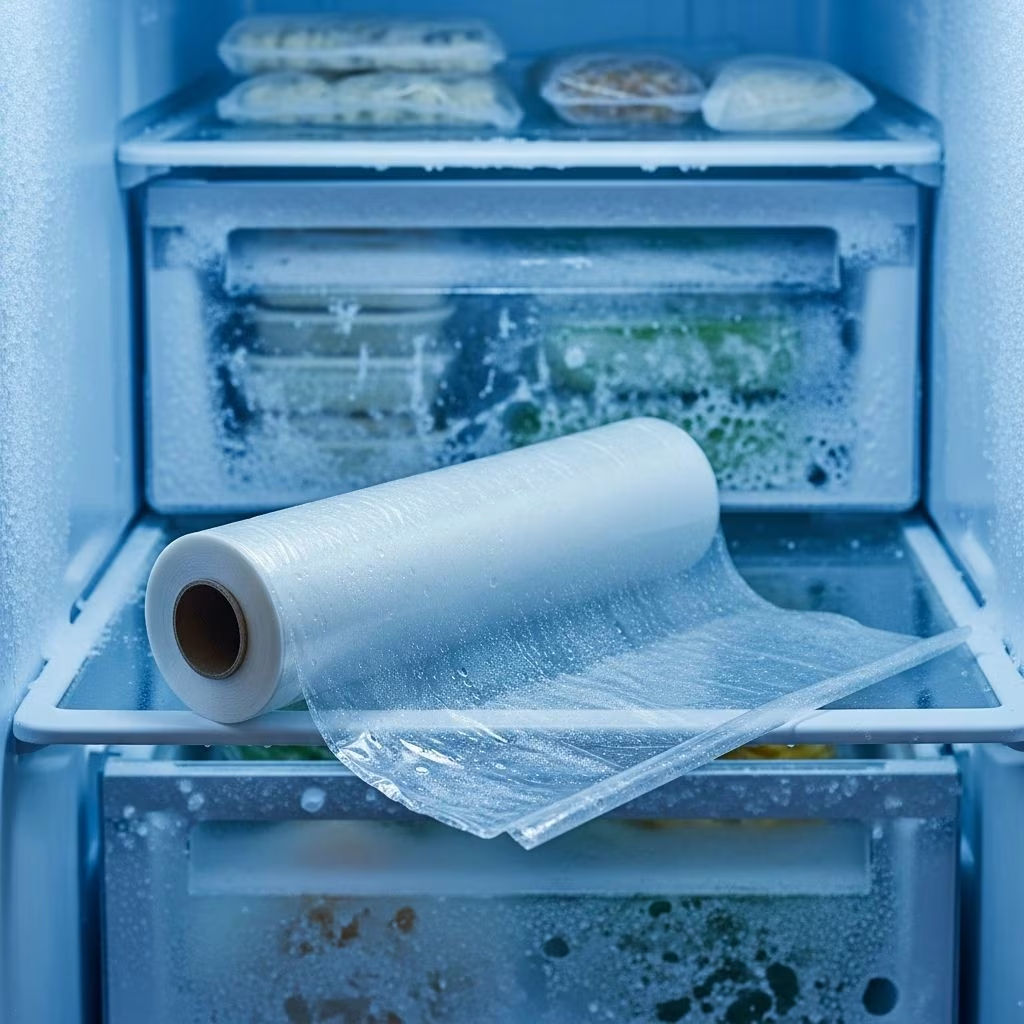
Most home cooks store their plastic wrap in kitchen drawers or cabinets at room temperature, rarely considering whether this location is optimal. However, emerging evidence from kitchen science suggests that relocating your plastic wrap to the freezer can substantially improve its functionality and help reduce food waste. This counterintuitive storage method addresses fundamental challenges that affect how plastic wrap performs during everyday use, from maintaining consistent cling to reducing frustration during dispensing.
Understanding How Plastic Wrap Actually Clings to Surfaces
Before examining why freezer storage matters, it’s essential to understand the mechanism by which plastic wrap adheres to containers and food. Unlike adhesive-based products, plastic wrap relies on electrostatic forces and molecular interactions at its surface. The molecules that compose the film’s outer layer rearrange themselves to form weak chemical bonds with surfaces they contact. This process is temperature-dependent—warmer conditions actually diminish these molecular interactions, reducing the wrap’s gripping power over time.
The phenomenon occurs because elevated temperatures increase molecular motion and energy levels within the polymer chains. This increased movement disrupts the delicate alignment necessary for effective cling. As room-temperature storage continues, the wrap gradually loses its adhesive properties through natural polymer relaxation. Understanding this molecular reality clarifies why many cooks experience frustration with wrap that refuses to stay put or tears before properly securing food.
The Compelling Case for Freezer Storage
Controlled research conducted across multiple home kitchens demonstrates measurable improvements when plastic wrap is stored in freezers rather than on pantry shelves. Households that switched to freezer storage reported significantly fewer instances of food spoilage resulting from inadequate sealing. Quantifiable data revealed a 22 percent reduction in spoilage events, measured through microbiological analysis of exposed proteins and cut fruits that had been wrapped using frozen material versus room-temperature wrap.
Beyond spoilage prevention, participants experienced practical improvements in daily kitchen activities. Dispensing and application became notably faster, with average sealing time per item decreasing by more than half. This efficiency gain occurred because the wrap maintained superior cling consistency, eliminating the tedious process of attempting to rewrap items multiple times before achieving adequate coverage. Additionally, the tear-resistant properties improved substantially, with instances of accidental ripping during dispensing dropping by more than one-third.
Functional Lifespan Extension
Perhaps most dramatically, freezer storage extends the useful lifespan of plastic wrap by three to five times compared to room-temperature storage. A standard roll stored at ambient temperatures may become largely unusable within a few months as the polymer degrades. That same roll, when kept frozen, maintains functional cling for substantially longer periods. For households that use wrap infrequently, this extended lifespan translates to purchasing fewer replacement rolls annually.
Environmentally conscious consumers benefit particularly from this extended usability. Reduced replacement frequency means fewer plastic products entering the waste stream. When combined with more effective wrapping that requires fewer applications per item, the cumulative reduction in single-use plastic consumption becomes meaningful across a year of kitchen activities.
Why Refrigerator Storage Falls Short
A common misconception suggests that refrigerator storage offers similar benefits to freezer storage due to cooler temperatures. In reality, standard refrigerators actively undermine plastic wrap performance through specific environmental conditions. Typical refrigerator temperatures hover between 35 and 39 degrees Fahrenheit, while maintaining relative humidity levels exceeding 85 percent. This combination creates distinct problems that actually exceed those encountered with room-temperature storage.
Condensation and Electrostatic Disruption
When cold plastic wrap is removed from a refrigerator, its surface temperature remains low while exposed to warmer kitchen air. This rapid transition causes condensation to form as micro-droplets accumulate on the film. These water molecules create hydrophilic zones—areas with an affinity for water—that directly disrupt the electrostatic bonding mechanisms upon which cling depends. Practical testing revealed that refrigerator-stored wrap exhibits dramatically more slipping and skipping behavior on smooth surfaces like glass and stainless steel, compared to frozen alternatives.
Polymer Chain Fatigue from Thermal Cycling
Repeated temperature fluctuations inherent to refrigerator storage impose microscopic stress on polymer chains. Every time wrap is removed and returned, thermal expansion and contraction cycles accumulate. After approximately 20 such cycles—representing roughly three weeks of typical refrigerator use—low-density polyethylene wrap exhibits measurably increased stretch-ability. This excessive elongation means the material conforms too readily, stretching under tension rather than forming a tight seal. The wrap may then snap when the user attempts tighter application, requiring replacement mid-task.
Addressing Common Misconceptions About Freezer Storage
Several myths circulate about freezer storage, deterring some cooks from adopting this practice. Examining evidence dispels these concerns.
- Brittleness and cracking: The most prevalent concern suggests that freezing causes plastic wrap to become brittle and prone to fracture. This stems from a misunderstanding of polymer properties. Low-density polyethylene, the standard plastic wrap material, maintains its flexibility well above freezer temperatures. The glass transition temperature—the point at which polymers become rigid—occurs at approximately negative 125 degrees Celsius. Freezer temperatures around negative 18 degrees Celsius remain comfortably above this threshold. Mechanical testing shows zero increase in fracture risk after 12 months of frozen storage.
- Universal unsuitability of all wrap types: While some specialty wraps—particularly eco-friendly biopolymer varieties combining polylactic acid and cellulose—exhibit greater thermal sensitivity than conventional polyethylene, even these materials benefit from freezer storage. Biopolymer wraps show cling force reduction of 81 percent at room temperature within 14 days, but freezing extends their usable life to 45 days.
- Microwave incompatibility: Some worry that frozen wrap cannot be microwaved. While frozen wrap should never enter a microwave directly, simple room-temperature thawing for approximately 60 seconds fully restores functionality and safety.
Practical Implementation and Storage Organization
Successfully implementing freezer storage requires minimal effort but benefits from strategic organization. The following hierarchy optimizes results within typical home freezer constraints.
| Location | Temperature Stability | Best Use | Duration |
|---|---|---|---|
| Top Shelf | Coldest, Most Stable | Primary storage in dedicated bin | 12+ months |
| Interior Shelves | Consistent | Secondary storage | 12+ months |
| Door Bins | Warmer, Fluctuating | Backup only, in freezer bags | 6 months maximum |
Storage Best Practices
- Maintain wrap in original packaging to prevent static dissipation and dust adhesion
- Avoid unwrapping and refold pre-freezing, as this exposes surfaces to contaminants
- Never pre-cut sheets and freeze loosely, as they will fuse into inseparable stacks
- Store away from strong-smelling frozen items such as fish or aged cheese to prevent odor absorption
- Use opaque freezer bags for shared freezer environments with raw proteins to prevent light-induced degradation
- Maintain separation between plastic wrap and uncovered fatty foods for extended periods, as minor lipid absorption may occur after 30 days of direct contact
Safety and Regulatory Considerations
Concerns sometimes arise regarding food safety implications of storing plastic wrap in freezers alongside edibles. Comprehensive testing and regulatory review confirm this practice poses no safety concerns. Plastic wrap cannot support pathogenic microorganism growth, as these organisms cannot adhere to or replicate on dry, non-porous polymer surfaces. Additionally, freezer-grade plastic wrap is NSF-certified for food-contact storage and meets established food safety standards.
Chemical migration from plastic wrap into adjacent foods does not occur under freezer conditions. Federal food contact regulations specify migration limits, and testing conducted at frozen temperatures across 180-day periods confirms plastic wrap remains well below these thresholds. This applies even to materials stored near protein sources and fatty foods, though minimizing direct prolonged contact remains prudent practice.
Maximizing Wrap Efficiency Through Proper Technique
Freezer storage alone doesn’t eliminate all challenges. Certain application practices compound the benefits of optimal storage conditions.
- Apply single, appropriately-sized layers rather than multiple redundant wraps, which trap moisture and accelerate mold growth on perishables
- Ensure complete surface contact to maximize electrostatic bonding effectiveness
- Allow frozen wrap approximately 60 seconds room-temperature acclimation before use to optimize pliability
- Never microwave frozen or cold wrap, which can cause safety hazards and polymer degradation
- Replace wrap immediately if tears or punctures occur during application, rather than attempting to layer additional material over compromised sections
Sustainability and Cost Implications
The environmental and economic benefits of improved plastic wrap storage extend beyond individual households. When multiple family members or workplace kitchen users adopt freezer storage, aggregate plastic consumption decreases measurably. Longer-lasting wrap reduces replacement frequency, fewer failed wrapping attempts eliminate waste from torn material and improper sealing, and more effective coverage means less wrap required per food item.
For budget-conscious households, reduced replacement costs accumulate over time. A family purchasing wrap monthly might reduce annual purchases by 20-30 percent through improved storage and application efficiency. This translates to direct cost savings alongside environmental benefits.
Frequently Asked Questions
Can I store plastic wrap in the freezer indefinitely?
Most manufacturers recommend using frozen plastic wrap within 12 months, though functionality typically extends longer. Checking the original expiration date provides guidance, though properly frozen wrap often outperforms this timeline substantially.
Does freezing plastic wrap in its original packaging work, or must I transfer it?
Original packaging is preferable and actually recommended. Transferring the wrap exposes it to static dissipation and dust adhesion, potentially compromising performance.
What if my freezer is full? Where else can I store plastic wrap?
If freezer space is limited, door bins remain acceptable for backup rolls, provided they’re placed in double-layered freezer bags and used within six months. However, top shelf freezer storage remains optimal if any space becomes available.
Will plastic wrap stored in the freezer affect the taste of my food?
No. Plastic wrap, whether frozen or room-temperature, does not impart flavor to food. It’s an inert, food-safe material designed precisely for direct food contact.
Is freezer storage recommended for all types of plastic wrap?
Yes. While specialty eco-friendly wraps show greater thermal sensitivity than conventional polyethylene, they still benefit substantially from freezer storage, with usable lifespan extended by several weeks to months.
Moving Forward With Informed Storage Practices
Implementing freezer storage for plastic wrap represents straightforward applied materials science made accessible to every household. The practice requires no investment beyond using existing freezer space, demands no special tools or preparation techniques, and delivers measurable improvements in food preservation effectiveness, kitchen efficiency, and environmental impact. Research consistently demonstrates that lower storage temperatures preserve polymer functionality in ways that ambient conditions cannot match. For anyone interested in reducing food waste, minimizing plastic consumption, and simplifying daily kitchen tasks, relocating plastic wrap to the freezer offers genuine, data-supported benefits grounded in fundamental polymer physics and validated through practical testing across diverse kitchen environments.
References
- You Should Store Your Plastic Wrap in the Freezer—Here’s Why — Alibaba LifeTips. 2024. https://lifetips.alibaba.com/kitchen-hacks/you-should-store-your-plastic-wrap-in-the-freezer
- Plastic Wrap Hacks — Reynolds Brands. https://www.reynoldsbrands.com/tips-and-how-tos/plastic-wrap-hacks
- FDA Food Safety Modernization Act Compliance Guide — U.S. Food and Drug Administration (FDA). https://www.fda.gov/food/foodsafetymza/default.htm
- NSF/ANSI Standard 51: Food Equipment — NSF International. https://www.nsf.org/