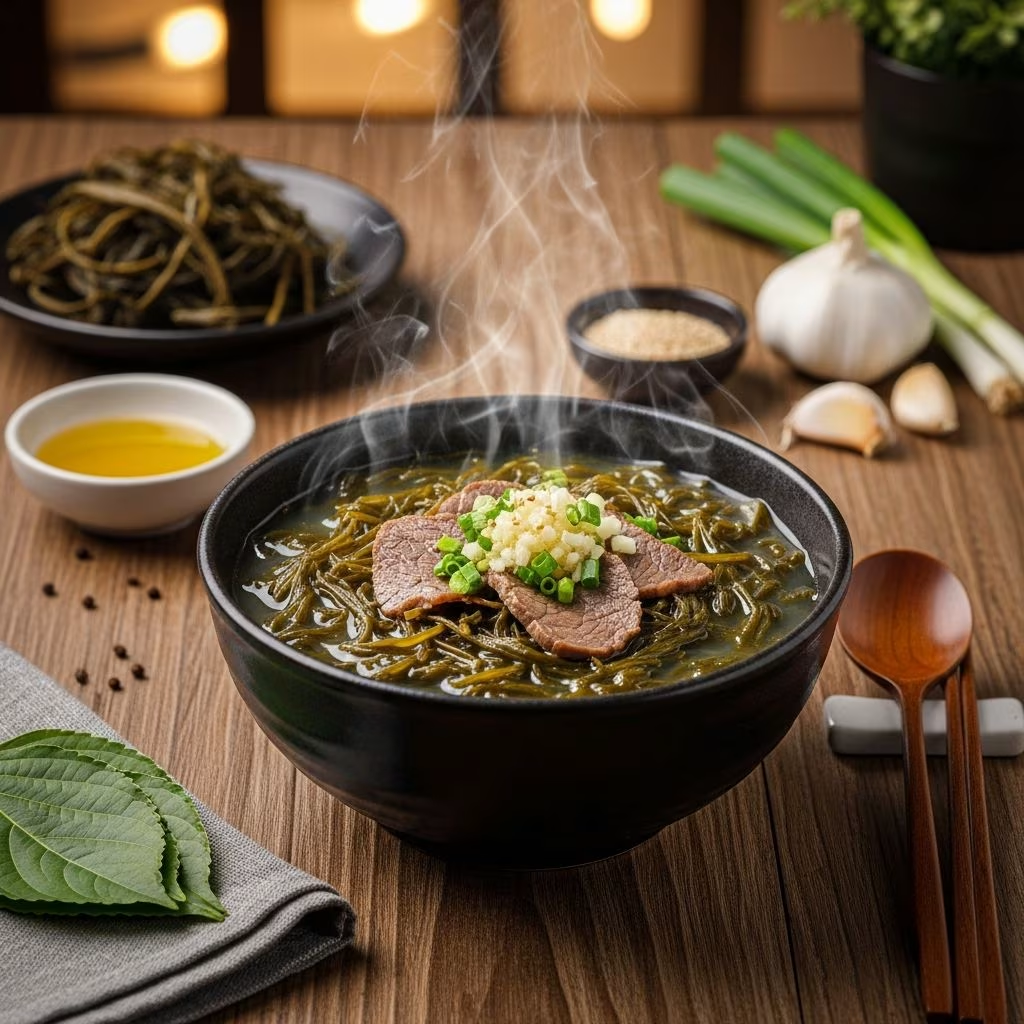
Korean seaweed soup, known as miyeokguk, stands as a cornerstone of traditional Korean cuisine, cherished for its simplicity, depth of flavor, and profound cultural resonance. This light yet hearty broth, infused with rehydrated miyeok seaweed and tender beef, offers a savory embrace that warms the soul on special occasions or ordinary days alike.
The Heart of Korean Tradition
Miyeokguk transcends mere sustenance; it embodies rituals deeply woven into Korean life. Families serve it on birthdays to symbolize longevity and renewal, drawing from ancient beliefs that the sea’s bounty fosters vitality. New mothers consume it during postpartum recovery, valuing its purported ability to replenish strength and promote healing. Beyond these milestones, it graces everyday tables and restaurant menus, reflecting its versatility and enduring appeal.
In coastal regions, variations incorporate seafood, adapting to local abundance, while inland versions favor beef for richness. This adaptability underscores miyeokguk’s role as a unifying dish across Korea’s diverse landscapes.
Nutritional Powerhouse from the Sea
Miyeok, or brown seaweed (Undaria pinnatifida), packs impressive nutrients. Rich in iodine essential for thyroid function, iron for blood health, and calcium for bones, it supports overall wellness. Studies highlight its potential to aid cholesterol management and provide dietary fiber for digestion. Paired with beef’s protein and sesame oil’s healthy fats, miyeokguk delivers a balanced, low-calorie meal ideal for mindful eating.
- Iodine: Crucial for metabolism regulation.
- Iron and Calcium: Bolster energy and skeletal strength.
- Antioxidants: Combat oxidative stress from daily life.
Opt for high-quality dried miyeok from Asian markets; it expands significantly upon soaking, ensuring tender texture without toughness.
Essential Ingredients Breakdown
Authentic miyeokguk hinges on fresh, quality components. Core elements include:
| Ingredient | Quantity (Serves 4) | Purpose |
|---|---|---|
| Dried miyeok seaweed | 1 oz (30g) | Main flavor base, nutrient source |
| Beef (brisket or stew meat) | 7-8 oz (200-300g), thinly sliced | Protein, umami depth |
| Sesame oil | 2-3 tbsp | Aroma, nutty richness |
| Korean soup soy sauce (gukganjang) | 2 tbsp | Salty seasoning, lighter than regular soy |
| Garlic, minced | 2 cloves | Pungent savoriness |
| Water or rice water | 8 cups | Clean, subtle broth base |
| Salt or fish sauce | To taste | Final balancing |
Rice water, the starchy rinse from washing rice, adds natural silkiness and mild sweetness, elevating the broth’s clarity.
Step-by-Step Classic Beef Miyeokguk Recipe
Prepare this timeless version in under an hour for comforting results.
- Rehydrate Seaweed: Soak dried miyeok in cold water for 10-30 minutes until softened. Drain, rinse if needed, squeeze excess water, and cut into bite-sized strips with scissors.
- Sauté Aromatics and Beef: Heat 1-2 tbsp sesame oil in a pot over medium heat. Add minced garlic, optional onion, and beef slices. Stir-fry until beef browns and loses pinkness, about 3-5 minutes.
- Incorporate Seaweed: Toss in prepared miyeok, coating with oil. Sauté 2-3 minutes to release its briny essence.
- Build Broth: Pour in 8 cups water or rice water. Bring to a boil, then simmer covered for 20-40 minutes until beef tenders and flavors meld.
- Season Thoughtfully: Stir in soup soy sauce, fish sauce if using, and remaining sesame oil. Adjust with salt. Simmer 5 more minutes.
- Serve Hot: Ladle into bowls alongside steamed rice and banchan like kimchi for a complete meal.
Yield: 4 servings. Total time: 45-60 minutes. Store leftovers refrigerated up to 4 days; reheat gently to preserve texture.
Variations to Suit Every Palate
Miyeokguk’s flexibility invites creativity while honoring tradition.
- Seafood Edition: Swap beef for shrimp, clams, or fish chunks. Sauté briefly to avoid overcooking; coastal families swear by this fresh twist.
- Vegan Delight: Use mushroom stock and omit beef. Add tofu for protein; season with kelp for oceanic depth.
- Quick Rice Cooker Hack: Combine ingredients in a rice cooker post-rice cycle for hands-off simmering.
- Spicy Kick: Infuse with gochugaru chili flakes or fresh green onions for heat.
For postpartum focus, double seaweed and simmer longer for maximum nutrient extraction.
Pro Tips for Restaurant-Quality Results
Elevate your miyeokguk with these insights:
- Choose pre-washed, cut miyeok to save prep time without sacrificing quality.
- Massage seaweed with sesame oil pre-sauté for even flavor absorption.
- Use gukganjang, a lighter Korean soup soy, for authentic subtlety over regular soy.
- Thinly slice beef against the grain for tenderness in short cooks.
- Taste iteratively; broth should be clear, savory, with nutty undertones.
Common pitfalls: Over-soaking seaweed leads to mushiness; under-sautéing leaves raw flavors.
Pairing and Serving Suggestions
Miyeokguk shines simplest: with white rice absorbing its essence. Complement with:
- Banchan: Kimchi, namul greens, or kkakdugi pickles for contrast.
- Drinks: Barley tea or soju for adults; kids enjoy with milk.
- Occasions: Birthday feasts, recovery meals, or chilly evenings.
Portion generously on special days, as abundance signals prosperity.
Frequently Asked Questions (FAQs)
What is miyeokguk traditionally eaten for?
Birthdays and postpartum recovery, symbolizing health and rebirth.
Can I make miyeokguk without beef?
Yes, seafood or vegan versions work beautifully, maintaining core flavors.
Where to buy miyeok seaweed?
Asian grocery stores or online; ensure it’s labeled for Korean soups.
How long does miyeokguk last in the fridge?
Up to 4 days in an airtight container; freeze for 1 month.
Is rice water necessary?
Not essential, but it enhances body and subtle sweetness.
Health and Cultural Deep Dive
Beyond taste, miyeokguk’s resurgence ties to wellness trends. Its low-fat profile suits modern diets, while cultural nostalgia draws younger generations. In Korea, serving it signifies care—mothers prepare it for children, elders for family gatherings.
Nutritionally, a bowl provides roughly 200-300 calories, 20g protein, and key minerals, making it a smart choice for balanced nutrition. Research from health bodies affirms seaweed’s role in iodine sufficiency, vital in iodine-deficient regions.
Globally, as Korean food gains traction via K-dramas and cuisine exports, miyeokguk offers an accessible entry—simple ingredients, minimal tools, profound reward.
References
- Korean Seaweed Soup-miyeok Guk — Group Recipes. 2007. https://www.grouprecipes.com/63833/korean-seaweed-soup-miyeok-guk.html
- Seaweed soup with beef (Miyeokguk) recipe by Maangchi — Maangchi.com. 2023-08-10. https://www.maangchi.com/recipe/miyeokguk
- Korean Seaweed Soup (Miyeokguk) with Beef — Beyond Kimchee. N/A. https://www.beyondkimchee.com/beef-seaweed-soup/
- miyukguk (Korean Seaweed Soup) — Cafe Maddy. N/A. https://www.cafemaddy.com/blog/miyukgook-korean-seaweed-soup
- Recipe: Miyeok Guk – Korean Seaweed Soup (Birthday Soup) — Mitziemee.com. N/A. https://mitziemee.com/korean-seaweed-soup-miyeok-guk-recipe/