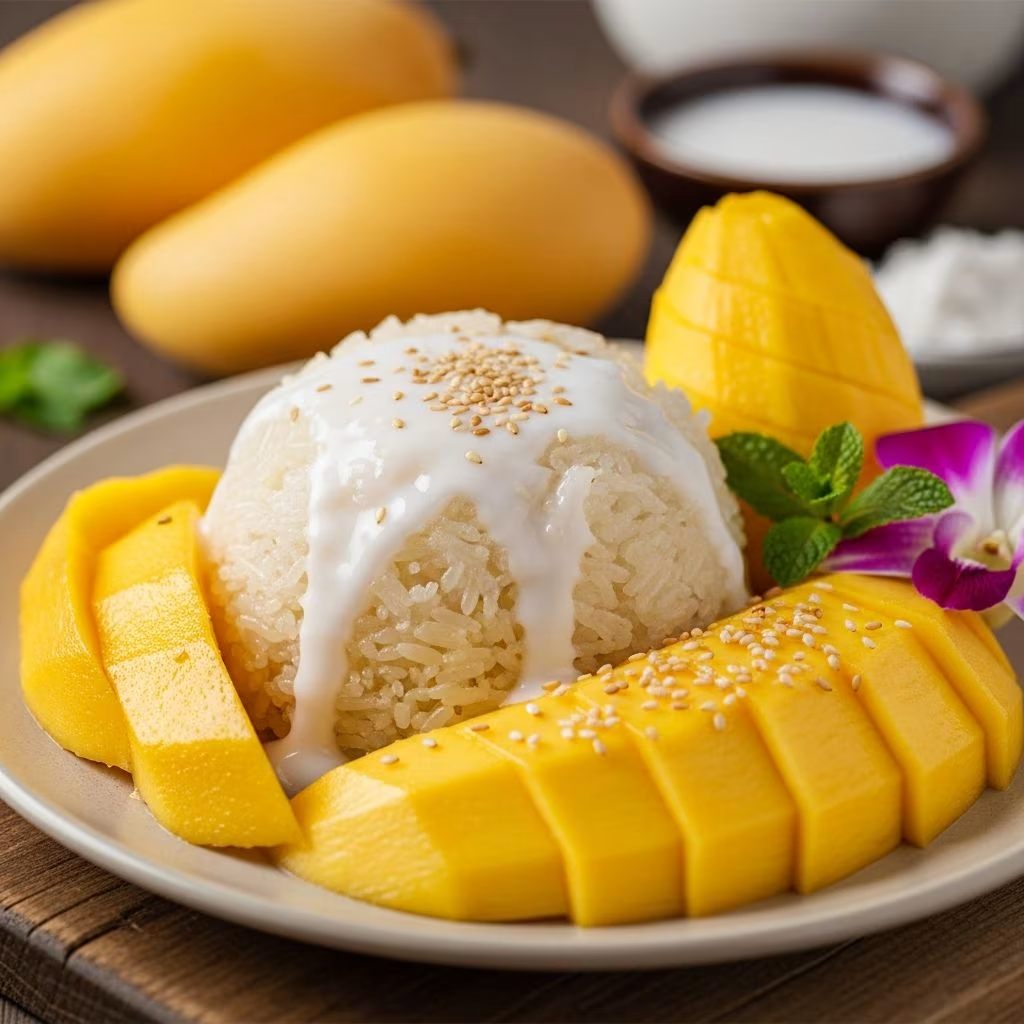
Thai mango sticky rice, known as Khao Niao Mamuang, stands as one of the most cherished desserts in Southeast Asian cuisine. This delightful dish combines the chewy texture of glutinous rice with the juicy sweetness of ripe mangoes and a luscious coconut sauce. Originating from Thailand’s street food scene, it has captivated palates worldwide for its perfect balance of sweet, salty, and creamy elements.
The Allure of Khao Niao Mamuang
At its core, mango sticky rice represents simplicity elevated to perfection. Glutinous rice, also called sweet or sticky rice, forms the base. Unlike regular rice, it boasts high amylopectin content, giving it that signature stickiness when cooked. Paired with seasonal mangoes at peak ripeness and a sauce made from coconut milk infused with sugar and salt, the result is a symphony of flavors and textures.
This dessert thrives on fresh ingredients. In Thailand, it’s a staple during mango season (March to June), when Alphonso or Nam Dok Mai varieties shine brightest. Vendors steam rice in bamboo baskets, drizzle it with sauce, and serve it warm alongside sliced mango—a ritual that draws long lines at markets.
Essential Ingredients for Authentic Flavor
To recreate this at home, gather these key components:
- Glutinous rice: 1-2 cups (200-400g), uncooked. Look for Thai brands like Erawan for best results.
- Coconut milk: Full-fat, 1-2 cans (400ml each). Shake well before opening.
- Sugar: Granulated white or palm sugar, 1/4 to 1/2 cup depending on sweetness preference.
- Salt: 1/2 to 1 tsp, to balance the sweetness.
- Ripe mangoes: 2-4 large ones, fragrant and yielding slightly to pressure.
- Pandan leaves (optional): 2-3 tied into knots for aromatic infusion.
- Sesame seeds or mung beans: Toasted, for garnish.
These ingredients ensure the dish remains gluten-free and naturally vegan, appealing to diverse dietary needs.
Step-by-Step Preparation Guide
Success hinges on proper technique, especially rice preparation. Here’s a foolproof method yielding 4-6 servings.
1. Soak the Rice
Rinse glutinous rice under cold water until clear, removing excess starch. Soak in ample water for at least 4 hours or overnight. This step softens the grains for even cooking and maximum stickiness.
2. Steam to Perfection
Drain rice and spread evenly in a steamer lined with cheesecloth or banana leaves. Steam over boiling water for 20-40 minutes, covered, until translucent and tender. Avoid boiling to prevent mushiness.
3. Prepare the Coconut Sauce
In a saucepan, gently heat half the coconut milk with sugar, salt, and pandan leaves. Stir until sugar dissolves—do not boil, as coconut milk can curdle. Reserve half for drizzling.
4. Combine and Rest
Pour warm sauce over hot steamed rice, mixing thoroughly. Cover and let steam-absorb for 10-15 minutes. This infuses flavor deeply.
5. Make Thickened Drizzle
For the topping sauce, simmer remaining coconut milk with a pinch of cornstarch (optional for thickness), sugar, and salt until glossy.
6. Assemble and Serve
Mound rice on plates, fan mango slices beside it, and pour sauce over. Sprinkle sesame seeds for crunch.
| Step | Time | Tip |
|---|---|---|
| Soaking | 4+ hours | Use room-temperature water |
| Steaming | 20-40 min | Check doneness by pinching a grain |
| Resting | 10-15 min | Keep covered to retain moisture |
Pro Tips for Restaurant-Quality Results
- Rice Selection: Thai glutinous rice outperforms sushi or arborio rice. It absorbs liquids without breaking down.
- Mango Ripeness: Choose golden-yellow fruits with sweet aroma. Underripe mangoes taste sour.
- Coconut Milk Quality: Avoid low-fat versions; creaminess is key. Freshly extracted is ideal but canned works well.
- No Microwave Shortcuts: Steaming preserves texture; microwaving often results in uneven cooking.
- Balance Flavors: Taste sauce before mixing—adjust salt to cut sweetness.
Common Mistakes and How to Avoid Them
Even seasoned cooks falter here. Over-soaked rice turns gummy; under-steamed stays hard. Solution: Time your soak precisely and test steam doneness. Boiling coconut milk separates fats—always simmer gently. Skipping the rest period leaves rice dry and flavorless.
For troubleshooting:
- Soggy Rice? Reduce sauce quantity or steam longer.
- Grainy Sauce? Strain coconut milk beforehand.
- Not Sticky Enough? Ensure proper glutinous variety and full soak.
Variations to Elevate Your Dessert
While classic reigns supreme, experiment mindfully:
- Durian Sticky Rice: Swap mango for ripe durian for creamy, pungent twist popular in Thailand.
- Corn Version: Add sweet corn kernels to rice for texture and subtle pop.
- Chocolate Drizzle: Modern fusion with dark chocolate ganache.
- Low-Sugar: Use natural sweeteners like honey or stevia, adjusting salt accordingly.
- Seasonal Fruits: Pineapple or lychee in off-seasons.
In Northern Thailand, versions omit coconut sauce, relying on plain sticky rice—highlighting regional adaptations based on ingredient availability.
Nutritional Profile and Dietary Fit
A single serving (about 1 cup rice + 1/2 mango) offers roughly 400-500 calories, primarily from carbs and healthy fats. Glutinous rice provides quick energy; coconut milk delivers medium-chain triglycerides for sustained fuel. Mangoes contribute vitamins A and C, plus fiber.
| Nutrient | Per Serving | % Daily Value |
|---|---|---|
| Calories | 450 | 23% |
| Carbs | 70g | 25% |
| Fat | 18g | 23% |
| Protein | 5g | 10% |
It’s naturally gluten-free and can be vegan. Portion control suits keto adaptations with cauliflower rice swaps.
Pairing and Serving Suggestions
Serve warm for best contrast—chilled rice firms up. Pair with Thai iced tea or singha beer for balance. At gatherings, present family-style with extra sauce.
Storing and Reheating Leftovers
Store in airtight containers up to 2 days in fridge. Reheat by steaming or microwaving with damp cloth to restore moisture. Freeze rice portions up to a month; thaw overnight before saucing fresh mango.
Frequently Asked Questions (FAQs)
Can I make mango sticky rice without a steamer?
Yes, use a rice cooker lined with cheesecloth or boil in a pot with minimal water, but steaming yields superior fluffiness.
What’s the best rice cooker setting?
Use the ‘sticky rice’ or ‘glutinous’ mode if available; otherwise, standard white rice works.
Is pandan essential?
No, but it adds authentic floral notes. Substitute vanilla extract sparingly.
How do I know mangoes are ripe?
They should smell sweet, feel soft at the stem end, and have vibrant yellow skin.
Can I use regular rice?
No—only glutinous rice achieves the proper sticky texture.
Cultural Significance and Global Appeal
Beyond taste, Khao Niao Mamuang embodies Thai hospitality. Street carts in Bangkok’s Chatuchak market serve thousands daily, blending tradition with innovation. Its rise in Western cafes underscores fusion cuisine’s power, from LA food trucks to NYC dessert bars.
Home cooks worldwide now replicate it, thanks to accessible ingredients. Videos and blogs demystify the process, proving this isn’t just a treat—it’s a cultural bridge.
References
- Coconut Sticky Rice with Mango (Khao Niao Mamuang) — What to Cook Today. N/A. https://whattocooktoday.com/sweet-sticky-rice-with-coconut-and-mango-khao-niaw-mamuang.html
- Ridiculously Good Mango Sticky Rice (Khao Niao Mamuang) — Cooking Therapy. N/A. https://www.cooking-therapy.com/mango-sticky-rice/
- Coconut Sticky Rice (Khao Niao Mamuang) – Desserts of the World — Maverick Baking. N/A. https://maverickbaking.com/coconut-sticky-rice-khao-niao-mamuang-desserts-of-the-world/
- Sticky Rice with Mango: Easy Thai Khao Niao Mamuang Recipe — Be Inspired. N/A. https://beinspired.au/recipes/sticky-rice-with-mango/