The intersection of Japanese culinary tradition and contemporary vegetarian cooking reveals itself most powerfully in dishes built around fermented miso paste. This ancient seasoning ingredient, created through the patient fermentation of soybeans, salt, and koji mold, transforms simple vegetables into something extraordinary—a dish that speaks to both sophistication and comfort. When eggplants and potatoes are braised in a miso-enriched sauce, they absorb layers of umami complexity that elevate them far beyond their humble origins into territory reserved for restaurant-quality fare.
Understanding Miso: The Foundation of Umami
Miso represents one of the world’s most underutilized flavor amplifiers in Western kitchens. The fermentation process that creates miso generates glutamates—the same compounds responsible for umami’s savory intensity—alongside amino acids and other compounds that build depth over time. Unlike simple salt, which provides one-dimensional saltiness, quality miso offers a multifaceted flavor profile that includes subtle sweetness, complex nuttiness, and an almost meaty richness despite containing no animal products.
When selecting miso for braising vegetables, understanding the available varieties matters considerably. Red miso (akamiso) undergoes longer fermentation periods, developing deeper, more assertive flavors with pronounced earthiness. White miso (shiromiso) ferments more briefly and retains more sweetness alongside lighter flavor notes. For a braised vegetable dish, the choice between these varieties determines whether your final dish leans toward bold assertiveness or delicate sophistication.
Vegetable Selection and Preparation
The vegetables chosen for a miso braise must possess certain characteristics to succeed. They should be sturdy enough to withstand extended cooking without disintegrating, yet tender enough to become silky when fully cooked. Eggplant, particularly Japanese varieties with their thinner skins and fewer seeds, becomes almost buttery in texture after braising, absorbing the surrounding sauce while maintaining structural integrity.
Potatoes serve as the dish’s grounding element, their starch content absorbing and concentrating the braising liquid into something approaching a light sauce. Waxy potato varieties work better than floury ones for this application—they hold their shape during cooking while still becoming fork-tender. The potato’s relatively neutral flavor acts as a canvas for the miso’s complexity rather than competing with it.
Proper preparation begins with thoughtful cutting. Both vegetables benefit from being cut into pieces large enough to remain recognizable after cooking but small enough to cook through evenly. This typically means cutting eggplant into substantial chunks and potatoes into similar-sized pieces, ensuring they cook at comparable rates and maintain appealing texture contrasts in the finished dish.
Building Layers of Flavor Through Aromatics
A miso braise begins not with miso itself but with aromatics that will provide the foundation for its flavors. Garlic and ginger, when gently cooked in a neutral oil, release their volatile compounds and become mellower, less harsh. These aromatics create a flavor base that won’t compete with or overwhelm the miso’s delicate complexity. The heat should remain moderate—aggressive heat can cause aromatics to brown and become bitter, introducing unwanted harshness into the finished dish.
Some preparations incorporate onions for their natural sweetness, which balances miso’s saltiness. Others introduce dried chilies for gentle heat that doesn’t scorch the palate but instead highlights the miso’s other flavor dimensions. The key principle remains consistent: aromatics should enhance rather than dominate, supporting the miso’s starring role.
The Braising Process and Technique
Once aromatics are properly fragrant, miso paste combines with liquid—typically dashi, vegetable broth, or water—to create the braising medium. This combination requires careful attention; miso should never be added to boiling liquid, as high heat can damage its complex flavors and alter its nutritional profile. Instead, miso dissolves more effectively in warm rather than hot liquid, and it benefits from being stirred through a small amount of liquid before introduction to the main pot.
The prepared vegetables enter this seasoned liquid, where they begin their transformation. The braising process typically occurs at a gentle simmer rather than a vigorous boil. This gentler approach prevents vegetables from becoming mushy while allowing sufficient time for flavors to meld and develop. The cooking time varies depending on vegetable size and individual potato variety—typically between thirty and forty-five minutes for properly cut pieces.
During braising, the liquid gradually reduces and concentrates, intensifying its flavor. The vegetables release their own moisture and starches, which thicken the braising liquid into a light sauce. This natural thickening means no additional cornstarch or flour is required—the process creates its own silky consistency through patient cooking.
Flavor Development and Seasoning Adjustments
As the braise progresses, the miso’s flavors evolve and become more integrated with the other ingredients. Early in the cooking process, miso’s salty and fermented notes taste somewhat distinct. As cooking continues, these notes marry with the vegetables’ natural flavors and create something that tastes less like separate components and more like a unified whole. This transformation represents the heart of the braise’s success—the development of true depth rather than simple flavor addition.
Tasting and adjusting seasoning during the braise’s final minutes allows for calibration. Additional miso can intensify umami and saltiness, while small amounts of acid from citrus or vinegar can brighten the overall flavor profile without disrupting the dish’s essential character. Some preparations benefit from a final addition of butter or oil stirred in just before serving, which adds richness and helps flavors coat the palate more completely.
Serving and Accompaniment Strategies
A miso-braised vegetable dish achieves its full potential when served thoughtfully. Plain steamed rice provides an ideal counterpoint—its neutral flavor doesn’t compete while its texture provides pleasant contrast to the soft vegetables. Fresh herbs like cilantro, scallions, or mint can be scattered over individual portions, their brightness playing against the dish’s deep savory notes.
Textural elements enhance the eating experience significantly. Toasted sesame seeds, crispy fried onions, or toasted nori strips provide crunch and visual interest. These additions should be reserved for serving rather than incorporated into the braise, which would soften them and diminish their textural contribution.
Variations and Adaptations
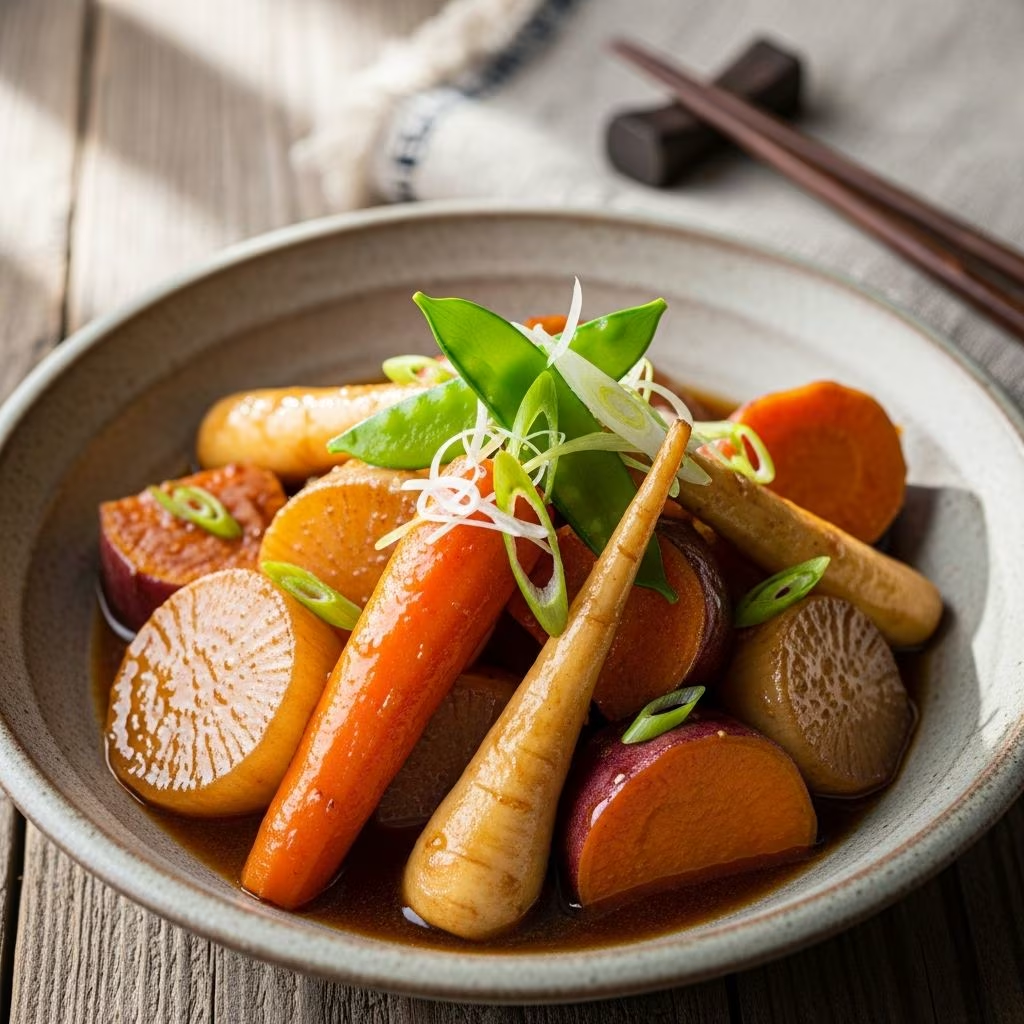
The basic formula of miso, aromatics, and vegetables adapts readily to seasonal ingredients and personal preferences. Root vegetables like carrots, turnips, or parsnips work equally well alongside eggplant. Mushrooms, particularly earthier varieties like shiitake or oyster mushrooms, add meaty character and additional umami compounds. Leafy greens like bok choy or spinach can be added near the end of cooking for nutritional balance and visual appeal.
Spice levels adjust according to preference through the addition of chili pastes, black pepper, or fresh hot peppers. The miso base remains constant, providing the flavor anchor while these additions create variation. Some preparations incorporate coconut milk for richness, while others add soy sauce for additional umami reinforcement.
Storage and Make-Ahead Considerations
A miso braise actually improves after a day or two of refrigeration, as flavors continue developing and integrating. This makes it an excellent candidate for meal preparation or advance cooking. The dish stores well in glass containers for up to four days when refrigerated properly. Reheating should occur gently over moderate heat or in a microwave to prevent the vegetables from becoming overcooked during warming.
Freezing is possible, though extended freezing can slightly alter the texture of eggplant. For this reason, preparations intended for freezing may benefit from slightly shorter initial cooking times, as thawing and reheating will provide additional cooking. Most preparations maintain quality for up to two months when frozen in airtight containers.
Nutritional Perspective and Health Considerations
Beyond flavor considerations, a miso-braised vegetable dish offers substantial nutritional benefits. Eggplants contain compounds with potential antioxidant properties and significant fiber content. Potatoes provide resistant starch when cooked and cooled, supporting healthy digestion. Fermented miso contributes beneficial microorganisms and enzymes that support digestive health, though these benefits diminish with extended cooking at high temperatures.
The fermentation process in miso creation also reduces the bioavailability of anti-nutritional compounds present in raw soybeans, making the protein and minerals more accessible to human digestion than they would be in whole soybean preparations. This makes miso a more bioavailable source of soy’s nutritional benefits than many alternatives.
Frequently Asked Questions
- Can I make this dish ahead of time? Yes, the braise actually develops more complex flavors after a day or two of refrigeration. Prepare it up to four days in advance and reheat gently before serving.
- What if I don’t have dashi? Vegetable broth or even water work adequately. Dashi adds additional umami depth, but the miso itself provides sufficient savory character for success.
- How do I prevent eggplant from becoming mushy? Avoid overcooking by checking vegetable tenderness starting around thirty minutes of braising. Remove from heat as soon as vegetables are tender.
- Can I use white miso instead of red? Yes, though white miso will produce a lighter, sweeter, less assertive final dish. Adjust quantities to taste.
- Is this dish suitable for vegan diets? Completely—it contains no animal products in its basic preparation, making it naturally vegan.
Mastering the Technique Through Practice
Creating a successful miso braise requires relatively modest technical skill but benefits enormously from attention and intention. The satisfaction derived from transforming simple vegetables into something unexpectedly sophisticated provides genuine cooking reward. As practitioners gain experience with the technique, they develop intuition about miso varieties’ characteristics and how to balance their flavors with seasonal ingredients and personal preferences.
Each preparation teaches something about how fermentation, time, and heat collaborate to build flavor. These lessons extend beyond this single dish into broader cooking competence—understanding umami in general, fermented ingredients’ potential, and the satisfaction of slow cooking done properly. A miso-braised vegetable dish represents not merely dinner but a gateway into more intentional, flavorful cooking.
References
- Handbook of Fermented Functional Foods — Farnworth, E. R. (Ed.). CRC Press. 2008. https://doi.org/10.1201/9781420053364
- The Umami Information Center: Understanding Umami — Umami Information Center. 2024. https://www.umamiinfo.com/
- Japanese Vegetables: Their Cultivation and Culinary Use — Schott, B. J. University of Hawaii Press. 2014.
- The Salt: What You Need To Know About Miso — NPR Food. https://www.npr.org/sections/thesalt/
- Fermented Foods and Their Role in Diet Quality — Marco, M. L., et al. Advances in Nutrition, 2017. https://doi.org/10.3945/an.116.013581