In today’s fast-paced world, the challenge of preparing a home-cooked meal often feels overwhelming, especially when grocery lists grow long and preparation time shrinks. However, there exists a culinary philosophy that turns this challenge on its head: the art of creating exceptional dishes with minimal ingredients. Pasta, one of the world’s most versatile and accessible starches, becomes the perfect canvas for this approach. By focusing on quality ingredients and straightforward techniques, you can prepare satisfying, delicious pasta meals that require just a handful of components.
The Philosophy Behind Ingredient Minimalism
Cooking with fewer ingredients isn’t about deprivation; it’s about intentionality. When you limit your ingredient list, each component must work harder to deliver flavor and satisfaction. This approach forces home cooks to think critically about ingredient quality and how different elements complement one another. A single exceptional ingredient can anchor an entire dish, transforming the ordinary into the extraordinary.
This minimalist philosophy has deep roots in traditional cuisine, particularly in Italian cooking, where regional dishes often rely on three or four fundamental ingredients prepared with precision and respect for their inherent qualities. Modern busy households can adopt this same approach, recognizing that simplicity often yields superior results compared to complex recipes requiring numerous pantry items.
Building Blocks: Essential Pantry Staples
Before exploring specific recipes, understanding which ingredients provide the greatest flavor impact allows you to build a foundational pantry. These key items, when kept on hand, enable spontaneous meal creation without extensive shopping.
- Quality olive oil: The foundation of countless simple pasta preparations, premium olive oil carries flavor complexity that cheaper varieties cannot match
- Garlic: One of cooking’s most versatile aromatics, providing depth and complexity to minimal-ingredient dishes
- Canned tomatoes: San Marzano varieties offer concentrated tomato flavor that can form the basis of rich sauces
- Pasta varieties: Maintaining several shapes—spaghetti, linguine, penne, and shells—allows flexibility in recipe selection
- Aged cheeses: Pecorino Romano and Parmigiano-Reggiano provide concentrated umami and saltiness that seasons dishes efficiently
- Dried herbs and spices: Red pepper flakes, black pepper, and oregano add dimension without requiring fresh preparation
- Anchovies: Though polarizing, these small fish provide intense umami that elevates simple dishes dramatically
Classic Preparations That Prove Simplicity Works
Several iconic pasta preparations demonstrate how restraint in ingredients need not mean restraint in flavor. These time-tested dishes have endured because their core combinations achieve perfect balance with minimal components.
The Timeless Garlic and Oil Foundation
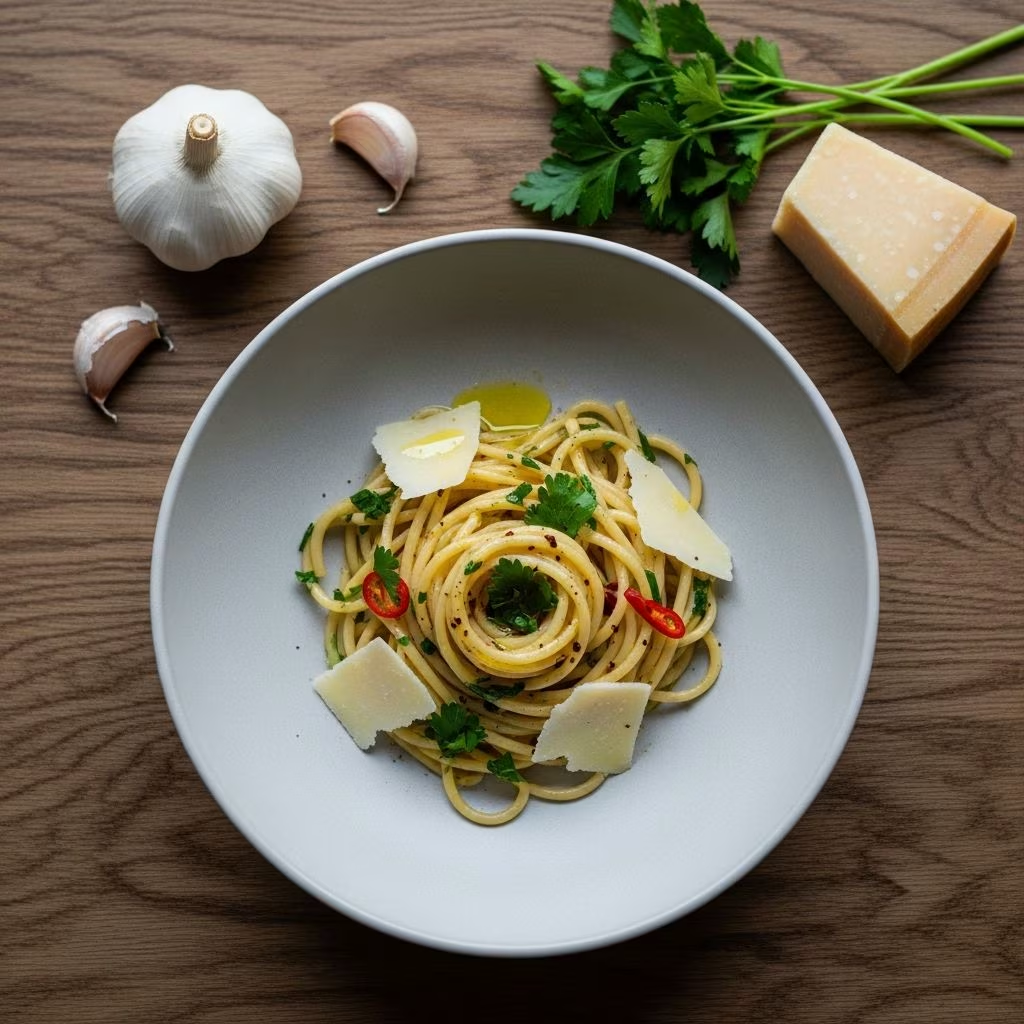
Perhaps the most fundamental of all minimal-ingredient pasta dishes, spaghetti with garlic and oil represents the pinnacle of ingredient-to-flavor ratio. The preparation involves cooking pasta while separately heating quality olive oil with sliced or minced garlic until the garlic turns golden and fragrant. When pasta finishes cooking, the two elements combine, with pasta water added to create a silky emulsion. Red pepper flakes often join this trio, providing gentle heat that complements the rich, aromatic oil and sweet undertones of the garlic. This dish, sometimes finished with fresh parsley and grated cheese, demonstrates that three ingredients executed with attention and care can satisfy completely.
Creamy Cheese Preparations
Another category of minimal-ingredient pasta emphasizes the interplay between pasta starch, cheese, and fat. These preparations rely on the natural emulsifying properties of starch to create creamy textures without requiring cream. Variations might include combining pasta with melted butter, sharp aged cheese, and cracked black pepper, allowing the starch from pasta cooking water to bind these elements into a luxurious sauce. The key lies in understanding food science: as pasta starch hydrates, it becomes a powerful emulsifier, capable of creating smooth, clingy sauces from just butter and cheese.
Tomato-Based Simplicity
Tomato-forward preparations showcase another minimalist approach, building concentrated flavor through quality ingredients rather than quantity. A traditional preparation might combine pasta with canned crushed tomatoes, garlic, olive oil, and perhaps a single additional ingredient such as anchovies, capers, or a small amount of spicy cured meat. The tomatoes provide the primary flavor base, needing only enhancement from salt, fat, and perhaps a supporting ingredient. This category proves that authentic-tasting preparations need not involve lengthy ingredient lists or complex techniques.
Proteins That Extend Minimal-Ingredient Meals
Incorporating protein into minimal-ingredient pasta dishes requires selecting proteins that either cook quickly or require minimal preparation. Several options work particularly well within this constraint framework.
- Preserved proteins: Anchovies, canned tuna, and cured meats like pancetta or guanciale cook through without additional preparation, requiring only heating and flavor distribution
- Quick-cooking proteins: Shrimp cooks in minutes, requiring only heat and seasoning; similarly, diced chicken can be pre-cooked or purchased already prepared for efficiency
- Eggs: Creating richness and protein without taking substantial preparation time, eggs can be stirred into hot pasta to create creamy textures
- Legumes: Canned chickpeas and white beans provide protein and texture, requiring only heating and seasoning
Vegetable Additions Without Complexity
While vegetables can sometimes extend cooking times, strategic choices allow vegetable incorporation within minimal-ingredient frameworks. Frozen vegetables require no washing or chopping, cooking through quickly when added to pasta during the final minutes. Fresh vegetables with short cooking times—cherry tomatoes, spinach, arugula—can be added without extending meal preparation substantially. Other vegetables like mushrooms, zucchini, or bell peppers can be prepared in advance or purchased pre-cut, allowing ingredient minimalism to extend to preparation time as well.
Flavor-Building Techniques for Minimal-Ingredient Dishes
When working with fewer ingredients, certain cooking techniques become especially important for maximizing available flavor potential. Understanding these approaches allows home cooks to extract maximum impact from minimal components.
Fat infusion: Slowly warming fat—whether olive oil or butter—with aromatic ingredients like garlic, red pepper flakes, or herbs creates flavor-infused bases. This gentle heating allows aromatic compounds to dissolve into fat, distributing throughout the finished dish more effectively than simply combining ingredients at high temperatures.
Seasoning at multiple stages: Rather than seasoning only at the end, adding salt and other seasonings gradually throughout cooking allows flavors to develop and layer. Seasoning pasta cooking water, the sauce, and the final dish creates more complex flavor perception than single-stage seasoning would produce.
Pasta water incorporation: The starchy water from cooking pasta serves multiple functions in minimal-ingredient dishes. It adjusts sauce consistency, helps emulsify fats, and contributes subtle, cooked-down pasta flavor that enhances overall depth.
Finishing techniques: Adding fresh herbs, additional cheese, or quality finishing oil just before service brightens minimal-ingredient dishes, creating textural and flavor contrast that feels more sophisticated than the ingredient count suggests.
Building Your Minimal-Ingredient Repertoire
Starting to cook with fewer ingredients requires approaching recipe selection strategically. Begin by identifying pasta dishes you already enjoy, then work backward to identify their essential components. Often, you’ll discover that favorite preparations actually need fewer ingredients than expected, with unnecessary elements falling away upon examination.
Organize your approach by considering ingredient categories: a pasta base, a fat component, a protein or primary flavor element, and perhaps one or two supporting ingredients. This framework allows systematic variation. You might establish pasta and olive oil as constants, then rotate through different combinations of garlic with anchovies, garlic with cheese, or garlic with tomatoes. This systematic approach prevents decision fatigue while building experience with how different elements interact.
Practical Tips for Success
- Prioritize ingredient quality: fewer ingredients means each receives greater attention, making quality especially important
- Keep pantry staples consistently stocked: having core ingredients available enables spontaneous meal preparation without shopping
- Invest in a good knife: with fewer components, proper technique in preparation becomes more visible and important
- Season gradually: adjusting seasoning throughout cooking rather than at the end creates better-integrated flavor
- Don’t skip salt in pasta water: this single step dramatically improves final dish seasoning and flavor development
- Taste frequently: with minimal ingredients, small adjustments in cooking time or seasoning create noticeable differences
Frequently Asked Questions
Can I make satisfying pasta with just three ingredients?
Yes, many traditional preparations prove entirely satisfying with three core ingredients. Examples include pasta with butter and cheese, pasta with garlic and oil, or pasta with quality tomatoes and garlic. The key involves ingredient quality and proper technique rather than complexity.
How do I ensure minimal-ingredient dishes don’t taste underseasoned?
Proper seasoning of pasta cooking water ensures the pasta itself carries flavor. Additionally, salt added to fat before it combines with other ingredients seasons more effectively than salt added at the end. Finally, finishing with cheese or additional quality oil can enhance perceived seasoning without requiring actual salt additions.
What pasta shapes work best for minimal-ingredient dishes?
Long, thin pasta like spaghetti or linguine pairs beautifully with oil-based and broth-like sauces. Shorter shapes like penne work well with chunkier preparations. The best choice depends on your sauce texture, though any quality pasta will work when properly prepared.
Can I prep ingredients in advance for minimal-ingredient pasta?
Absolutely. Washing and chopping vegetables, marinating proteins, or even cooking pasta ahead allows quick assembly when serving time arrives. Just store cooked pasta with a small amount of oil to prevent sticking.
How do minimal-ingredient recipes compare nutritionally to more complex dishes?
Nutritional value depends on ingredient selection rather than quantity. Choosing whole grain pasta, quality proteins, and abundant vegetables creates nutritionally superior meals regardless of ingredient count. The simpler preparation often means fewer processed additions, potentially improving overall nutritional profile.
Conclusion: Embracing Culinary Restraint
The movement toward minimal-ingredient cooking represents not limitation but liberation. By focusing on fewer, better elements, home cooks can spend less time in the kitchen while producing more satisfying results. Pasta, that ultimate accessible ingredient, becomes the vehicle for this philosophy, proving that elegance often lives in simplicity rather than complexity. Whether preparing a quick weeknight dinner or entertaining guests, these minimal-ingredient approaches offer delicious solutions that align with modern life’s genuine demands while honoring time-tested culinary wisdom.
References
- Pasta Recipes With 5 Ingredients Or Less — Barilla. 2024. https://www.barilla.com/en-us/recipe/under-5-ingredients
- 15 Quick Pasta Recipes You Can Make In Under 30 Minutes — DeLallo. 2024. https://www.delallo.com/blog/5-ingredient-pasta-recipes/
- 5 Easy Pasta Recipes (5 Ingredients Each) — AllRecipes. 2024. https://www.youtube.com/watch?v=D6mZeYaVbcI