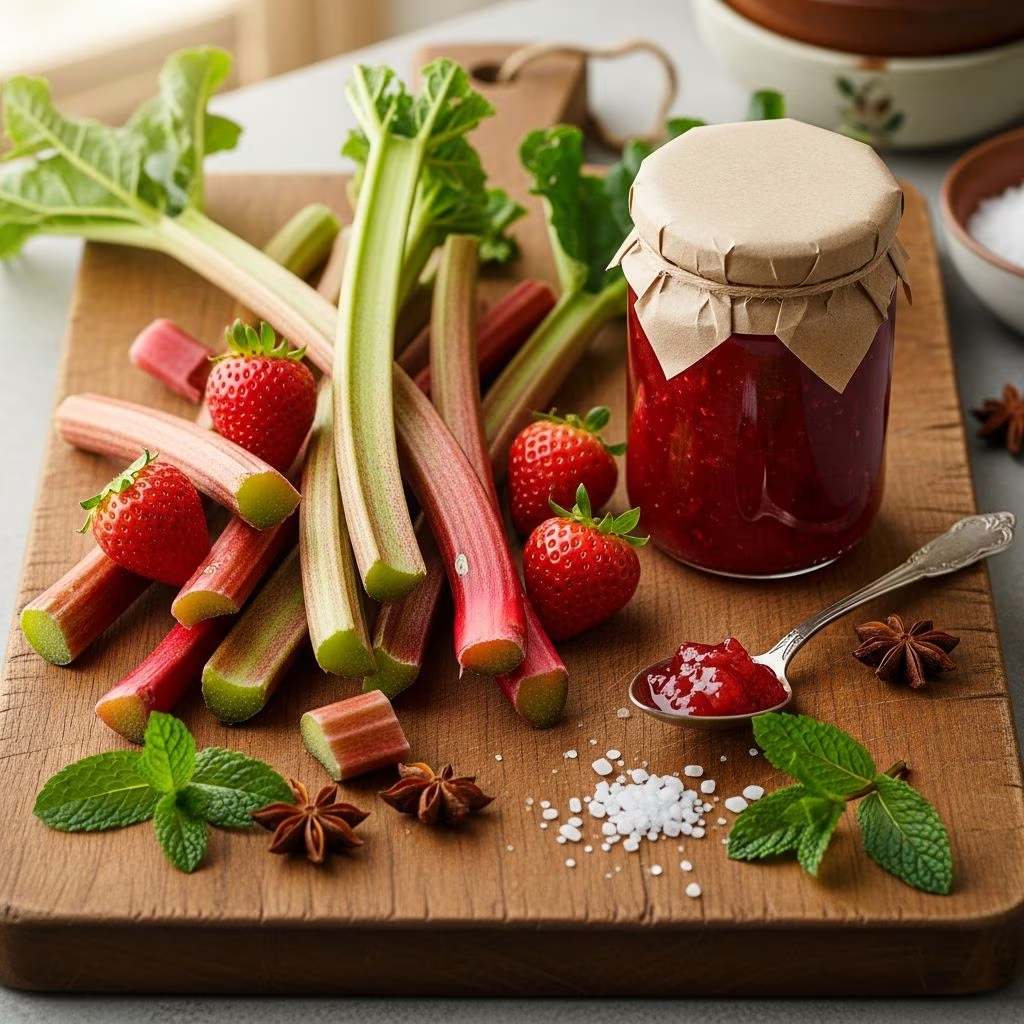
Rhubarb jam captures the unique tartness of this spring vegetable, transformed into a versatile spread through simple cooking. Home cooks appreciate its minimal ingredients and quick preparation, yielding jars of vibrant preserve for toast, desserts, or gifts. This guide explores everything from basic methods to creative twists, ensuring success in your kitchen.
Why Rhubarb Makes Exceptional Jam
Rhubarb’s high acidity and natural pectin content allow it to thicken naturally when cooked with sugar, often eliminating the need for commercial thickeners. Its bright red stalks provide vivid color and a puckering flavor that balances sweetness perfectly. Seasonal availability in spring makes it ideal for preserving summer’s bounty into winter treats.
Nutritionally, rhubarb offers vitamins C and K, fiber, and antioxidants, though sugar tempers its low-calorie profile in jam form. Home preparation controls quality, avoiding preservatives found in store-bought versions.
Selecting and Preparing Rhubarb
Choose firm, crisp stalks with vibrant color—red varieties yield prettier jam, but green ones work well too. Avoid wilted or blemished pieces. Harvest from gardens or buy from farmers’ markets for peak freshness.
- Wash thoroughly: Rinse under cool water to remove dirt.
- Trim ends: Discard leaves (toxic) and root ends; slice stalks into 1/2-inch pieces.
- Yield estimate: 1 pound raw rhubarb yields about 3-4 cups chopped.
For optimal flavor, use young, tender stalks; older ones may need peeling of stringy outer layers.
Core Ingredients for Success
Most recipes rely on 2-4 staples: rhubarb, sugar, and a touch of acid like lemon juice. Sugar preserves color, aids gelling, and tempers tartness—use granulated white for clarity or brown for deeper flavor.
| Recipe Type | Rhubarb | Sugar | Acid/Add-ins | Yield |
|---|---|---|---|---|
| Minimalist | 3.5 cups | 1/4 cup | Water | 1 small jar |
| Classic | 6 cups | 2 cups | 1 Tbsp lemon juice | |
| Pectin-Boosted | 4 lbs | 4 lbs | 3 Tbsp lemon + pectin |
Lemon juice enhances pectin activation and brightens taste; water or its natural juices provide cooking liquid.
Step-by-Step: Basic No-Pectin Rhubarb Jam
This foolproof method uses rhubarb’s natural properties for a small batch ready in 30 minutes.
- Prep rhubarb: Chop 3.5 cups into 1-inch pieces.
- Combine: In a saucepan, mix rhubarb, 1/4 cup sugar, and 1/4 cup water.
- Cook: Heat to medium, stirring until rhubarb softens (10 minutes). Simmer low 15 minutes until jammy.
- Test set: Chill a plate; drop jam—if it wrinkles when pushed, it’s ready.
- Jar: Pour into sterilized jars; cool and refrigerate up to 1 week.
Scale up for larger batches, adjusting cook time.
Advanced Technique: Overnight Maceration Method
For deeper flavor, let rhubarb and sugar sit overnight. This draws out juices, reducing cook time and intensifying taste.
- Chop 6 cups rhubarb; toss with 2 cups sugar in a bowl. Cover; rest 8+ hours.
- Juices will pool—transfer all to a pot with 1 Tbsp lemon juice.
- Boil medium-high 20 minutes, stirring; simmer low 10 minutes until set.
- Cool slightly; jar and chill. Yields intense, spreadable jam.
Use non-reactive pots (stainless steel) to prevent discoloration.
Pectin-Enhanced Version for Canning
For shelf-stable jars, add natural pectin. Based on tested formulas, this makes 8 half-pints.
- 4 lbs chopped rhubarb + 3 Tbsp lemon juice: Simmer 10 minutes.
- Add 1.75 oz pectin; boil 10 minutes.
- Stir in 4 lbs sugar; boil 15-20 minutes to 220°F or saucer test.
- Fill hot jars; process in water bath 10 minutes for safety.
Always follow USDA canning guidelines for low-acid foods.
Troubleshooting Common Issues
Jam too runny? Recook with lemon juice or pectin. Too stiff? Stir in boiling water. Weeping liquid? Overripe rhubarb or insufficient sugar—use next time’s saucer test religiously.
- Foam: Skim during cooking for clarity.
- Color fade: Add lemon early; avoid overcooking.
- Burning: Stir constantly on low heat.
Flavor Variations to Elevate Your Jam
Experiment beyond basics:
- Strawberry-Rhubarb: 50/50 mix with berries for sweetness.
- Ginger: Grate 2 Tbsp fresh ginger for spice.
- Vanilla: Seeds from 1 pod during maceration.
- Spiced: Cinnamon stick or cardamom pods simmered in.
- Low-Sugar: Use honey (1:1 ratio) and extra pectin.
These twists maintain rhubarb’s star role while adding complexity.
Storage and Safety Essentials
Refrigerate small batches up to 1 month; freezer for 1 year. For pantry storage, water-bath can: boil jars 10 minutes (adjust for altitude). Check seals—discard if bulging or off-smelling.
Sterilize jars by boiling 10 minutes. Use new lids for proper sealing.
Creative Ways to Use Rhubarb Jam
Beyond toast:
- Swirl into yogurt or cheesecake batter.
- Glaze for pork or chicken.
- Fill thumbprint cookies or tarts.
- Top ice cream or pancakes.
- Mix into barbecue sauce base.
Its tart profile shines in both sweet and savory dishes.
Nutrition Snapshot
| Per Tbsp | Calories | Sugar | Fiber |
|---|---|---|---|
| Basic Recipe | ~50 | 12g | 0.2g |
Values vary; low-sugar versions reduce calories significantly.
Frequently Asked Questions
Can I make rhubarb jam without sugar?
Yes, with artificial sweeteners and pectin, but texture may differ. Natural low-sugar works best with extra cooking.
How do I know when jam is set?
Use the frozen plate test: push jam; if it wrinkles, it’s ready. Or cook to 220°F.
Is rhubarb safe for canning?
Yes, its acidity (pH ~3.3) allows safe water-bath processing when following recipes precisely.
Can I freeze raw rhubarb for later jam?
Absolutely—chop, bag, and freeze up to 1 year. Thaw before using.
Why use lemon juice?
It boosts natural pectin, prevents browning, and balances flavor.
Seasonal Tips for Peak Harvest
Rhubarb peaks April-June; force early crops by covering plants. Harvest by twisting stalks to encourage regrowth. Over-harvesting weakens plants—take only 1/3 at a time.
Pair with strawberries for classic combos or experiment with cherries for unique jams.
References
- Easiest Rhubarb Jam Recipe — Christina’s Cucina. 2023-05-15. https://www.christinascucina.com/easiest-rhubarb-jam-recipe/
- Rhubarb Jam — A Cookie Named Desire. 2022-06-10. https://cookienameddesire.com/rhubarb-jam-recipe/
- Easy Rhubarb Jam — Leite’s Culinaria. 2021-04-20. https://leitesculinaria.com/74779/recipes-easy-rhubarb-jam.html
- Small Batch Rhubarb Jam — Rhubarbarians. 2023-03-08. https://www.rhubarbarians.com/small-batch-rhubarb-jam/
- Easy Rhubarb Jam — The Farmwife Feeds. 2024-01-12. https://www.farmwifefeeds.com/easy-rhubarb-jam/
- Rhubarb Jam — Beyond The Chicken Coop. 2022-09-05. https://www.beyondthechickencoop.com/rhubarb-jam/
- SURE.JELL Rhubarb Jam — Kraft Heinz. 2023-11-01. https://www.kraftheinz.com/sure-jell/recipes/500891-sure-jell-rhubarb-jam